



In This Article Show
Fall is one of the best seasons to improve a yard because cooler weather makes planting, digging, mulching, and rearranging outdoor spaces much easier. The soil is often still warm enough for roots to establish, while changing leaves and softer sunlight make it easier to see where the landscape needs more color, structure, or balance.
A beautiful fall landscape should offer more than a temporary display of pumpkins and mums. The strongest ideas combine seasonal flowers with evergreens, grasses, pathways, shrubs, and practical improvements that continue working through winter and into spring.
These projects can be adjusted for large front yards, small entry gardens, patios, and narrow side spaces.
1. Create a Layered Front Foundation Bed
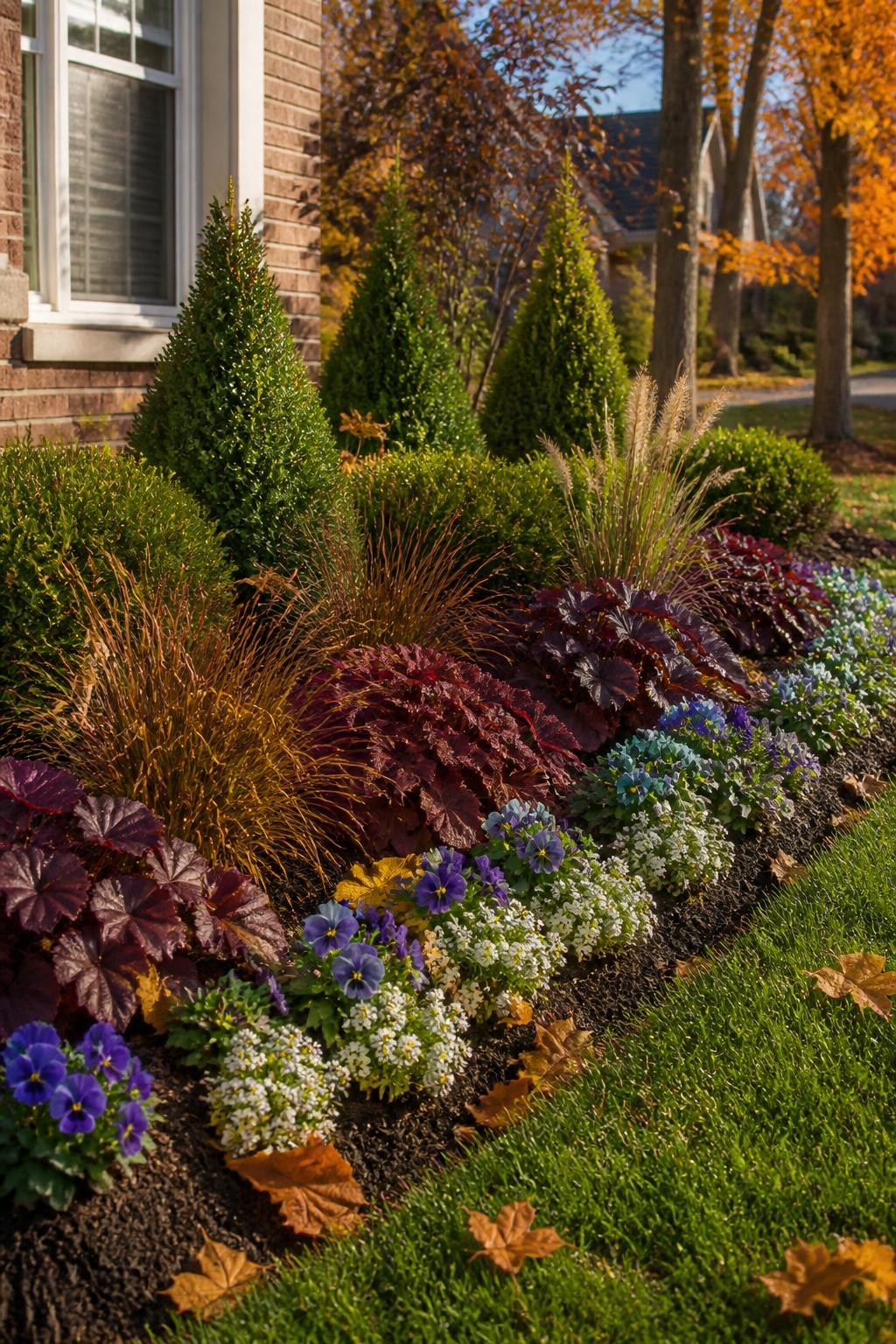
A layered foundation bed makes the front of a house look fuller and more intentional. Place compact evergreens or medium shrubs near the wall, add colorful foliage and grasses in the middle, then finish with low flowers or groundcover along the edge. Keeping the tallest plants at the back prevents smaller plants from disappearing.
Choose plants based on their mature size rather than how small they look at the garden center. Leave enough space between shrubs for airflow and future growth. A curved border usually feels softer than a perfectly straight line and can make a small front yard appear wider.
2. Add Ornamental Grasses for Movement
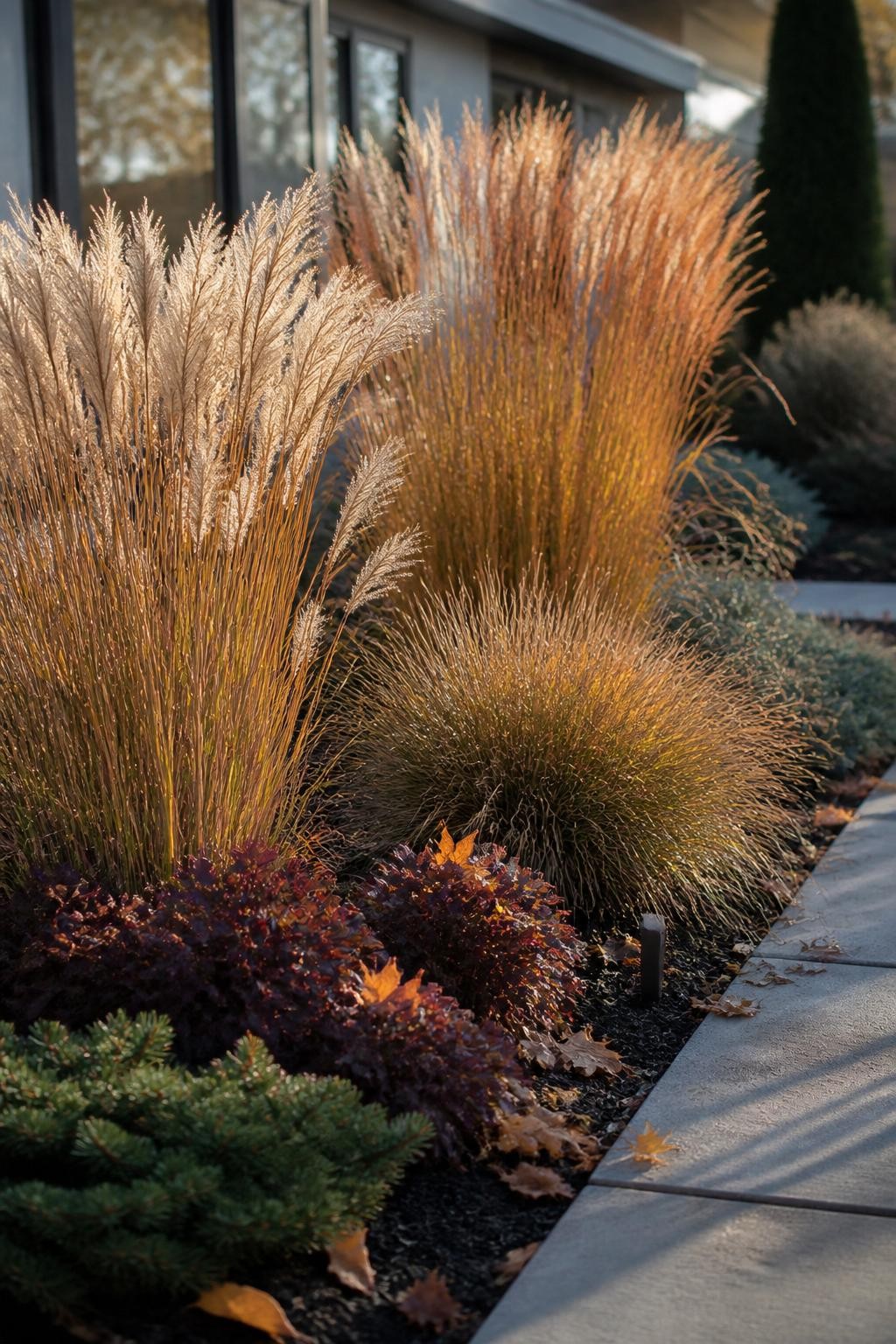
Ornamental grasses bring height, movement, and soft texture to a fall landscape. Their seedheads catch the light beautifully and remain attractive after many flowers have faded. Use taller grasses at the back of a bed and compact varieties beside paths or near the front of the garden.
Check whether a variety clumps neatly or spreads before planting it. Most grasses prefer full sun and soil that drains well. Leave healthy stems standing through winter if they remain upright, then cut them back before new spring growth begins.
3. Refresh a Walkway with Crisp Edging
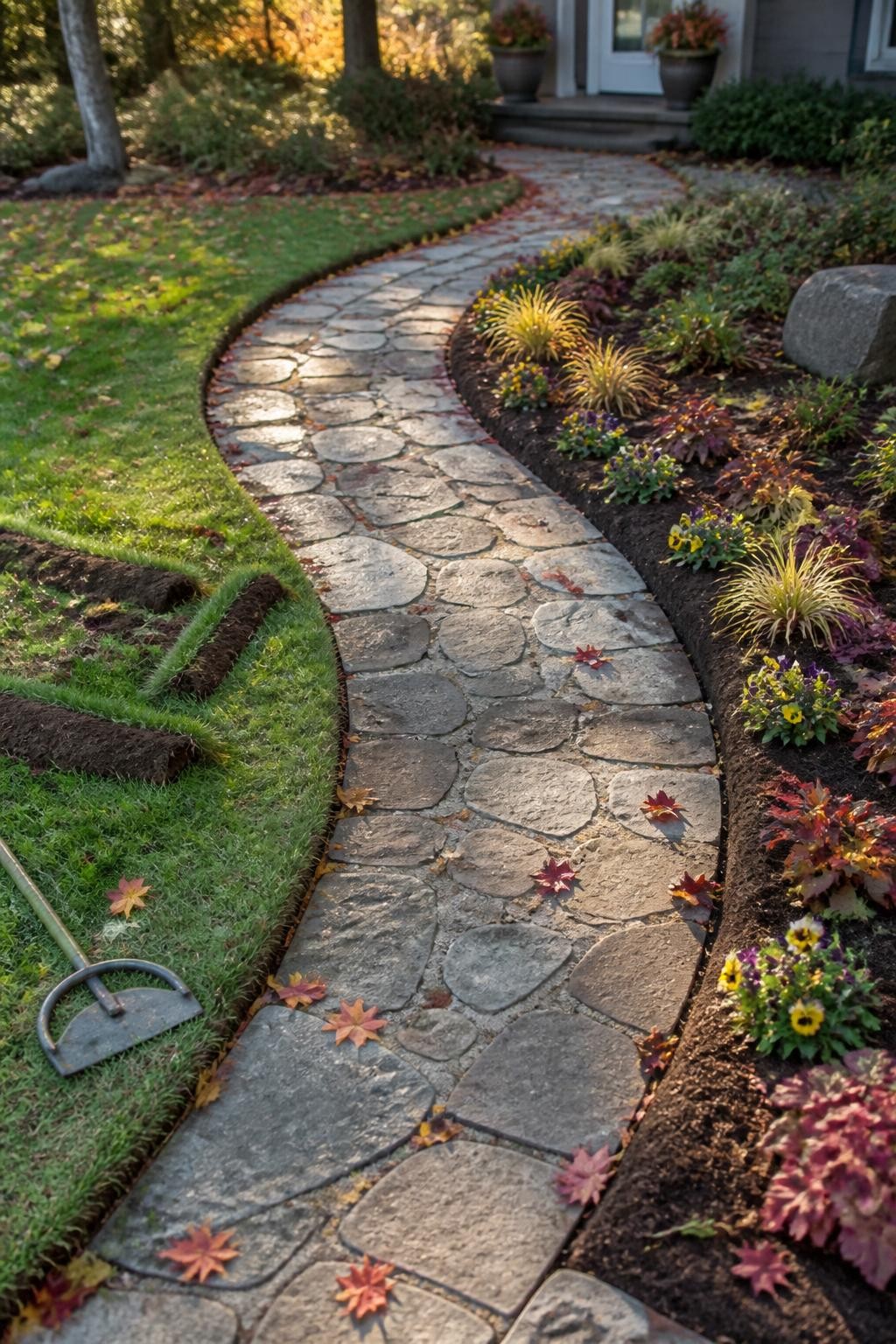
Clean edging can make an existing landscape look renewed without replacing any plants. Redefine the border between the lawn, paths, and planting beds using a sharp spade or edging tool. A clear line keeps grass from spreading into beds and makes mowing easier.
Follow the natural shape of the yard instead of adding many tight curves that are difficult to maintain. Once the edge is cut, add mulch to the planting side while keeping it off the grass. Repeat the cleanup once or twice a year to keep the border looking sharp.
4. Build a Colorful Mailbox Garden
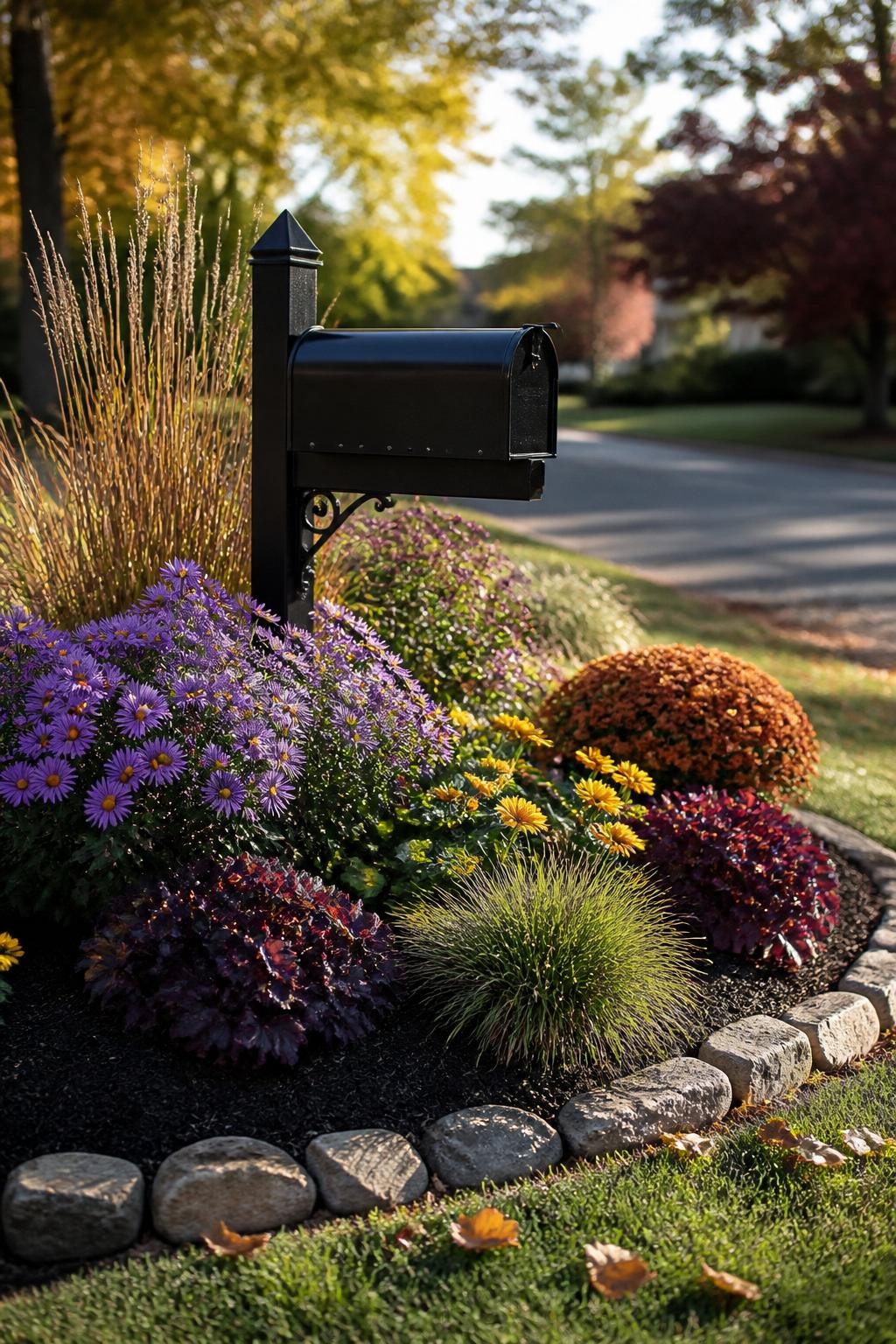
A mailbox garden can turn an overlooked part of the front yard into a useful focal point. Choose compact plants that will not block the mailbox door, road view, or access for delivery. Asters, mums, heuchera, sedge, and low evergreens can provide color without becoming difficult to manage.
Keep the design simple because roadside beds often receive extra heat, wind, and reflected light. Use mulch to reduce weeds and protect the soil from drying quickly. Leave a clear stepping area so the mailbox can be reached without walking through the plants.
5. Plant a Fall Pollinator Border
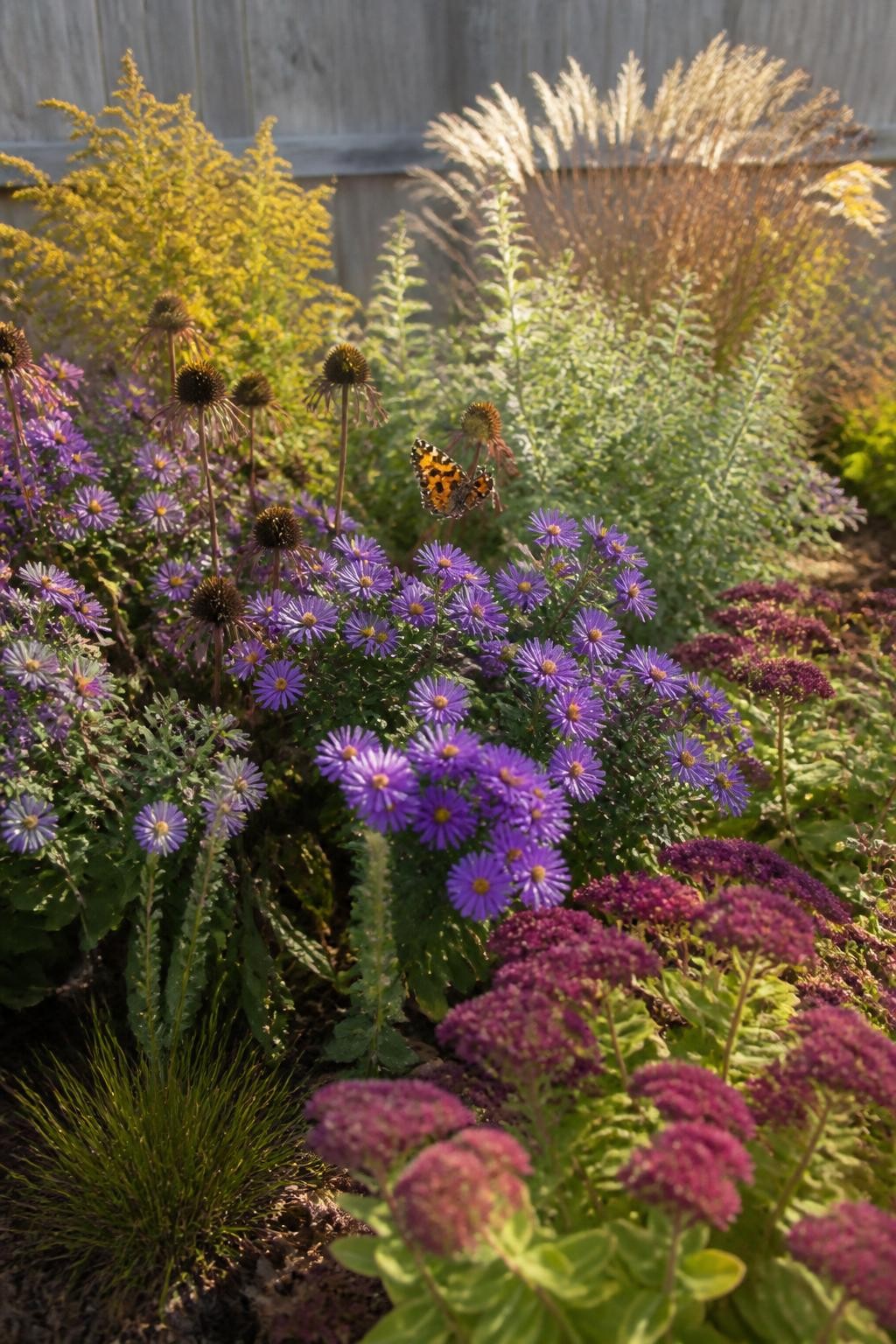
A fall pollinator border gives bees and butterflies access to nectar when fewer plants are blooming. Asters, goldenrod, sedum, late coneflowers, and native grasses can create a colorful display while supporting local wildlife.
Plant flowers in groups so pollinators can find them easily. Choose varieties suited to your local climate and soil rather than relying only on appearance. Leave some healthy seedheads standing after flowering to provide food for birds and winter structure.
6. Use Dwarf Evergreens as Year-Round Anchors
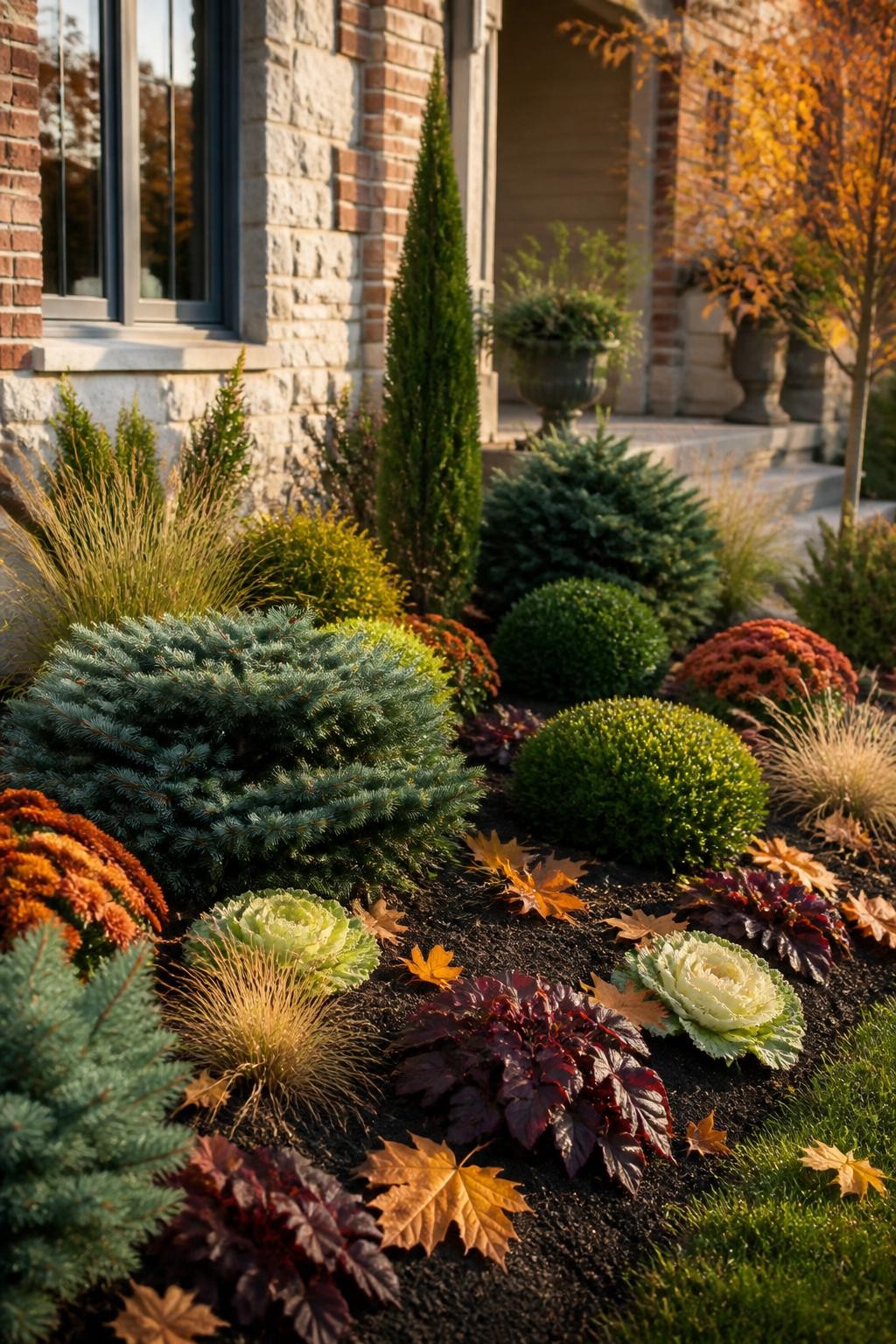
Dwarf evergreens keep a yard from looking empty after seasonal flowers disappear. Use them near corners, entry steps, windows, or the ends of planting beds to create a stable framework. Their green foliage also makes fall flowers and grasses stand out more clearly.
Read the mature height and width before planting because dwarf does not always mean tiny. Keep evergreens far enough from walls and walkways to grow naturally. Water new plants deeply during dry fall weather until the ground begins to freeze.
7. Add a Curved Wood-Chip Garden Path
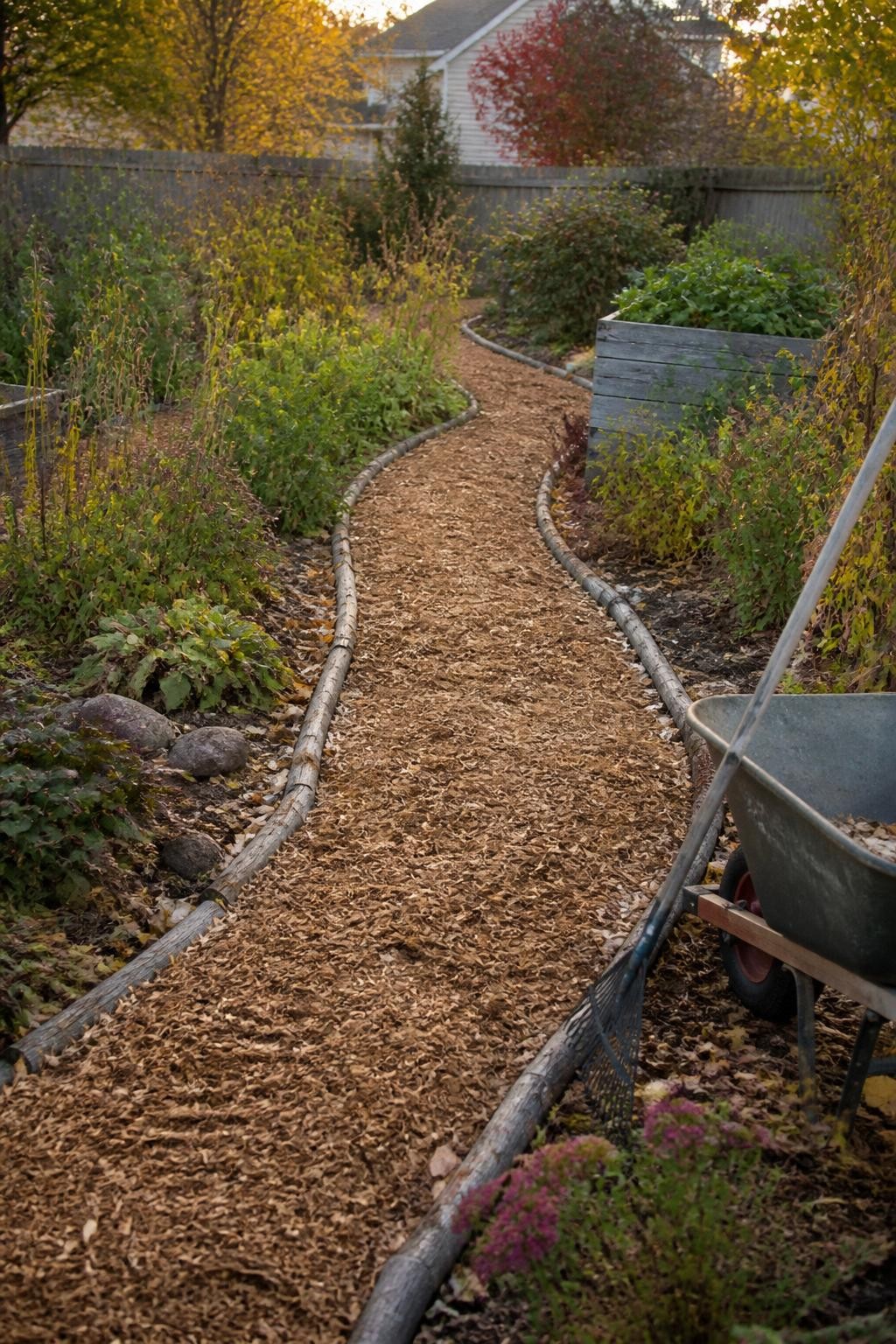
A wood-chip path creates a natural route through garden beds while reducing mud and weeds. Mark the curve first with a hose or garden rope, then remove tall weeds and cover the soil with plain cardboard if extra weed control is needed.
Apply several inches of untreated wood chips and rake them level. Make the path wide enough to walk comfortably or move a wheelbarrow through it. Add more chips as they settle and break down, and avoid piling them against plant stems or wooden structures.
8. Create a Small Rain Garden
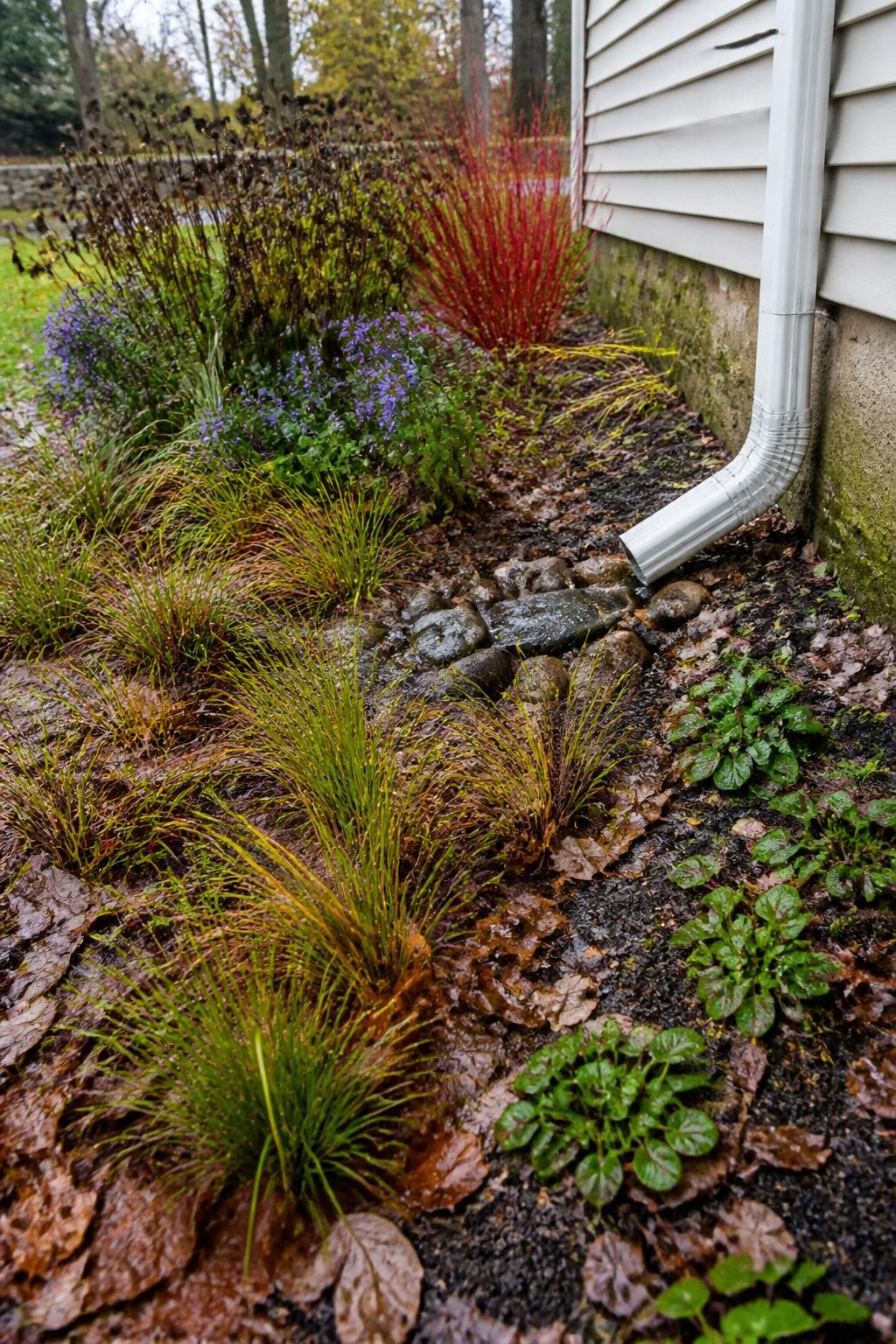
A rain garden collects runoff from roofs, driveways, or sloped lawns and allows it to soak slowly into the ground. It can reduce puddles while creating a planted area that looks natural and useful. Position it away from the house foundation and underground utilities.
Choose plants that can tolerate both temporary wetness and dry periods. Native sedges, asters, dogwood, and other locally suitable plants are often good choices. The basin should drain within a reasonable time rather than remaining permanently flooded.
9. Frame the Entry with Coordinated Containers
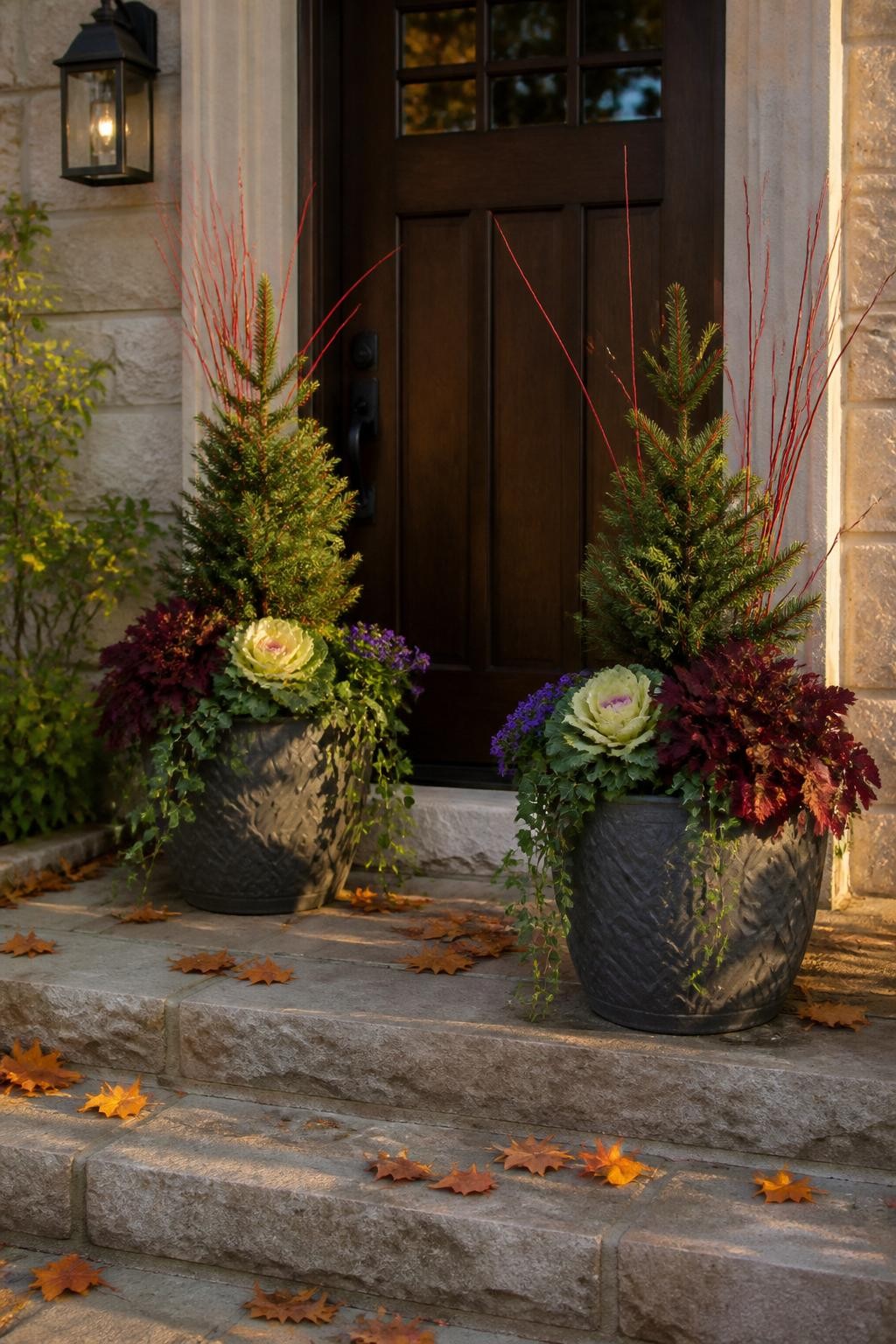
Matching or coordinated containers can make an entryway feel more welcoming without changing the permanent landscape. Use an evergreen or upright grass for height, foliage plants for fullness, and low flowers or ivy around the rim.
The containers do not need to be perfectly identical, but they should share similar colors and plant shapes. Choose heavy pots that will not tip in wind and keep drainage holes open. After fall flowers fade, replace them while leaving the evergreen structure in place.
10. Refresh Beds with Dark Mulch
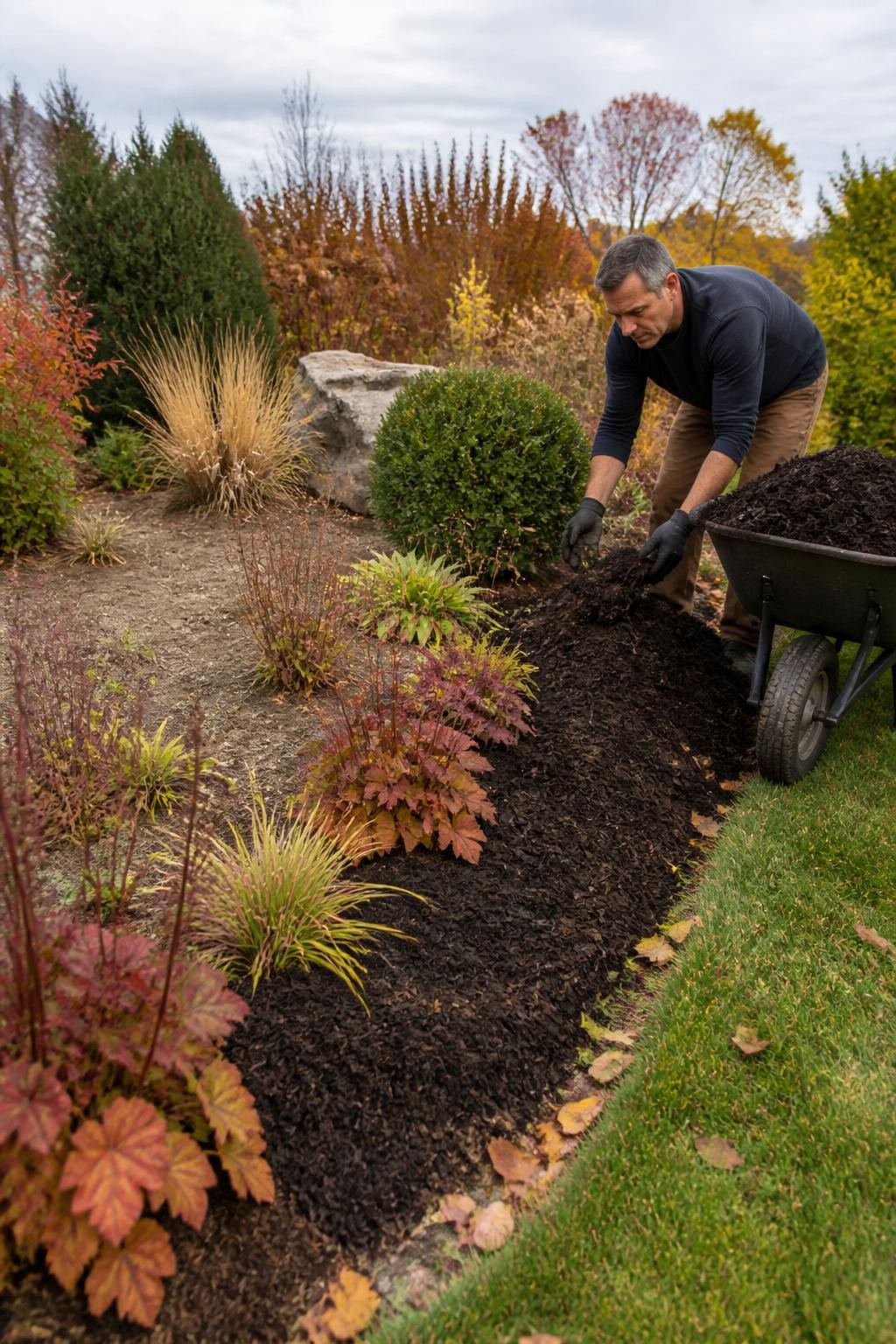
Fresh mulch can quickly improve the appearance of tired beds while also reducing weeds and protecting the soil. Remove large weeds first, then spread a moderate layer around shrubs, perennials, and trees.
Keep mulch several inches away from trunks, crowns, and woody stems. Thick piles against plants can trap moisture and encourage rot. Shredded bark, wood chips, pine needles, and leaf mulch can all work when matched to the style and needs of the garden.
11. Add a Stone-Edged Tree Ring
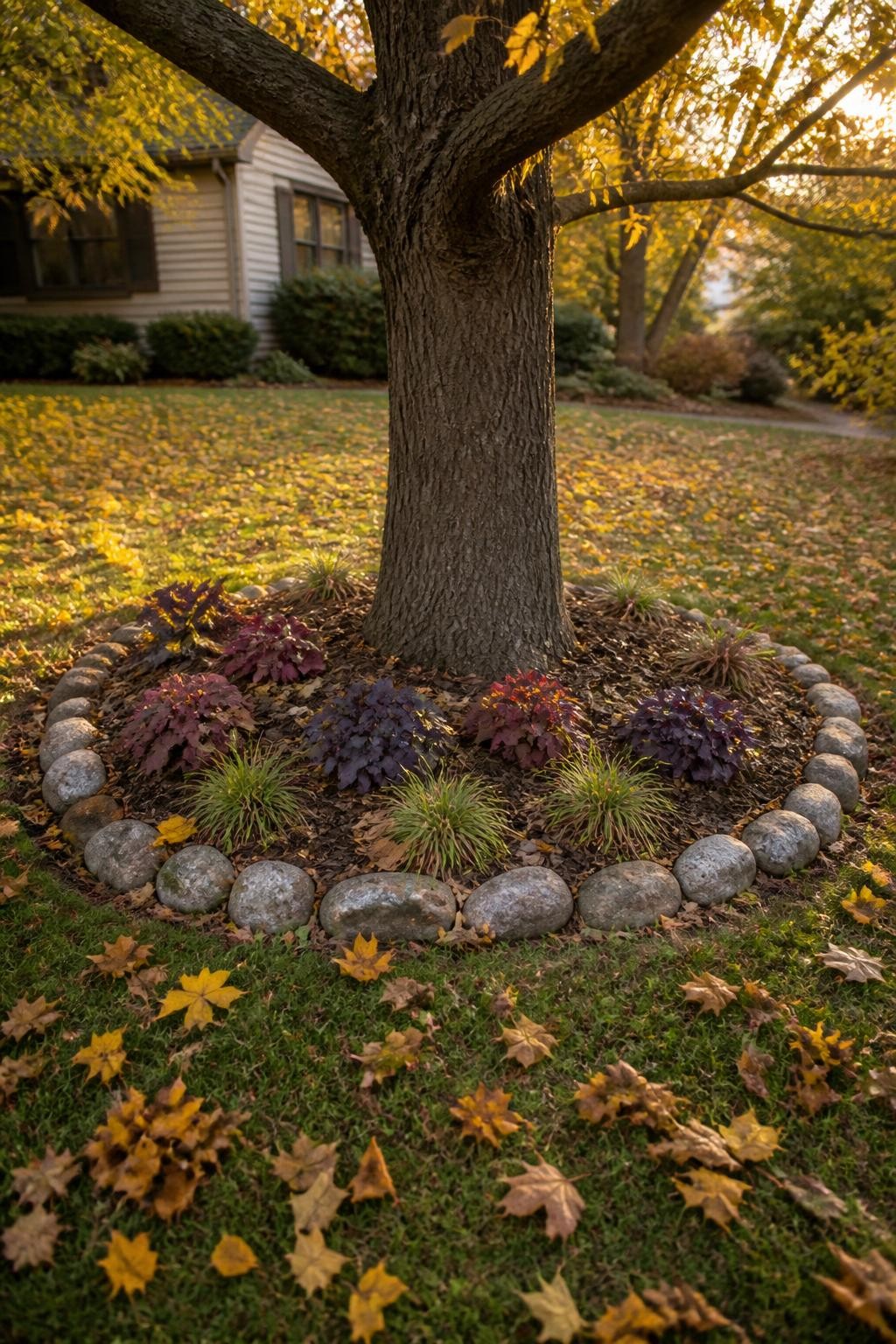
A wide planting ring around a tree can reduce competition from grass and protect the trunk from mower damage. Use a simple edge of natural stone, brick, or a clean cut line, then add shade-tolerant plants or a light mulch layer inside.
Do not raise the soil level around the trunk or build a narrow mound of mulch against it. The root flare should remain visible. Choose plants with shallow roots and avoid digging deeply, since tree roots often sit close to the surface.
12. Create a Fall Garden Seating Nook
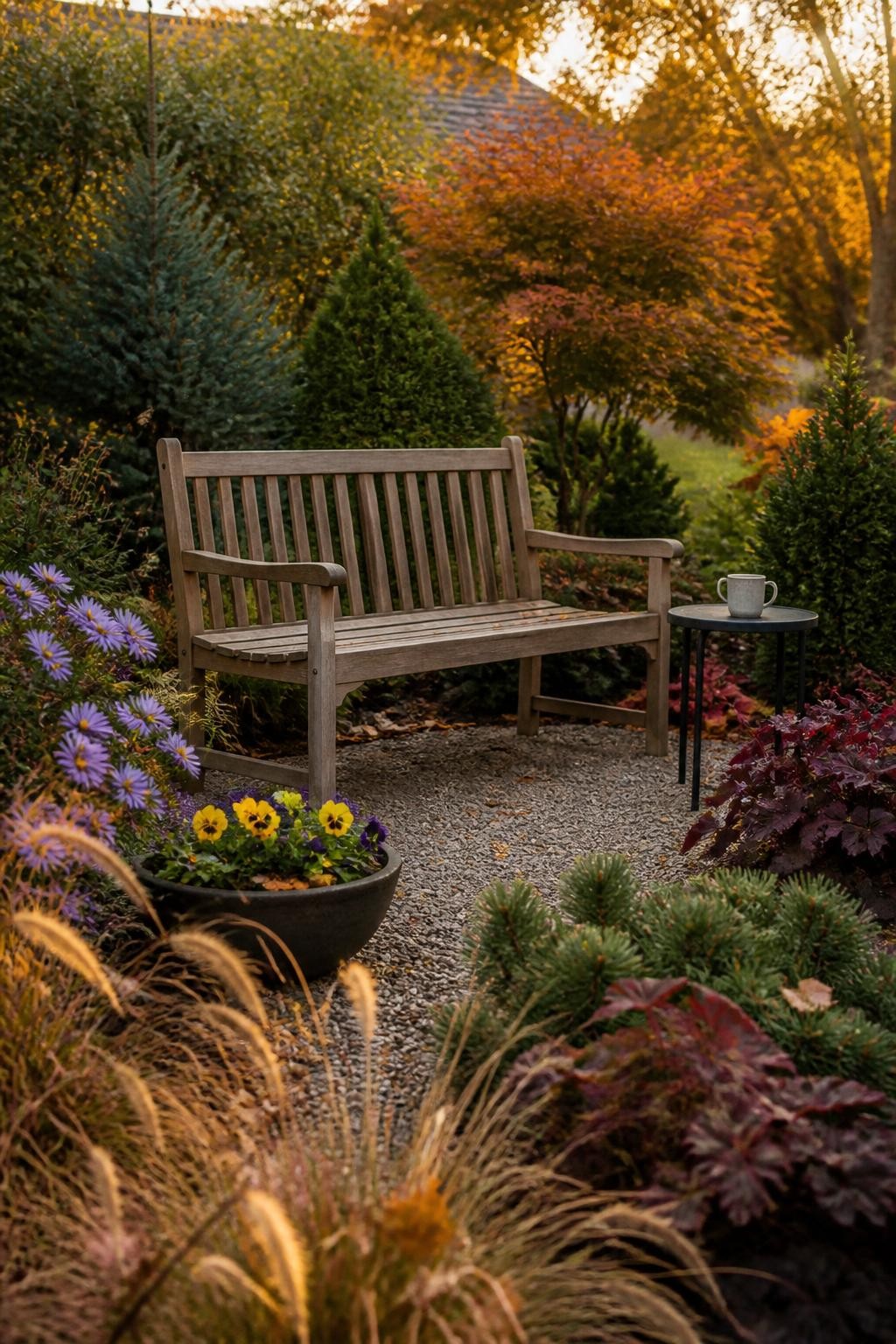
A small seating area gives the landscape a purpose beyond being viewed from indoors. Place a bench or two chairs where you can see changing foliage, flowering plants, or bird activity. Gravel, flat stones, or wood chips can create a simple level base.
Surround the seating area with plants of different heights without making it feel enclosed. Keep thorny plants and strong bee activity away from the immediate seat. Leave a clear path so the space remains easy to reach during damp fall weather.
13. Add Low Landscape Lighting
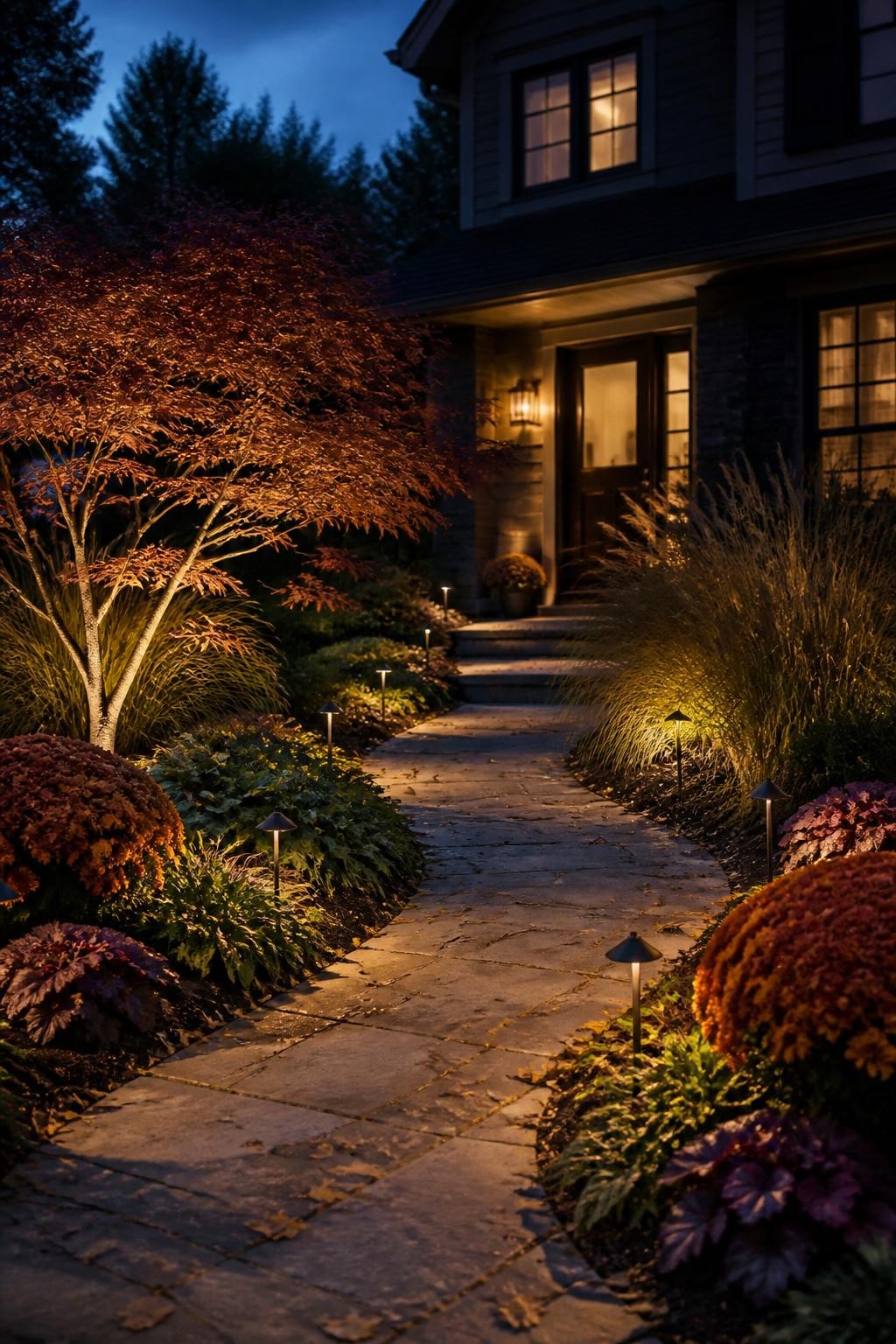
Low landscape lighting can make paths safer as evenings become darker. Use small fixtures along steps, curves, and changes in level rather than placing lights in a continuous bright row. One or two gentle uplights can also highlight an attractive tree or grass.
Choose outdoor-rated fixtures and keep wires protected from digging and mowing. Aim lights downward or toward specific plants to reduce glare. Solar lights are easy to install, but wired low-voltage systems are often more consistent in shaded areas.
14. Plant Groundcover Beneath Shrubs
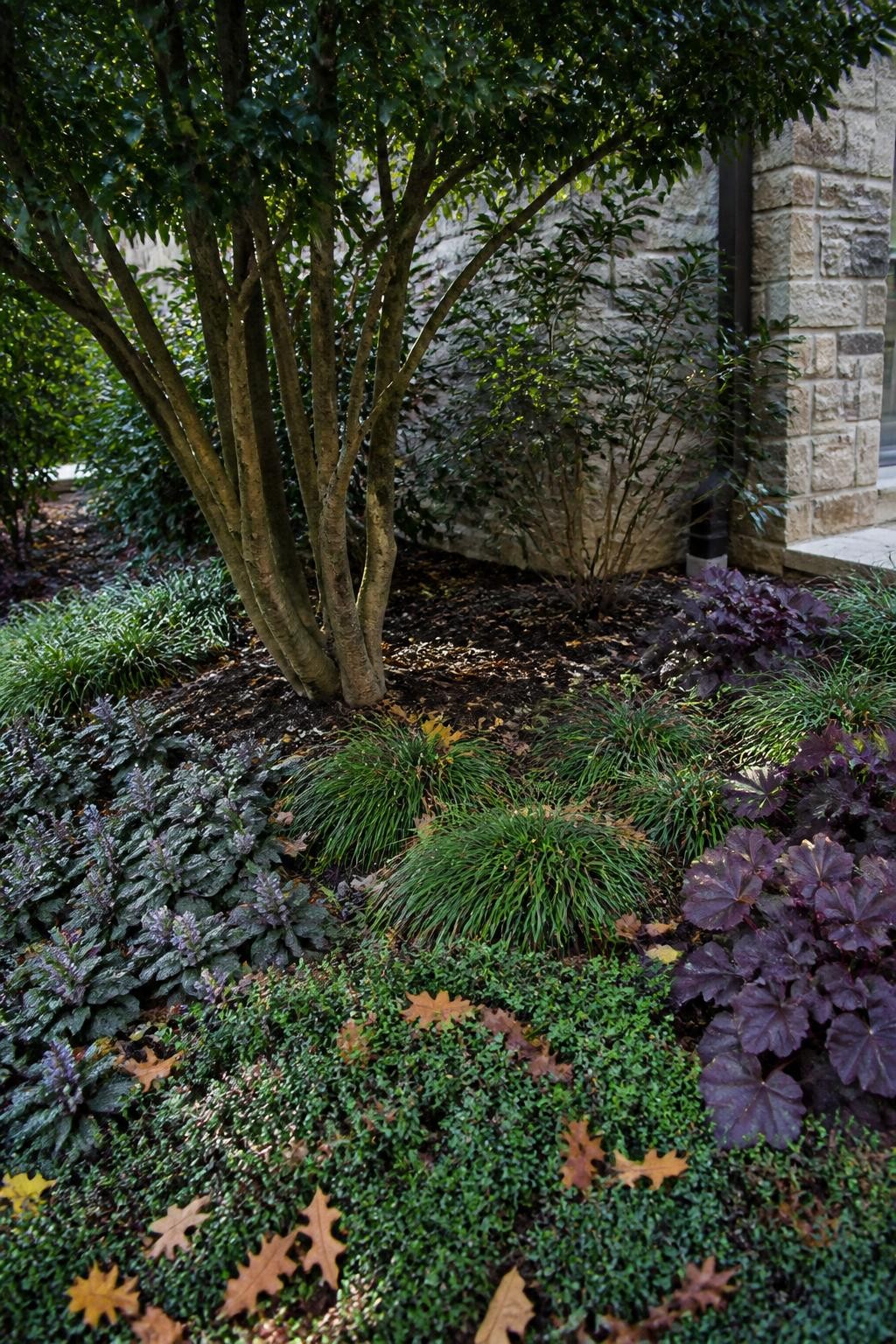
Groundcover can reduce bare soil, soften the base of shrubs, and limit weed growth. Choose low plants suited to the amount of sunlight and moisture in the area. Ajuga, sedge, creeping thyme, and other regionally suitable plants can form attractive mats over time.
Avoid planting too close to shrub stems, and leave enough room for each plant to spread. Groundcover is not completely maintenance-free, so remove weeds while the plants establish and trim anything that begins crossing paths or lawn edges.
15. Build a Mixed Fall Color Border
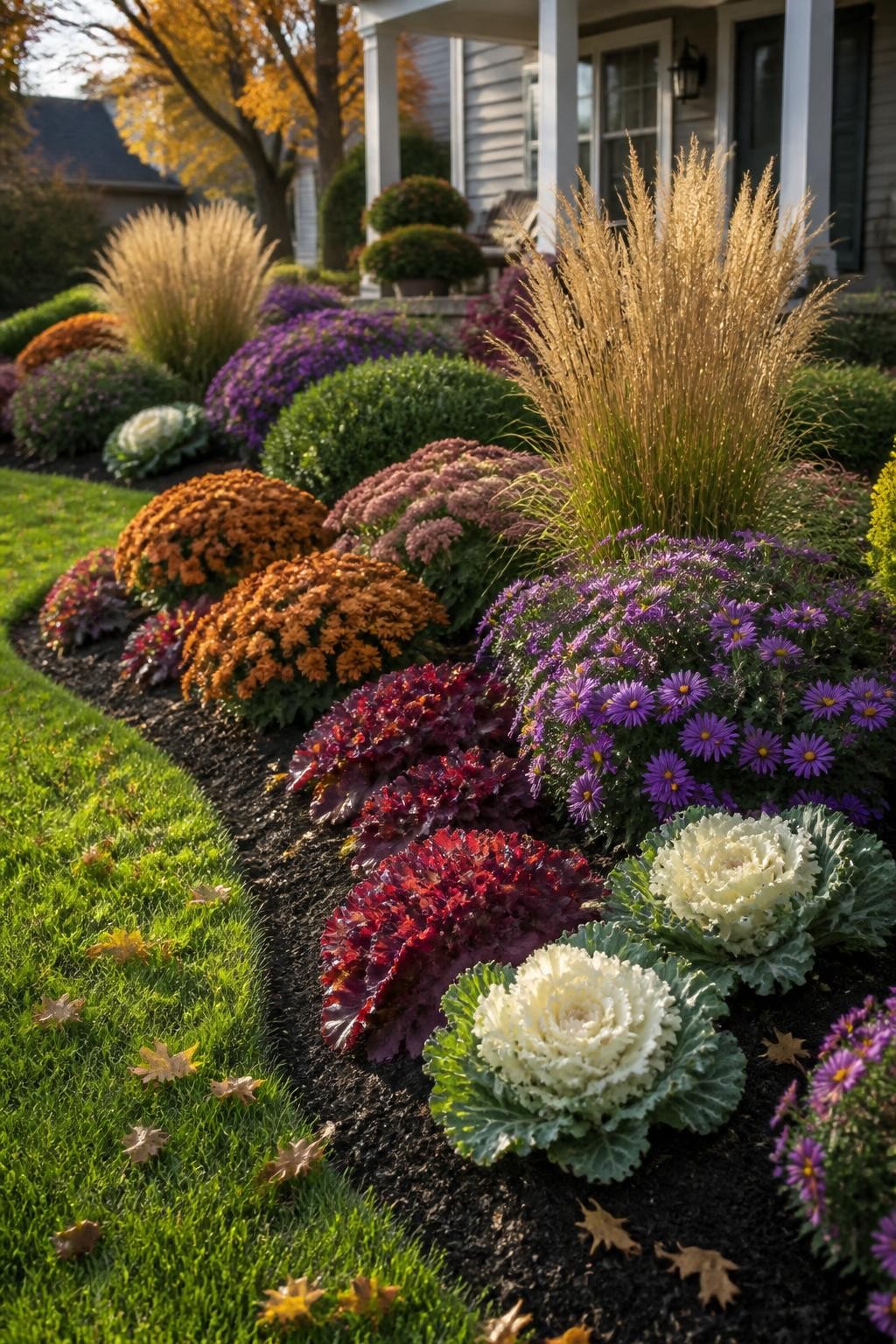
A mixed border combines flowers, foliage, grasses, and evergreen structure in one complete display. Repeat a few colors and plant types across the bed instead of using one of everything. This creates rhythm and helps the landscape feel connected.
Place the strongest evergreen shapes first, then add grasses and long-lasting perennials before filling gaps with seasonal flowers. Plan for the view after blooms fade as well as the fall display. Seedheads, bark, foliage, and plant shape can continue carrying the border into winter.