




In This Article Show
Creating a good habitat for hermit crabs is important for their health and happiness. When I built my first crab tank, I learned how small changes can make a big difference in their environment.

This article will show you 16 easy DIY hermit crab habitat design ideas that anyone can try. These ideas are simple to follow and use materials you can find without much trouble.
1. A gex glassterior crab tank design with volcanic rocks

A GEX Glassterior crab tank design with volcanic rocks creates a sleek, modern habitat that is both functional and visually stunning.
One of the benefits of this is that you can customize the layout to suit your crabs’ natural behaviors, creating caves, climbing spots, and hiding areas while keeping the tank visually striking.
2. Decked out hermit crab home with a colorful tray

Creating a decked-out hermit crab home with a colorful tray is a cool DIY option because it’s both playful and practical. The tray provides a bright, cheerful base that adds personality while keeping the habitat organized.
3. Colorful zen setup for proper hermit crab enclosure

This project is budget-friendly, beginner-friendly, and lets you express creativity while ensuring your pets have a safe, stimulating environment. It’s a perfect blend of style and function.
By using vibrant décor, smooth stones, natural wood, and calming sand arrangements, you create a peaceful yet stimulating environment.
4. Use a glass aquarium with a secure mesh lid for ventilation
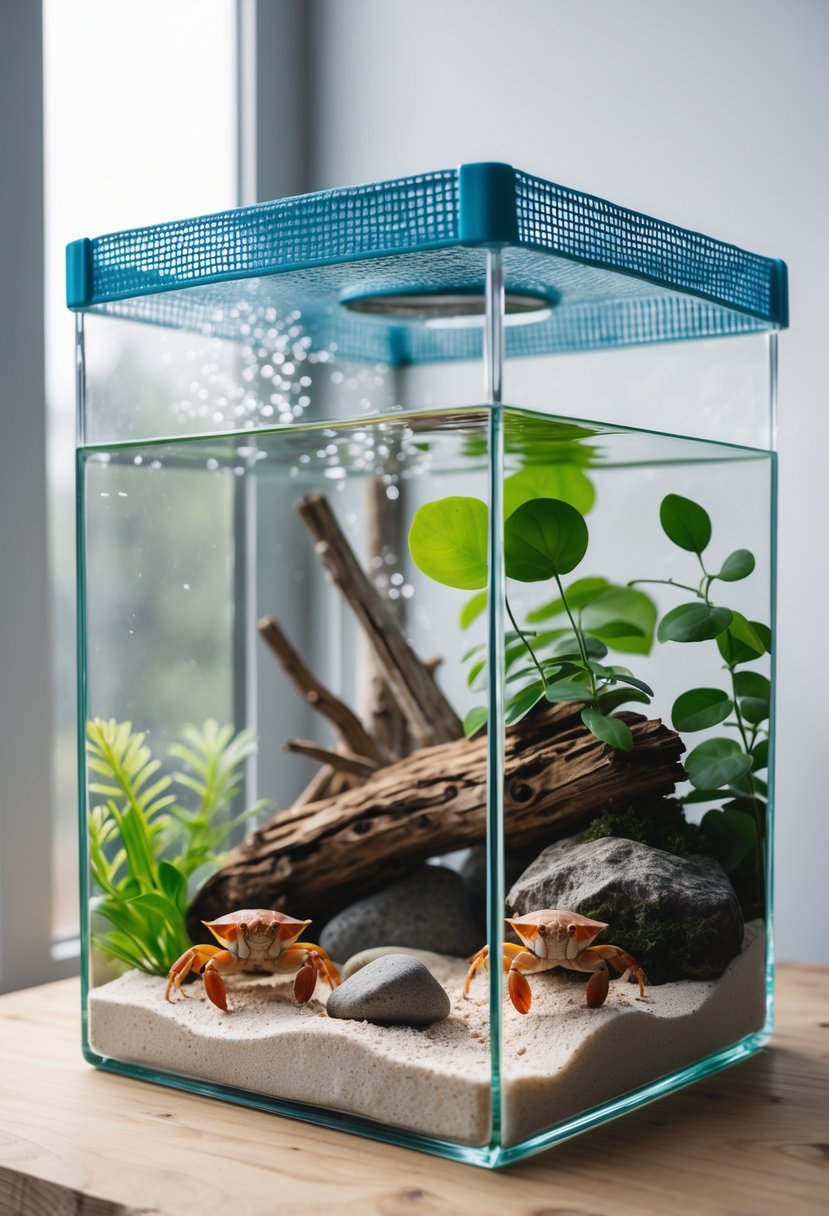
I find a glass aquarium works well for a hermit crab habitat. It keeps humidity in while letting me see my crabs clearly.
I add a mesh lid to give fresh air and stop crabs from escaping. The mesh also helps keep the right moisture level inside.
5. Line the tank with eco-friendly coconut fiber substrate
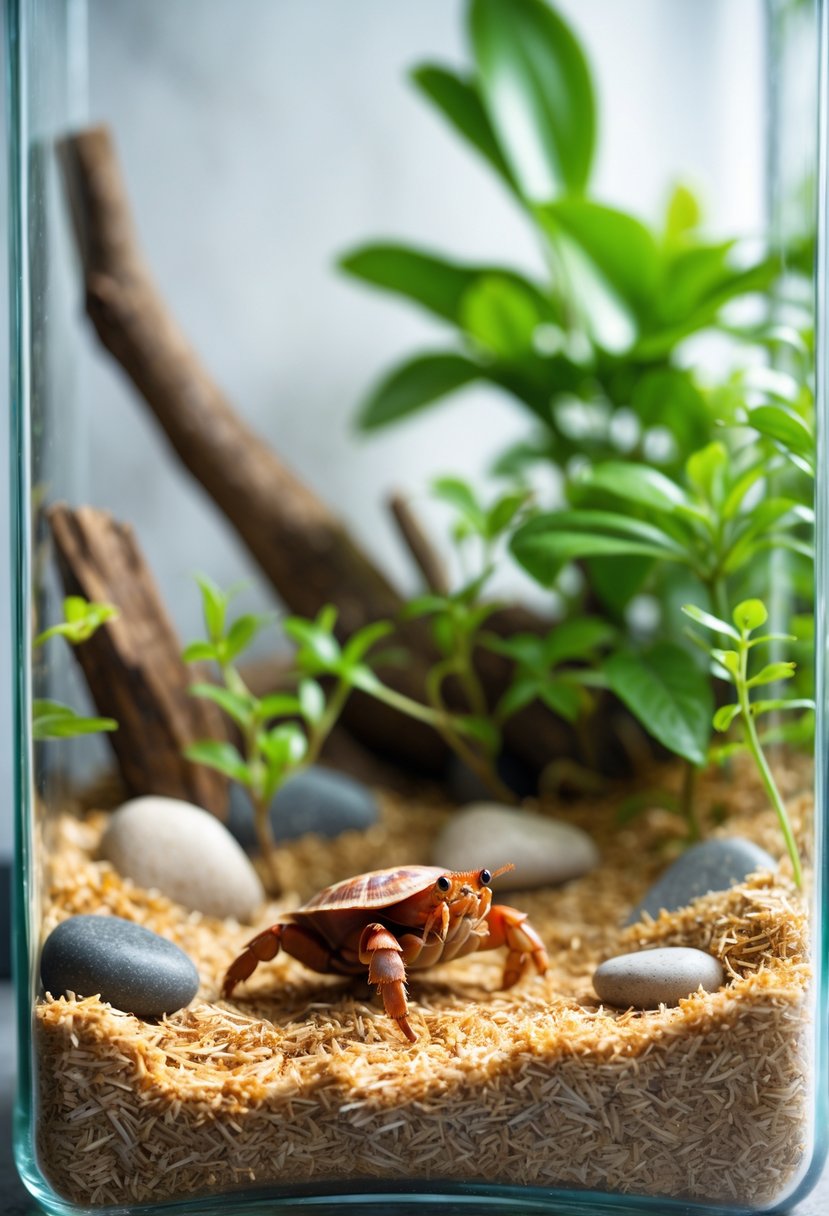
I use coconut fiber to line the bottom of my hermit crab tank. It holds moisture well, helping keep the humidity at the right level. The fiber is natural and safe for the crabs to dig and burrow in.
6. Include a shallow water dish for both fresh and saltwater
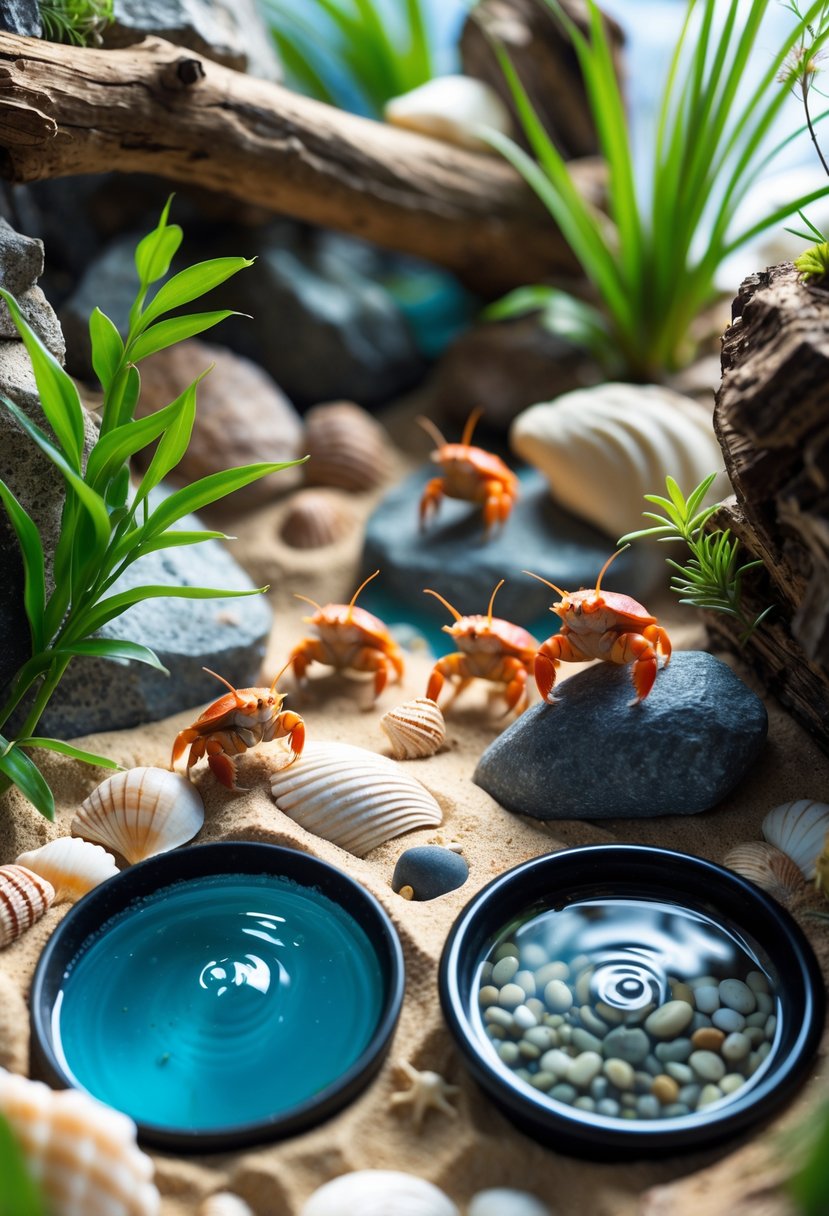
I always make sure to provide two shallow dishes in my hermit crab habitat. One dish holds freshwater, and the other contains saltwater made with marine salt. Both are important because hermit crabs need access to each type for drinking and bathing.
7. Maintain humidity levels between 70-80% using a spray bottle
I use a spray bottle to keep humidity between 70% and 80%. I mist the habitat once or twice a day to keep everything moist.
This helps my hermit crabs breathe properly and stay healthy. I check humidity with a gauge to make sure it stays steady.
8. Add climbing branches and driftwood for exercise
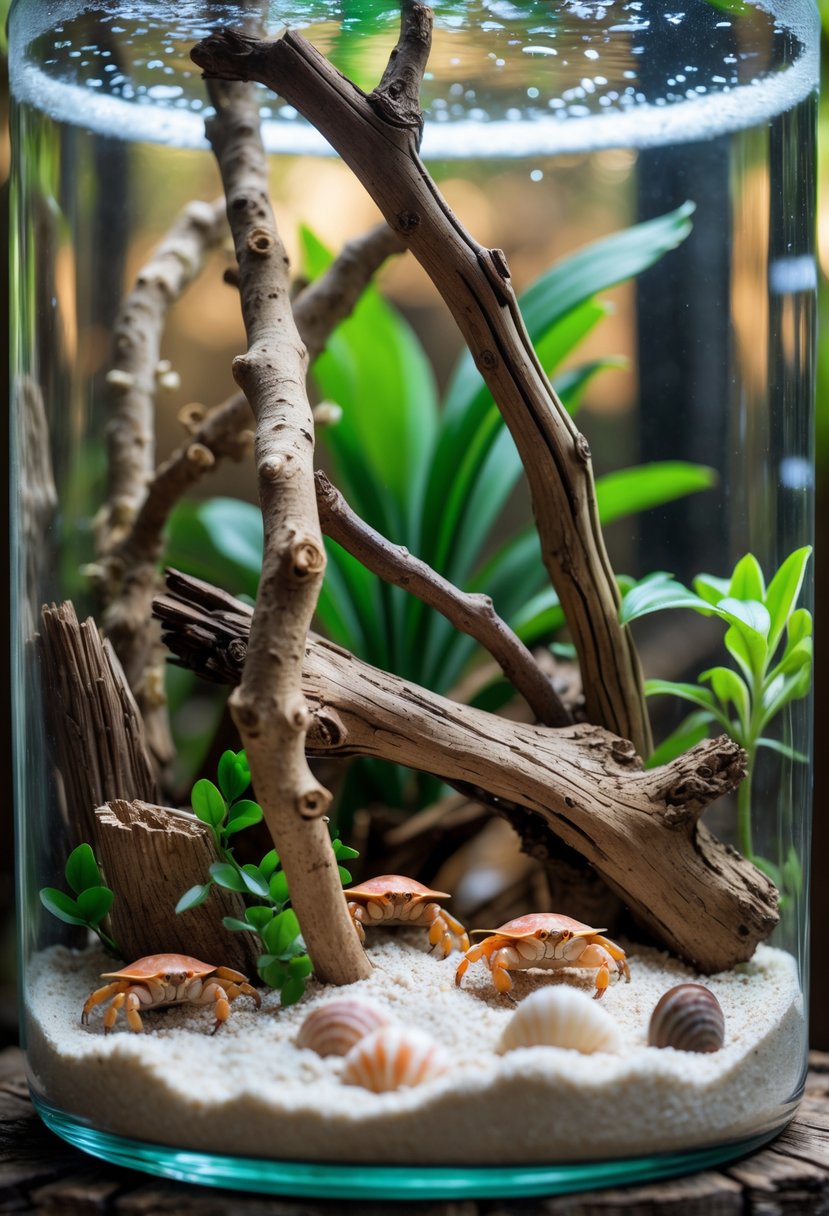
I add branches and driftwood to my hermit crab tank to give them spots to climb. These items help create exercise opportunities and mimic their natural habitat. I make sure everything is clean and secure so my crabs can climb safely.
9. Place a hideout shell or small cave for privacy
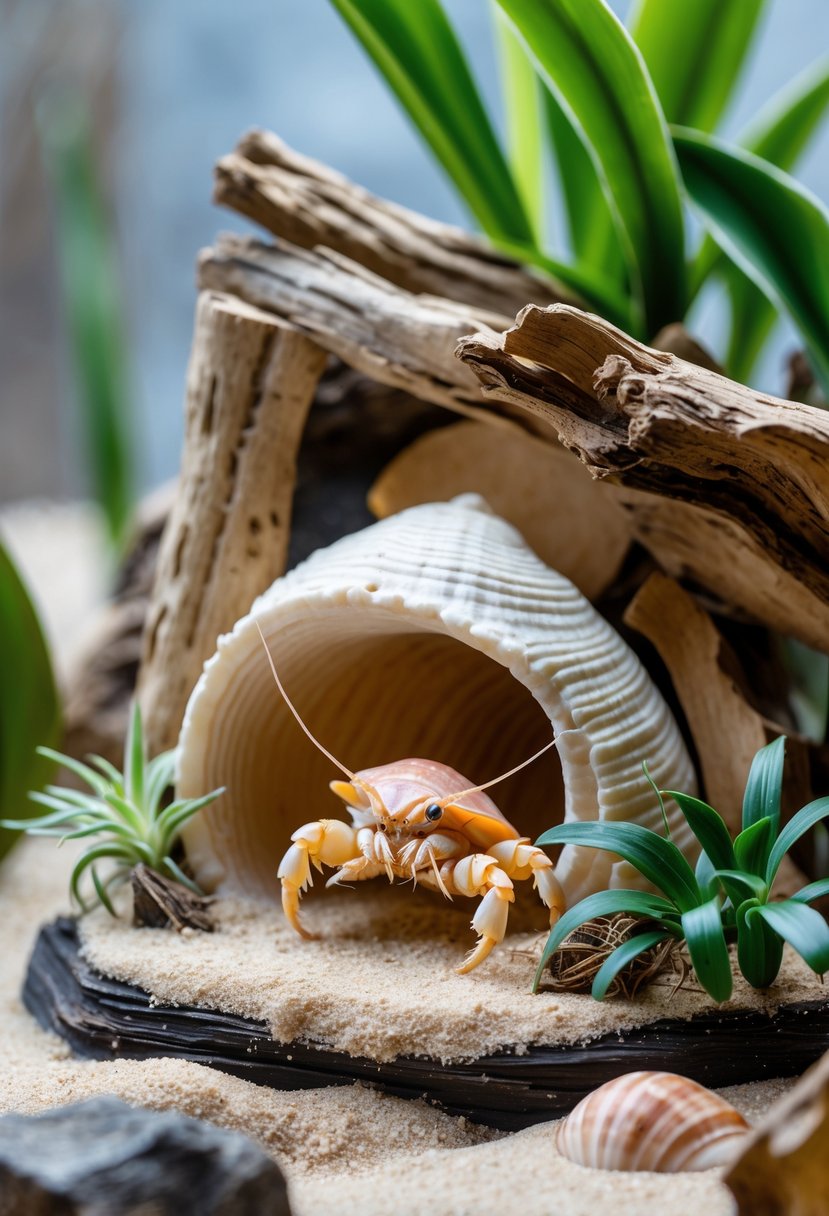
I add a hideout shell or a small cave in the habitat to give my hermit crab a private space. This helps them feel safe and reduces stress. I use natural materials like half-buried pipes or empty shells for this purpose.
10. Use a digital hygrometer and thermometer to monitor conditions
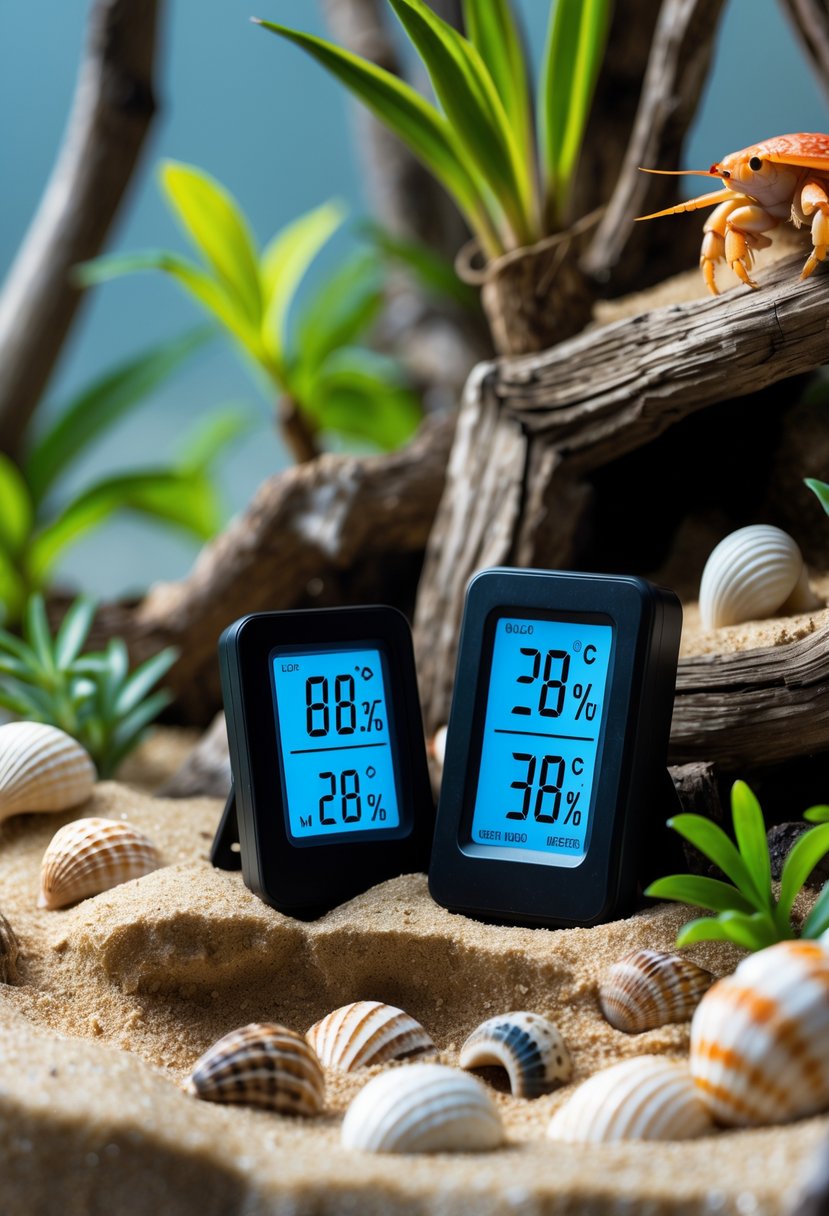
I use a digital hygrometer and thermometer to check my hermit crab’s habitat. This helps me keep track of the temperature and humidity accurately.
Hermit crabs need humidity above 70%, and guessing can be risky. A digital device gives me real numbers to adjust the environment when needed.
11. Incorporate live or artificial plants for natural habitat feel
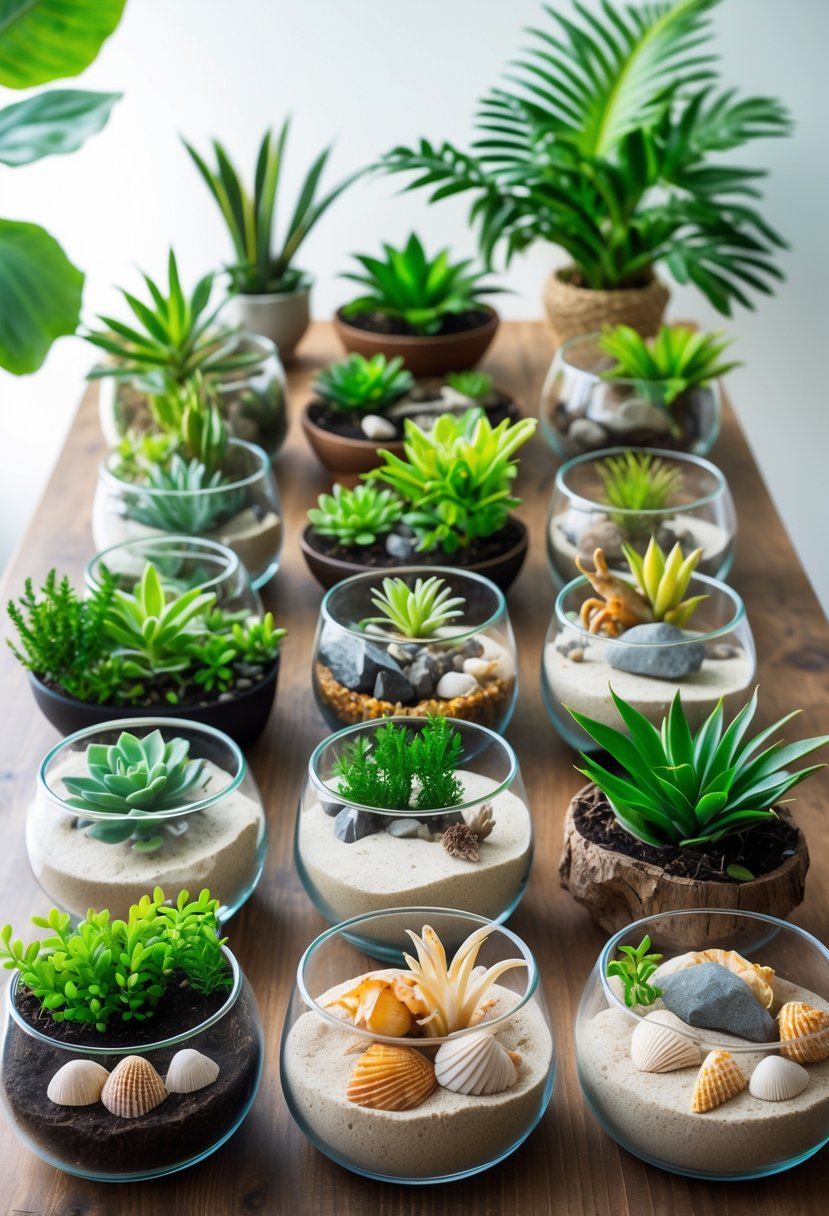
I add live or artificial plants to make the habitat feel more natural. Live plants can help with humidity and air quality. Artificial plants are easier to care for and still provide climbing spots and hiding places for my crabs.
12. Include multiple shells of varying sizes for growth
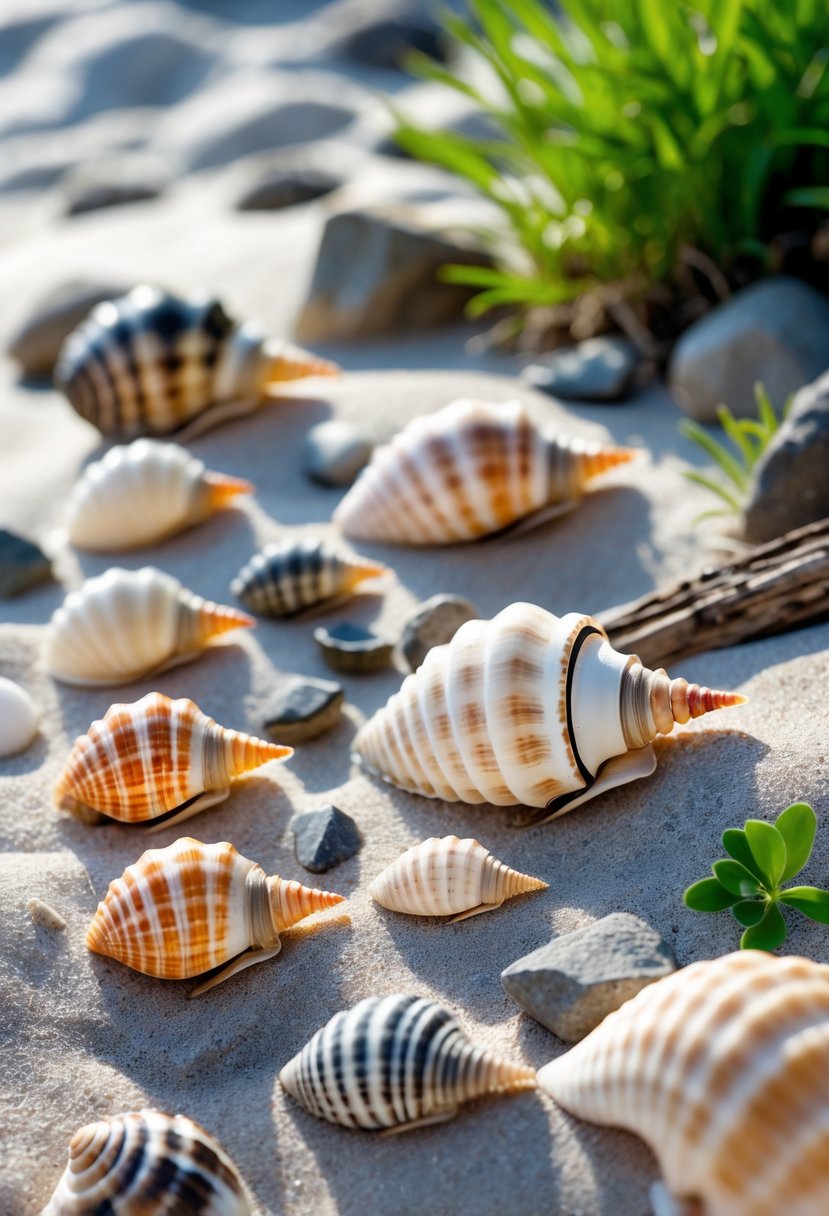
I always provide my hermit crabs with several shells in different sizes. This helps them switch shells as they grow. Having choices reduces stress and supports their natural behavior.
13. Add a heat mat under one side of the tank for a temperature gradient
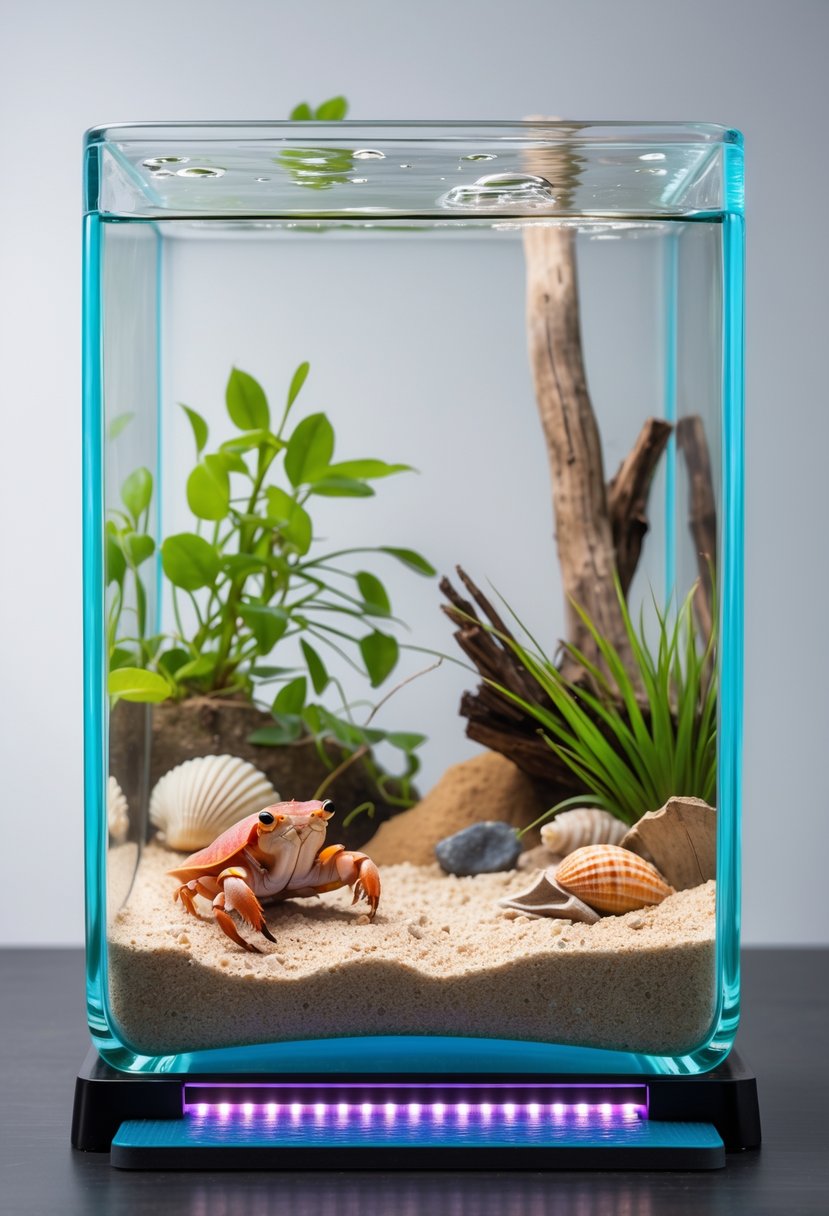
I place a heat mat under only one side of the tank. This creates a warm side and a cooler side. Hermit crabs can move to the spot they prefer.
I make sure the heat mat is on the outside bottom, not directly under the substrate. This helps avoid overheating the crabs.
I watch the tank temperature to keep it between 75 and 85°F. Using a thermometer helps me keep the environment safe and comfortable for my hermit crabs.
14. Use untreated sand for a burrowing depth of at least 3 inches
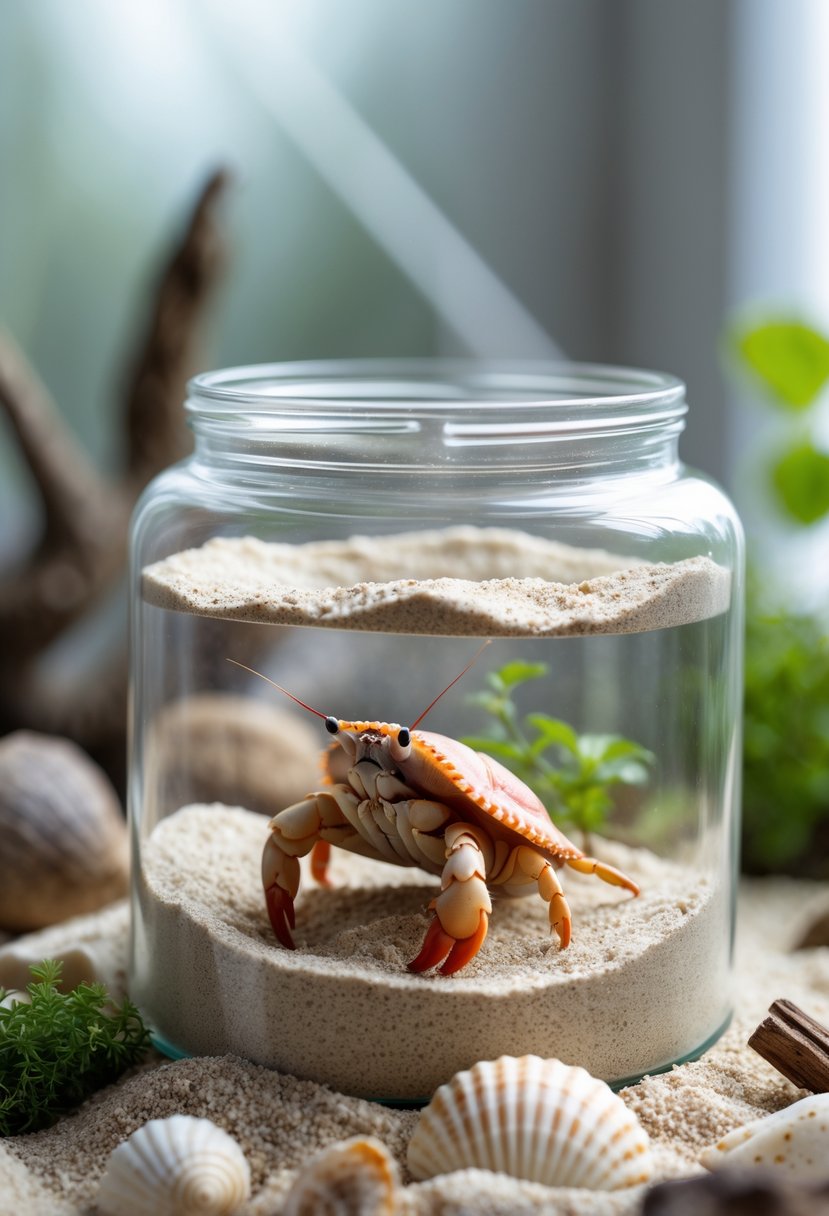
I use untreated sand to give my hermit crabs a safe place to burrow. The sand should be at least 3 inches deep. This depth lets them dig and molt comfortably.
15. Create a dual-section setup with land and water zones
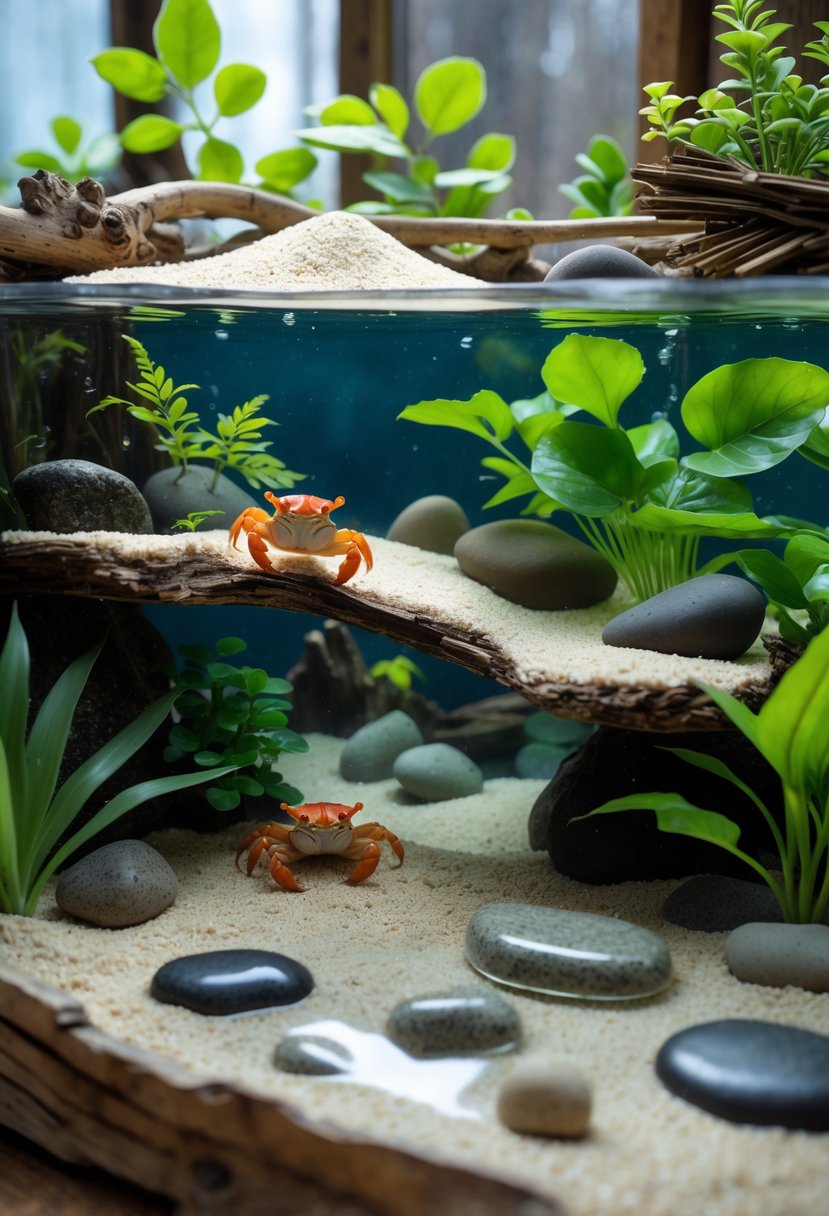
I designed my hermit crab habitat with separate land and water areas. This gives my crabs space to climb and a safe spot to swim. I use shallow bowls for salt and fresh water, making sure both are easy to access.
16. Fiddler crab tank setup with plants

The addition of plants in this setup makes the habitat visually appealing while still meeting the crabs’ needs for climbing, digging, and hiding.
This approach allows you to personalize the enclosure, turning pet care into a creative project that’s fun, relaxing, and rewarding.