





In This Article Show
Easter in Greece is not just a day—it’s a whole week of traditions, family gatherings, and incredible food. If you’ve ever wondered what makes Greek Easter so special, the answer is simple: it’s the way generations come together in the kitchen, carrying on recipes that have been passed down for centuries.
I’ll be honest—when I first learned about Greek Easter traditions, I was amazed by how much meaning is woven into every single dish. The red eggs aren’t just pretty; they symbolize Christ’s blood and the promise of new life . The sweet bread isn’t just delicious; it represents the Resurrection . And the slow-roasted lamb? That tradition goes all the way back to Old Testament stories .
Whether you’re Greek yourself looking to carry on family traditions, or you simply want to try something new and meaningful this Easter, these 17 recipes will bring the authentic flavors of a Greek Easter celebration right to your table. From the Holy Thursday baking to the midnight soup and the Sunday feast, let’s explore the dishes that make Greek Easter unforgettable.
1. Tsoureki (Greek Easter Bread)
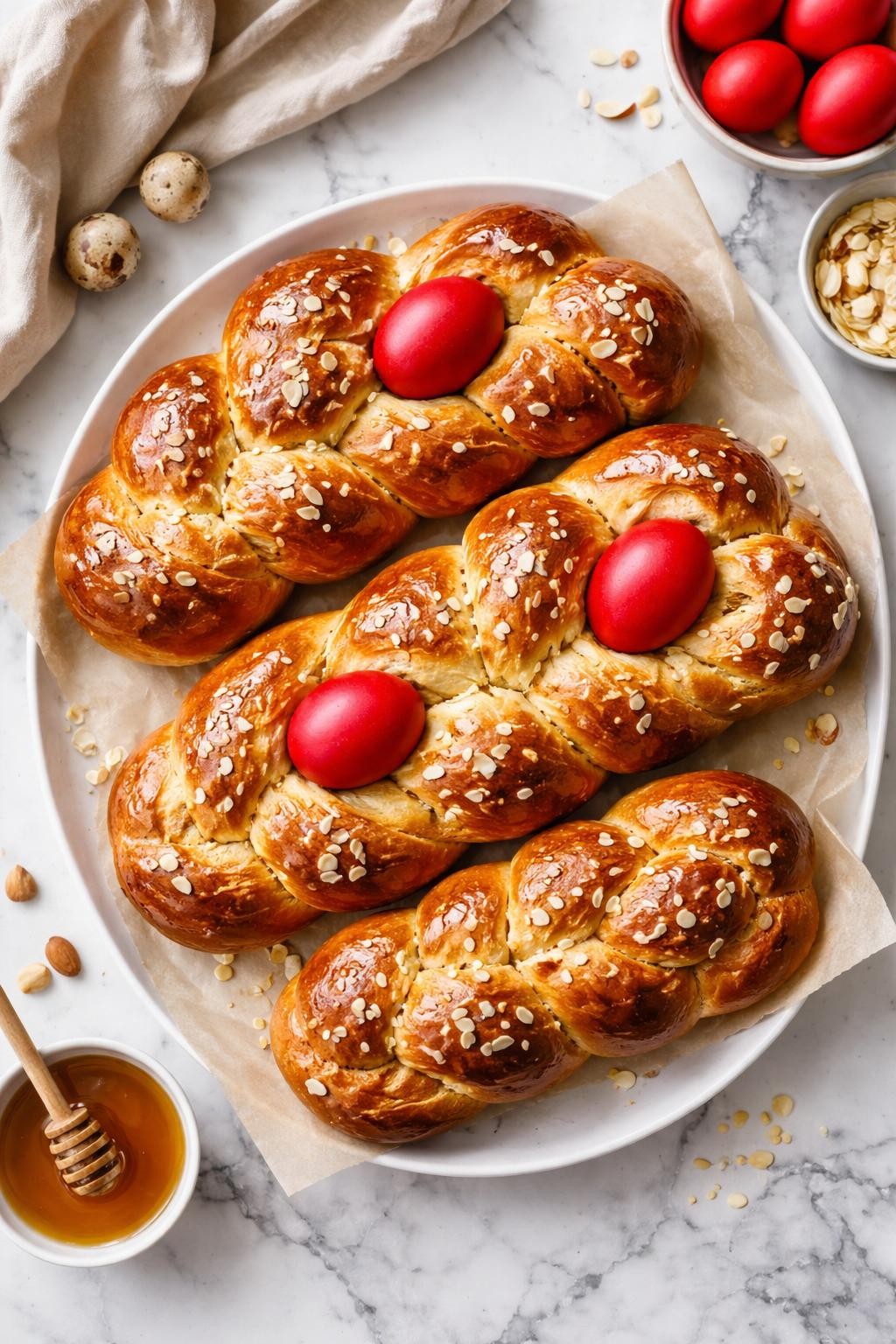
No Greek Easter is complete without tsoureki, the sweet, braided bread that fills homes with the warm, nostalgic scent of the holiday . Traditionally baked on Holy Thursday, this enriched bread is similar to brioche and often has a red-dyed egg pressed into the braid, symbolizing the blood of Christ . The distinctive flavor comes from mahlepi, an aromatic spice ground from cherry seeds.
Recipe Metadata:
Time to Make: 3 hours (includes rising time)
Servings: 2 large loaves
Ingredients:
- 1 kg (about 7-8 cups) all-purpose flour
- 2 packets (15g) dry yeast
- 310g (1½ cups) sugar
- 6 eggs
- 235ml (1 cup) warm milk
- 90g (6 tablespoons) melted butter
- 2 teaspoons mahlepi
- ½ teaspoon ground mastic (optional)
- 1 egg yolk beaten with water for brushing
- Slivered almonds for decoration
- 3-4 hard-boiled eggs dyed red
Recipe Steps:
- In a mixer, beat the eggs with sugar for 8 minutes until pale and fluffy.
- Add mahlepi and mastic, mix for 3 minutes.
- Add half the flour, then the warm milk and melted butter, mixing for 2 minutes.
- Add remaining flour and yeast, mix for 10 minutes until dough is smooth and elastic.
- Cover and let rise for 1 hour until doubled.
- Divide dough into 3 pieces, roll into long ropes, and braid together. Shape into a wreath or loaf.
- Place on a baking tray, cover, and let rise for 45 minutes.
- Brush with egg wash, sprinkle with almonds, and gently press red eggs into the braid.
- Bake at 160°C (320°F) for 30-40 minutes until golden brown .
2. Koulourakia (Easter Butter Biscuits)
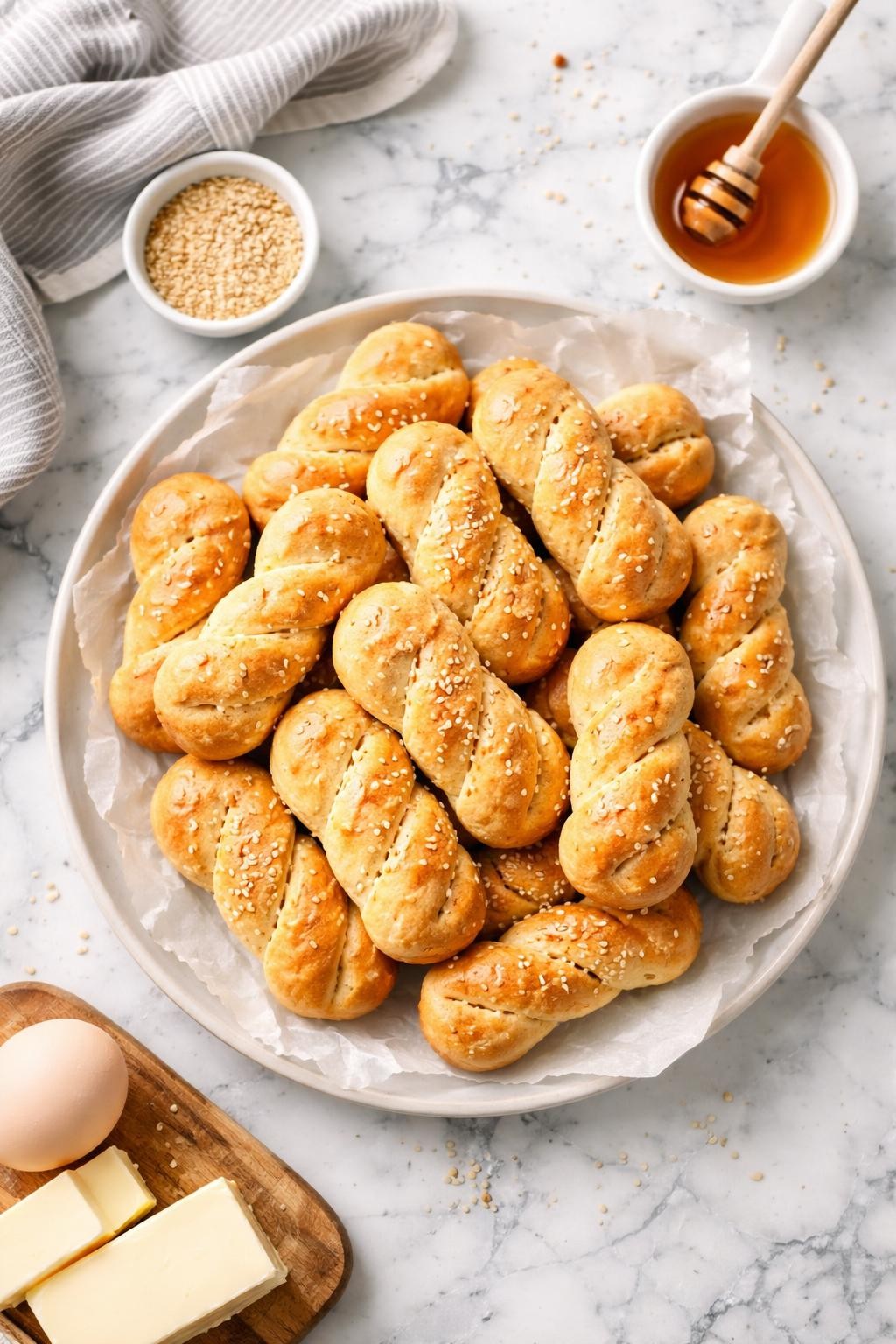
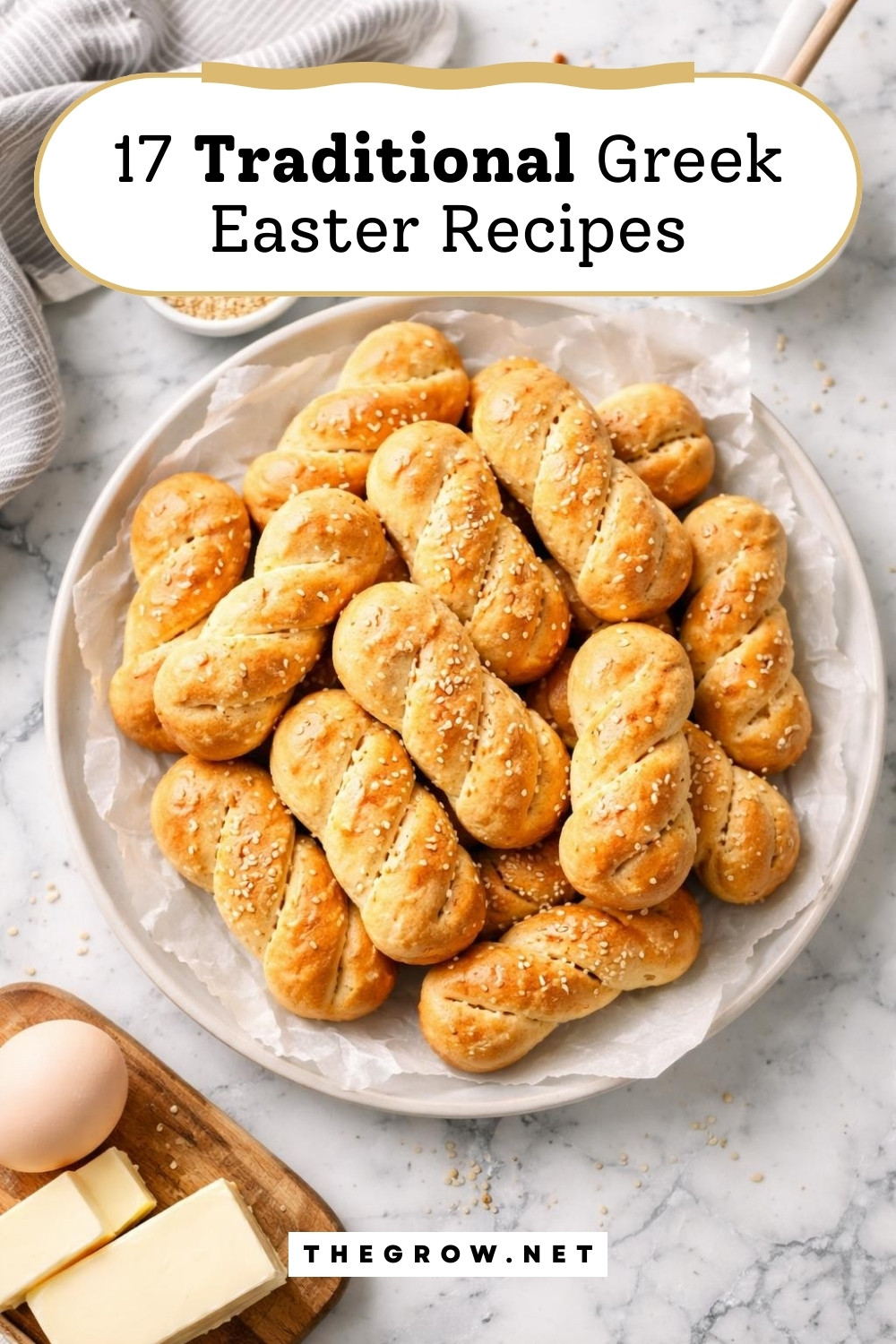
These buttery, sesame-topped cookies have been made for over 4,000 years, dating back to the Minoan civilization . Traditionally prepared on Holy Saturday for Easter Sunday, koulourakia are known for their distinctive shapes—coiled, braided, or formed into rings. They’re slightly fluffy inside, crispy outside, and perfect with morning coffee.
Recipe Metadata:
Time to Make: 45 minutes
Servings: 40-50 biscuits
Ingredients:
- 500g (4 cups) all-purpose flour
- 250g (1 cup) unsalted butter, softened
- 1 cup sugar
- 2 eggs
- 1 teaspoon vanilla extract
- 1 teaspoon baking powder
- 1 tablespoon milk
- 1 teaspoon aniseed (optional)
- Sesame seeds for sprinkling
- 1 egg beaten with water for egg wash
Recipe Steps:
- Beat butter and sugar together until light and fluffy.
- Add eggs, vanilla, and aniseed, beating well.
- Add half the flour and the milk, mixing to combine.
- Fold in remaining flour and baking powder until a soft, elastic dough forms.
- Preheat oven to 180°C (350°F) and line baking trays.
- Roll tablespoons of dough into logs and shape into rings, coils, or braids.
- Place on trays, brush with egg wash, and sprinkle with sesame seeds.
- Bake for 15-20 minutes until golden brown .
3. Red Easter Eggs (Kokkina Avga)
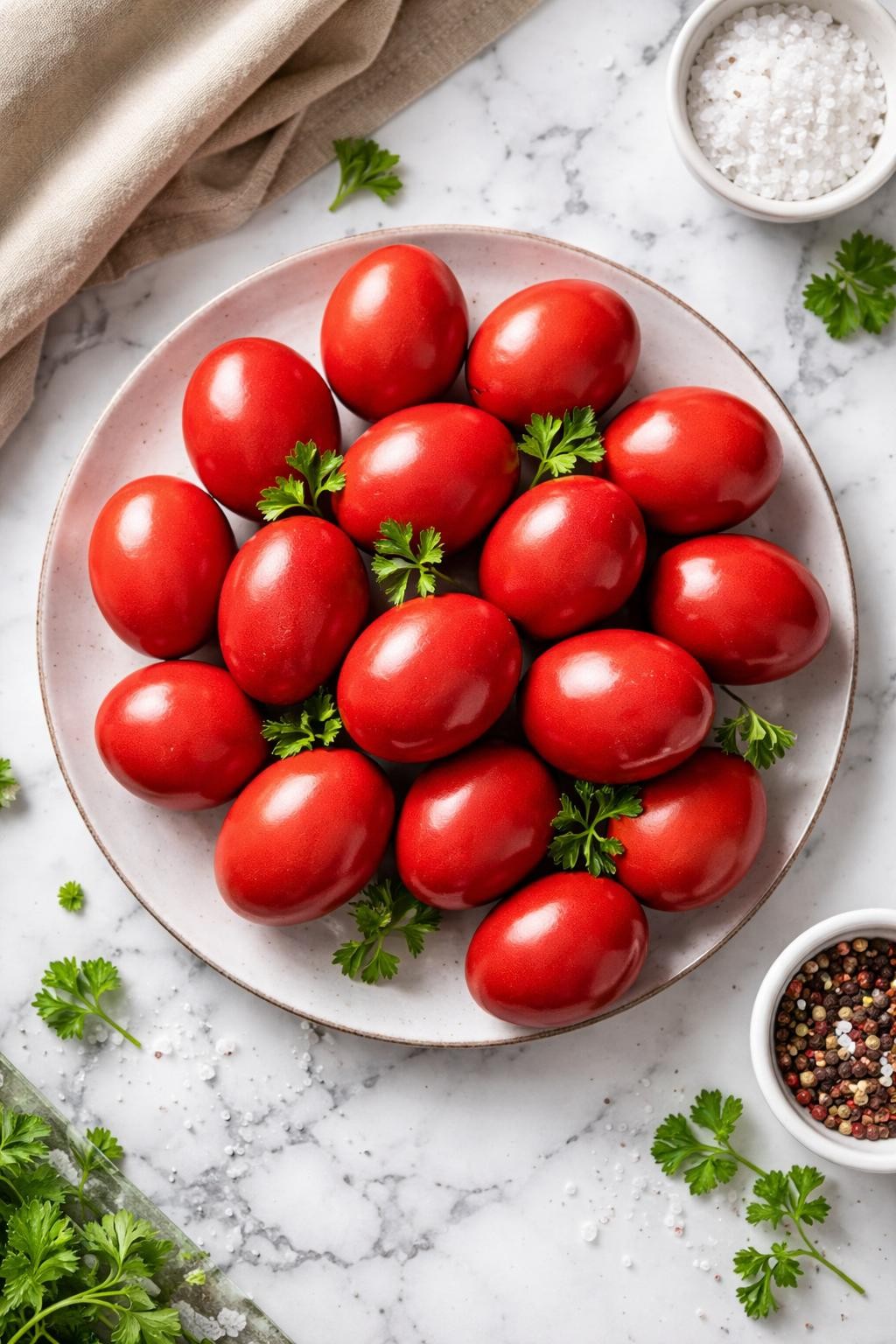
The tradition of dyeing eggs red on Holy Thursday is one of the oldest and most beloved Greek Easter customs . The red symbolizes the blood of Christ, and the egg itself represents new life and the Resurrection . These aren’t just decorations—they’re used in the tsougrisma cracking game and eaten to break the Lenten fast .
Recipe Metadata:
Time to Make: 30 minutes
Servings: 12 eggs
Ingredients:
- 12 large eggs (preferably white or light brown)
- Red Easter egg dye (available at Greek markets) or natural dyes like onion skins
- Water
- White vinegar
- Olive oil for shining (optional)
Recipe Steps:
- Hard-boil the eggs by placing them in a pot with cold water, bringing to a boil, and simmering for 10-12 minutes.
- Prepare the dye according to package instructions, typically mixing with water and vinegar.
- Carefully lower eggs into the dye using a spoon or wire holder.
- Let eggs sit in dye until the desired shade of red is achieved (usually 10-20 minutes).
- Remove and dry on paper towels or a wire rack.
- For a glossy finish, rub eggs with a small amount of olive oil.
- Store in the refrigerator until ready to use .
4. Magiritsa (Easter Soup)
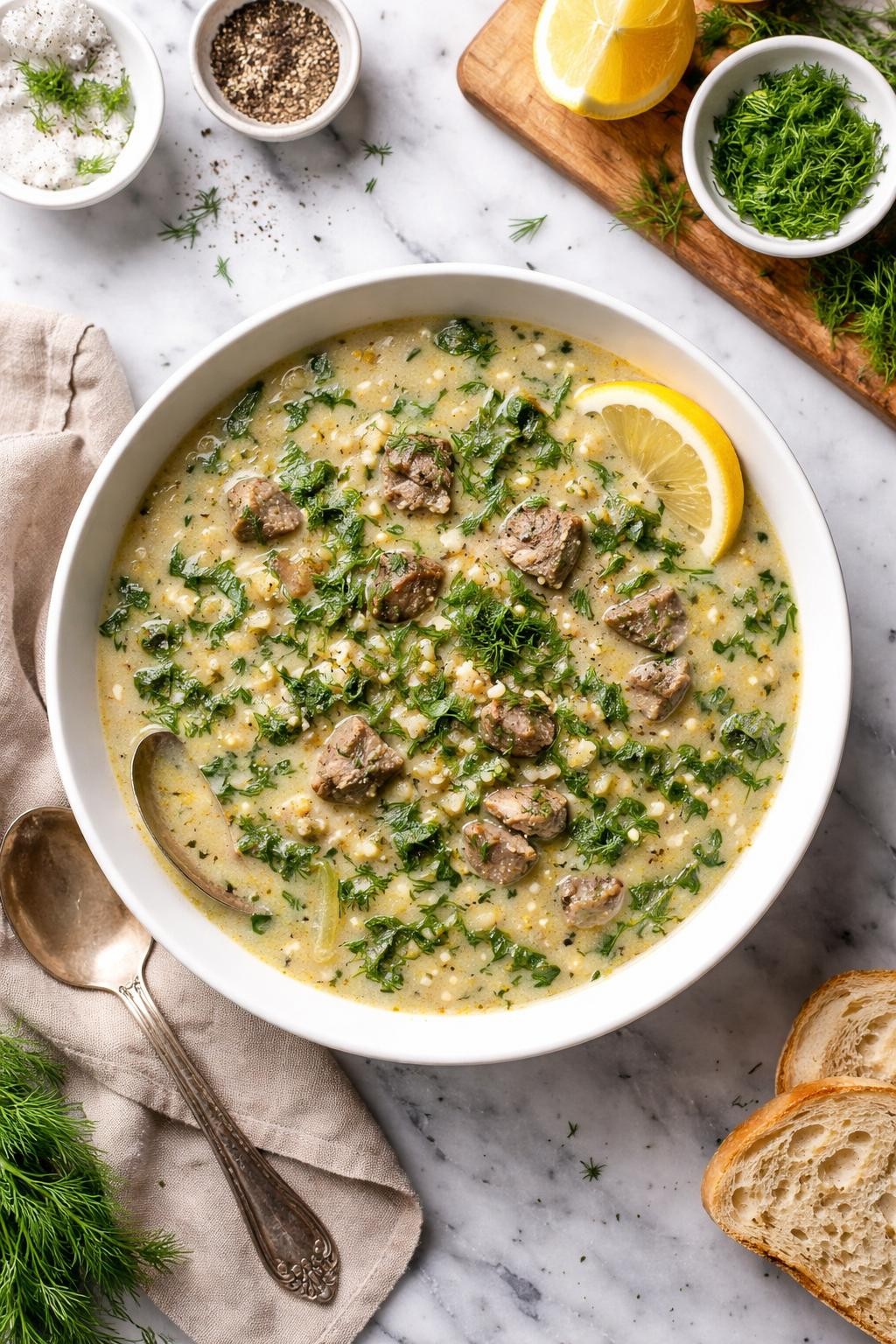
This traditional soup is eaten right after the midnight Resurrection service to break the 40-day Lenten fast . Made with lamb offal, fresh greens, and dill, then thickened with avgolemono (egg-lemon sauce), magiritsa is light enough for stomachs accustomed to fasting but rich in flavor. As Greeks say, “Either you adore it or you can’t stand looking at it”—but it’s undeniably the taste of Easter .
Recipe Metadata:
Time to Make: 1 hour 30 minutes
Servings: 8-10
Ingredients:
- 1 kg lamb liver and intestines (or use just liver)
- 1 large onion, finely chopped
- 5 stalks young garlic, chopped
- 1 head lettuce, romaine, or sorrel, chopped
- 1 bunch fresh dill, chopped
- ½ cup olive oil
- ½ cup rice
- Salt and pepper
- For avgolemono: 2 eggs, juice of 2 lemons
Recipe Steps:
- Boil lamb liver and intestines for 10-15 minutes, then chop into small cubes.
- In a large pot, heat olive oil and sauté the chopped onion until soft.
- Add chopped liver and cook for about 10 minutes.
- Add 2 cups water and cook for 10-15 minutes.
- Add young garlic, greens, and dill, cooking for 30 minutes, adding water as needed.
- Season with salt and pepper, add rice, and cook for another 15 minutes.
- Remove from heat and let cool slightly.
- For avgolemono: beat egg whites until frothy, add yolks and lemon juice, then gradually whisk in ladles of warm soup.
- Pour the mixture back into the pot and stir gently. Reheat without boiling.
- Serve warm as the first Easter meal .
5. Roasted Lamb on the Spit (Arni sti Souvla)
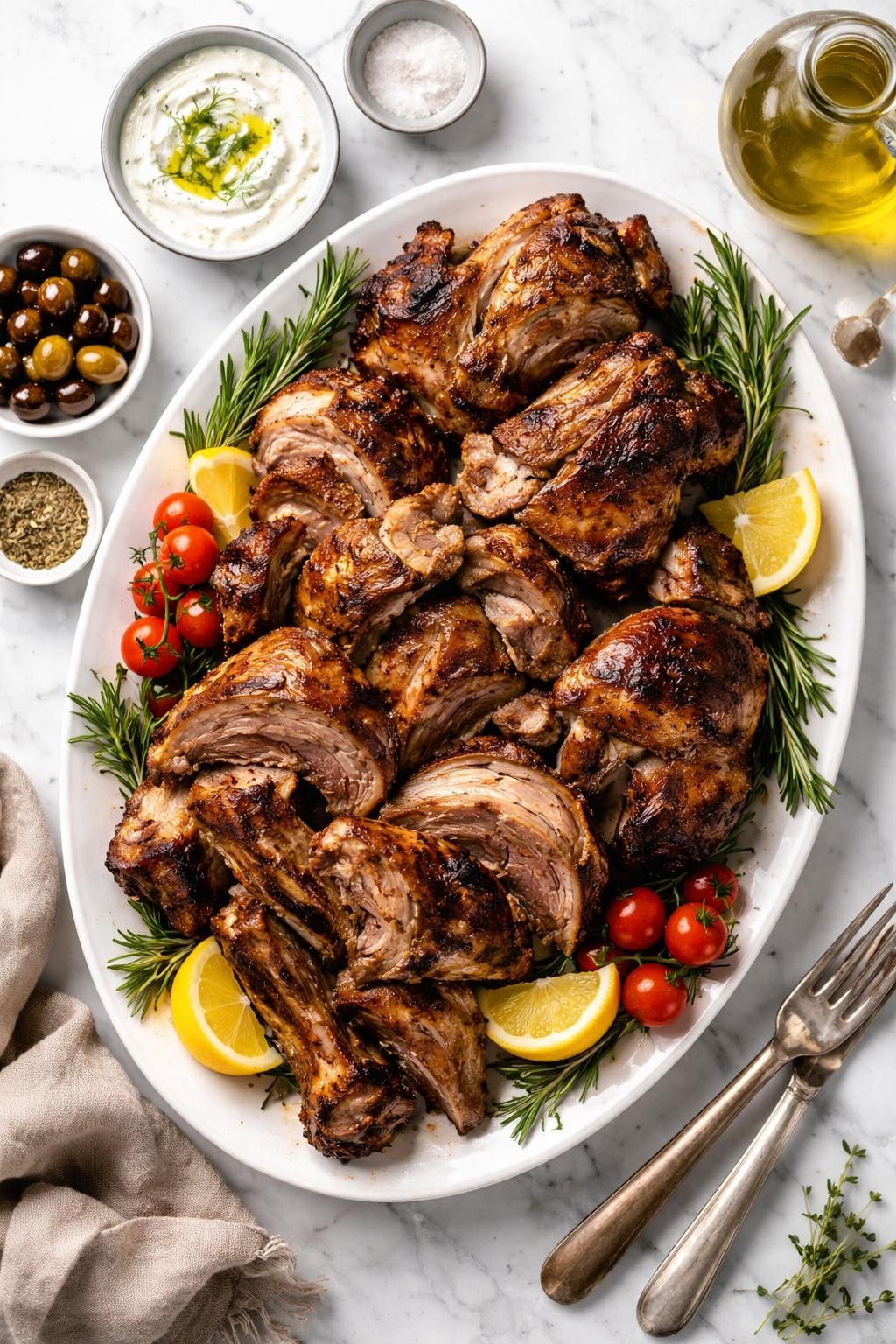
The centerpiece of Greek Easter Sunday is whole lamb roasted on a spit, symbolizing the Lamb of God . Families gather around the fire from early morning, turning the spit slowly while enjoying appetizers and drinks. The meat becomes incredibly tender with crispy, flavorful skin—a true celebration of spring and resurrection .
Recipe Metadata:
Time to Make: 4-5 hours
Servings: 15-20
Ingredients:
- 1 whole lamb (about 15-20 kg), cleaned and prepared
- Salt and coarse black pepper
- Oregano
- Garlic cloves, sliced
- Lemon juice
- Olive oil
Recipe Steps:
- The night before, make small incisions all over the lamb and insert garlic slices.
- Rub the entire lamb with lemon juice, olive oil, salt, pepper, and oregano.
- Secure the lamb on the spit, making sure it’s balanced.
- Set up over a charcoal fire, placing a drip pan underneath.
- Roast slowly, turning constantly, for 4-5 hours.
- Baste occasionally with a mixture of lemon juice, olive oil, and herbs.
- The lamb is done when the meat is falling-off-the-bone tender and the skin is crispy .
6. Kokoretsi
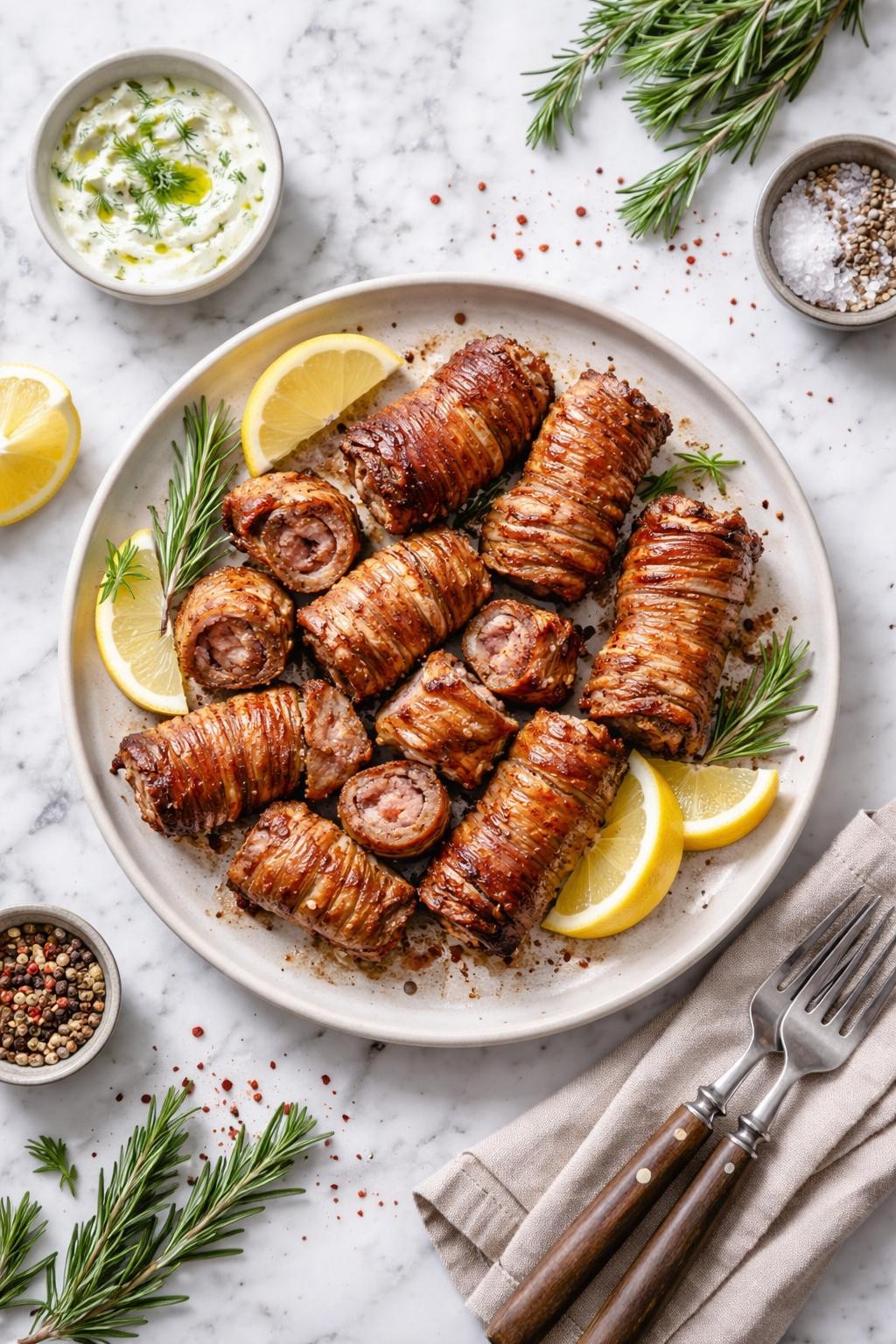
For adventurous eaters, kokoretsi is a Greek Easter delicacy made by wrapping seasoned lamb or goat offal (liver, heart, lungs, sweetbreads) in cleaned intestines and grilling them on a spit . It’s crispy on the outside, tender and flavorful inside, and considered a prized part of the Easter feast.
Recipe Metadata:
Time to Make: 3 hours
Servings: 10-12
Ingredients:
- Lamb offal (liver, heart, lungs, sweetbreads), about 2 kg
- Lamb intestines, thoroughly cleaned
- Oregano
- Salt and pepper
- Olive oil
- Lemon juice
Recipe Steps:
- Soak the intestines in cold water with lemon juice for several hours, changing water multiple times.
- Chop the offal into medium pieces and season generously with oregano, salt, and pepper.
- Thread the seasoned offal onto a long skewer, packing tightly.
- Carefully wrap the intestines around the offal, covering it completely in a spiral pattern.
- Secure the ends and brush with olive oil.
- Roast on a spit alongside the lamb, turning constantly for 2-3 hours until golden and crispy .
7. Oven-Roasted Lamb with Potatoes (Arni sto Fourno)
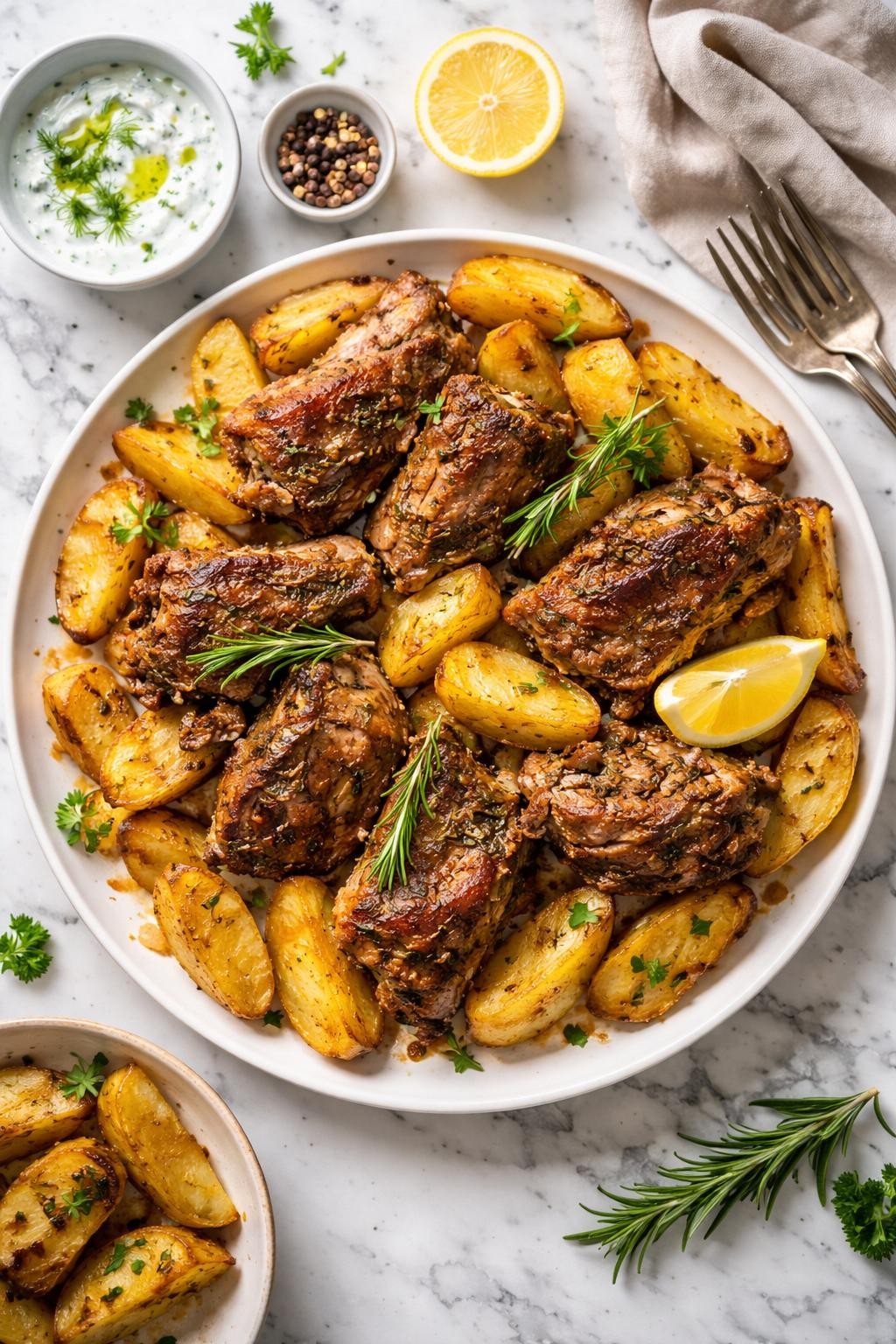
Not everyone has a spit, and oven-roasted lamb is equally traditional and delicious. This version features lamb shoulder or leg roasted with potatoes that soak up all the flavorful juices. The combination of garlic, lemon, and oregano is unmistakably Greek.
Recipe Metadata:
Time to Make: 2 hours 30 minutes
Servings: 8-10
Ingredients:
- 2-3 kg lamb shoulder or leg, bone-in
- 6-8 potatoes, peeled and quartered
- 6-8 garlic cloves, sliced
- 1/2 cup olive oil
- 1/2 cup lemon juice
- 1 cup water or broth
- 2 tablespoons dried oregano
- Salt and pepper
Recipe Steps:
- Preheat oven to 200°C (400°F).
- Make small incisions in the lamb and insert garlic slices.
- Rub lamb all over with salt, pepper, and half the oregano.
- Place lamb in a large roasting pan. Arrange potatoes around it.
- Mix olive oil, lemon juice, water, and remaining oregano. Pour over lamb and potatoes.
- Cover with foil and roast for 1 hour.
- Remove foil, baste with pan juices, and continue roasting for another hour until lamb is tender and potatoes are golden.
- Let rest 15 minutes before carving .
8. Tzatziki
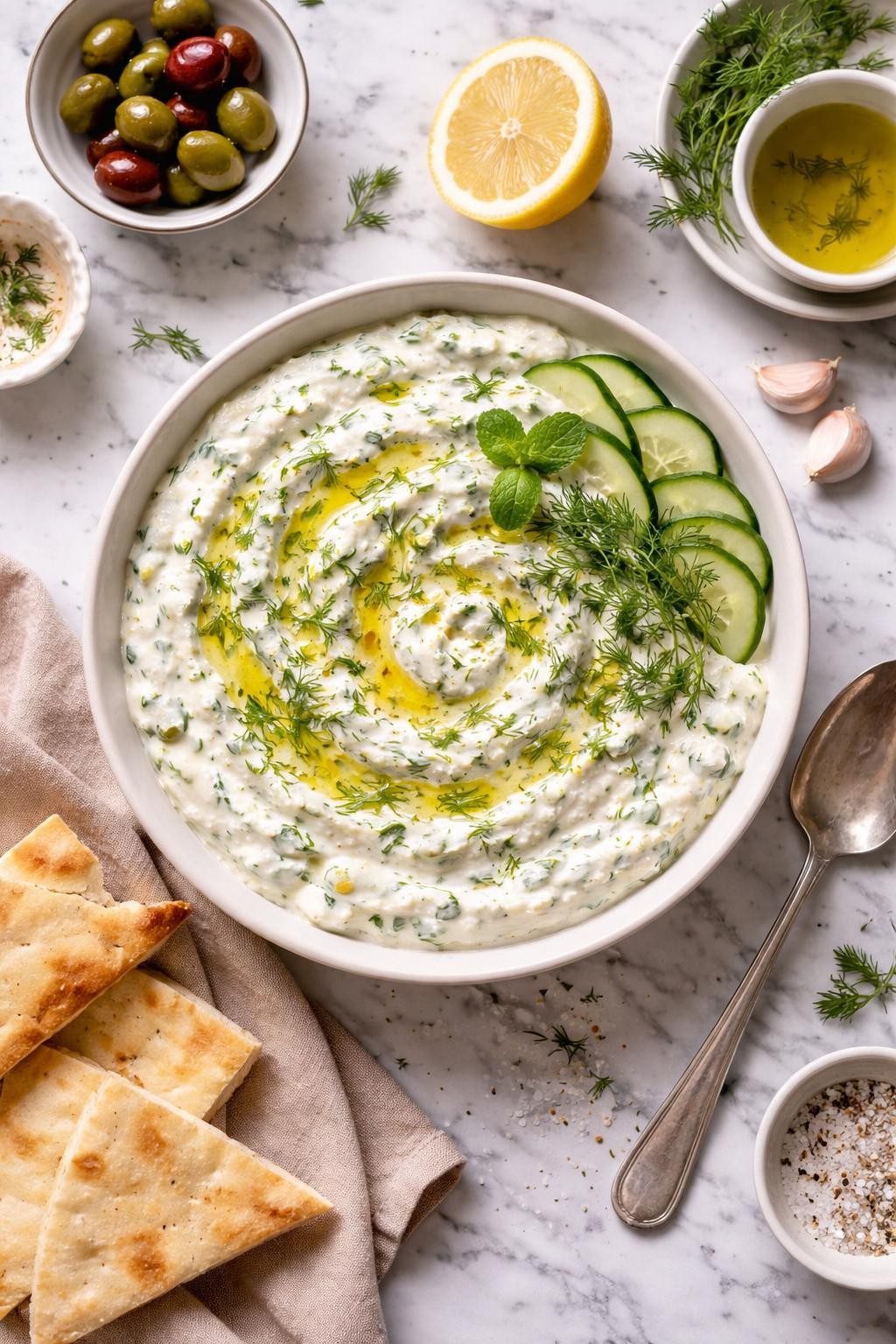
This creamy, refreshing cucumber-yogurt dip is essential on the Easter table, served alongside the roasted lamb. The coolness of tzatziki balances the richness of the meat perfectly, and it’s also wonderful spread on bread or tucked into pita.
Recipe Metadata:
Time to Make: 15 minutes
Servings: 6-8
Ingredients:
- 500g Greek yogurt (full-fat, strained)
- 1 cucumber, grated
- 3-4 garlic cloves, minced
- 2 tablespoons olive oil
- 1 tablespoon white wine vinegar or lemon juice
- 1 tablespoon fresh dill, chopped
- Salt to taste
Recipe Steps:
- Grate the cucumber and place in a clean kitchen towel. Squeeze out as much liquid as possible.
- In a bowl, combine Greek yogurt, squeezed cucumber, minced garlic, olive oil, vinegar, and dill.
- Mix well and season with salt.
- Refrigerate for at least 1 hour before serving to allow flavors to meld.
- Drizzle with a little olive oil before serving .
9. Patates Fournou (Oven-Roasted Potatoes)
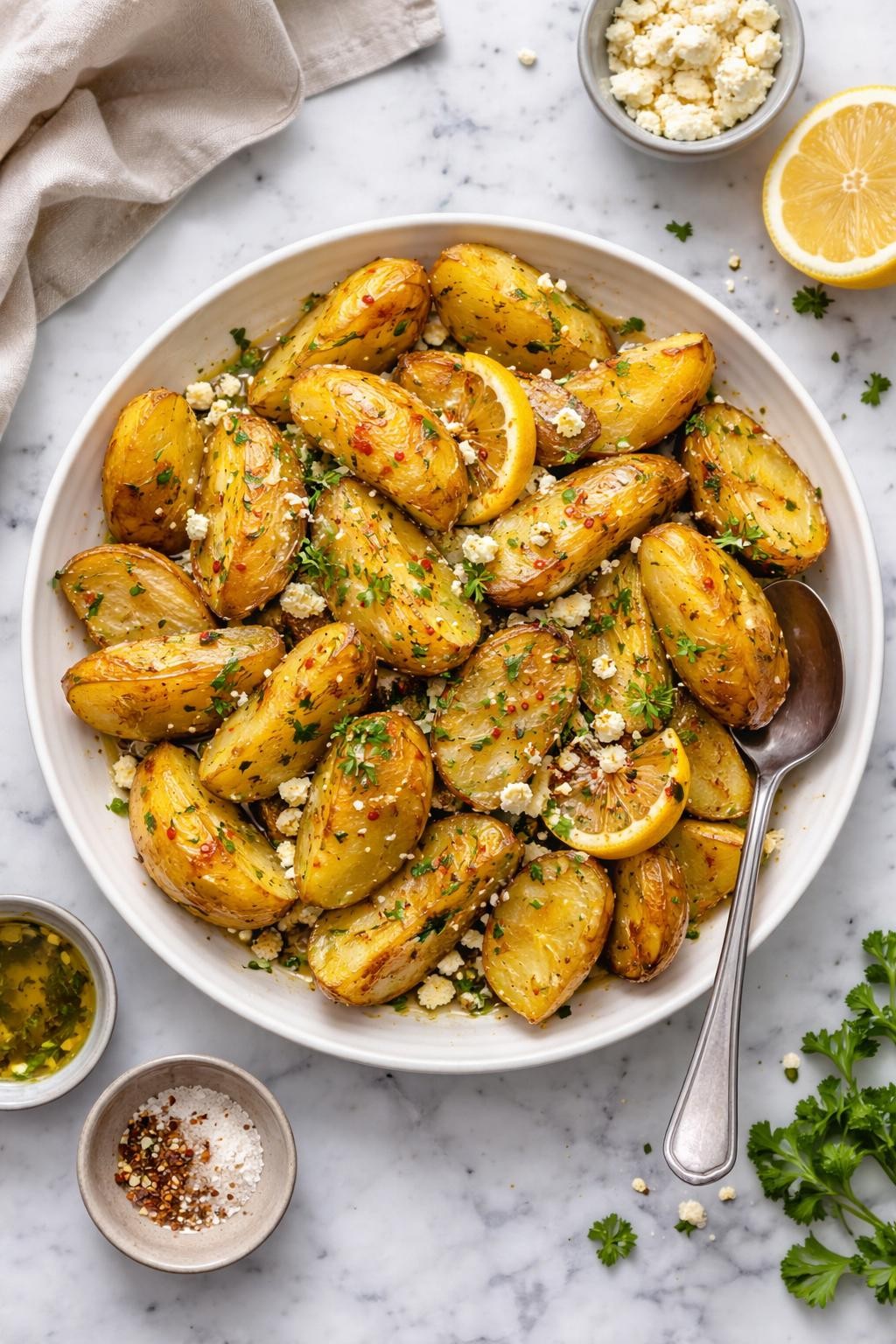
These lemony, oregano-infused potatoes are the classic side dish for Greek Easter lamb. They’re crispy on the outside, fluffy inside, and soak up all the delicious pan juices from the roasting meat . No Greek Easter table is complete without them.
Recipe Metadata:
Time to Make: 1 hour 15 minutes
Servings: 8
Ingredients:
- 2 kg potatoes, peeled and cut into wedges
- 1/2 cup olive oil
- 1/2 cup lemon juice
- 1 cup water or chicken broth
- 2 tablespoons dried oregano
- 4-6 garlic cloves, whole
- Salt and pepper
Recipe Steps:
- Preheat oven to 200°C (400°F).
- Place potato wedges in a large roasting pan.
- Mix olive oil, lemon juice, water, oregano, salt, and pepper. Pour over potatoes.
- Add whole garlic cloves.
- Roast for about 1 hour, turning occasionally, until potatoes are golden and tender.
- If roasting with lamb, add potatoes to the pan during the last hour of cooking .
10. Spanakotyropita (Spinach and Cheese Pie)
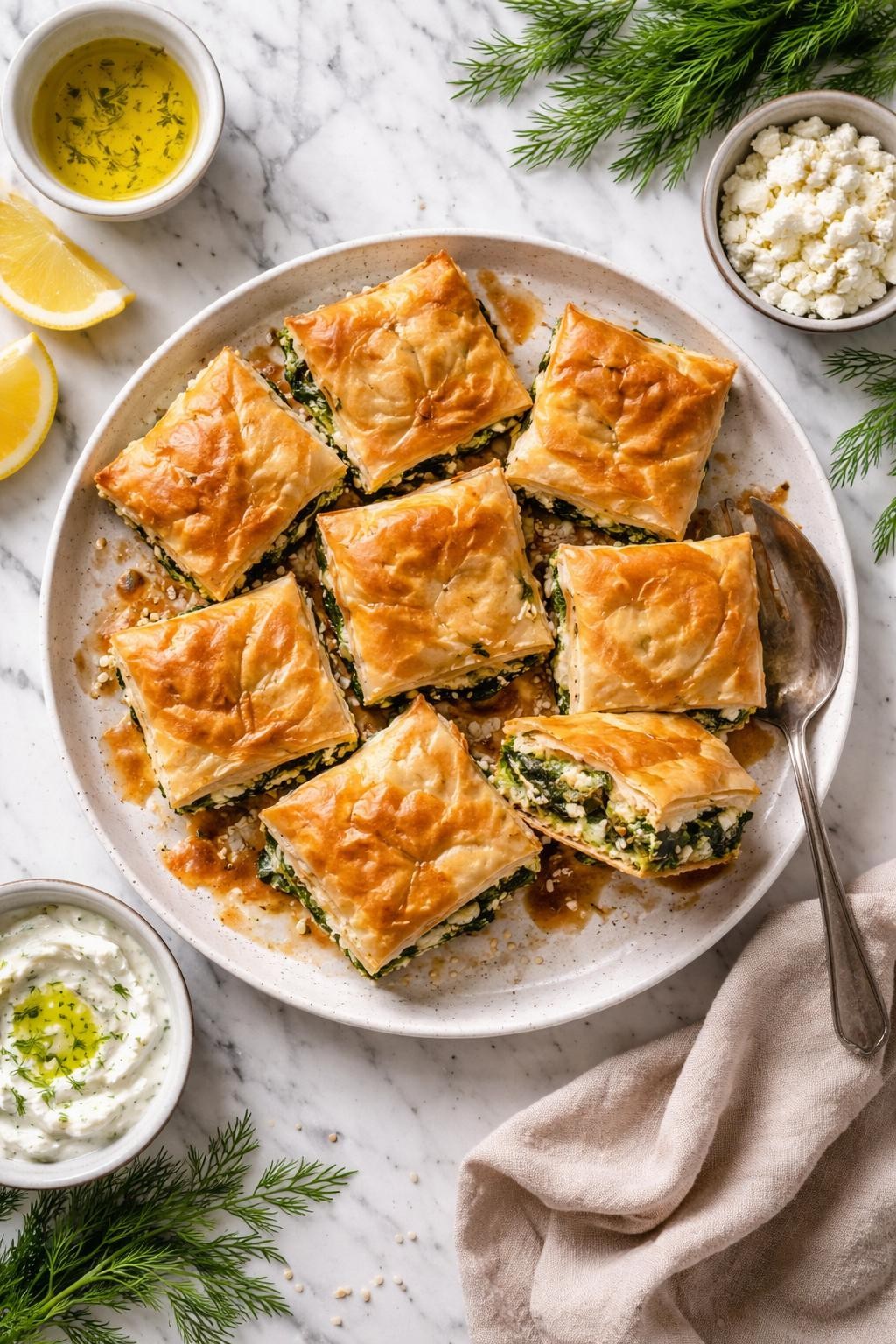
This flaky phyllo pie filled with spinach and feta is often served as part of the Easter feast or as an appetizer while waiting for the lamb to cook . It’s savory, satisfying, and showcases the wonderful cheeses of Greece.
Recipe Metadata:
Time to Make: 1 hour
Servings: 10-12
Ingredients:
- 1 package phyllo dough, thawed
- 500g fresh spinach, chopped
- 400g feta cheese, crumbled
- 250g ricotta or cottage cheese
- 1 onion, finely chopped
- 3 eggs, lightly beaten
- 1/2 cup olive oil
- 1/4 cup fresh dill, chopped
- Salt, pepper, and nutmeg
- Melted butter for brushing
Recipe Steps:
- Preheat oven to 180°C (350°F).
- Sauté onion in olive oil until soft. Add spinach and cook until wilted. Drain excess liquid.
- In a bowl, mix spinach mixture with feta, ricotta, eggs, dill, salt, pepper, and nutmeg.
- Brush a baking pan with butter. Layer half the phyllo sheets, brushing each with butter.
- Spread filling evenly over phyllo.
- Top with remaining phyllo sheets, brushing each with butter.
- Score the top layers into serving pieces.
- Bake for 40-45 minutes until golden and crispy .
11. Flaounes (Cypriot Easter Cheese Pies)
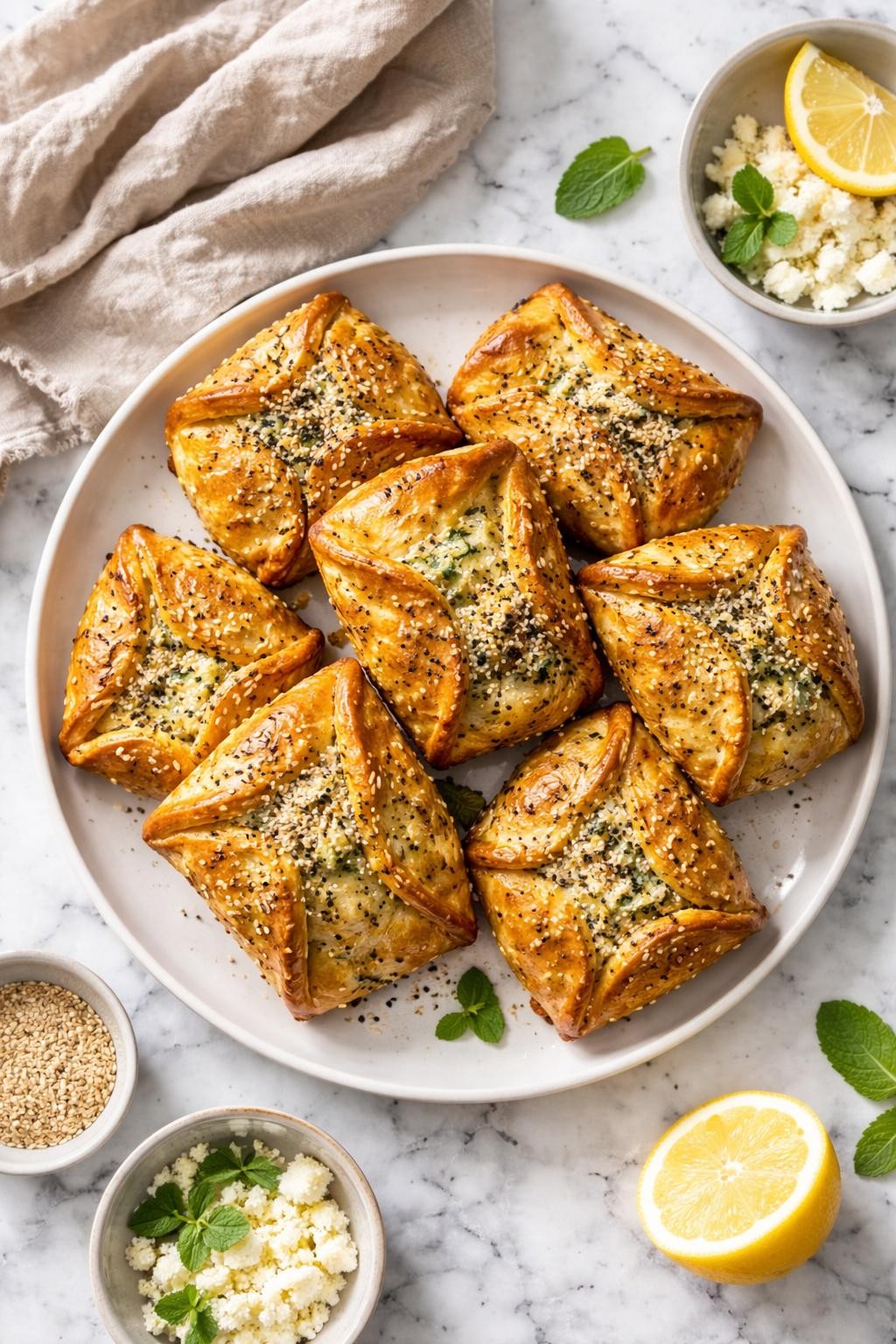
Though originally from Cyprus, these savory cheese pies are beloved throughout Greece for Easter. Made on Holy Thursday, flaounes contain a special cheese that doesn’t melt easily, along with eggs, raisins, and mint—all foods that were forbidden during Lent . They freeze well, so many families make big batches.
Recipe Metadata:
Time to Make: 1 hour 30 minutes
Servings: 15-20 pies
Ingredients:
- For dough: 4 cups flour, 1 packet yeast, 1 cup warm milk, 1/2 cup sugar, 1/2 cup olive oil, 1 egg
- For filling: 500g flaouna cheese or halloumi, grated, 1 cup grated mizithra, 1/2 cup raisins, 2 eggs, 2 tablespoons fresh mint, chopped, 1 teaspoon mahlepi
- Sesame seeds for topping
Recipe Steps:
- Prepare dough: dissolve yeast in warm milk with sugar. Add flour, olive oil, and egg, kneading until smooth. Let rise 1 hour.
- Mix filling ingredients together.
- Roll dough into circles. Place filling in center, fold edges over to form square or triangle parcels, leaving center open.
- Place on baking trays, brush with egg wash, and sprinkle with sesame seeds.
- Bake at 180°C (350°F) for 25-30 minutes until golden .
12. Kaltsounia (Cretan Easter Cheese Pies)
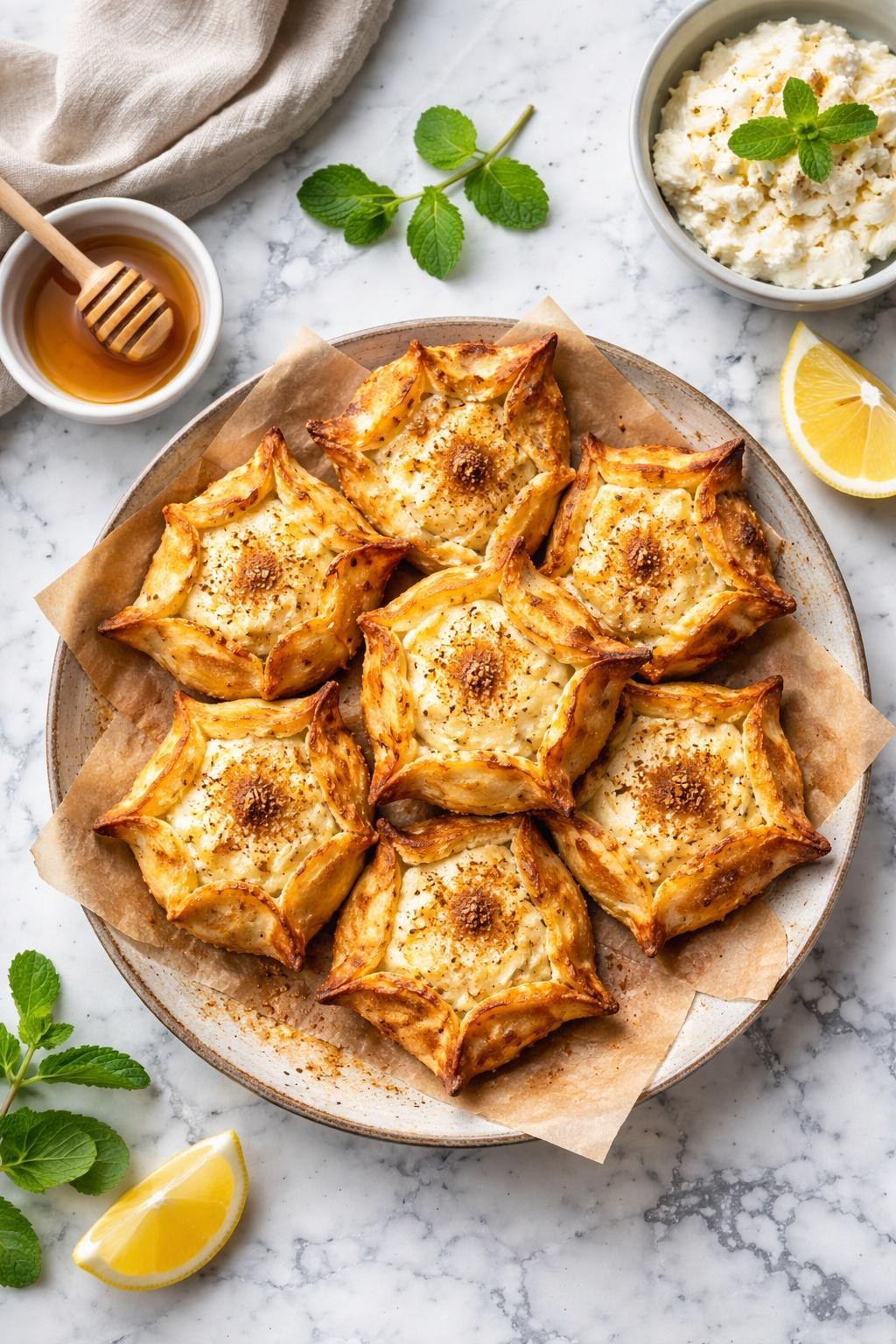
A specialty of Crete, kaltsounia (also called lychnarakia) are delicious little pastries made with soft dough and filled with mizithra cheese and cinnamon . Though traditionally an Easter treat, they’re so popular you can find them year-round in Cretan bakeries.
Recipe Metadata:
Time to Make: 1 hour
Servings: 20-25 pies
Ingredients:
- For dough: 500g flour, 1 teaspoon salt, 1/2 cup olive oil, 1 cup warm water
- For filling: 500g fresh mizithra cheese (or ricotta), 2 eggs, 1 teaspoon cinnamon, 2 tablespoons sugar, 1 tablespoon honey
Recipe Steps:
- Mix flour and salt. Add olive oil and enough water to form a soft dough. Knead well.
- For filling, mix cheese, eggs, cinnamon, sugar, and honey.
- Roll dough thinly and cut into circles.
- Place a spoonful of filling in the center, fold over, and crimp edges to seal.
- Place on baking tray and brush with egg wash.
- Bake at 180°C (350°F) for 25-30 minutes until golden .
13. Mayiritsa Avgolemono (Egg-Lemon Soup)
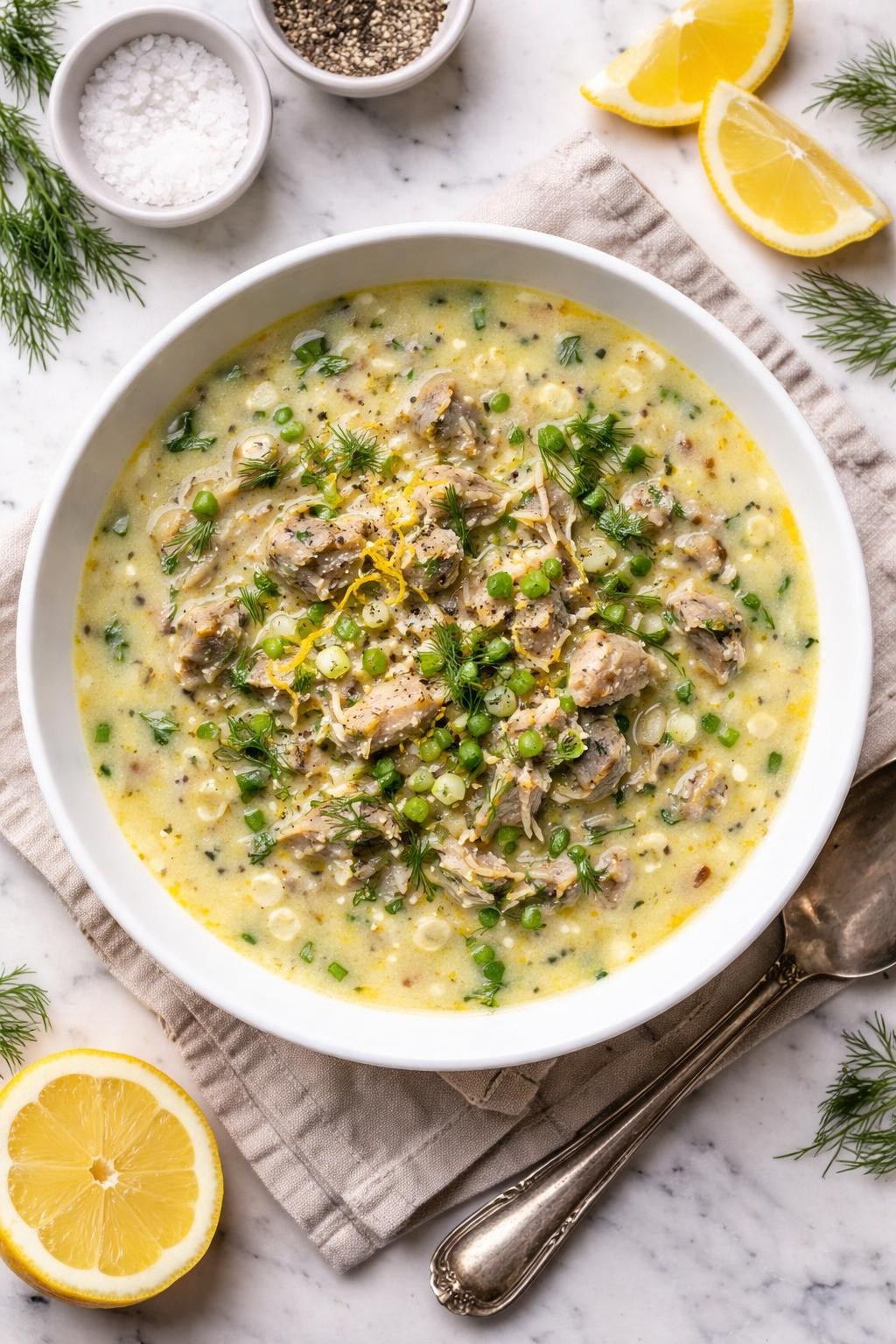
While magiritsa specifically refers to the Easter soup with offal, avgolemono is the classic Greek egg-lemon sauce that’s also served as a soup on its own. This velvety, comforting soup is made with chicken or lamb broth, rice, and the signature egg-lemon mixture.
Recipe Metadata:
Time to Make: 45 minutes
Servings: 6
Ingredients:
- 8 cups chicken or lamb broth
- 1/2 cup rice or orzo
- 3 eggs
- Juice of 2 lemons
- Salt and pepper
Recipe Steps:
- Bring broth to a boil, add rice, and cook until tender (about 20 minutes).
- In a separate bowl, beat eggs until frothy. Gradually add lemon juice while beating.
- Slowly ladle hot broth into the egg mixture, whisking constantly to temper the eggs.
- Pour the mixture back into the pot and stir well.
- Heat gently, stirring constantly, until soup thickens slightly. Do NOT boil.
- Serve immediately with pepper and fresh herbs .
14. Greek Salad (Horiatiki)
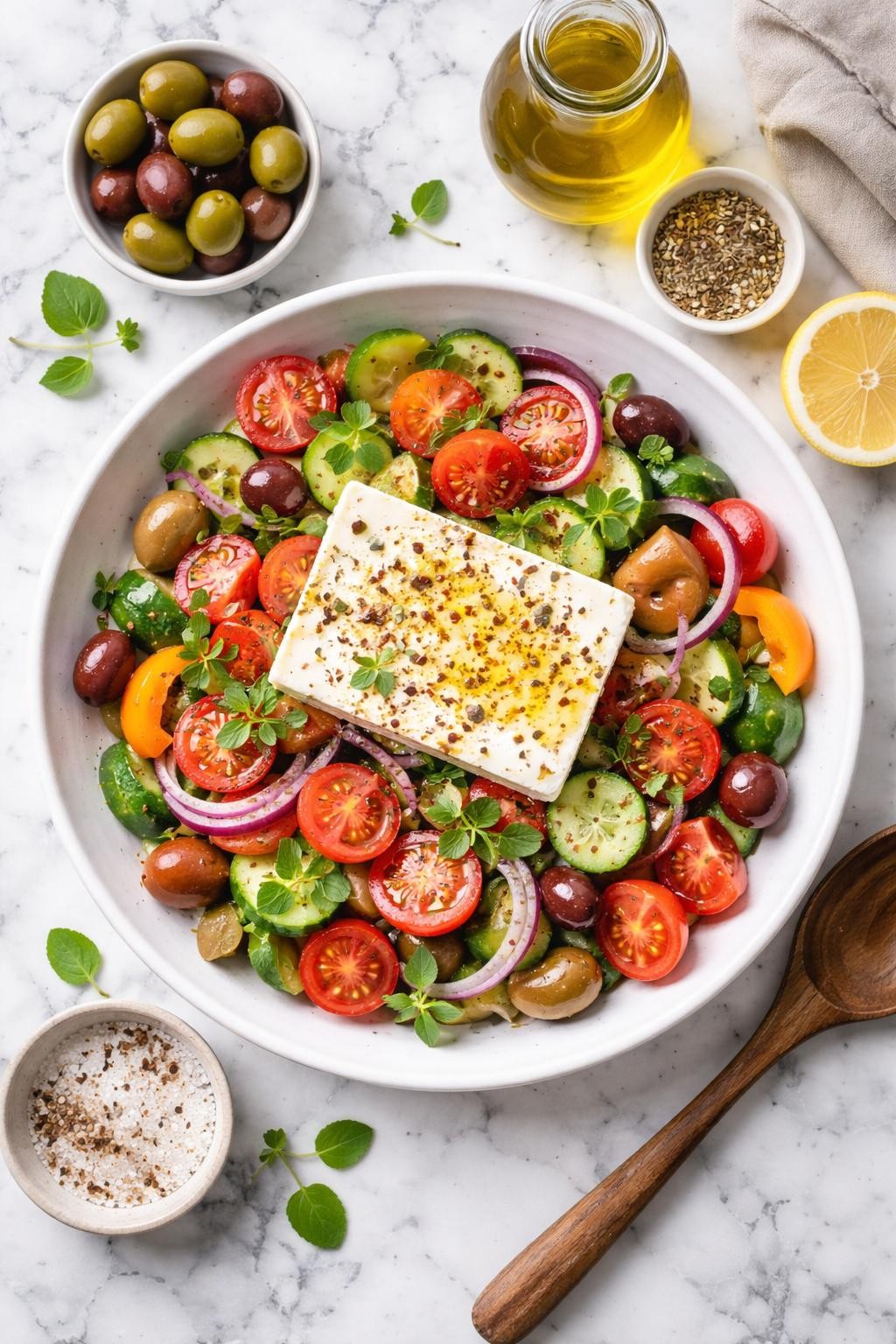
A simple, fresh Greek salad is the perfect accompaniment to rich Easter meats. With ripe tomatoes, crisp cucumber, red onion, olives, and a slab of feta on top, it’s dressed simply with olive oil and oregano—letting the ingredients shine.
Recipe Metadata:
Time to Make: 15 minutes
Servings: 8
Ingredients:
- 5 ripe tomatoes, cut into wedges
- 1 cucumber, sliced
- 1 red onion, thinly sliced
- 1 green bell pepper, sliced (optional)
- 200g feta cheese, in one block
- 1 cup Kalamata olives
- 1/2 cup extra virgin olive oil
- 1 teaspoon dried oregano
- Salt (use sparingly—feta is salty)
Recipe Steps:
- In a large bowl, combine tomatoes, cucumber, onion, and pepper.
- Place the block of feta on top of the vegetables.
- Scatter olives around.
- Drizzle generously with olive oil.
- Sprinkle with oregano and a tiny bit of salt.
- Do not toss—serve as is, letting everyone take what they want .
15. Tyrokafteri (Spicy Feta Dip)
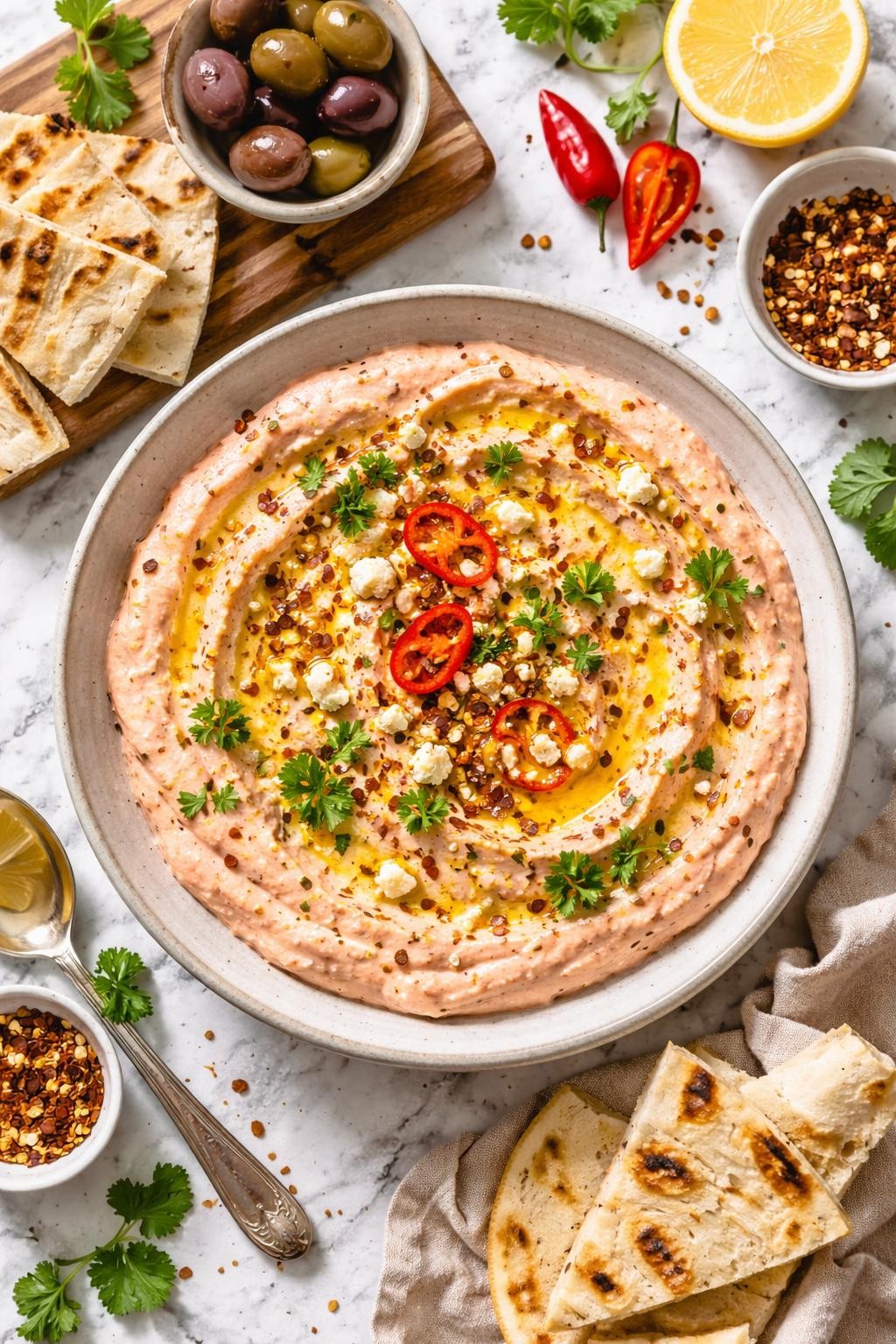
This creamy, spicy cheese dip is a favorite meze on the Easter table. Made with feta, yogurt or cream cheese, and hot peppers, it’s perfect for spreading on bread or pairing with crispy vegetables while waiting for the lamb.
Recipe Metadata:
Time to Make: 10 minutes
Servings: 6
Ingredients:
- 400g feta cheese
- 1-2 red hot peppers (or 1 roasted red pepper + cayenne)
- 200g Greek yogurt or cream cheese
- 2 tablespoons olive oil
- 1 teaspoon red wine vinegar
Recipe Steps:
- Crumble feta into a food processor.
- Add peppers, yogurt, olive oil, and vinegar.
- Blend until smooth and creamy.
- Taste and adjust seasoning (feta is salty, so additional salt probably isn’t needed).
- Refrigerate until serving. Drizzle with olive oil before serving.
16. Galaktoboureko (Custard Phyllo Dessert)
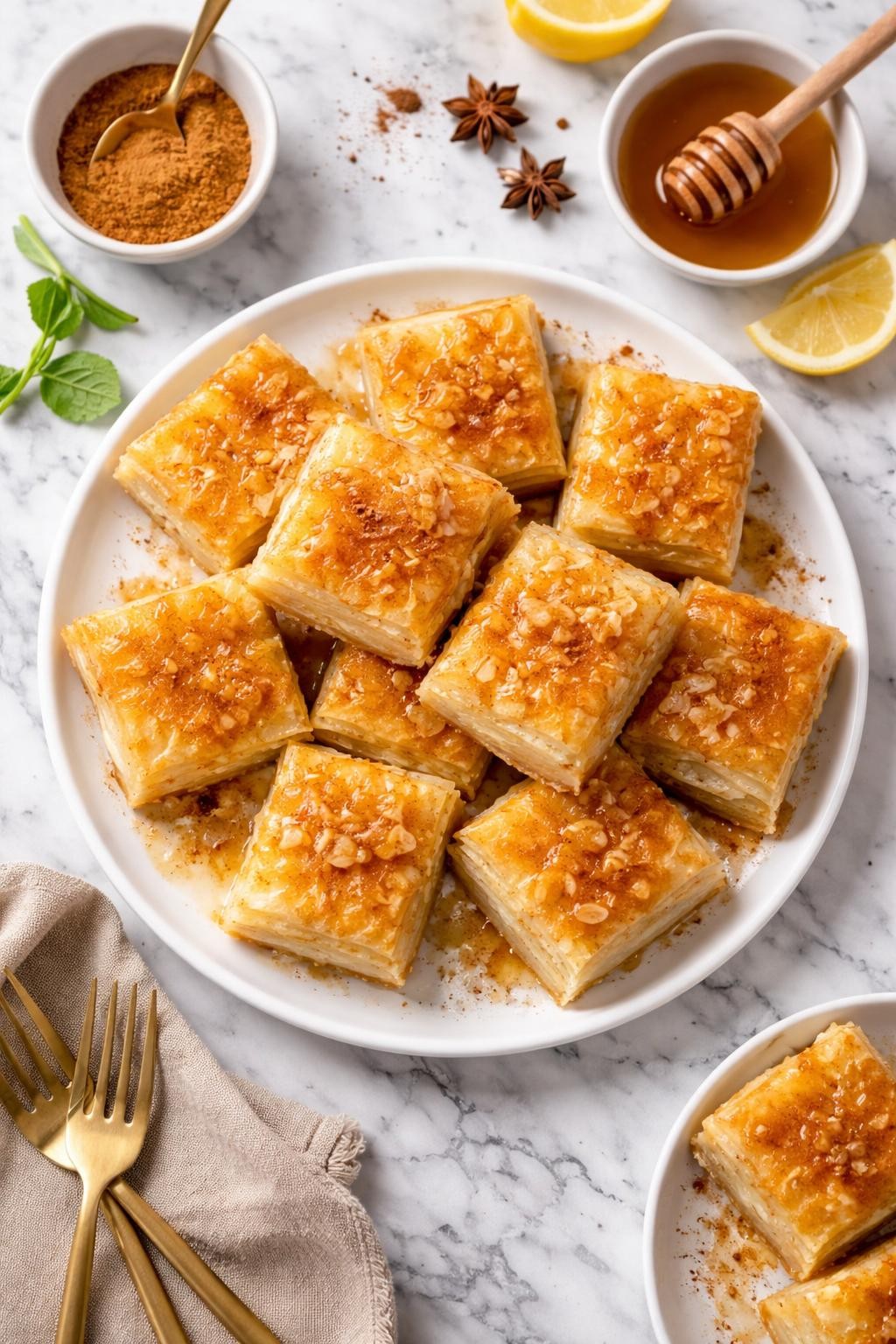
This heavenly dessert features a silky semolina custard wrapped in crisp, buttery phyllo and soaked in a fragrant lemon-honey syrup. It’s a showstopper that’s often made for special occasions like Easter.
Recipe Metadata:
Time to Make: 1 hour 30 minutes
Servings: 12
Ingredients:
- For custard: 1 liter milk, 200g semolina, 200g sugar, 4 eggs, 1 teaspoon vanilla, 100g butter
- For phyllo: 1 package phyllo dough, 200g melted butter for brushing
- For syrup: 2 cups sugar, 1½ cups water, 1 cinnamon stick, 1 lemon peel, 1 tablespoon honey
Recipe Steps:
- Make syrup first: boil sugar, water, cinnamon, and lemon peel for 10 minutes. Add honey, cool completely.
- For custard: heat milk. In a separate pan, whisk semolina and sugar, gradually add hot milk. Cook until thick.
- Remove from heat, whisk in eggs one at a time, then butter and vanilla.
- Butter a baking pan. Layer half the phyllo, brushing each sheet with butter.
- Pour custard over phyllo. Top with remaining phyllo, buttering each sheet.
- Score top layers into serving pieces.
- Bake at 180°C (350°F) for 40-45 minutes until golden.
- Pour cold syrup over hot pastry. Let absorb completely before serving.
17. Diples (Honey-Fried Pastry)
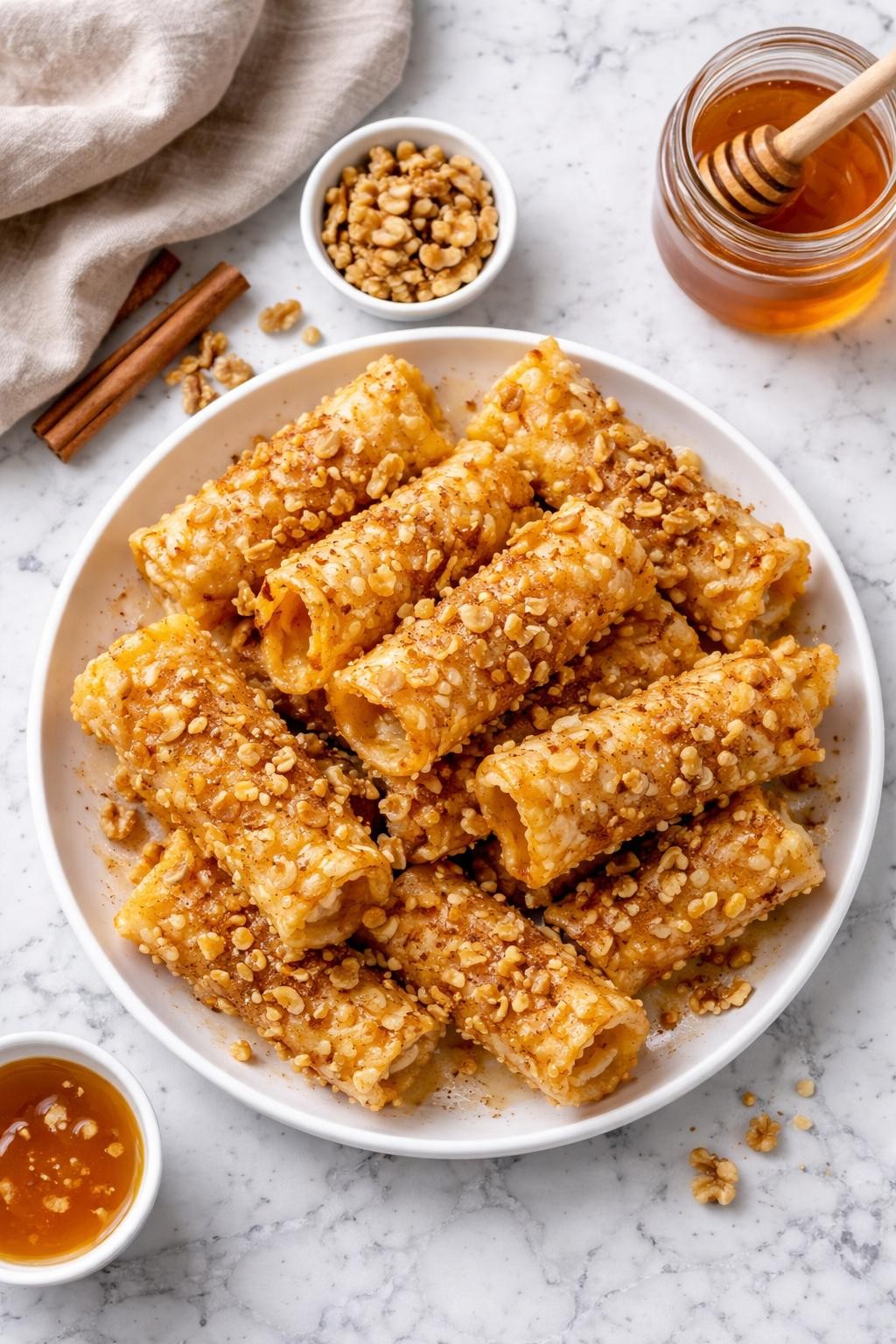
These thin sheets of fried dough, folded or rolled, then drenched in honey and sprinkled with walnuts and cinnamon, are a traditional Greek dessert often served at weddings and celebrations—including Easter. They’re time-consuming but absolutely worth the effort.
Recipe Metadata:
Time to Make: 1 hour 30 minutes
Servings: 20-25 pieces
Ingredients:
- For dough: 4 cups flour, 4 eggs, 2 tablespoons olive oil, 2 tablespoons brandy or ouzo, 1 teaspoon lemon zest, 1/2 teaspoon salt
- For syrup: 2 cups honey, 1 cup sugar, 1 cup water, 1 cinnamon stick
- For topping: chopped walnuts, cinnamon
Recipe Steps:
- Make dough: mix all ingredients, knead until smooth. Cover and rest 30 minutes.
- Roll dough paper-thin, cut into 3×5 inch rectangles.
- Heat oil for frying. Fry each piece quickly until puffed and golden.
- Drain on paper towels. While still warm, fold into rolls or triangles.
- Make syrup: boil honey, sugar, water, and cinnamon for 10 minutes.
- Dip fried pastries in warm syrup, turning to coat.
- Arrange on platter, sprinkle with walnuts and cinnamon.
Kalo Pascha! (Happy Easter!) May your table be full, your family gathered, and your traditions carried on for generations to come .