





In This Article Show
Farmhouse pumpkin decor works best when it feels warm, simple, and collected rather than overly polished. Soft whites, muted greens, natural wood tones, checks, stripes, and lightly distressed finishes can turn ordinary pumpkins into pieces that fit naturally beside woven baskets, old lanterns, linen runners, and dried branches.
The ideas below combine familiar farmhouse patterns with a few fresher designs that are still easy to recreate at home. You can use real, faux, ceramic, or wooden pumpkins depending on where you plan to display them.
Together, these projects offer enough variety to decorate a porch, mantel, dining table, kitchen shelf, or entryway without making every pumpkin look the same.
1. Distressed White Pumpkin

Paint the pumpkin in warm white or ivory, then lightly sand the raised ridges once the surface is dry. Allowing a little of the original pumpkin color to show through creates a worn finish without making the piece look damaged.
Brush a thin beige wash into the grooves to add depth, then leave the stem natural. This simple design works well as the neutral base of a larger farmhouse arrangement.
2. Black-and-White Buffalo Check Pumpkin
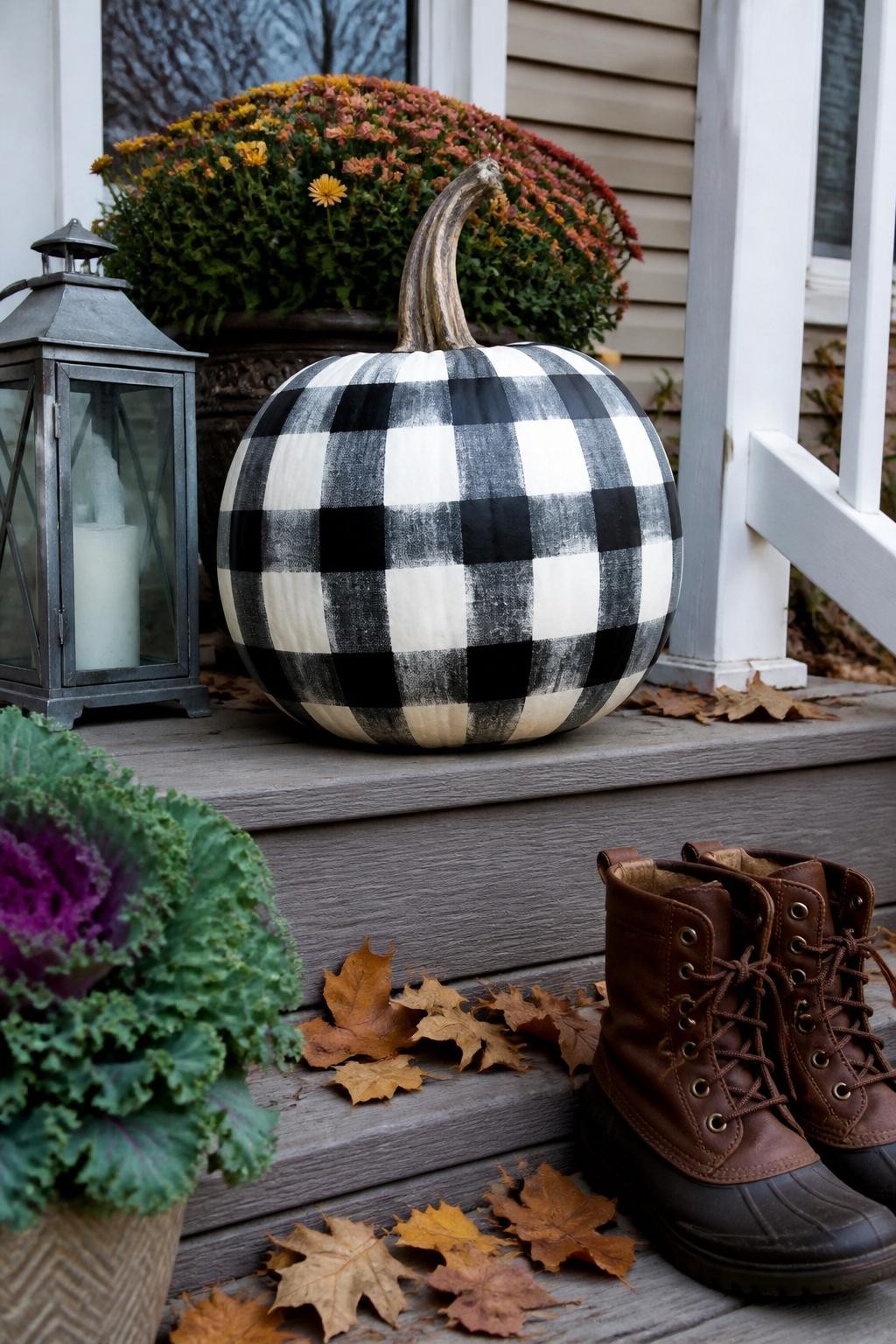
Cover the pumpkin with warm white paint, then add wide vertical and horizontal black lines. Darken the squares where the lines overlap to create the layered appearance of buffalo check fabric.
Use the pumpkin’s natural ridges to help place the vertical sections. Slightly uneven lines give the pattern a handmade quality that fits the farmhouse style better than a perfectly printed grid.
3. Sage Green Farmhouse Pumpkin

Paint a pumpkin in muted sage, then add darker olive inside the grooves and a little pale cream across the raised sections. These subtle color changes help the surface look more natural and less like a flat coat of craft paint.
Display several sage pumpkins with cream and orange varieties for a calm, collected arrangement. The green tones pair especially well with wood, galvanized metal, and woven textures.
4. Grain Sack Stripe Pumpkin

Paint the pumpkin warm white, then add one wide vertical stripe down the front. Place a thinner stripe on either side using muted charcoal, navy, rust, or olive.
Keep the edges slightly faded rather than perfectly sharp. The simple pattern resembles old grain sack fabric and brings a quiet farmhouse detail to kitchens and dining areas.
5. Hand-Painted Rooster Pumpkin
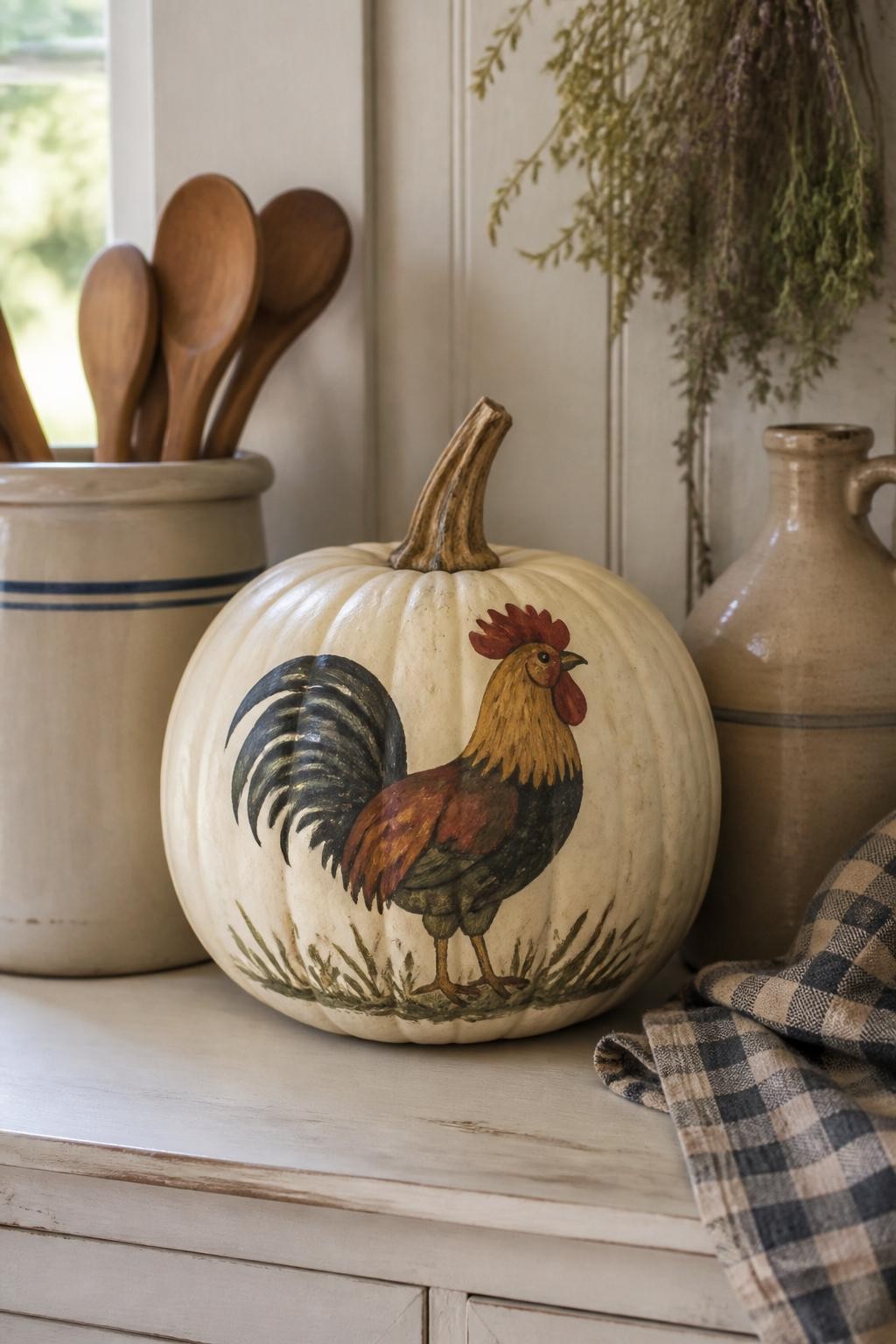
Horizontal 16:9 realistic iPhone photograph of a pale cream real pumpkin painted with one simple folk-style rooster in muted black, rust, mustard, and olive across the front, small hand-painted grass details near the base, natural brown stem, displayed on a farmhouse kitchen shelf beside ceramic crocks, wooden spoons, folded checked cloth, and dried herbs, soft window light, charming handmade imperfections, no text.
Paint a simple folk-style rooster on the front of a cream or pale beige pumpkin. Use bold shapes rather than detailed feathers, then add small touches of rust, mustard, black, and olive.
Keep the rest of the pumpkin mostly plain so the rooster remains the main feature. This design works especially well in kitchens and breakfast areas where farmhouse motifs already feel at home.
6. Rustic Wood-Tone Pumpkin

Paint the pumpkin with a tan or caramel base, then drag darker brown paint lightly across the surface to imitate wood grain. Follow the ridges so the painted lines curve naturally around the pumpkin.
Add a thin brown glaze to soften the contrast and give the surface an aged appearance. The finished pumpkin pairs easily with wooden signs, crates, and other rustic pieces.
7. Simple Farmhouse Leaf Wreath
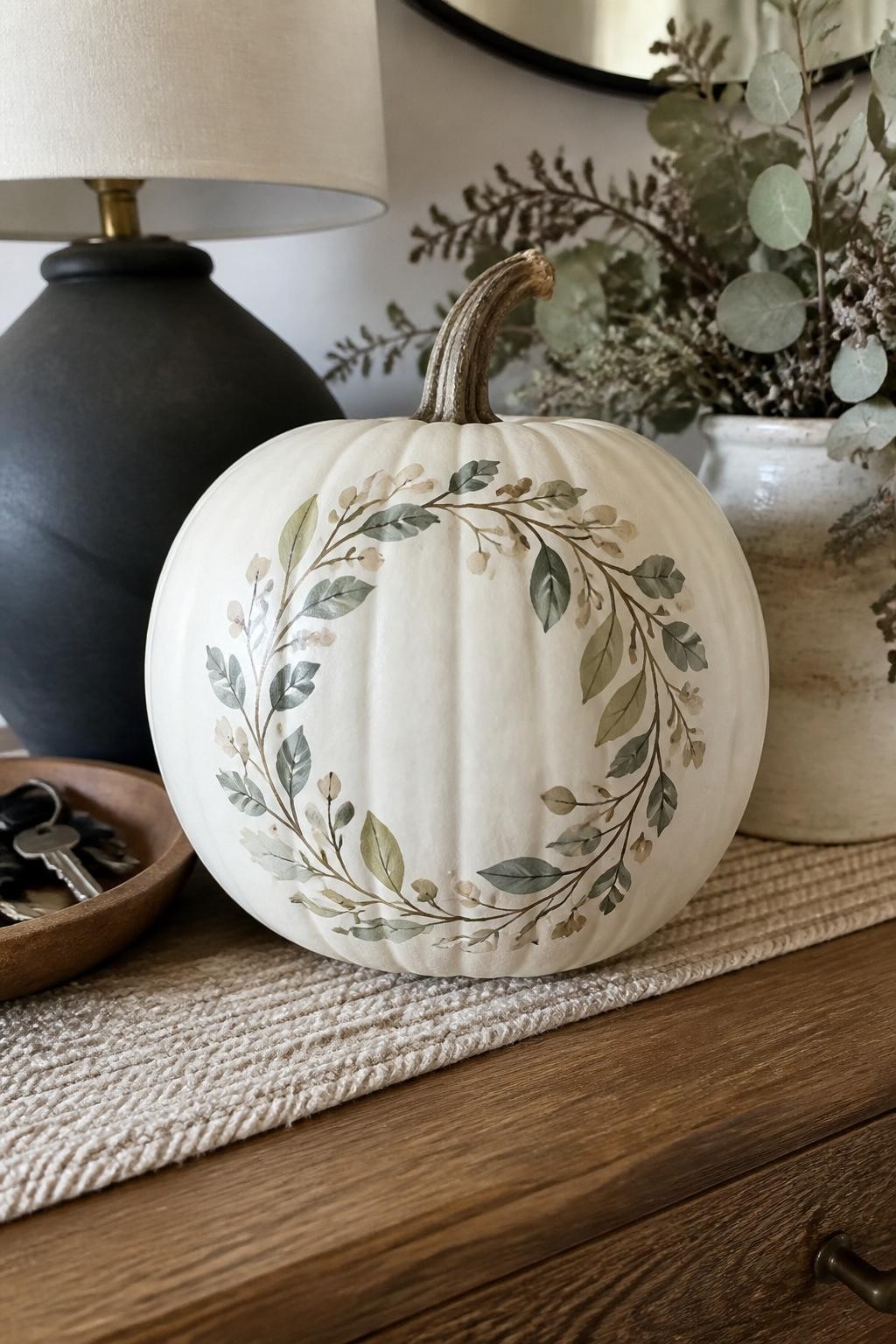
Paint a small wreath of olive, sage, and dusty green leaves around the front of a white or cream pumpkin. Add thin brown stems and a few beige berries for extra depth.
Leave the center empty for a clean farmhouse look, or add one initial if you want a personalized piece. Keeping the colors muted helps the wreath feel natural rather than decorative.
8. Painted Patchwork Quilt Pumpkin

Use the pumpkin’s ridges to divide the surface into sections, then fill each one with a different farmhouse pattern. Try small checks, stripes, simple florals, dots, and solid blocks.
Limit the palette to cream, rust, olive, mustard, and charcoal so the patterns still feel connected. The finished pumpkin resembles a handmade patchwork quilt and makes a strong centerpiece.
9. Chalkboard Message Pumpkin

Paint a large pumpkin with matte chalkboard paint, then add a short fall message using chalk or a white chalk marker. Words such as “Gather,” “Welcome,” or “Thankful” work especially well.
Frame the lettering with a small wheat, leaf, or berry border. Because the message can be changed, the same pumpkin can be used for family dinners, fall parties, and Thanksgiving.
10. Cream Pumpkin With Tiny Brown Dots

Add small brown dots across a cream or pale beige pumpkin using the rounded end of a brush. Keep the spacing loose and allow the dots to vary slightly in size.
The simple pattern adds texture without competing with the rest of the display. This pumpkin works especially well inside a wooden dough bowl or woven basket with plain pumpkins and natural materials.
11. Vintage Floral Crock-Inspired Pumpkin
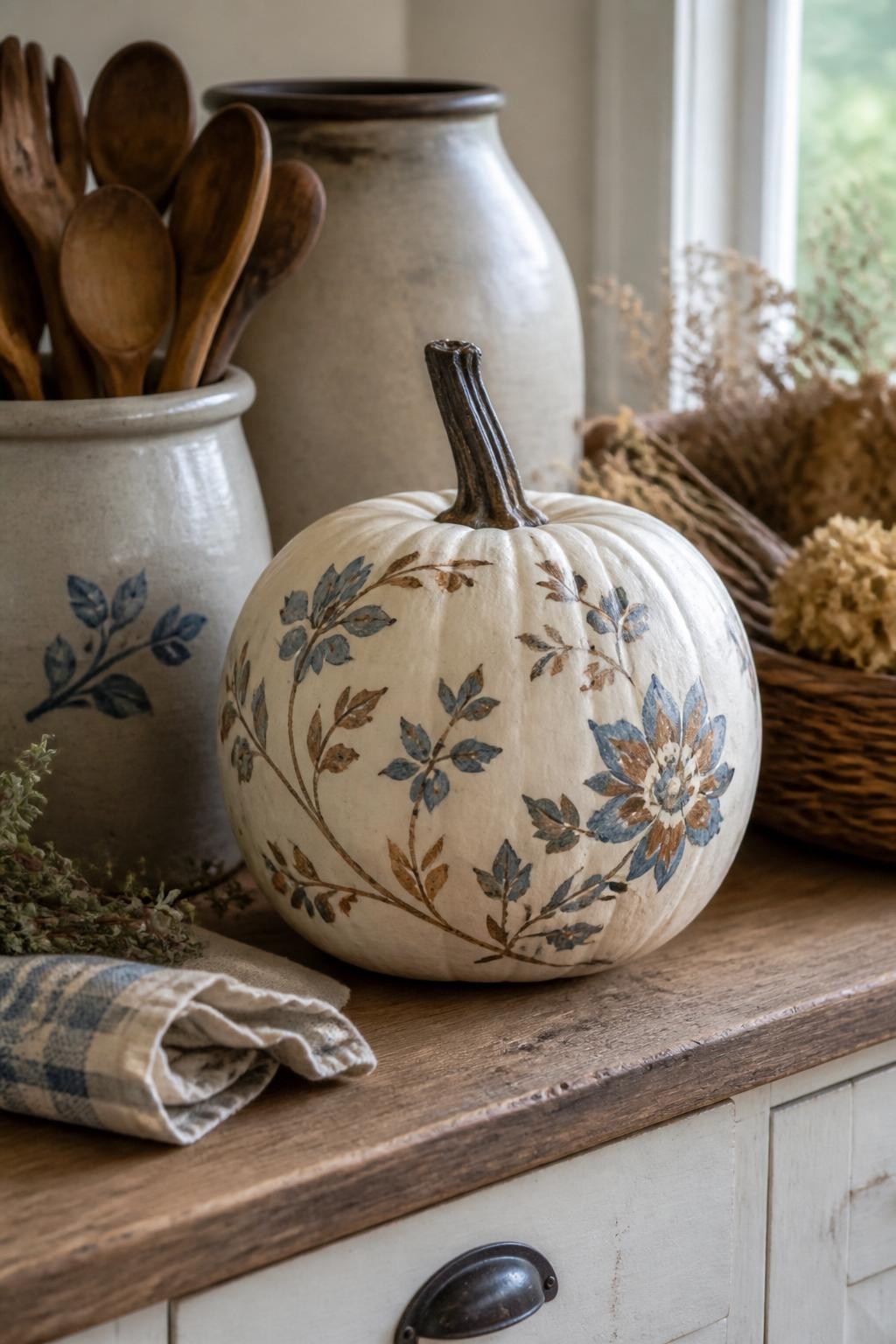
Paint faded blue flowers, muted brown leaves, and small curling vines across a white pumpkin. Keep the shapes simple and slightly worn to imitate the look of old decorated stoneware crocks.
You can lightly sand a few painted areas after they dry to soften the pattern. The result feels collected and vintage, making it ideal for kitchens and dining rooms.
12. Barn Quilt Pumpkin

Paint a simple barn quilt star or geometric block across the front of a wooden or flat-sided pumpkin. Use muted farmhouse shades rather than bright primary colors.
Sketch the design in pencil and use painter’s tape to guide the larger shapes. Slight distressing around the edges can help the finished piece look older and more naturally connected to porch decor.
13. Personalized Farmhouse Name Pumpkin

Paint a family surname, house number, or single initial across the front of a white or cream pumpkin. Choose dark olive, charcoal, rust, or muted black for lettering that remains easy to read.
Add a few simple leaves or small branches around the words, but avoid filling the entire surface. The personalized design can return every year and become a familiar part of your fall entryway.