





In This Article Show
A stumpery garden uses tree stumps, roots, and logs to create a unique, natural space in any yard. This style turns forgotten or shady corners into interesting woodland features, perfect for shade-loving plants and local wildlife.

I want to share 17 stumpery garden ideas that can help you transform your outdoor area into a more inviting and eco-friendly space.
Whether you enjoy gardening for relaxation, creativity, or wildlife, exploring stumpery design can open up new possibilities for your garden.
1. Create moss-covered log seating
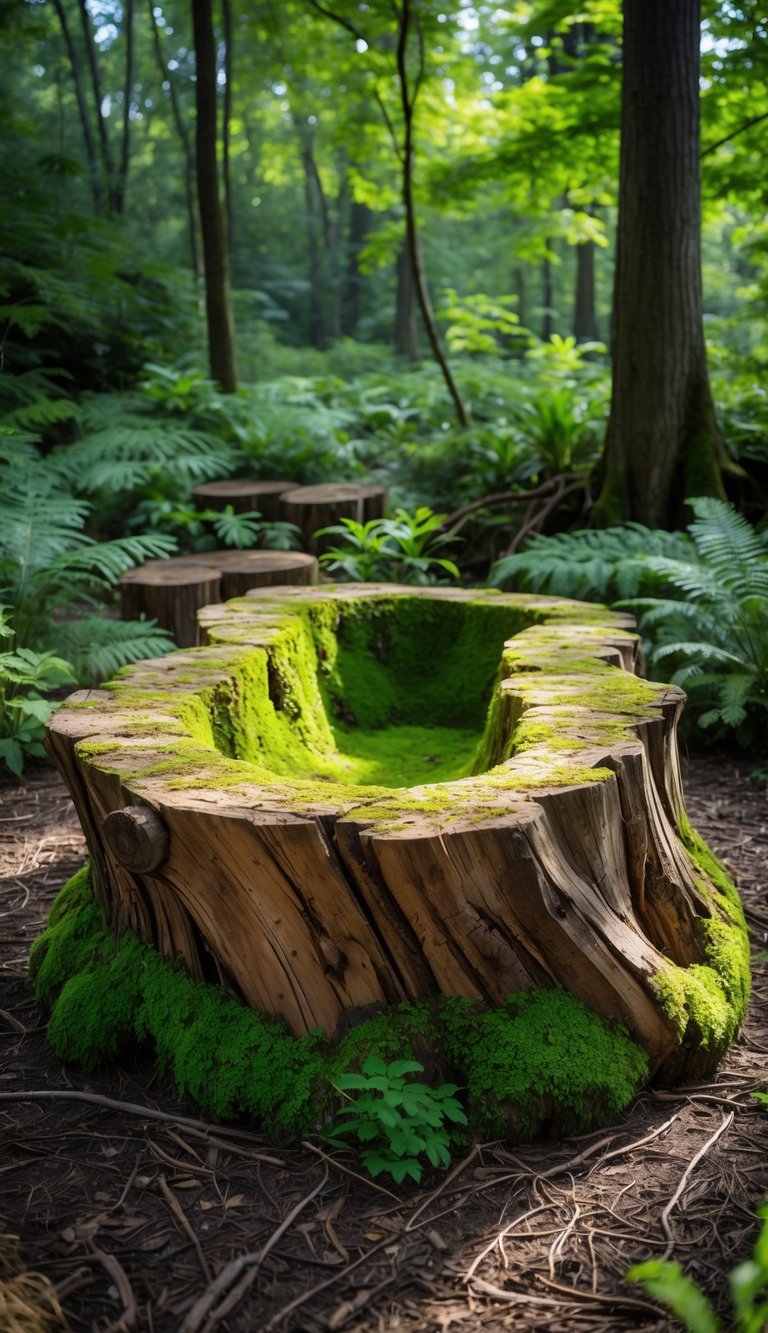
I like using old logs as garden seating by laying them flat in a shady area. Over time, moss just takes over and creates a soft, green cover. It makes the stumpery feel cozy and a little magical, honestly.
2. Build insect hotels from hollow stumps
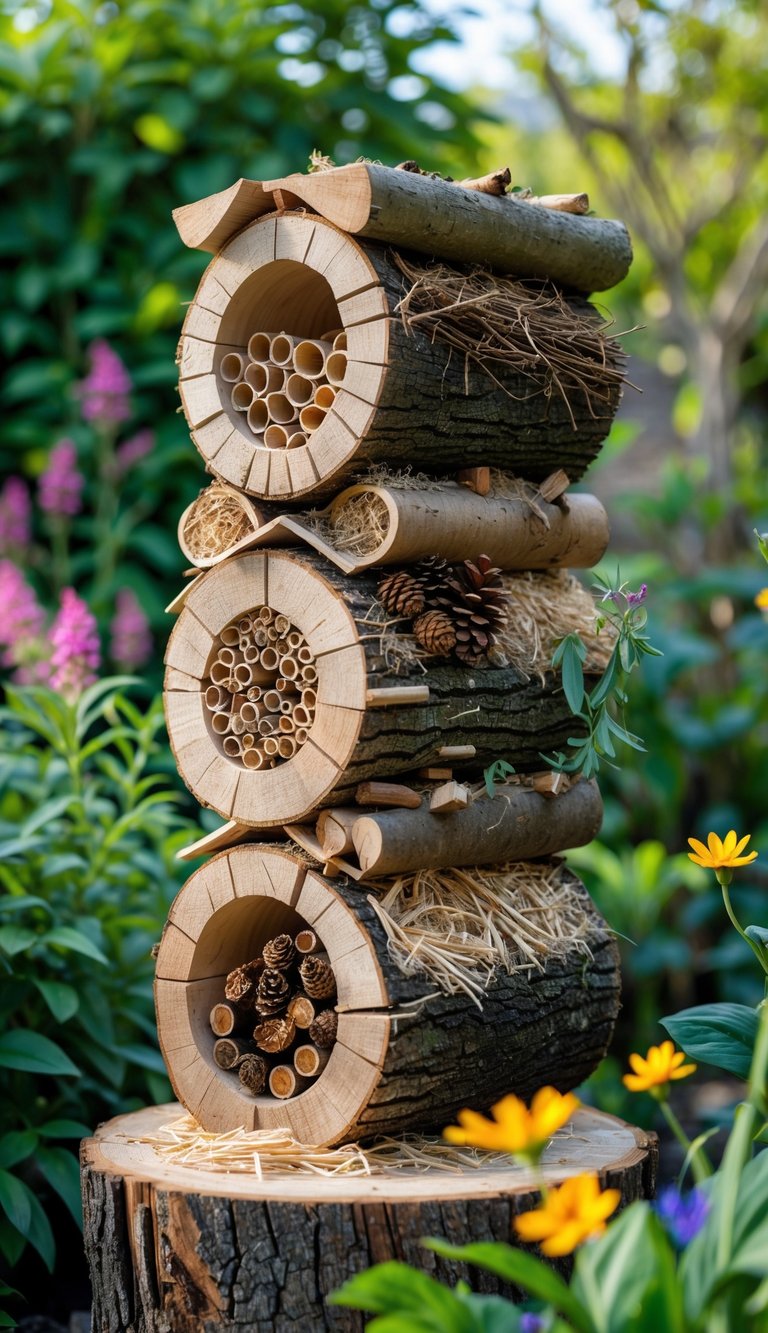
Hollow tree stumps make excellent insect hotels in my stumpery. Bees, ladybugs, and beetles love the safe nooks. I usually stuff them with dry grass, pine cones, and sticks—super easy, and the bugs seem grateful.
3. Arrange root wads as natural sculptures
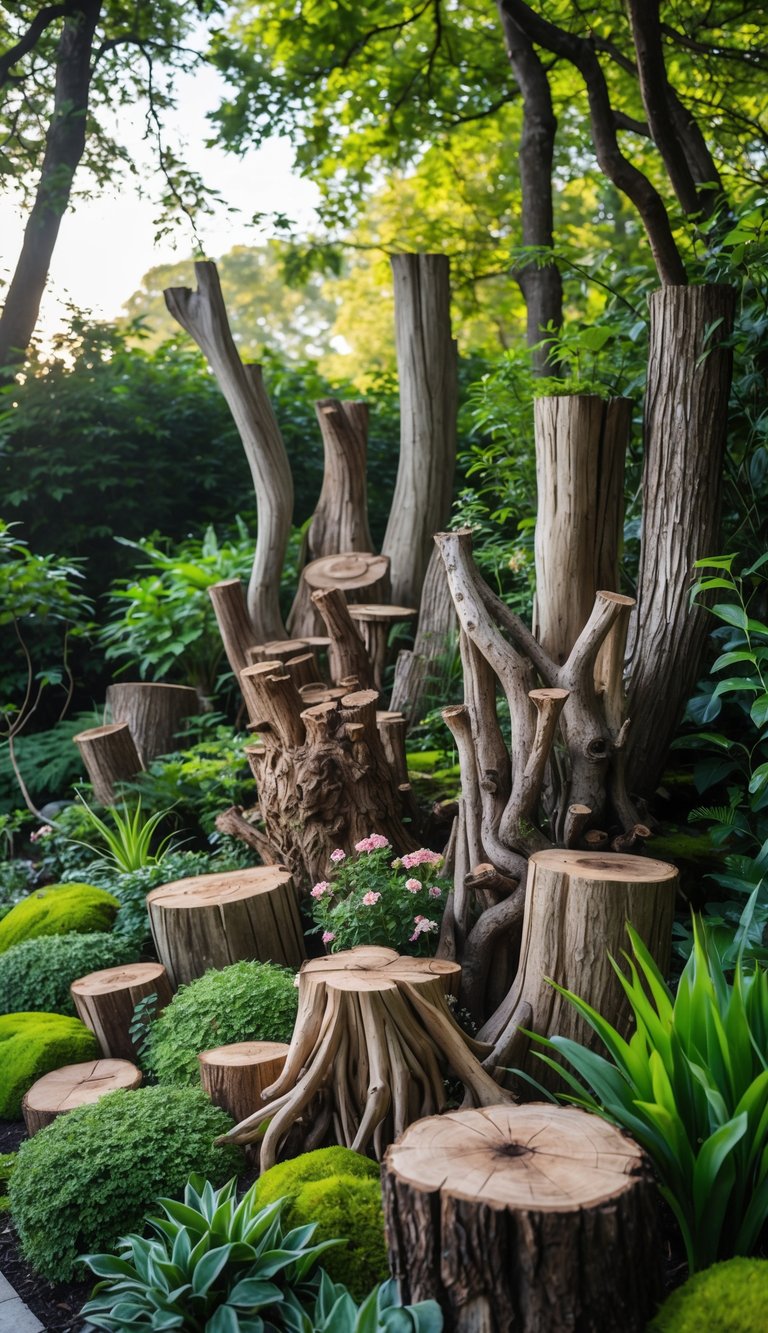
Root wads, with all their wild twists, really stand out as striking features in a stumpery. I like placing them where their textures and forms pop, especially among ferns and moss. They’re a bit dramatic, but that’s the point.
4. Incorporate ferns and hostas for shade
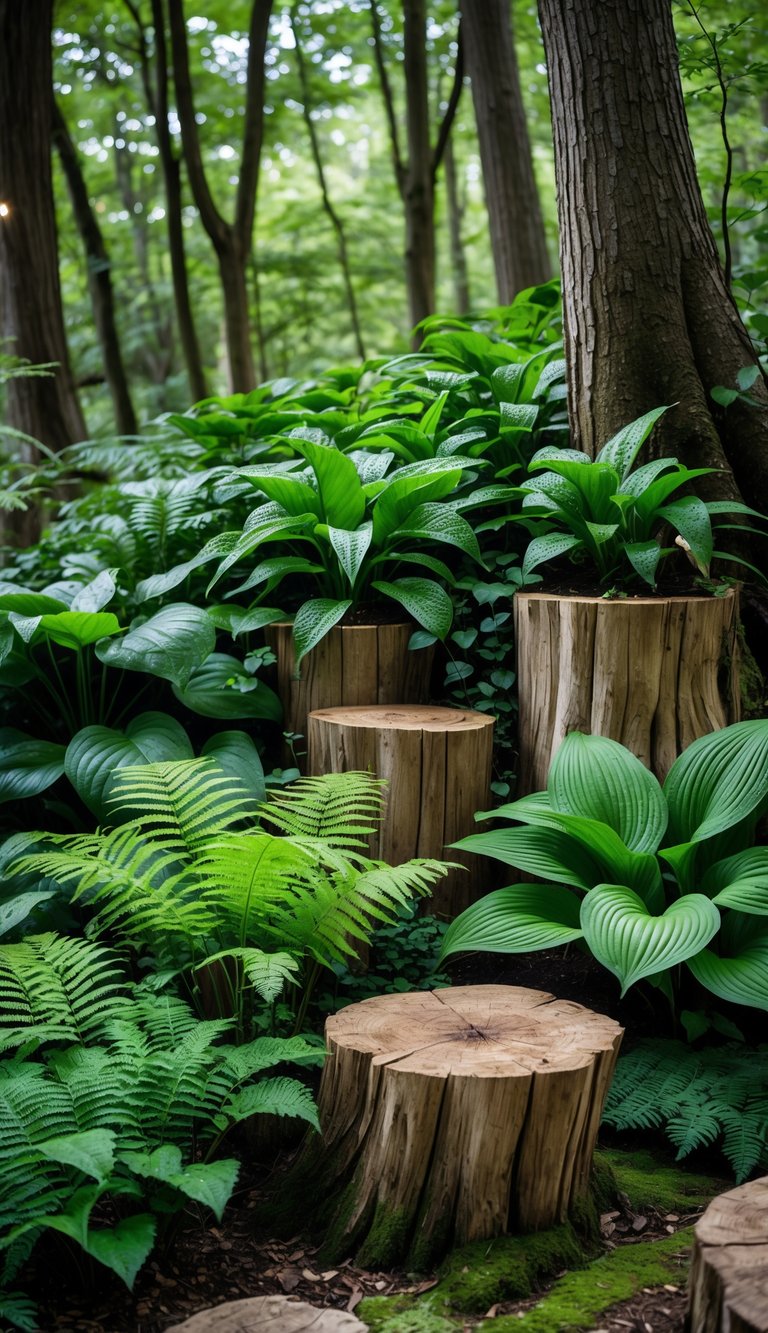
Ferns and hostas just thrive in the shade, so I tuck them throughout my stumpery. Their textures play off each other nicely, and honestly, they kind of take care of themselves. If you’re looking for low-maintenance, these are your friends.
5. Construct a shady woodland corner
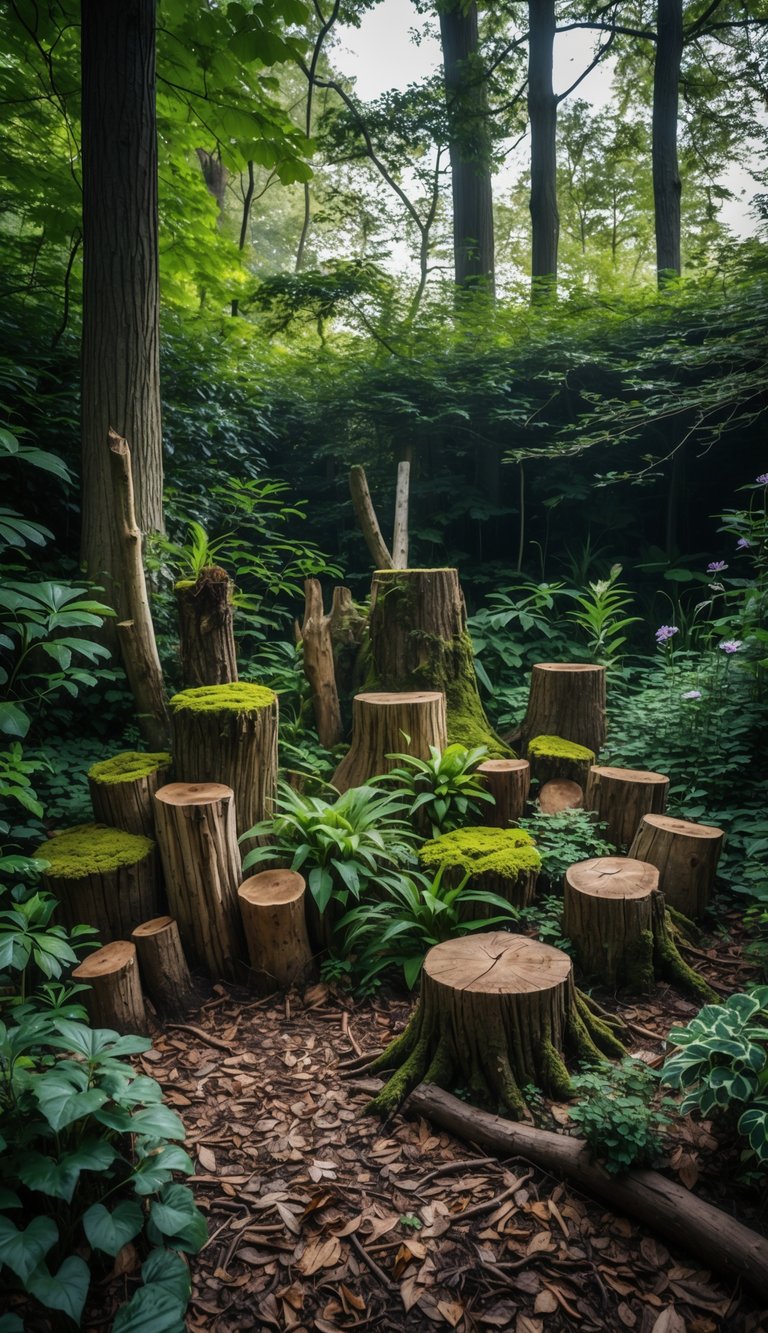
I use tree stumps and logs to carve out a shaded nook in the garden. Shade-loving plants like ferns and hostas just fit right in. It’s an easy way to turn a dark, empty corner into something peaceful and inviting.
6. Use broken stumps as planter bases
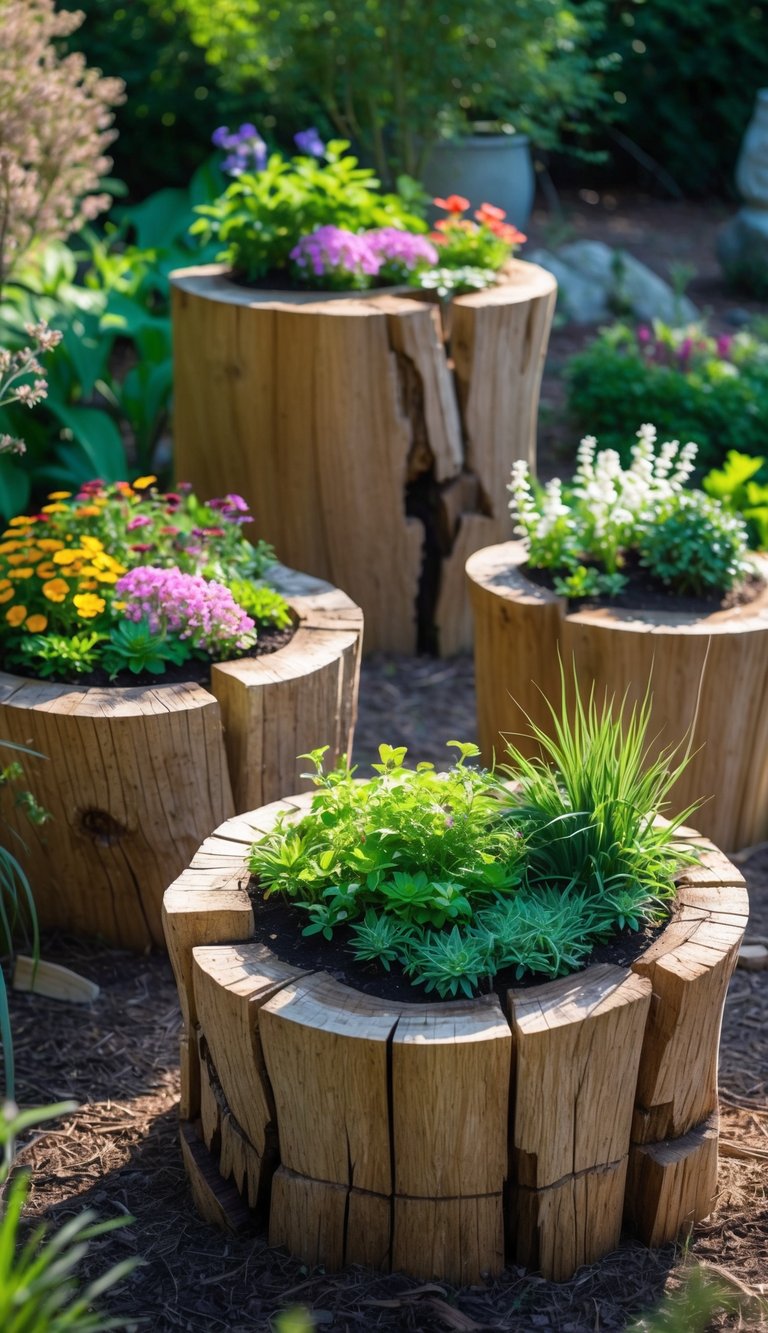
I use broken tree stumps as stands for my plant containers. It lifts the pots up and gives the plants a little more presence. Adds some texture, too. Plus, it’s a clever way to reuse old wood and keep things tidy.
7. Design multi-level stump displays
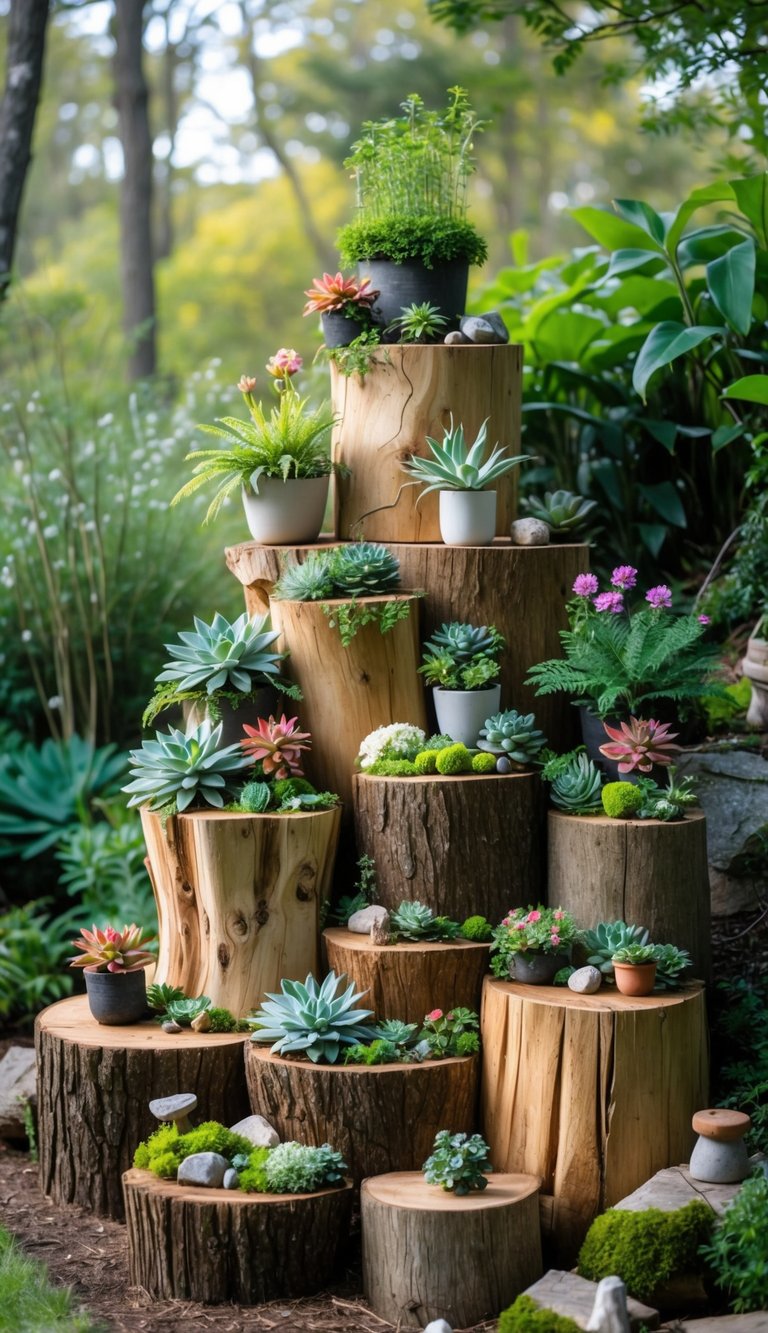
Mixing up stump heights and sizes lets me create layered displays in the stumpery. I’ll place potted plants or ferns on top for extra texture. It’s a simple trick, but it really makes the garden feel more dynamic.
8. Add mushrooms and toad habitats
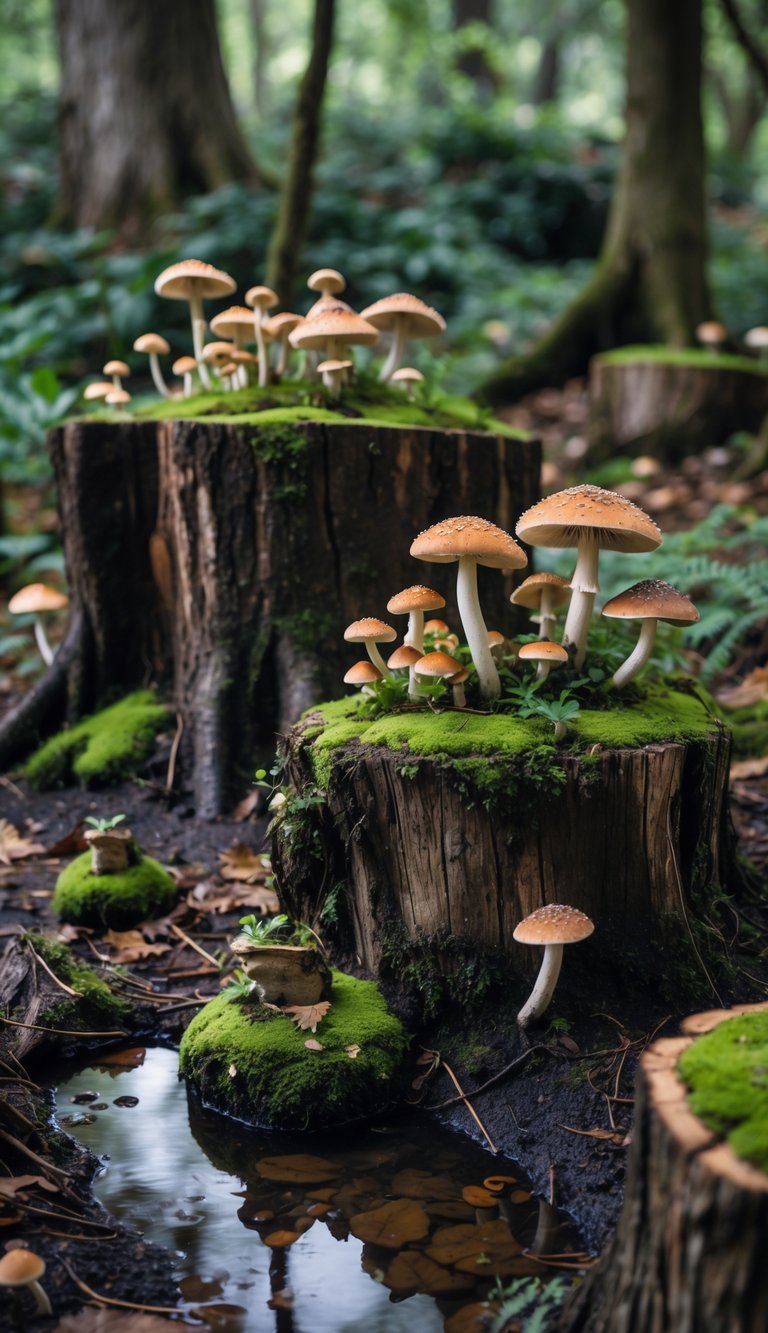
I like using old logs and shady patches to grow mushrooms and draw in toads. Mushrooms break down the wood and bring in cool colors and shapes. Tossing a few rocks or shelters nearby gives toads a safe spot to hang out.
9. Combine stumps with hugelkultur mounds
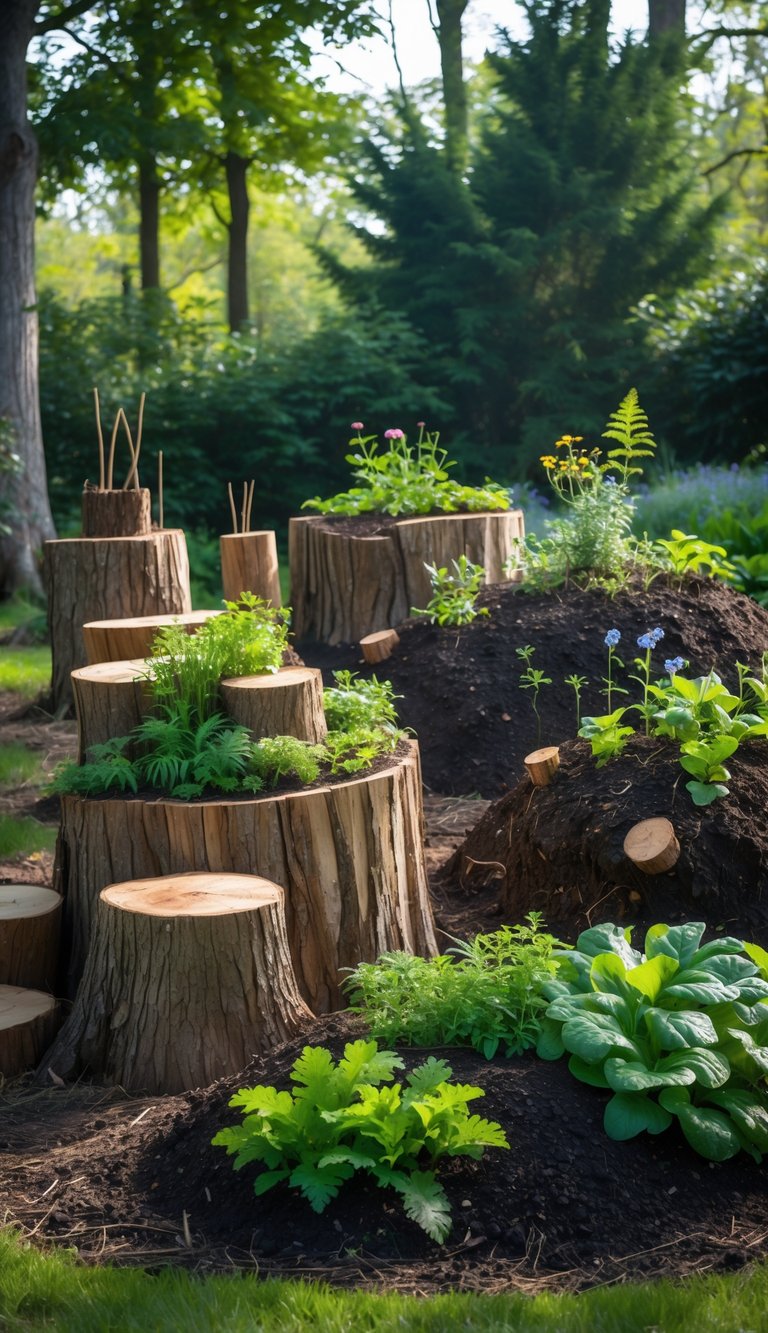
I tuck tree stumps at the base of my hugelkultur mounds. They break down slowly and enrich the soil over time. I’ll pile on branches, leaves, and grass clippings to make a mound that looks right at home for planting.
10. Use logs for rustic garden pathways
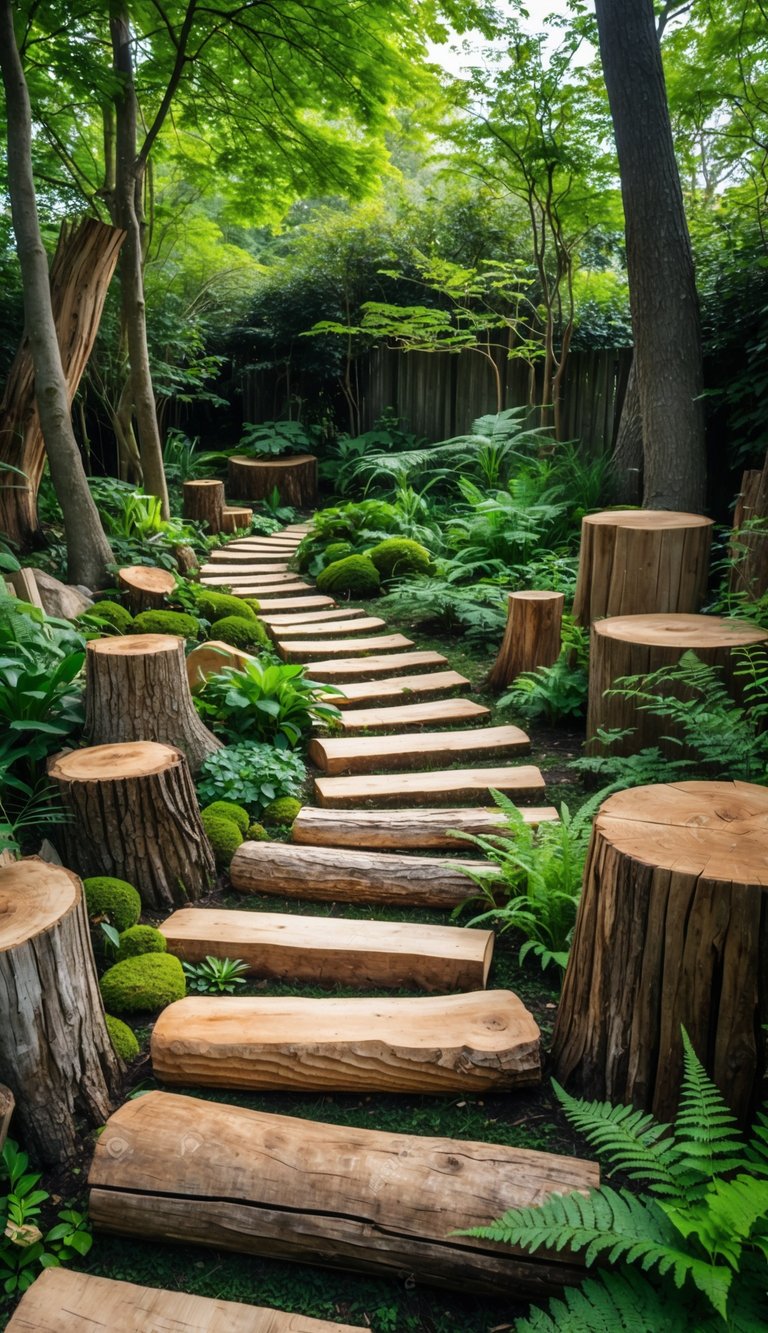
I lay log slices or sections across the garden to make natural pathways. They blend in with the plants, giving a real woodland vibe. I fill the spaces with gravel or mulch to keep things level and less slippery.
11. Feature carved tree trunk focal points
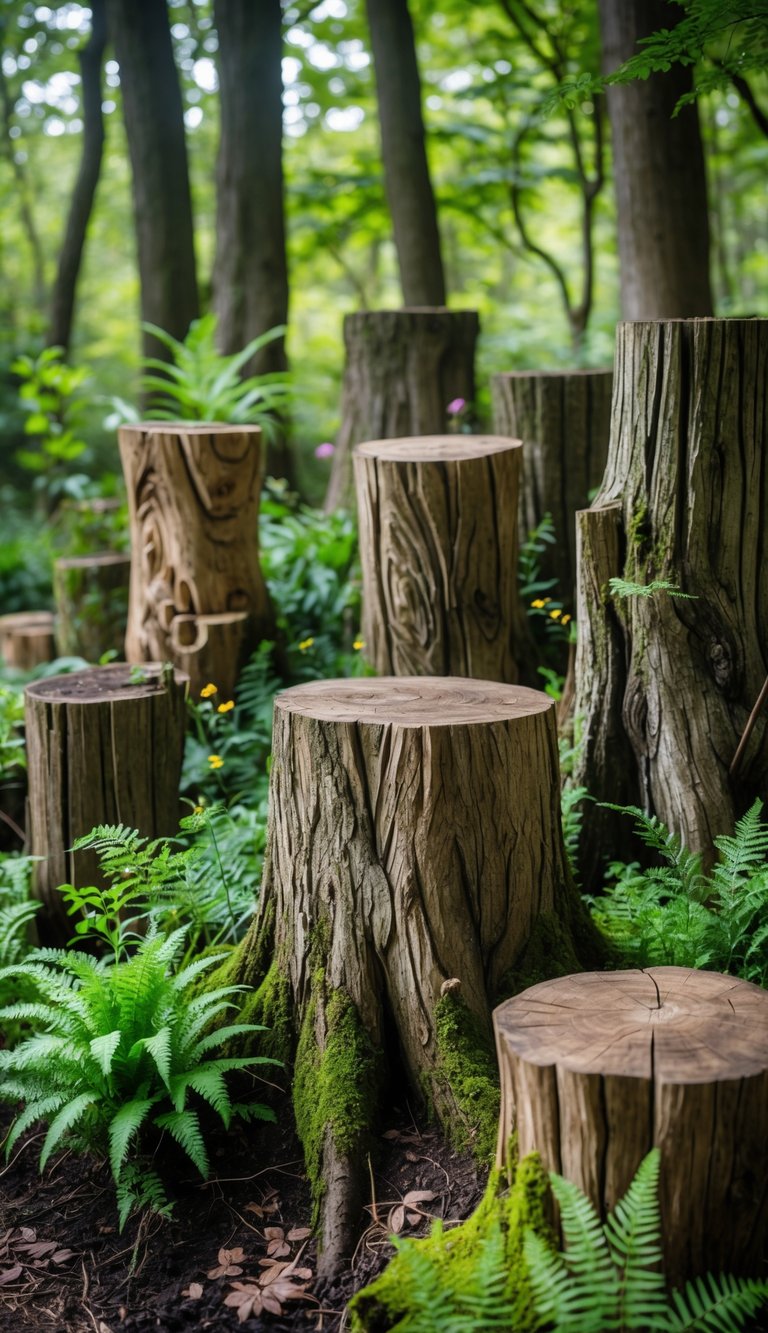
I love adding carved tree trunks as unique focal points in the stumpery. Simple shapes, animal figures, or just interesting patterns—each one draws the eye and makes people stop for a closer look.
12. Create miniature fairy garden scenes
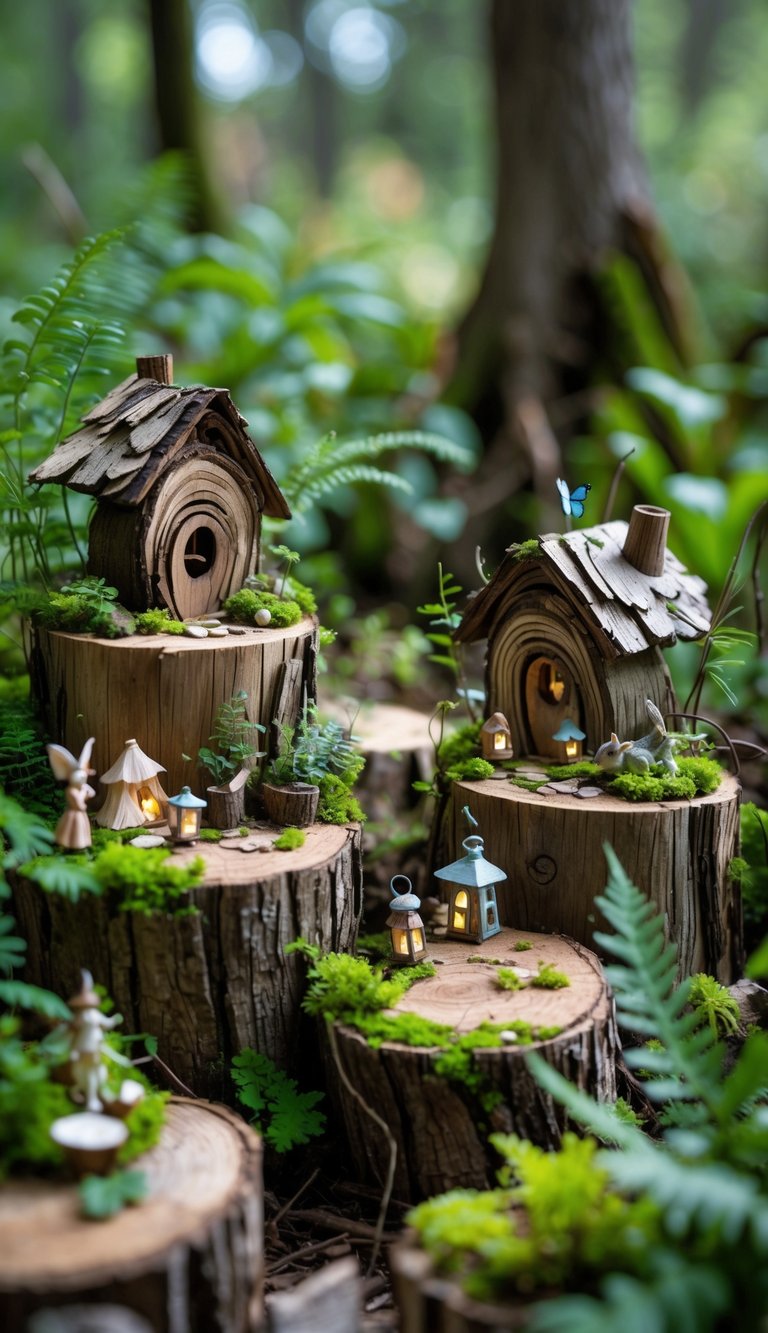
Sometimes I’ll use little bits of wood, moss, and tiny accessories to build fairy garden scenes. Mini ladders, houses, colorful pebbles—just enough whimsy, but I keep it simple so it still feels natural.
13. Integrate aromatic herbs around stumps

I plant aromatic herbs like thyme, mint, and sage right at the base of stumps. These herbs handle partial shade just fine and fill the air with fresh scents. Plus, they bring in helpful insects, which is always a bonus.
14. Form natural log retaining walls
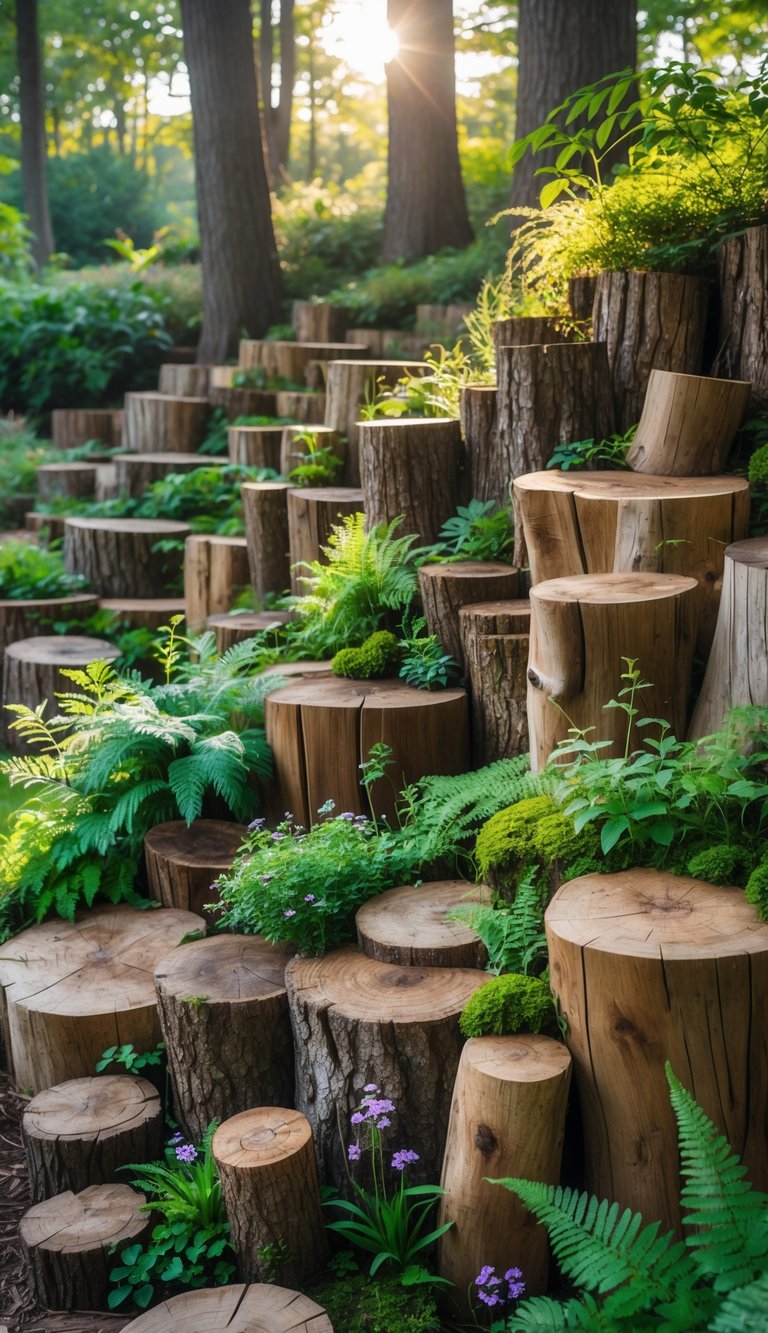
I use logs to build rustic retaining walls. They help shape different levels in the stumpery and keep the soil in place. I think they look right at home among the ferns and flowers.
15. Include birdhouses on tall stumps
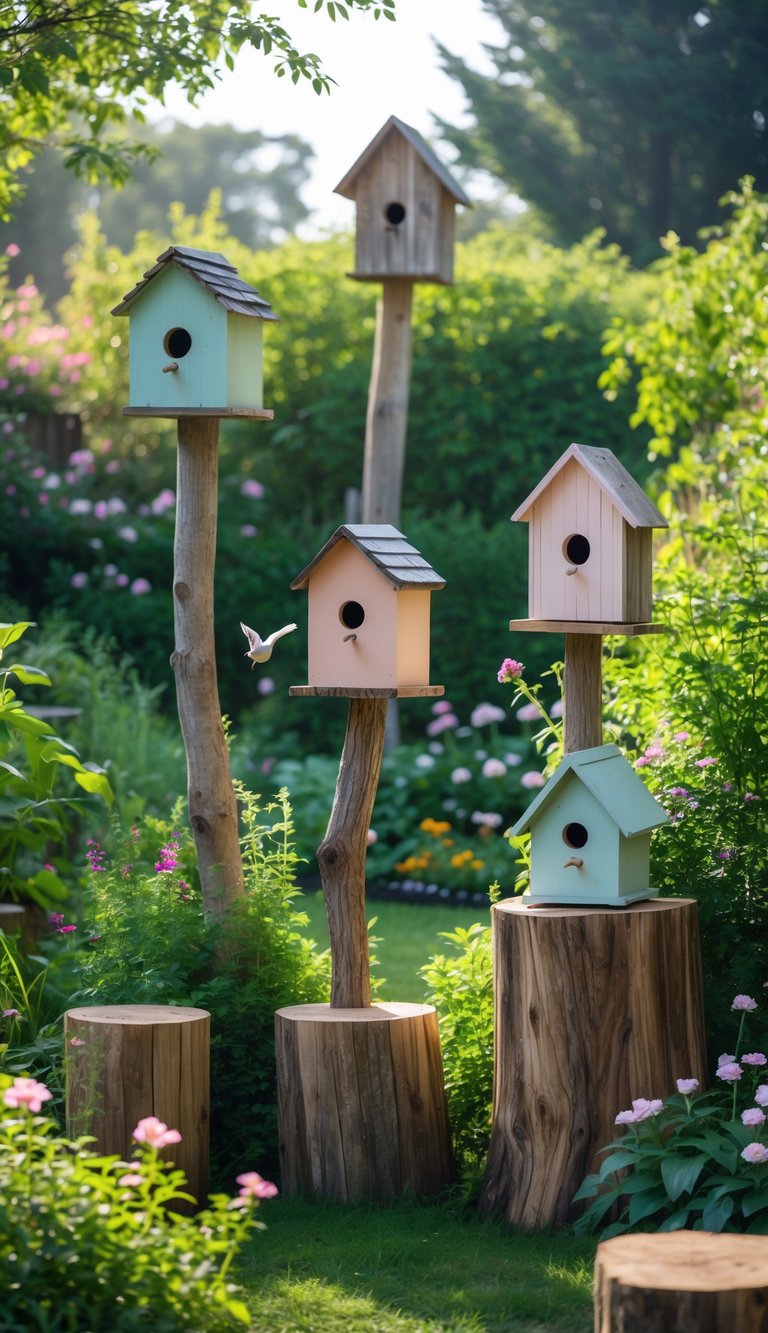
I put birdhouses on the tallest stumps in my stumpery to attract all sorts of birds. The extra height keeps them visible and a bit safer from critters wandering the ground. I stick with simple wooden houses—they just fit better with everything else.
16. Craft bench seating from large roots
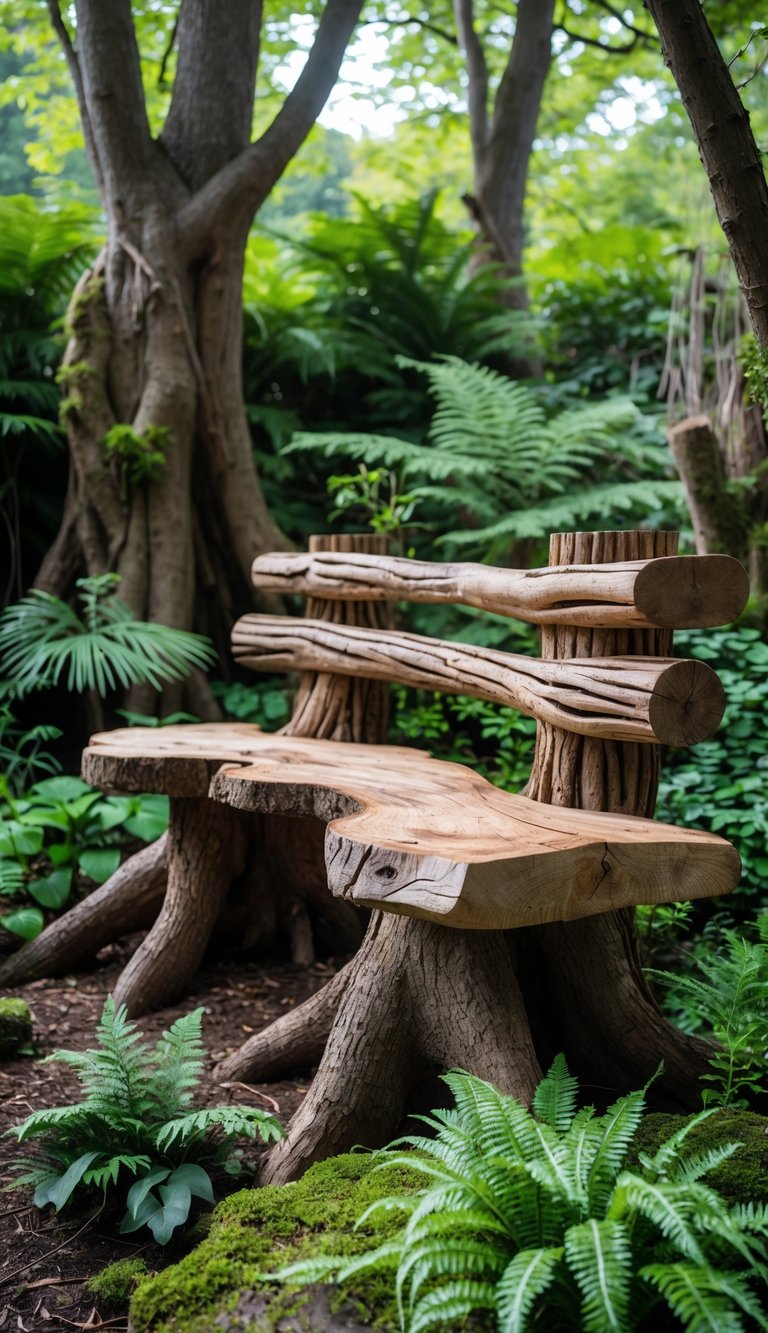
Big tree roots make surprisingly sturdy, rustic benches for a stumpery. I like how the twisting wood blends into the woodland vibe. Sometimes you just have to work with what nature gives you, right?
17. Use stumps to mark garden zones
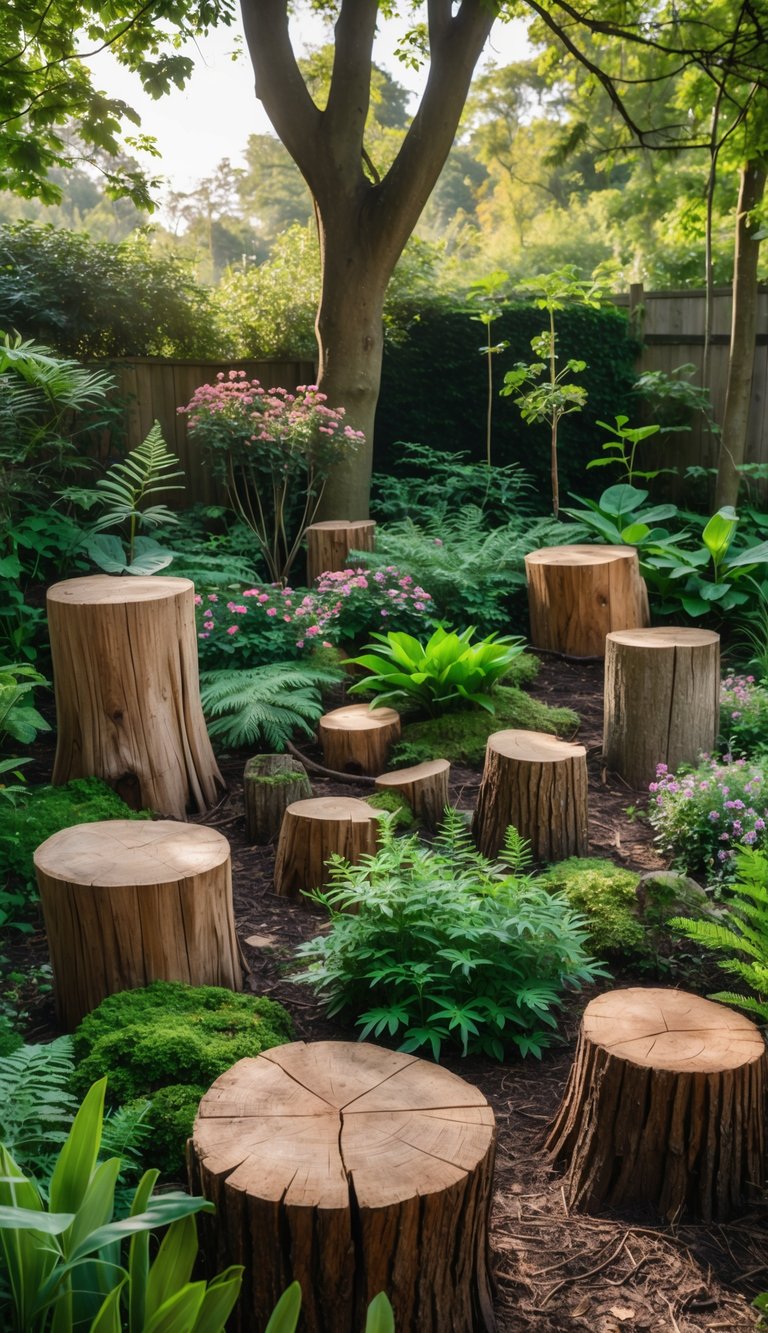
I like to place tree stumps between different areas in my garden to show where one zone ends and another begins. It’s a simple way to split up flower beds, veggie patches, and walking paths. Honestly, I just prefer this over the look of plastic or metal edging—it keeps things organized without feeling too manufactured.