





In This Article Show
A kitchen can look clean and still feel difficult to use. Pots may be stacked in awkward piles, food containers lose their lids, utensils fill every drawer, and the items you use most often somehow end up in the hardest places to reach.
Good kitchen organization should make cooking, cleaning, and putting groceries away feel easier. It does not require matching containers or a complete renovation. In most homes, the biggest improvements come from using cabinets more thoughtfully, keeping daily items within reach, and giving small objects clear places to return to.
These kitchen organization ideas are practical enough for real homes, including small apartments, busy family kitchens, and rental spaces. Choose the ones that solve your biggest problem areas first, then build a system that matches how you actually cook.
1. Create a Cabinet for Everyday Meals
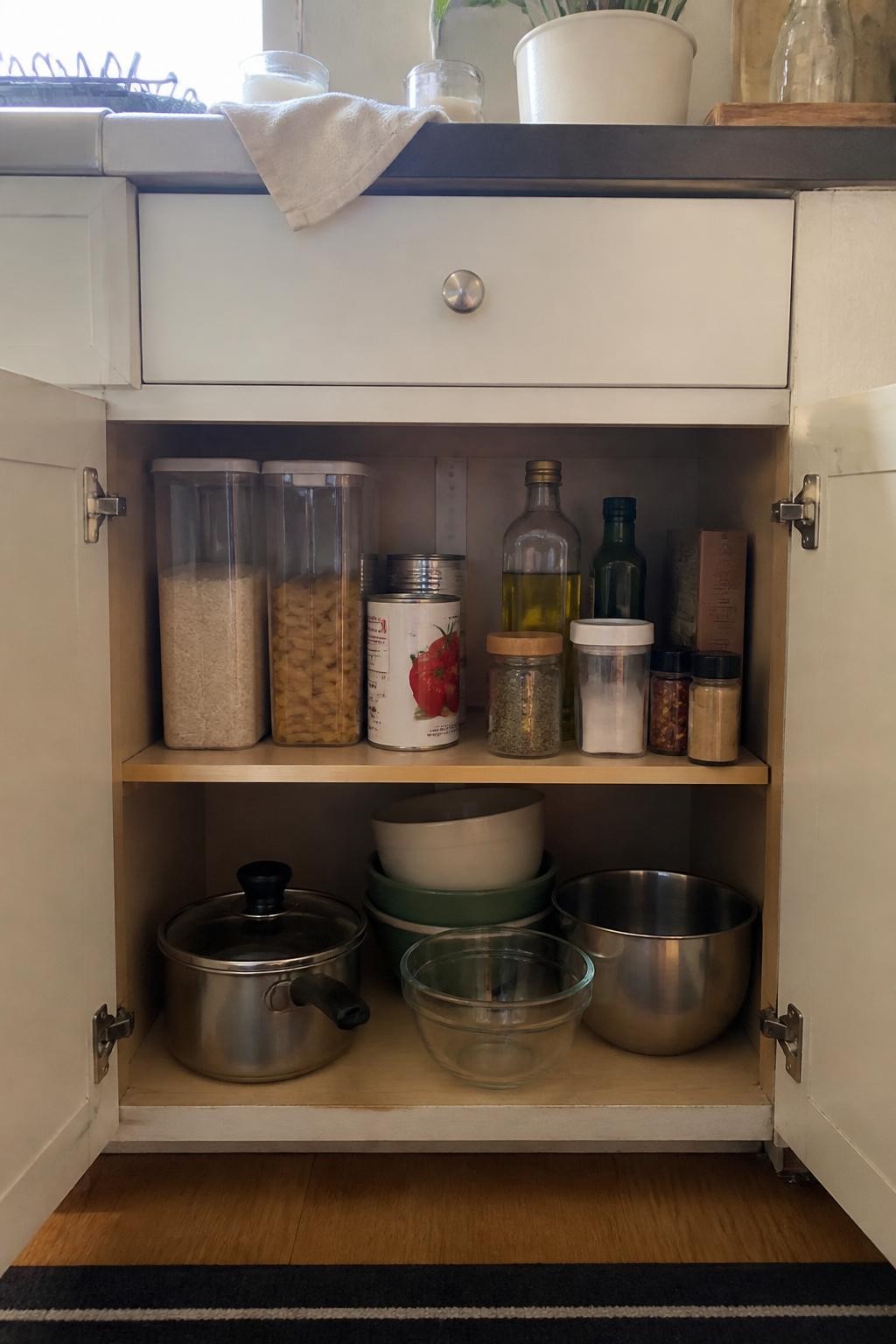
Instead of storing similar items only by type, group the ingredients and tools you use for your most common meals.
A simple cooking cabinet could hold rice, pasta, sauces, seasonings, bowls, and one or two frequently used pots. This reduces the number of cabinets you need to open while preparing dinner.
2. Store Food Container Lids Vertically
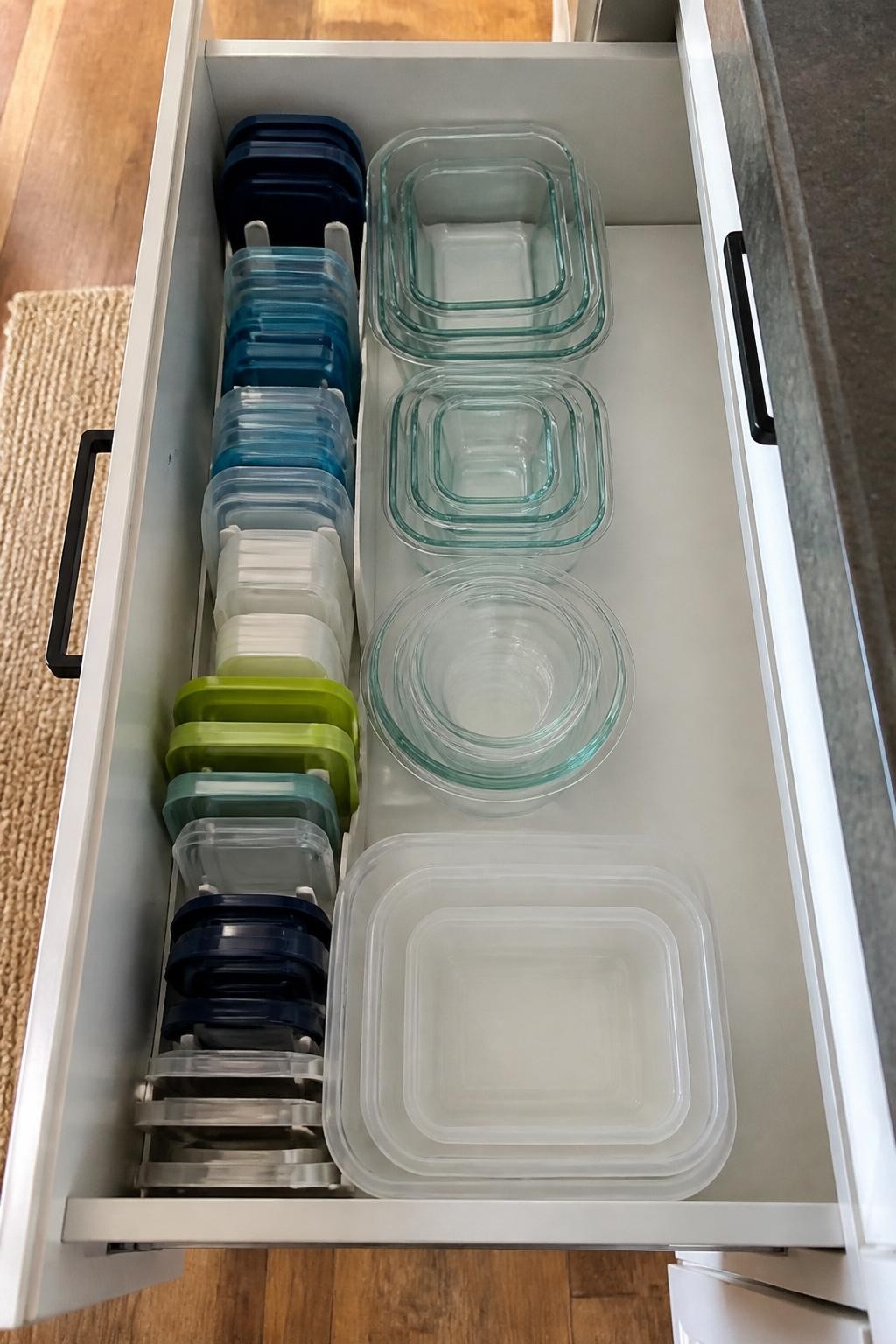
Food container lids become difficult to manage when they are stacked flat or pushed behind the containers.
Use a narrow rack, file sorter, or adjustable drawer divider to store them upright. Arrange lids roughly by size so you can quickly match each one to the correct container.
3. Add a Pull-Out Shelf Under the Sink
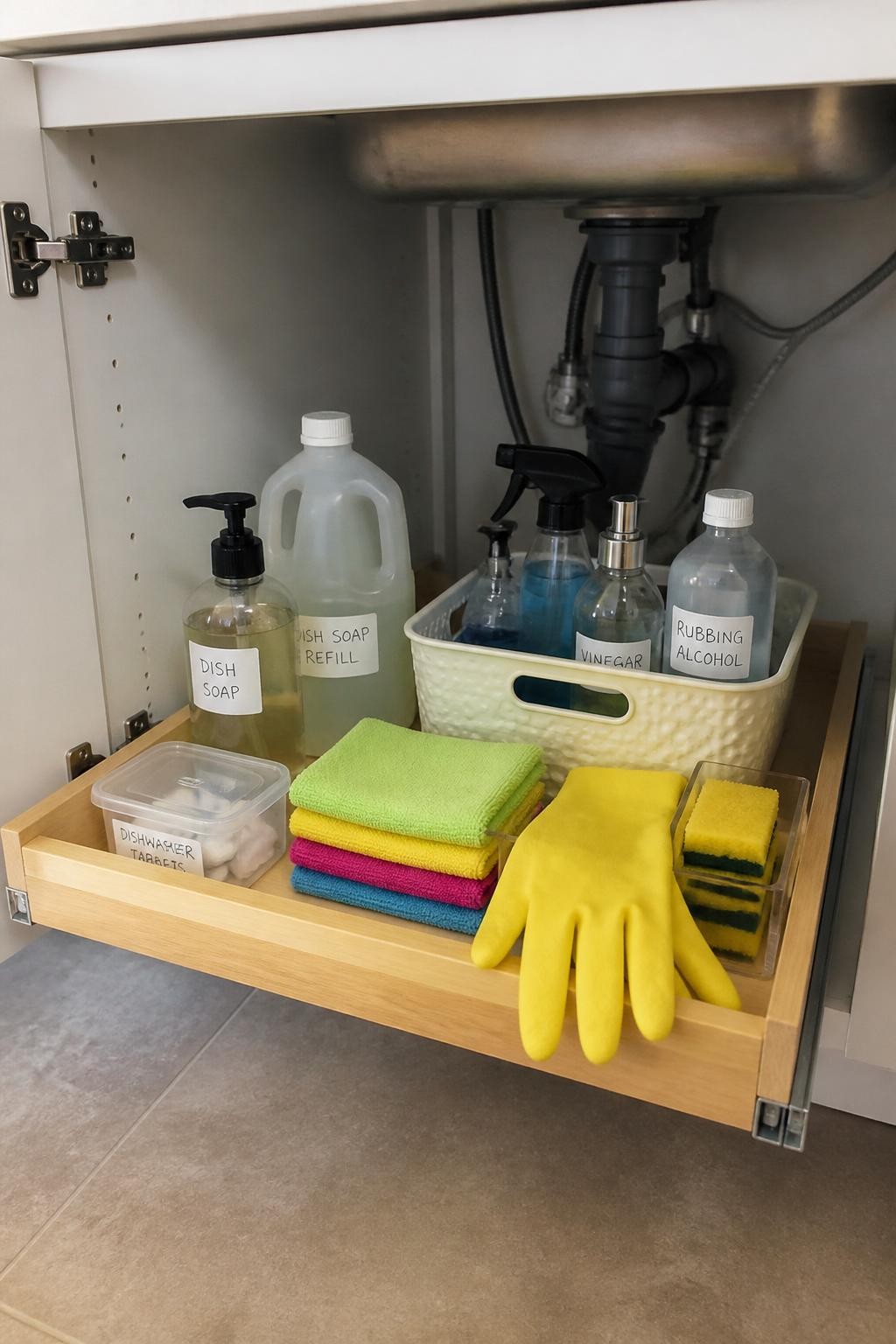
The space beneath the sink is often deep, dark, and difficult to reach. A pull-out shelf lets you access items at the back without removing everything in front.
Use it for dishwashing products, cloths, bin liners, and basic cleaning supplies. Keep products in shallow trays so leaks are easier to notice and clean.
4. Build a Compact Cooking Utensil Zone
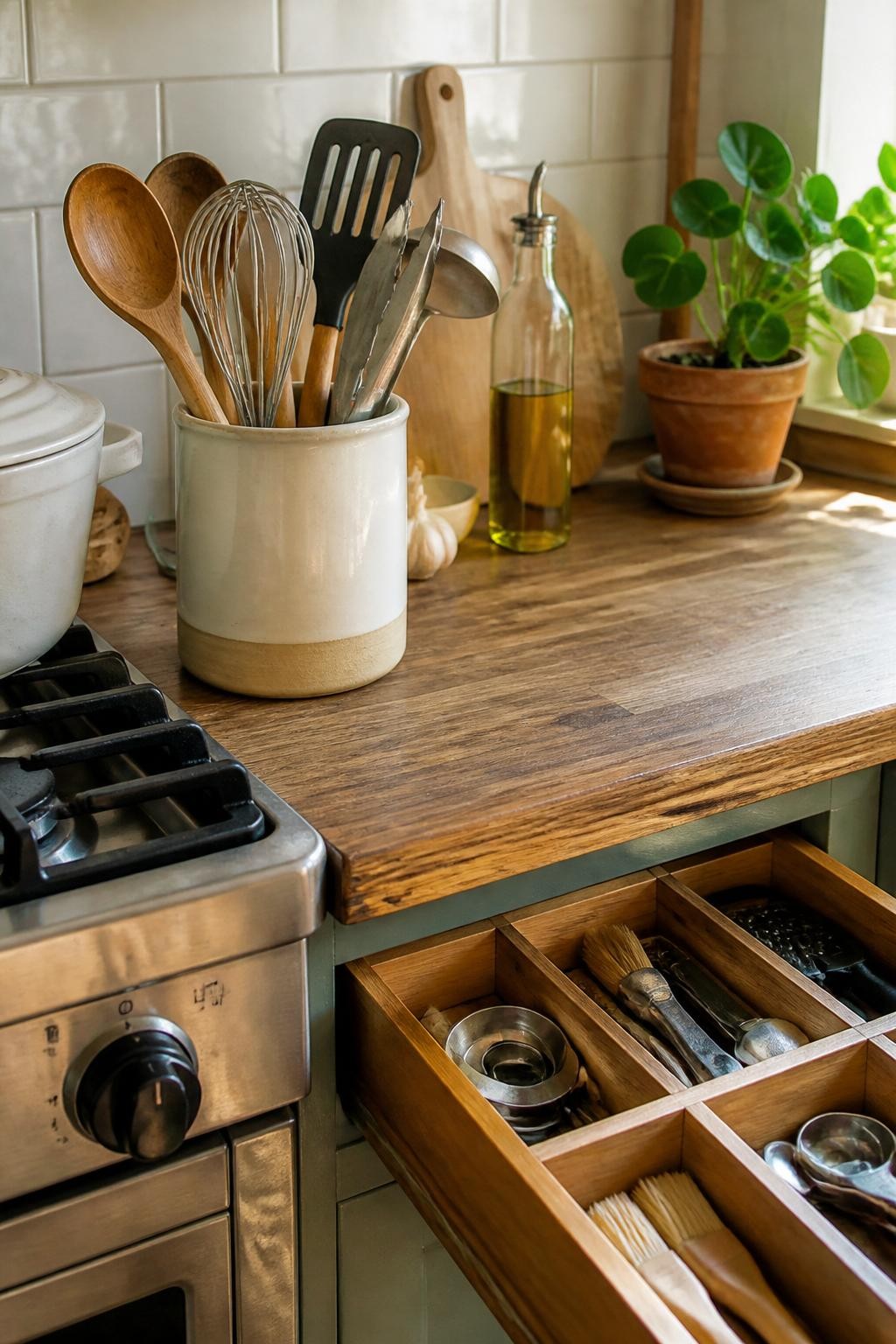
Keeping every cooking utensil on the counter can quickly create clutter. Place only the tools you use several times a week beside the stove.
Store specialty items such as pastry brushes, potato mashers, and serving tools in a divided drawer. This keeps the worktop clear without making daily cooking less convenient.
5. Use Shelf Risers for Plates and Bowls
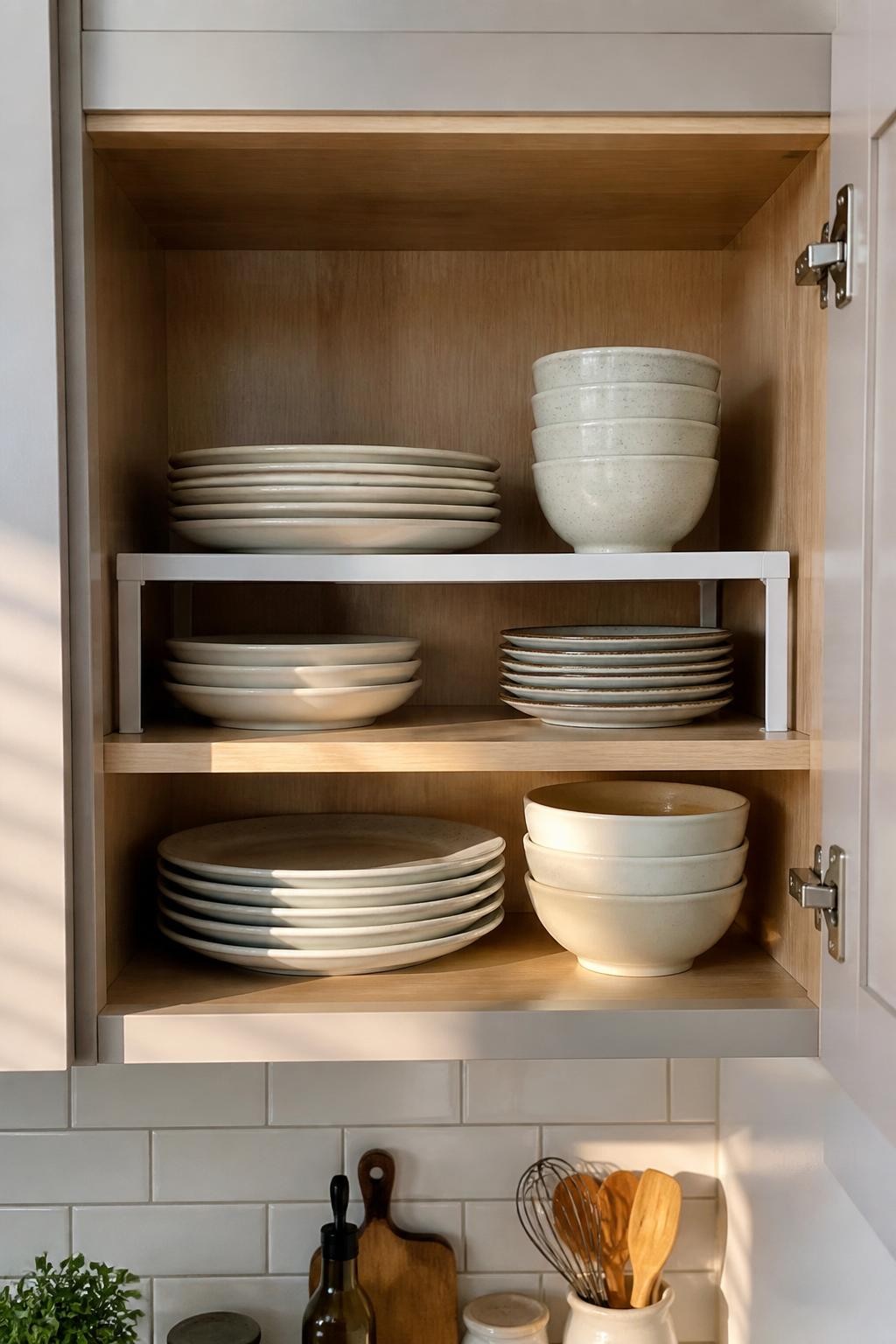
Stacking plates, bowls, and serving dishes in one tall pile makes the lower items difficult to reach.
A shelf riser creates an extra level inside the cabinet. Place plates below, bowls above, or separate everyday dishes from items used for guests.
6. Create a Grab-and-Go Lunch Station

Keep lunch-packing supplies together so preparing food for work or school requires fewer trips around the kitchen.
Use one drawer or cabinet for lunch boxes, reusable bags, napkins, small containers, and travel cutlery. Place it near the refrigerator or main food preparation area when possible.
7. Install a Slim Tray Divider
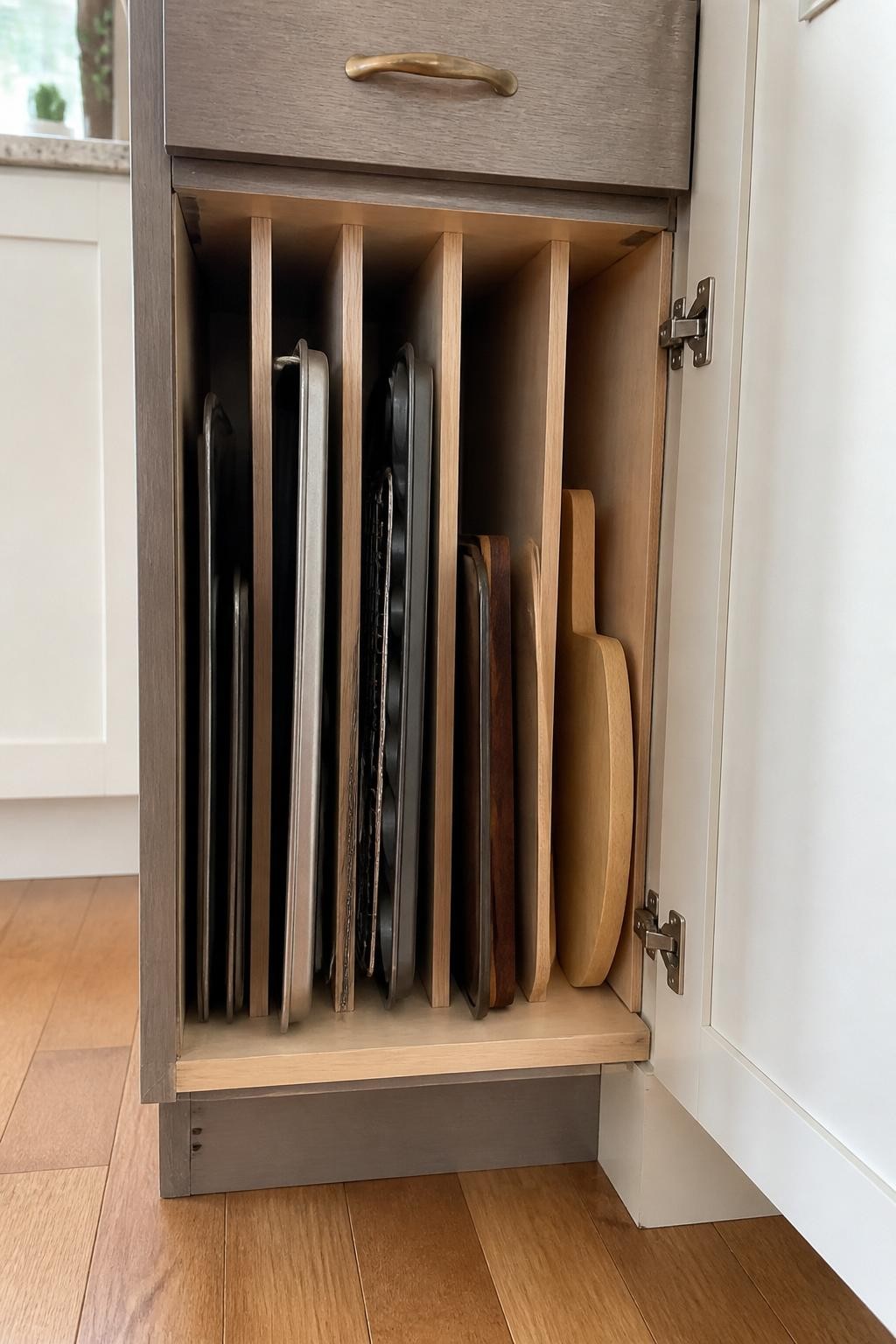
Baking trays and chopping boards are easier to remove when stored vertically rather than stacked flat.
Install dividers in a narrow cabinet or use a strong file rack. Give heavier trays enough room so they can slide in and out without scratching nearby items.
8. Keep Spices in a Shallow Drawer
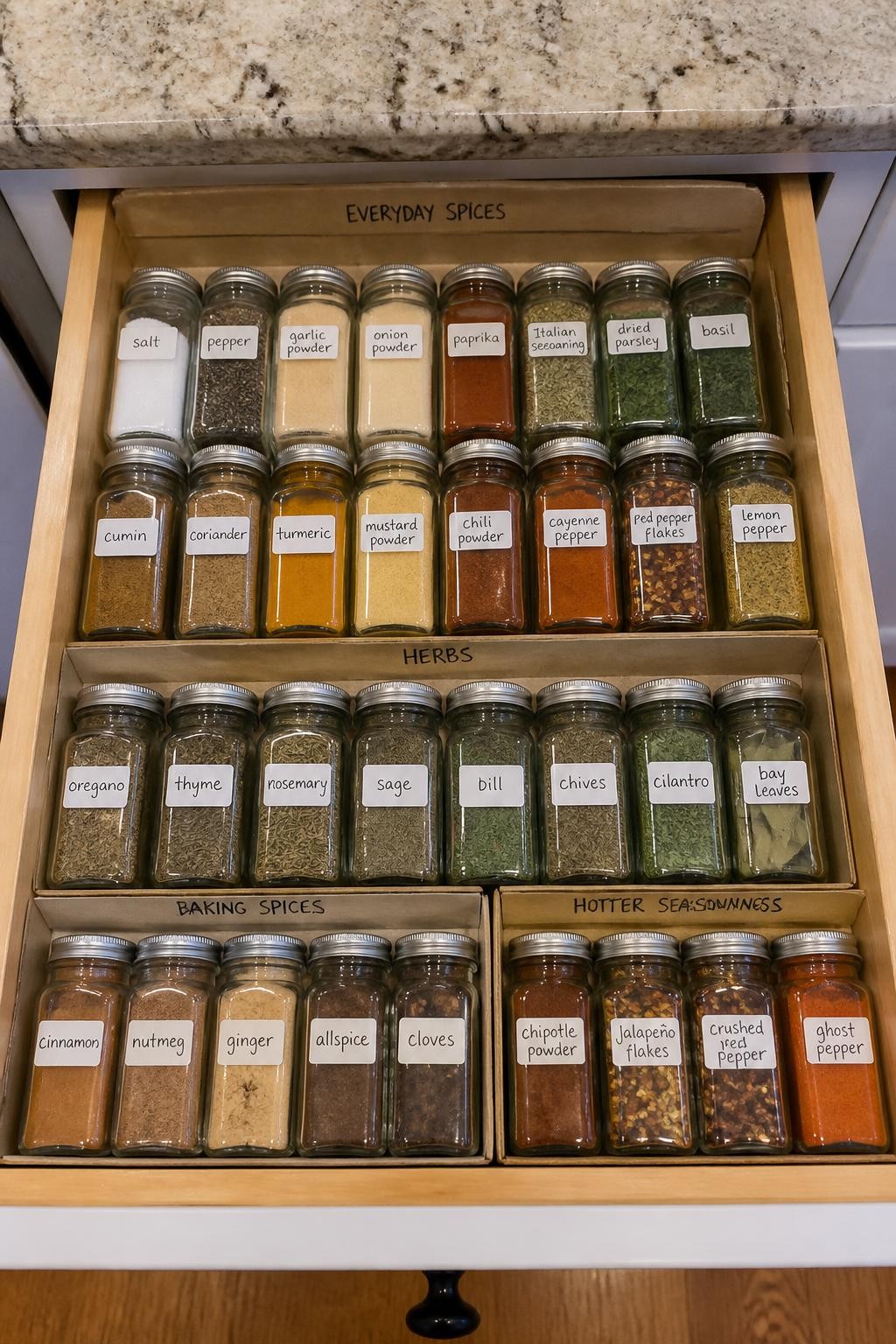
A shallow spice drawer allows you to see each label without moving several jars first.
Arrange the jars alphabetically or group them by how you cook. Keep your most-used spices near the front and remove duplicates that are old or nearly empty.
9. Turn a Drawer Into a Tea and Coffee Station
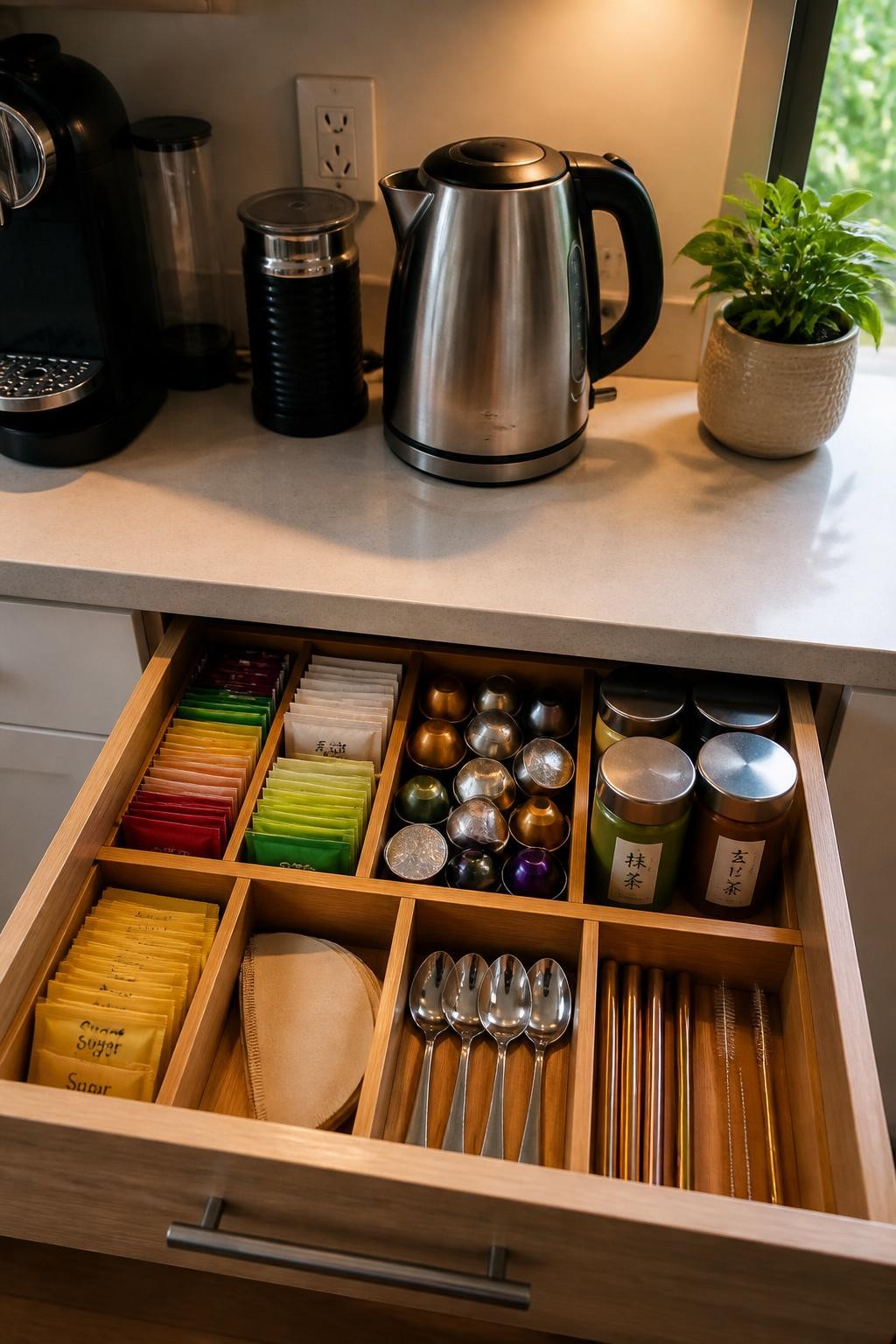
Drink supplies can take up a surprising amount of counter and cabinet space. A dedicated drawer keeps everything together while leaving the worktop clearer.
Store tea, coffee, filters, sweeteners, and measuring spoons in small compartments. Keep mugs in the cabinet directly above for a simple drink-making zone.
10. Store Pot Lids on a Cabinet Door

Pot lids take up less space when they are stored separately from the pans.
Attach secure holders to the inside of a cabinet door or side wall. Check that the handles do not prevent the door from closing before installing the full set.
11. Create a Small Appliance Parking Area
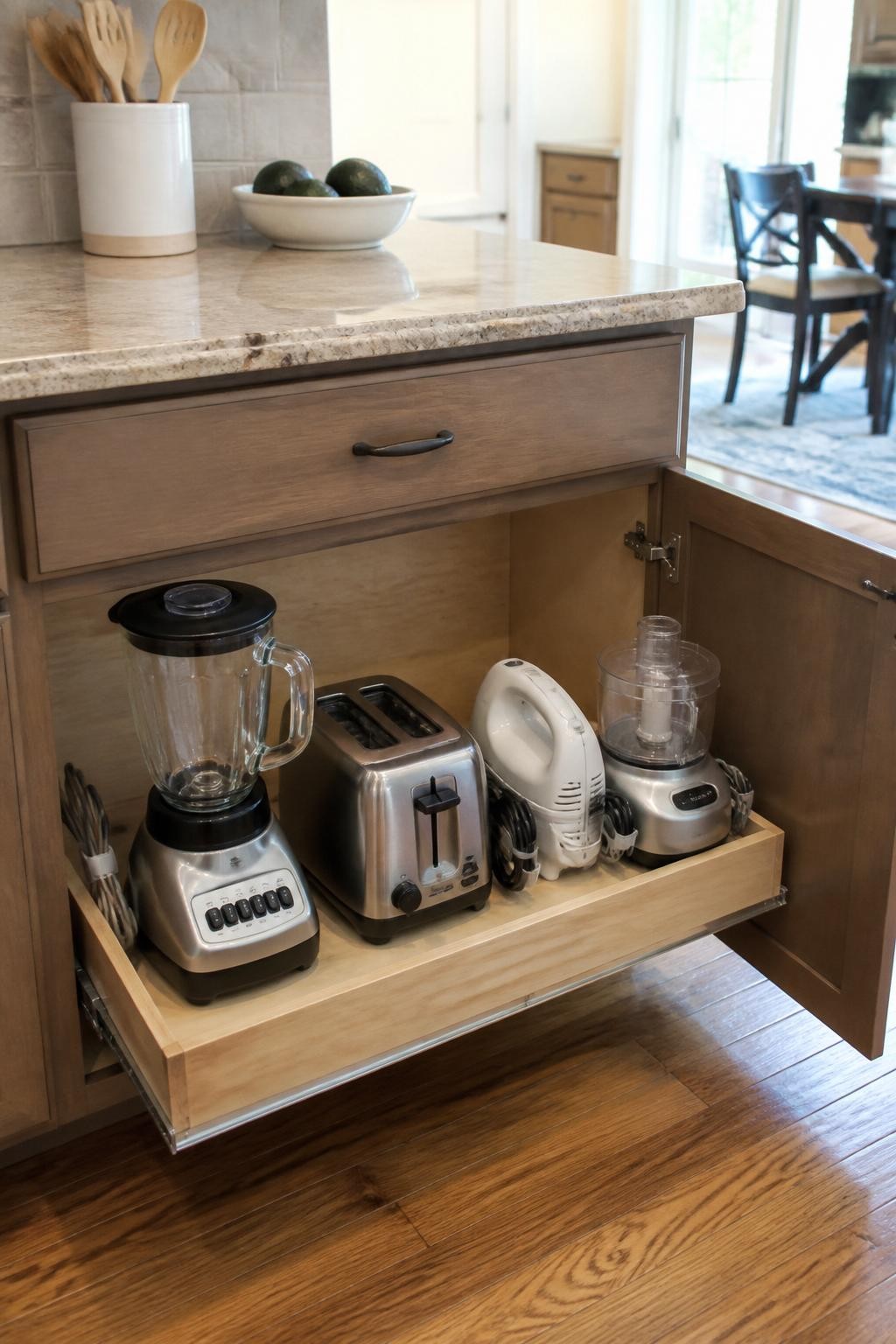
Small appliances often remain on the worktop because they are awkward to move or difficult to store.
Give frequently used appliances one easy-to-reach cabinet or shelf. Wrap each cord loosely and leave enough room to remove one appliance without lifting the others.
12. Use a Turntable for Cooking Oils and Sauces
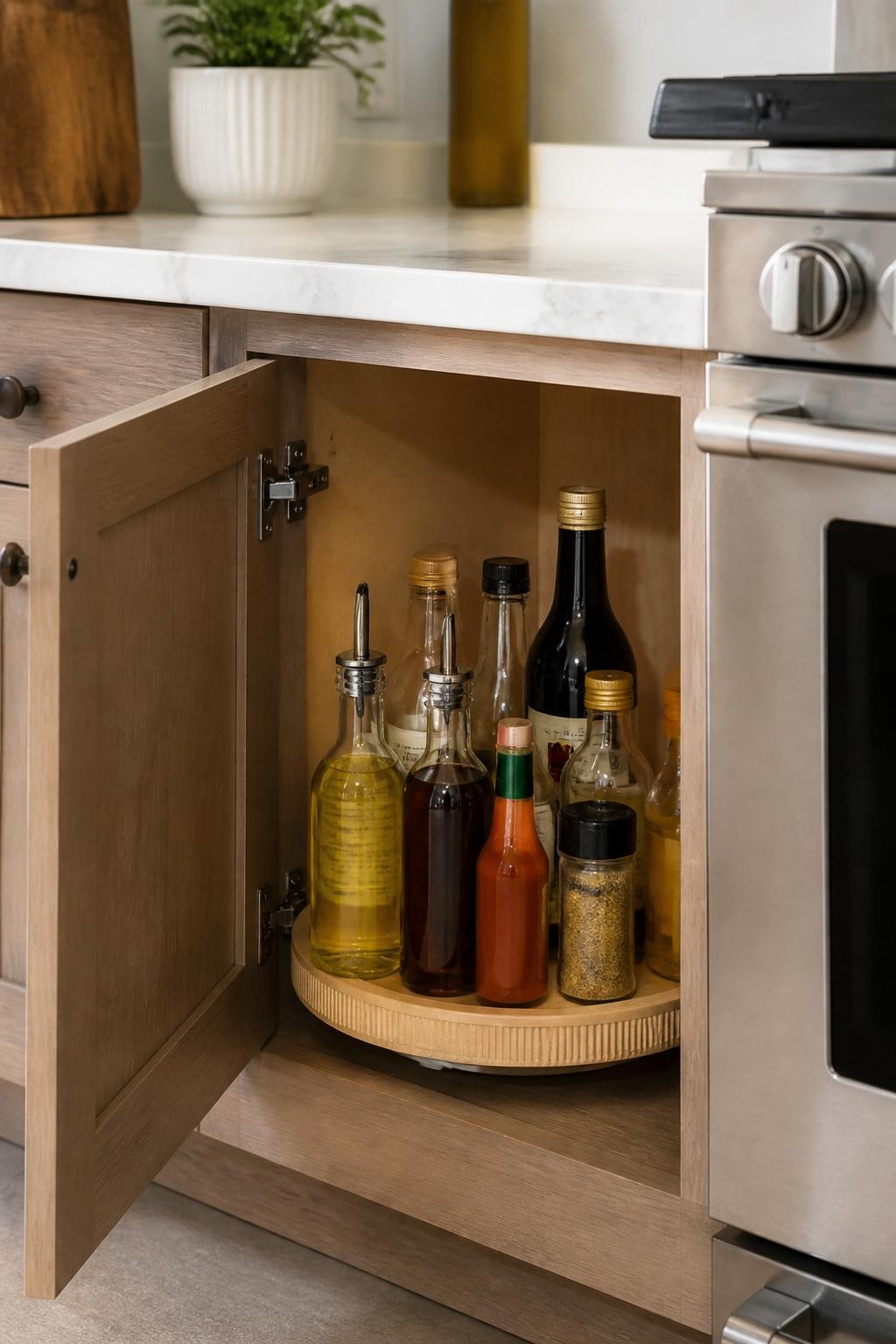
A turntable works well for bottles that tend to get lost in deep cabinets.
Place everyday cooking oils, sauces, and vinegars together and rotate the tray to reach items at the back. Keep tall bottles near the middle to reduce the chance of tipping.
13. Make a Refrigerator Leftovers Zone

Leftovers are less likely to be forgotten when they have a clear home inside the refrigerator.
Choose one eye-level shelf or bin for food that should be eaten soon. Check the area before cooking or ordering food so useful meals are not wasted.
14. Keep Cleaning Cloths in a Divided Drawer
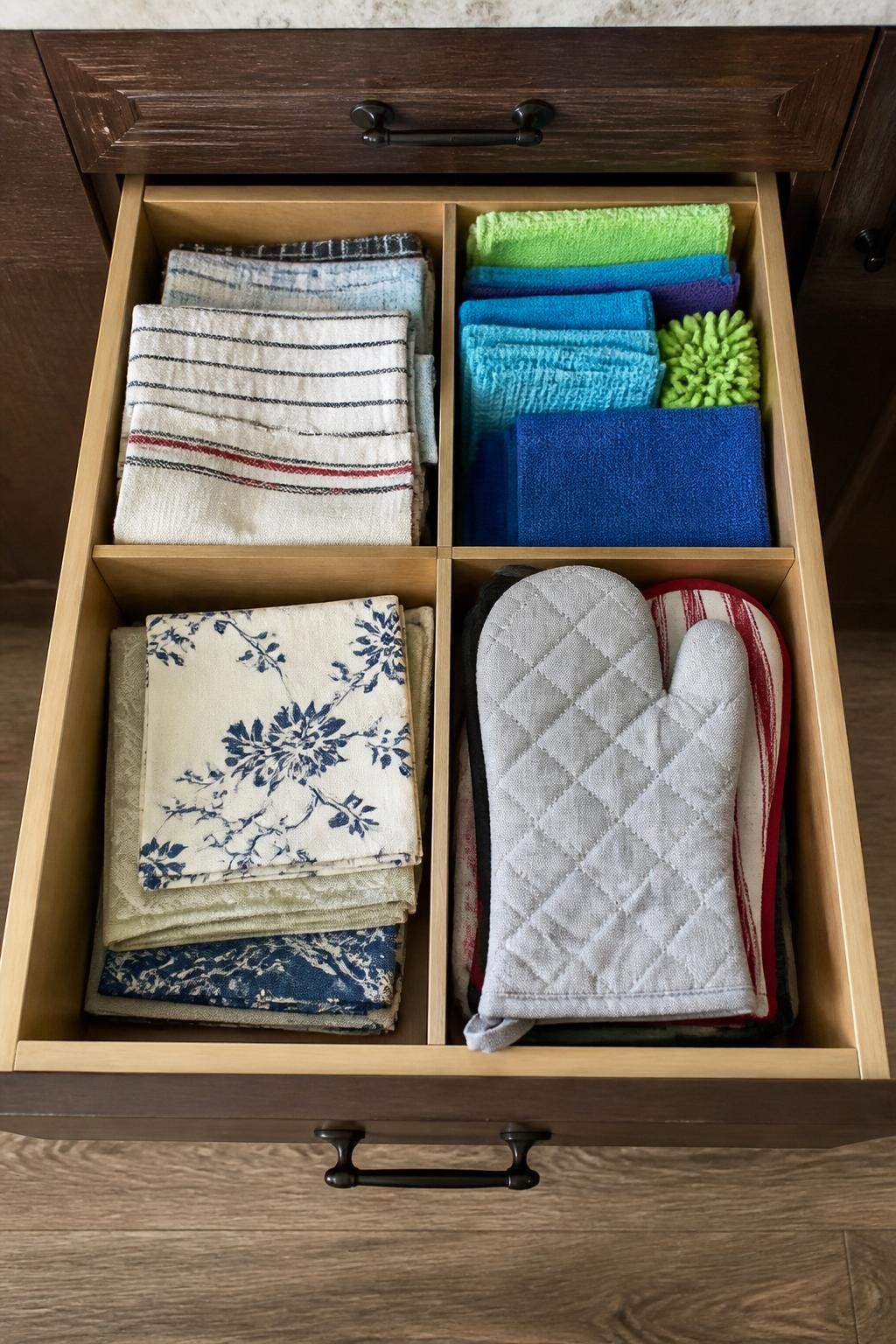
Kitchen fabrics become messy when tea towels, cloths, napkins, and oven gloves are pushed into the same crowded drawer.
Use dividers to separate each category and fold items vertically where possible. Keep only the amount that fits comfortably so the drawer remains easy to close.
15. Add a Temporary Countertop Drop Zone
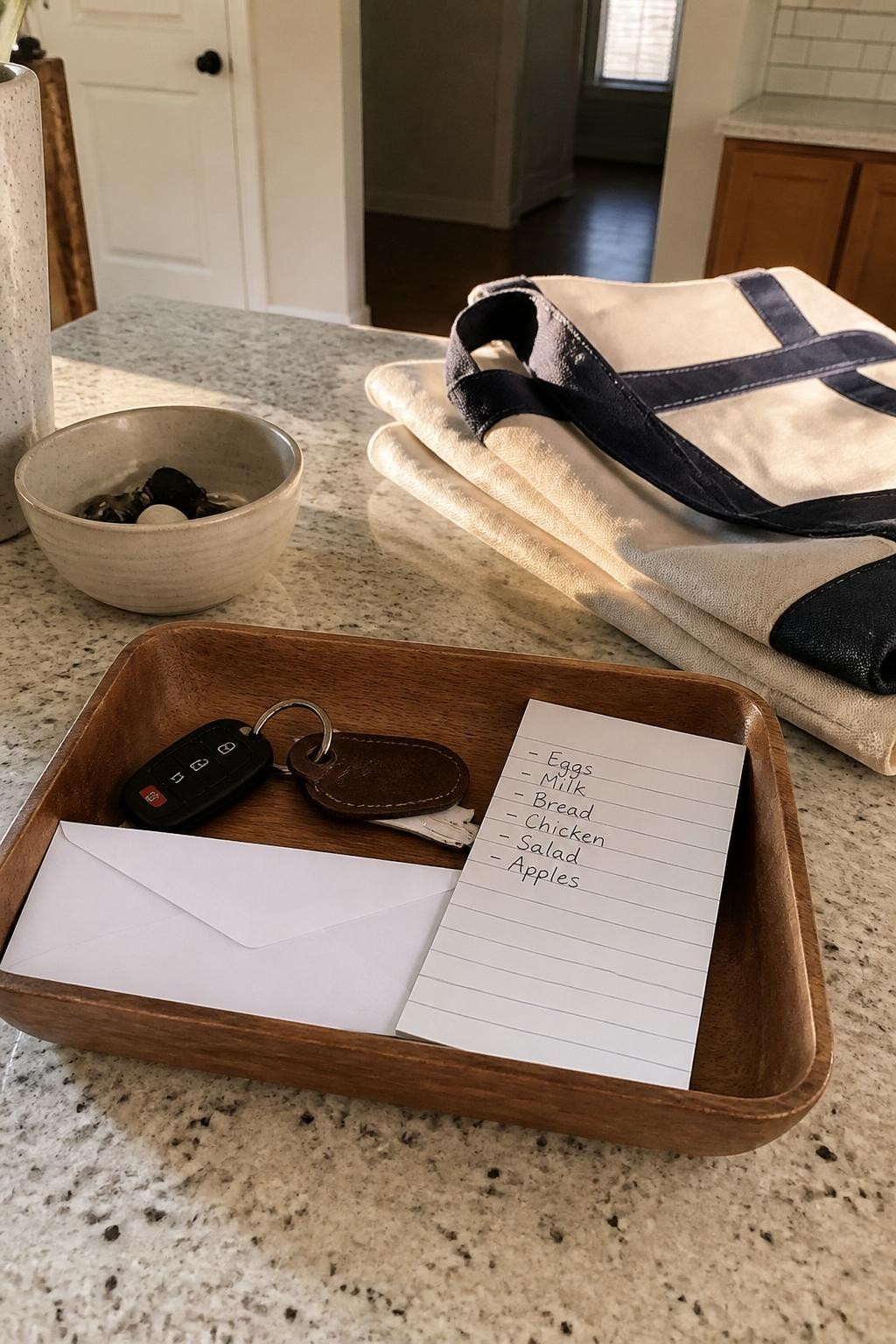
Kitchens often collect keys, receipts, mail, and items that need to be returned to another room. A small tray keeps this temporary clutter contained.
Choose a limited space and clear it regularly. The goal is not to create permanent storage, but to stop small objects from spreading across the entire counter.