







In This Article Show
There’s a special kind of disappointment that comes with spring: watching your neighbors’ tulips bloom while yours are nowhere to be seen, or produce only sad, stunted flowers.
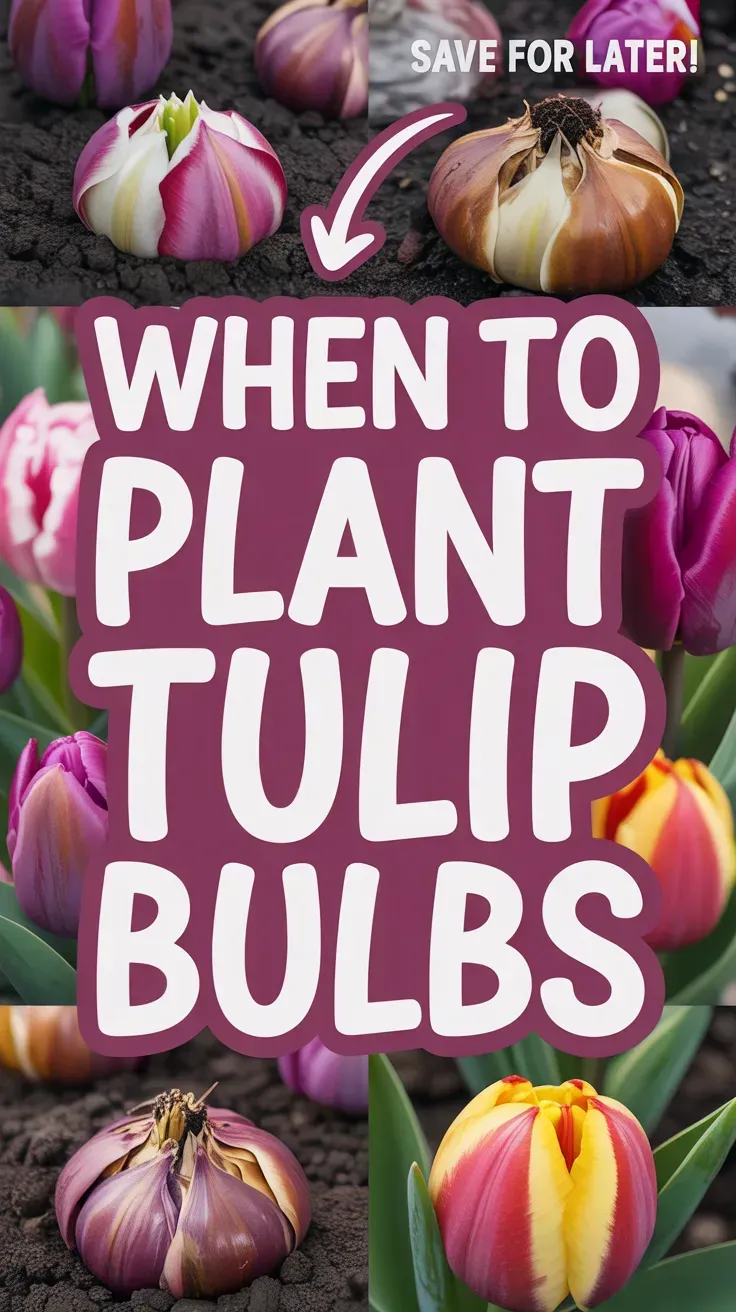
More often than not, it’s because the bulbs went into the ground at the wrong time. Tulips have a specific need that can’t be rushed.
The secret is that tulips are planted not in the season you want them to bloom, but in the season before. This guide will help you nail the timing, giving your bulbs exactly what they need to wake up in spring with vibrant, show-stopping color.
The Golden Rule: Plant in Fall, Not Spring
Tulips must be planted in the fall. Here’s why:
- They Need a Cold Winter: Tulip bulbs require a long period of cold dormancy (12-16 weeks) to trigger the biochemical processes that lead to blooming in spring.
- Spring-Planted Bulbs Won’t Bloom: If you plant bulbs in spring, they won’t have had this necessary cold period. You might get leaves, but you’ll almost never get flowers.

Your Perfect Planting Window
The goal is to plant late enough so the soil is cool, but early enough that the bulbs can establish roots before the ground freezes solid.
The Best Signal
Plant when your average nighttime temperatures are consistently in the 40s to 50s Fahrenheit (4-10°C). A good rule of thumb is to plant 6-8 weeks before your ground freezes hard.
A Classic Benchmark:
- Many gardeners plant after the first light frost has hit.
- An old, reliable saying is to plant around Columbus Day in the North and Thanksgiving in the South.
What Happens if You Plant Too Early or Too Late?
- Too Early (Warm Soil): Bulbs are susceptible to rot and fungal disease. Warmth can also trigger premature growth, which a subsequent frost will damage.
- Too Late (Frozen Ground): Bulbs won’t have time to grow roots, leading to poor survival, weak stems, or no blooms at all.
A Simple Climate-Based Timeline
- Cold Northern Climates (Zones 3-5):
- Plant: Late September to mid-October.
- Tip: Apply a thick layer of mulch after planting to prevent frost heaving.
- Temperate Climates (Zones 6-7):
- Plant: October through early November.
- This is ideal tulip country. The cycle of cold winters and warm springs suits them perfectly.
- Mild Southern Climates (Zones 8-9):
- Plant: Late November through December.
- Crucial: You must pre-chill your bulbs. Refrigerate them (away from fruit) for 10-14 weeks before planting in cool soil.
- Very Warm Climates (Zone 10+):
- Strategy: Tulips are treated as annuals here. Purchase pre-chilled bulbs and plant them in December or January for a one-time spring display.
How to Plant Your Tulips for Success
- Buy Good Bulbs: Choose firm, plump bulbs with no soft spots or mold. Bigger bulbs usually mean bigger flowers.
- Choose the Right Spot: Tulips need full sun and excellent drainage. Soggy soil is a death sentence.
- Plant Deep Enough: The universal rule is to plant the bulb 3 times as deep as it is tall. For most tulips, this means a hole 6-8 inches deep. This depth protects them from temperature swings and animals.
- Pointy End Up: Place the bulb with the pointed tip facing upward.
- Spacing: Plant bulbs about 4-6 inches apart.
- Water Once: After planting, give the bed a good soak to settle the soil and encourage root growth. Then, rely on fall rains.
A Note on “Naturalizing” vs. “Annual” Display
- For a One-Time Show (Annual Display): Plant as directed above. After blooming, you can dig up and discard the bulbs, as many varieties weaken in subsequent years.
- For a Returning Display (Naturalizing): Choose specific “naturalizing” or “perennial” tulip varieties. Plant them even deeper (8+ inches) in a sunny, well-drained, and undisturbed spot. Allow the foliage to die back completely after blooming to feed the bulb for next year.
Can You Plant in Winter or Early Spring?
- Winter: If you find unplanted bulbs in December or January and the ground is workable (not frozen), plant them immediately. They still have a chance.
- Early Spring: Bulbs found in spring are unlikely to bloom that year. Plant them anyway as an experiment—they may gather strength and bloom the following spring.
Planting tulips is an act of delayed gratification and optimism. Tucking those brown, onion-like bulbs into the chilly autumn soil is your promise to yourself for a brighter spring. Get the timing right, and that promise will be kept with a spectacular display.