






In This Article Show
Hydrangeas are honestly some of my favorite garden plants—their big, colorful blooms just light up any yard. Even if you’ve only got a tiny patch, there are so many ways to use hydrangeas to make your garden feel welcoming and beautiful.
So here are 15 dreamy hydrangea garden ideas that’ll help you create a space packed with color and charm all season long.
There’s something here for every space and style—hopefully a few will spark ideas for your own garden.
1. Create a hydrangea hedge for dense blooms and privacy
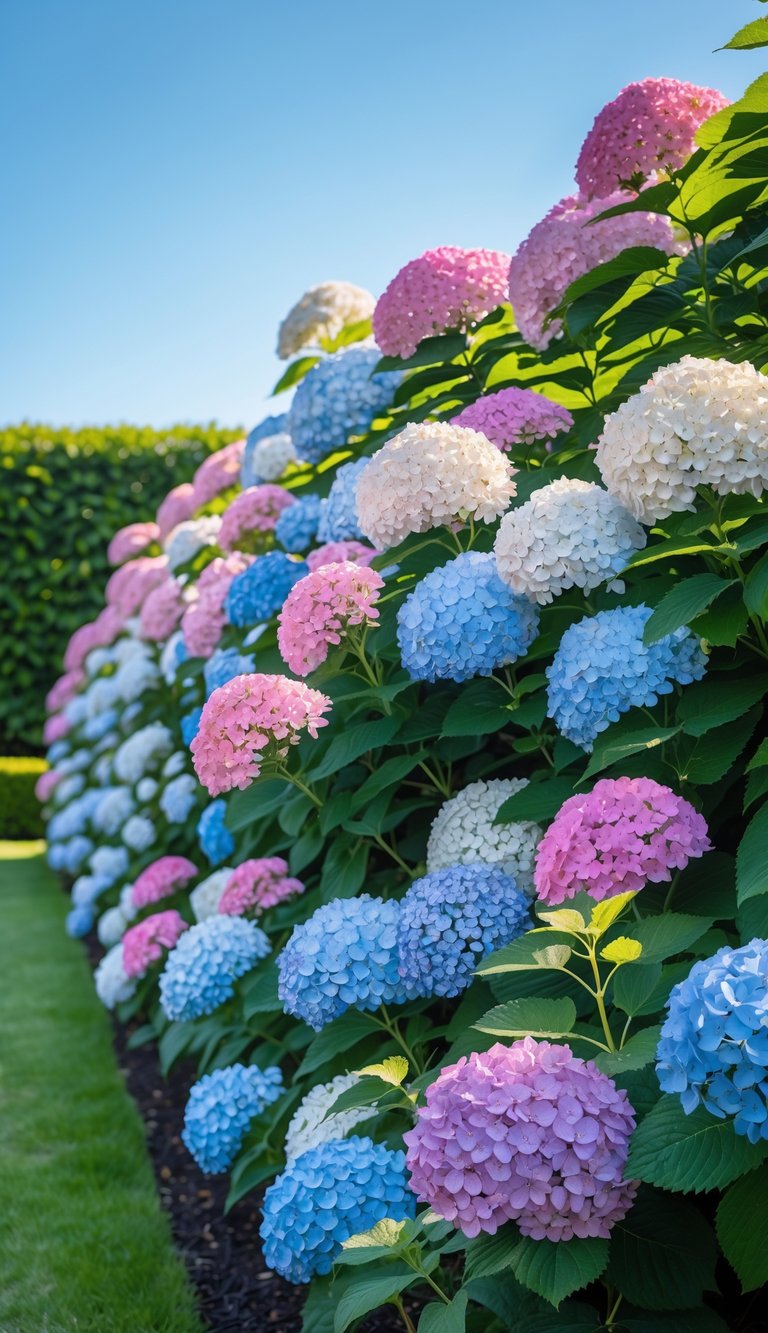
I love using hydrangeas as a natural hedge—they grow thick and explode with huge flowers in summer. I space them out according to their mature width so each one has room to fill in. It’s an easy way to get a lush screen that’s beautiful and adds a bit of privacy.
2. Mix bigleaf and oakleaf hydrangeas for varied texture
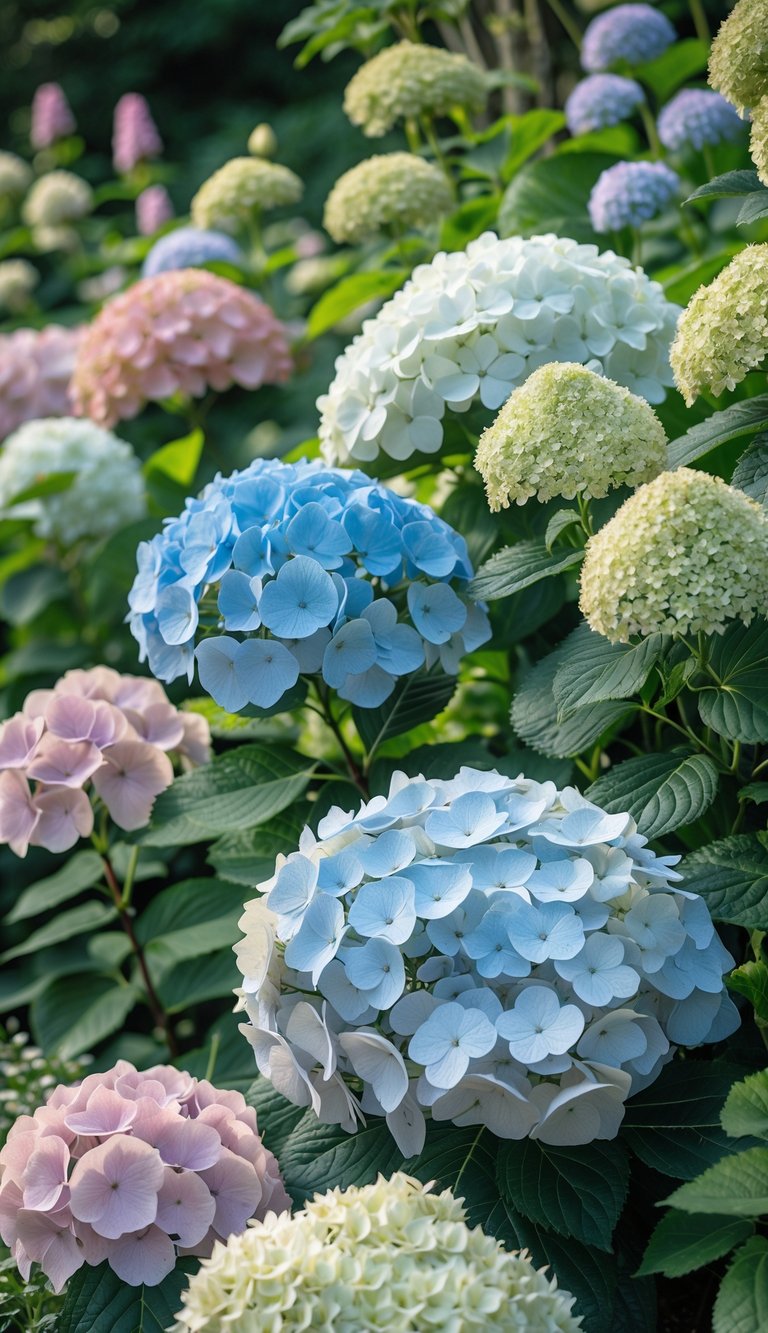
Pairing bigleaf hydrangeas with oakleaf hydrangeas always makes the garden more interesting. Bigleaf types have rounded leaves and those classic, chunky flower heads, while oakleafs show off their deeply lobed leaves and a different vibe.
Mixing them gives you a cool combo of shapes and textures. Their blooms also change up in color and size, so you don’t get bored looking at them.
3. Use Annabelle hydrangeas for large, white floral clusters
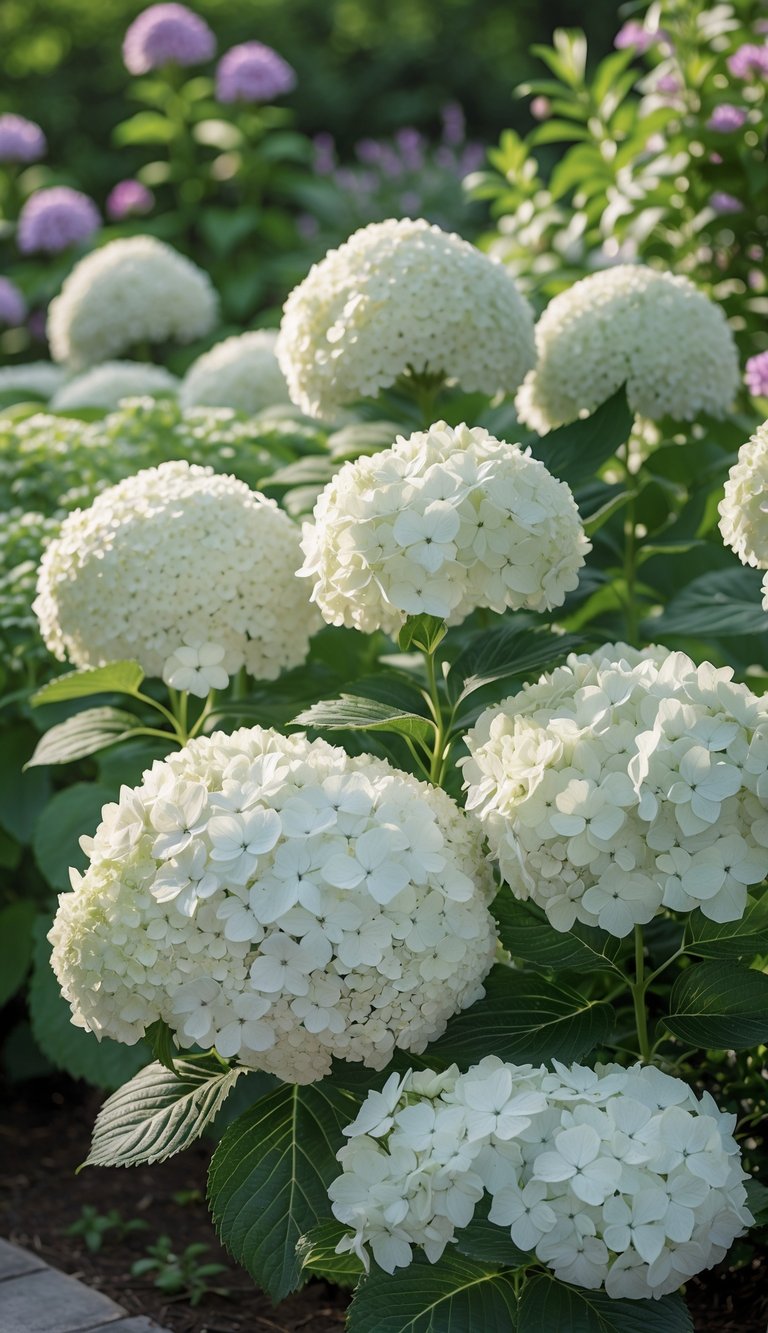
When I want those big, bold white blooms, I plant Annabelle hydrangeas. The flower clusters can get massive—sometimes a foot across. They start out a pale green and open up to a bright white. In my experience, they’re happiest with a bit of afternoon shade and soil that stays moist.
4. Plant hydrangeas in tall border mounds for visual impact
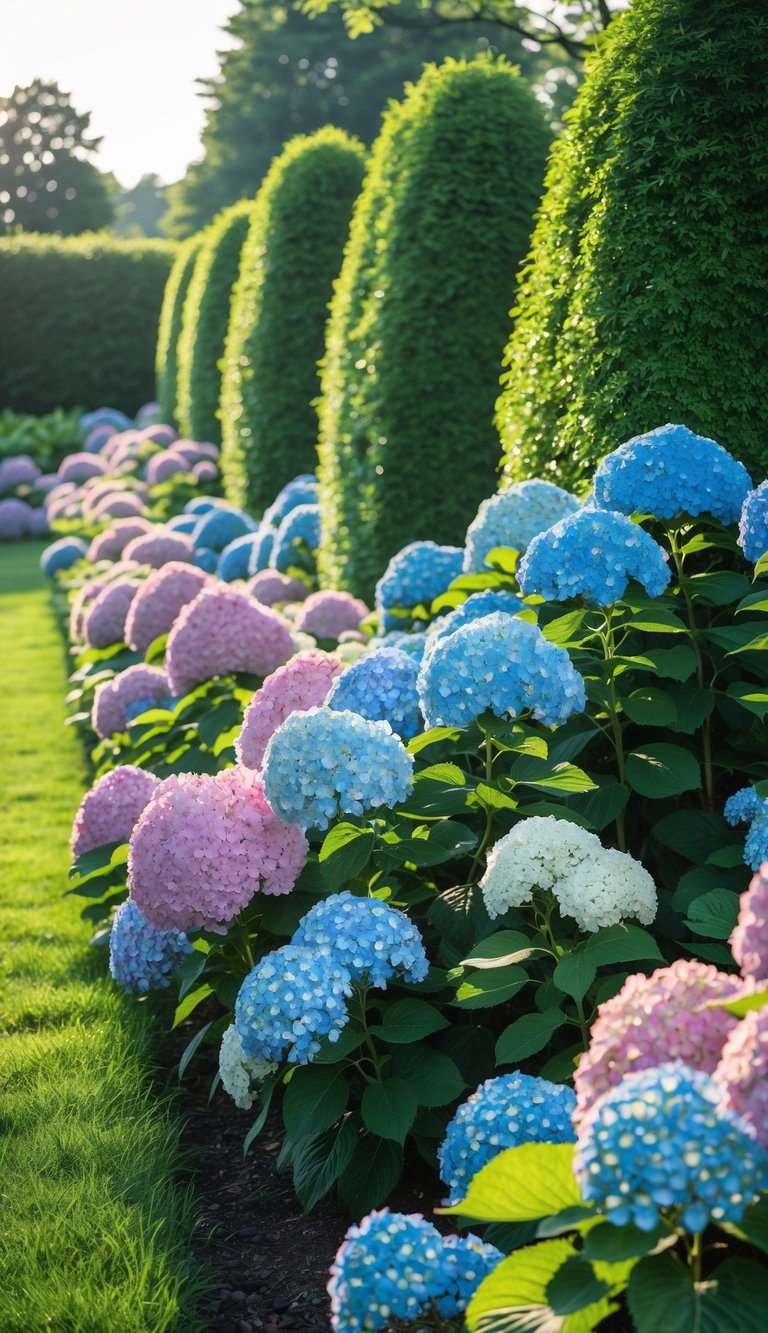
I like planting hydrangeas on raised mounds along garden borders. The blooms really pop at eye level and you get that nice layered look. These tall borders make the flowers visible from across the yard, which is always a win.
5. Frame entryways with pink and white hydrangea varieties
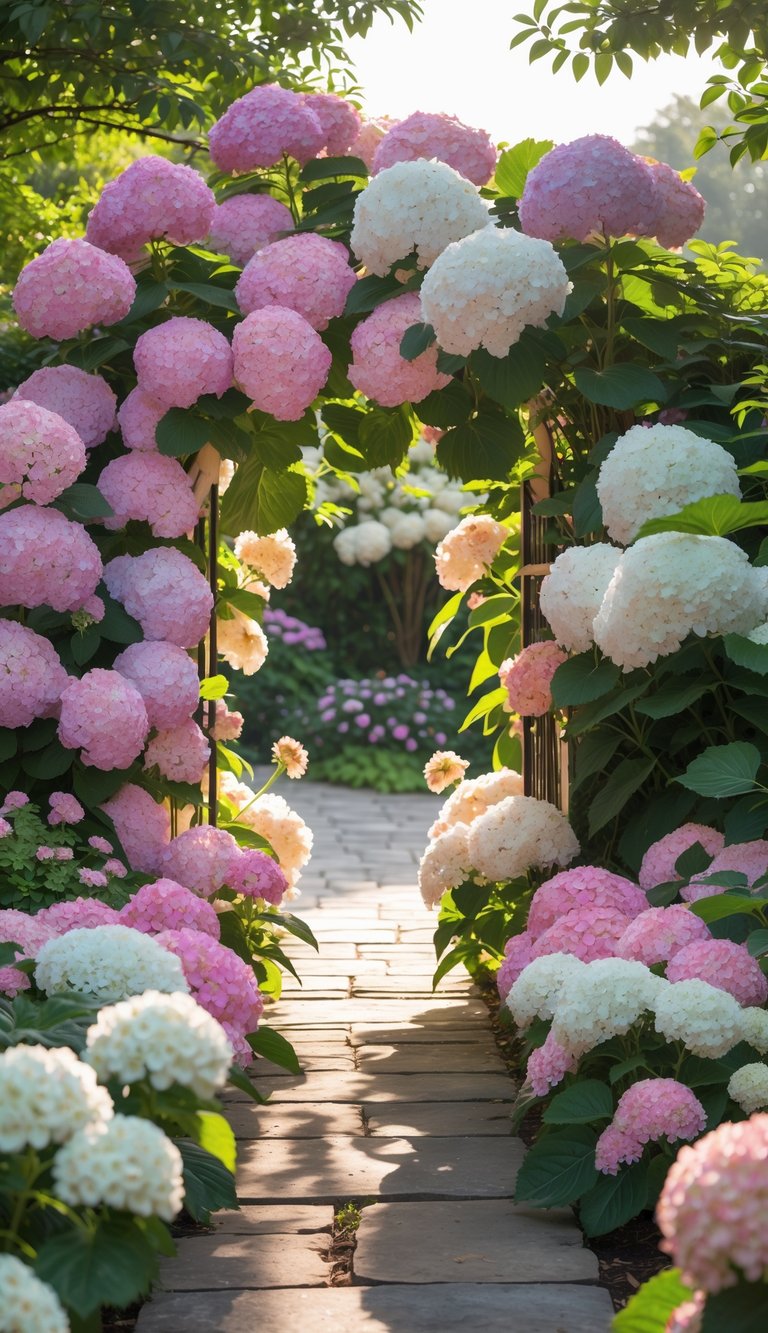
I like planting pink and white hydrangeas around front doors or gates. They make the entry look soft and inviting. These colors really brighten up shaded spots and highlight the walkway—plus, it’s a simple touch that works for almost any home.
6. Incorporate hydrangeas in cottage garden designs
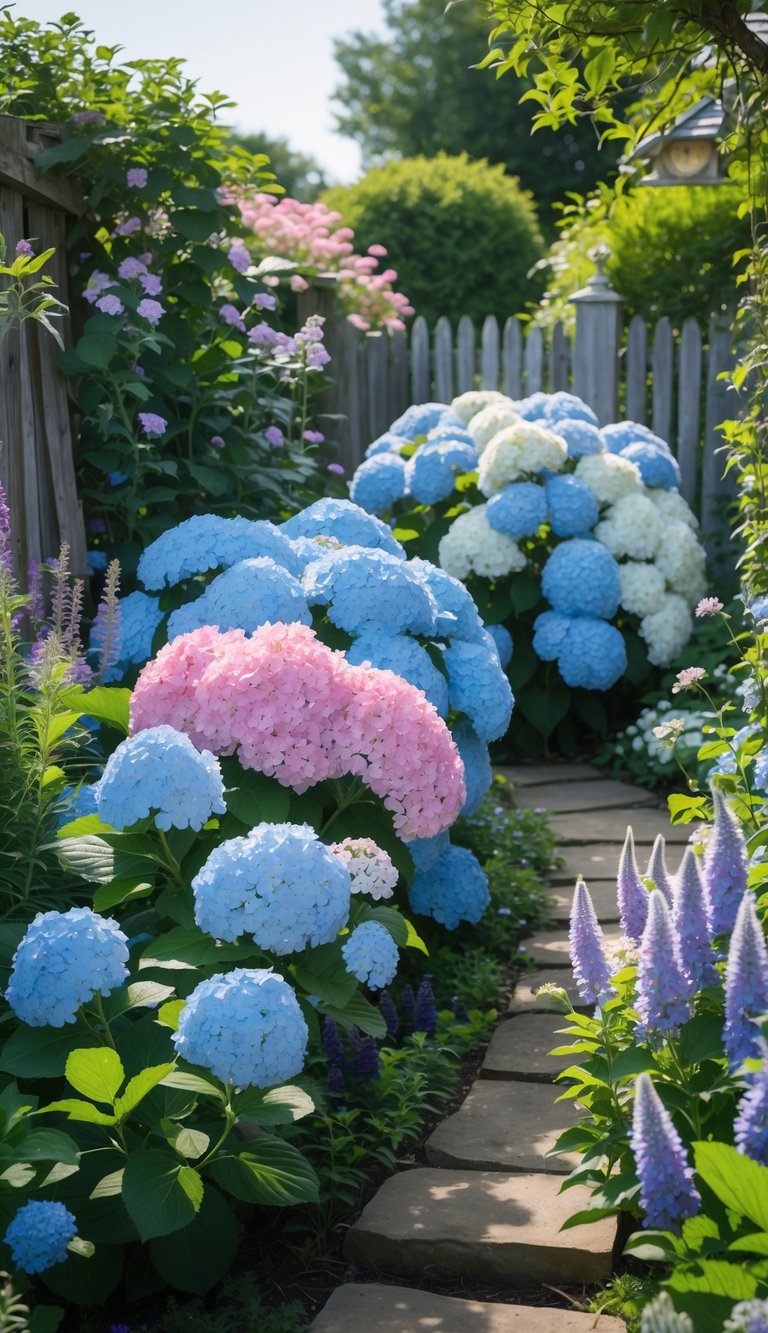
I love adding hydrangeas to cottage gardens—their big, puffy blooms fit right in with classic cottage flowers. I usually mix them with hollyhocks, peonies, or cosmos for more variety. If you’re short on space, compact hydrangeas are a lifesaver.
7. Pair hydrangeas with ferns and hostas for shade gardens
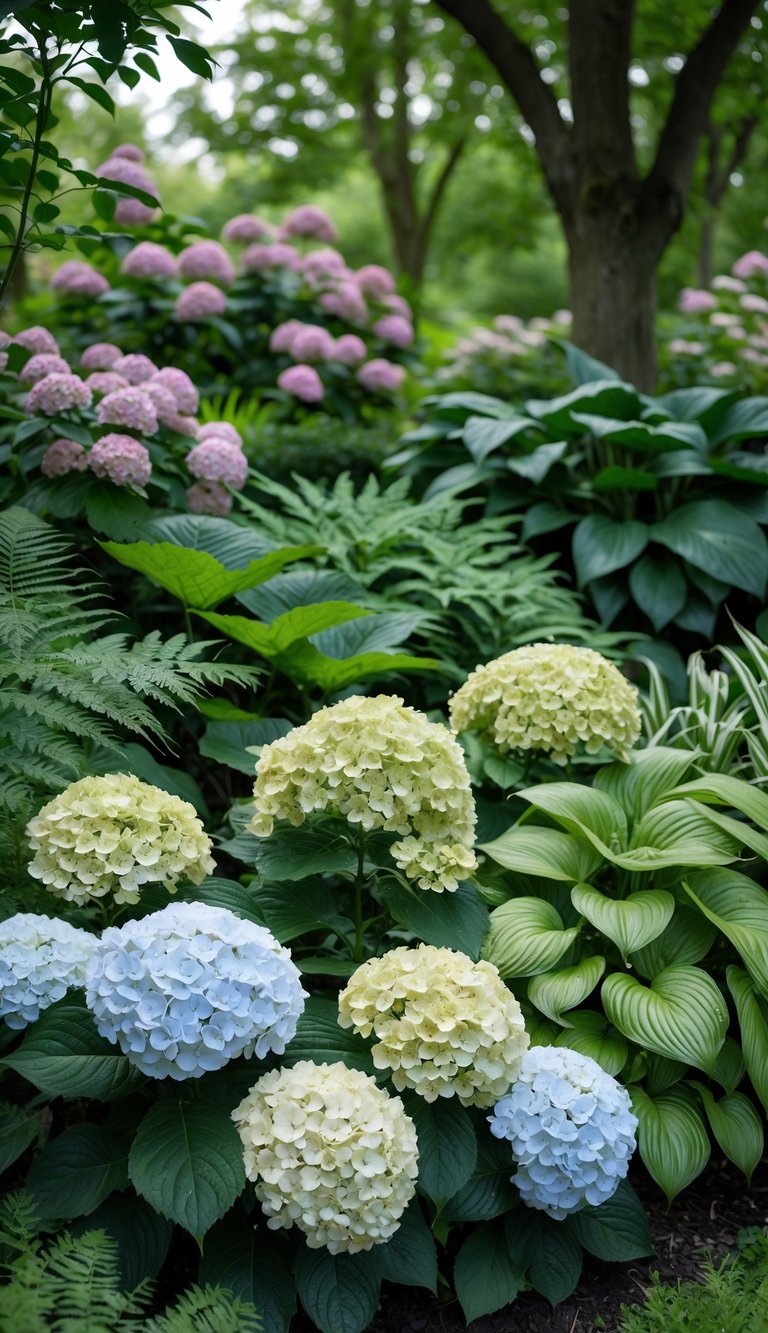
In my shady spots, I like to plant hydrangeas with ferns and hostas. The combo of big hydrangea blooms, feathery ferns, and broad hosta leaves just looks full and lush. All three love shade and moist soil, so they’re a low-stress trio.
8. Use containers for hydrangea placement on patios or decks
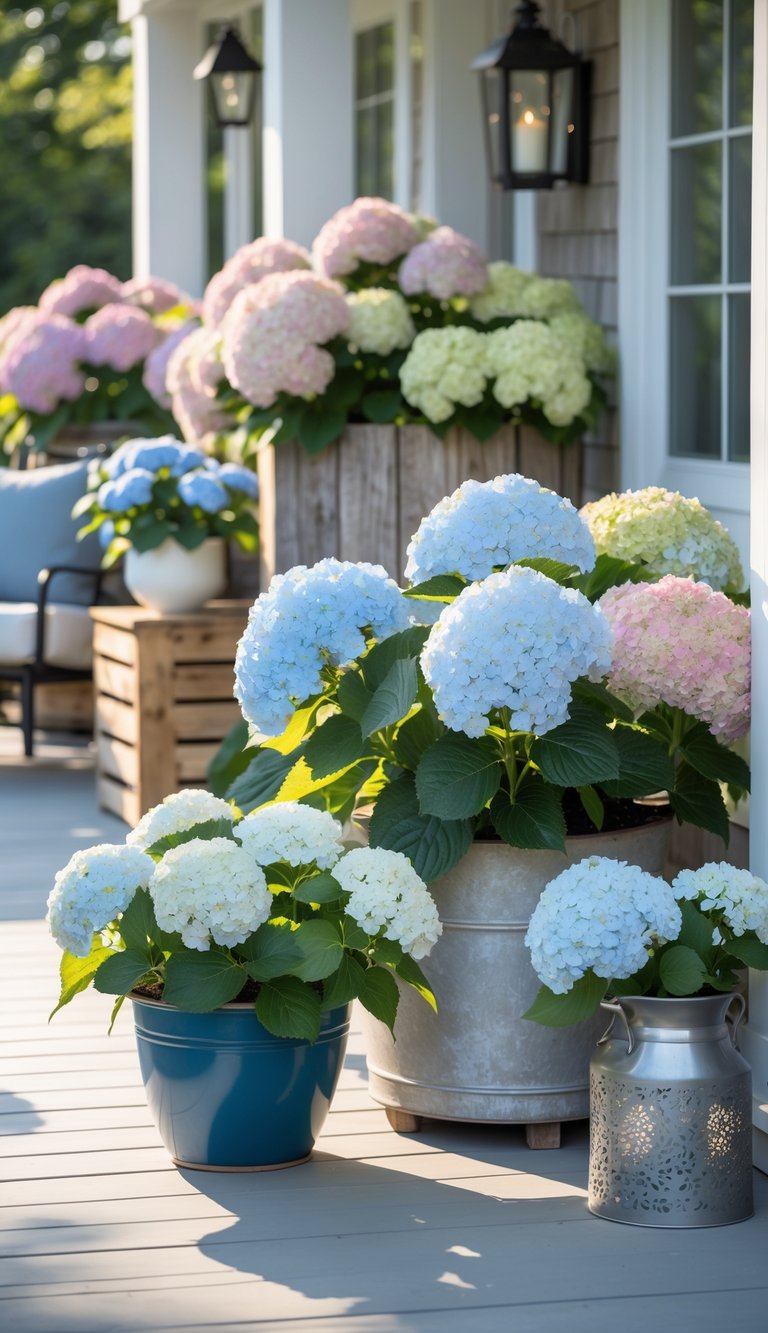
I use big containers for hydrangeas on my patio or deck. Pots let me move plants around for better sun or shade, and honestly, it’s a great way to add color wherever it’s needed.
9. Create cascading blooms over stone walls for whimsical effect
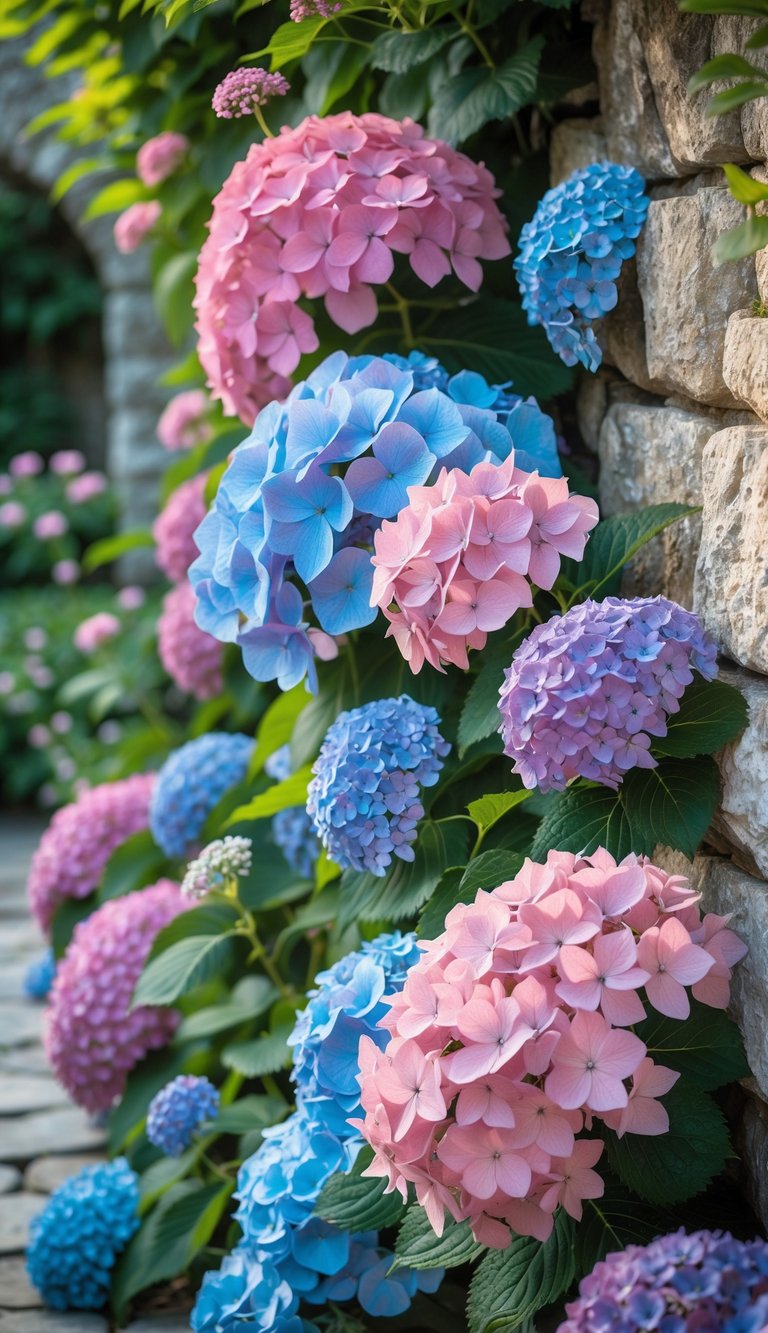
I like to plant hydrangeas at the top of stone walls and let the flowers and leaves spill over the edge. It softens the stone and adds a bit of whimsy. Trailing or bigger varieties work best for this look, in my opinion.
10. Plant smooth hydrangeas for long-lasting spring blooms
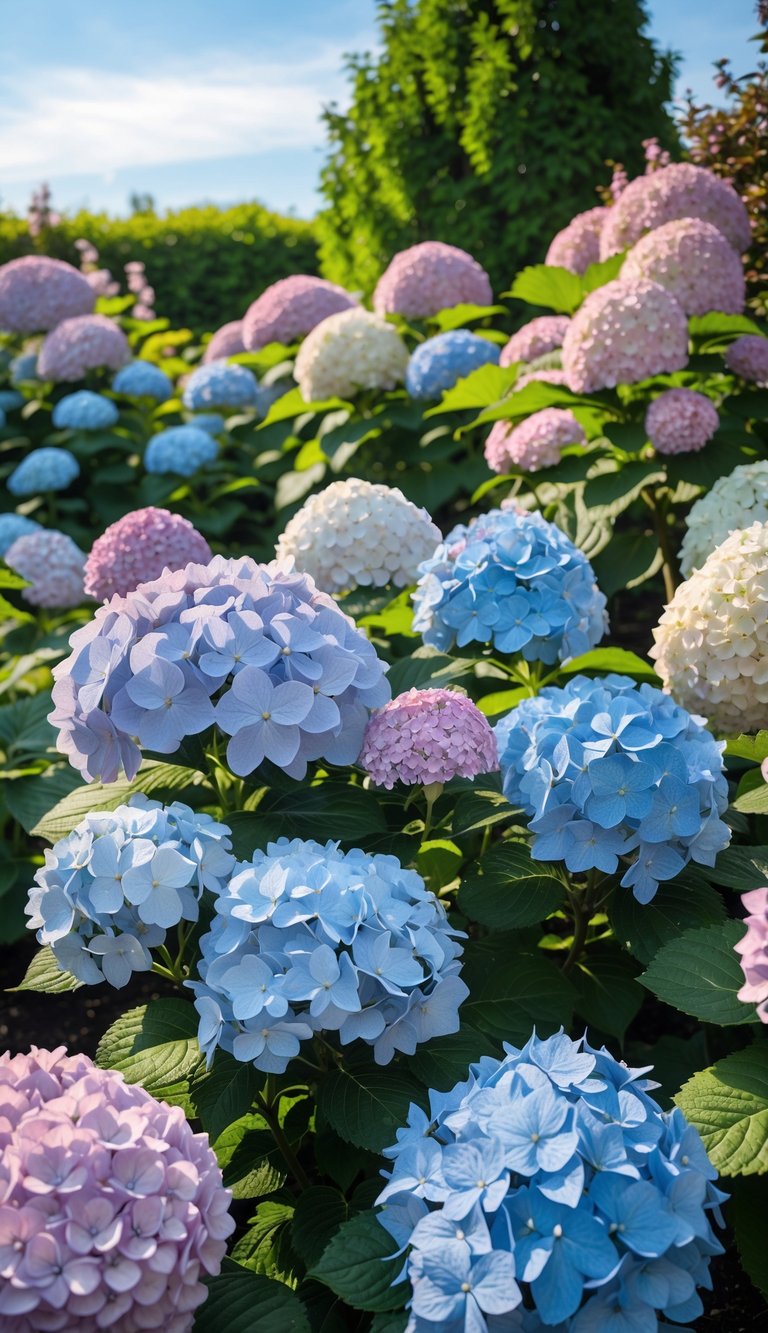
I plant smooth hydrangeas (Hydrangea arborescens) for their reliable spring blooms. They thrive in partial shade and shrug off cold weather pretty well. Their flowers last ages and bring soft color to the garden just when you need it most.
11. Include lacecap hydrangeas for delicate flower form contrast
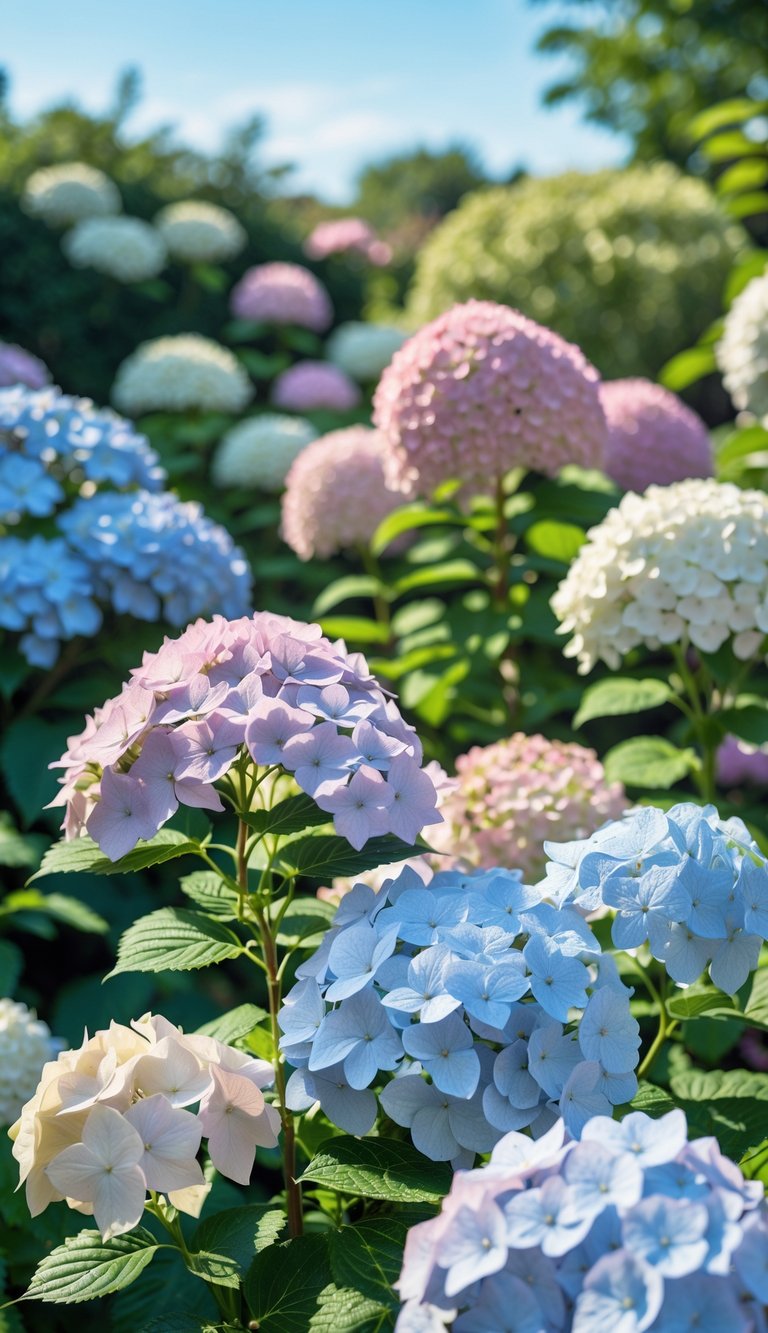
I use lacecap hydrangeas whenever I want more variety. Their flat, delicate flowers really stand out next to the round mopheads. The unique shape gives the garden a softer, more interesting look—honestly, they’re a bit underrated.
12. Design partial to full sun areas with mophead hydrangeas
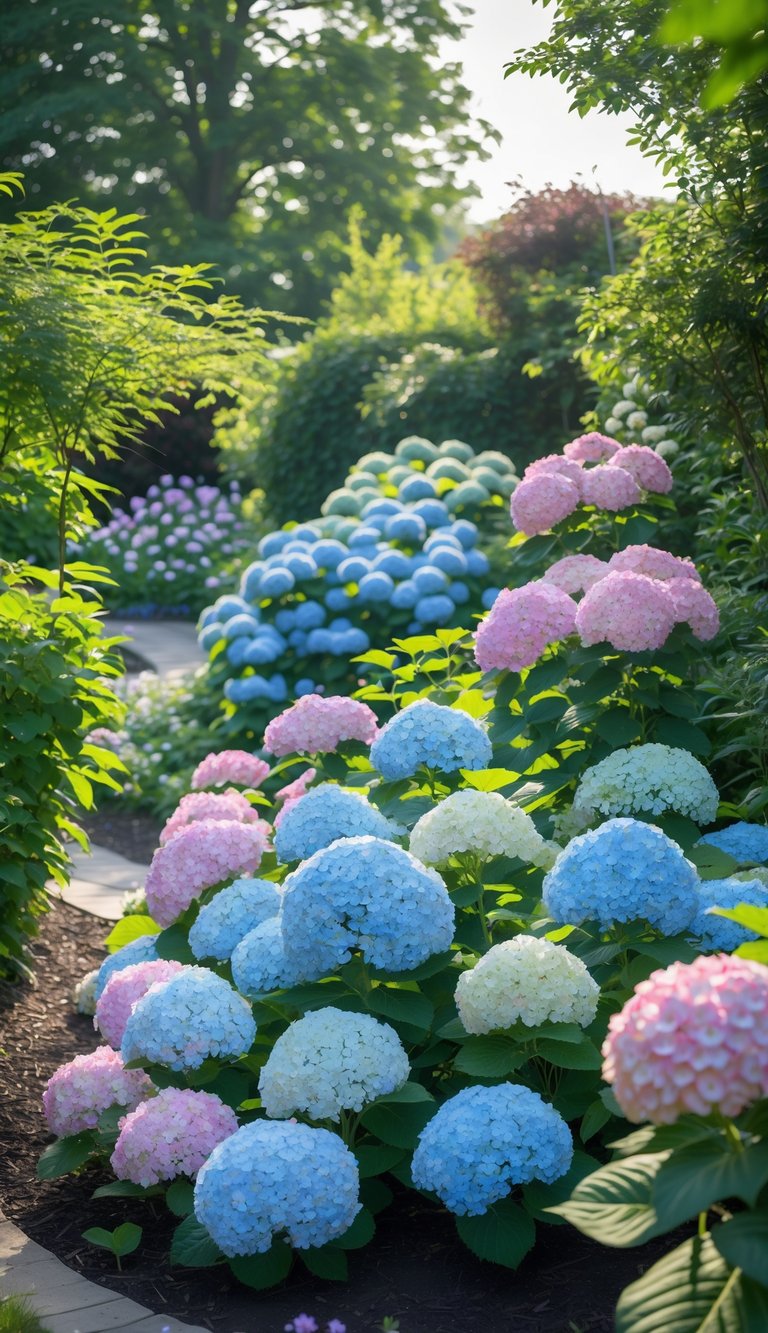
I use mophead hydrangeas in spots with partial to full sun. Their big, round flower clusters add a burst of color. I always make sure they get a little shade during the hottest part of the day—otherwise, they can get a bit crispy.
13. Use fertilization timing to maximize bloom size and health
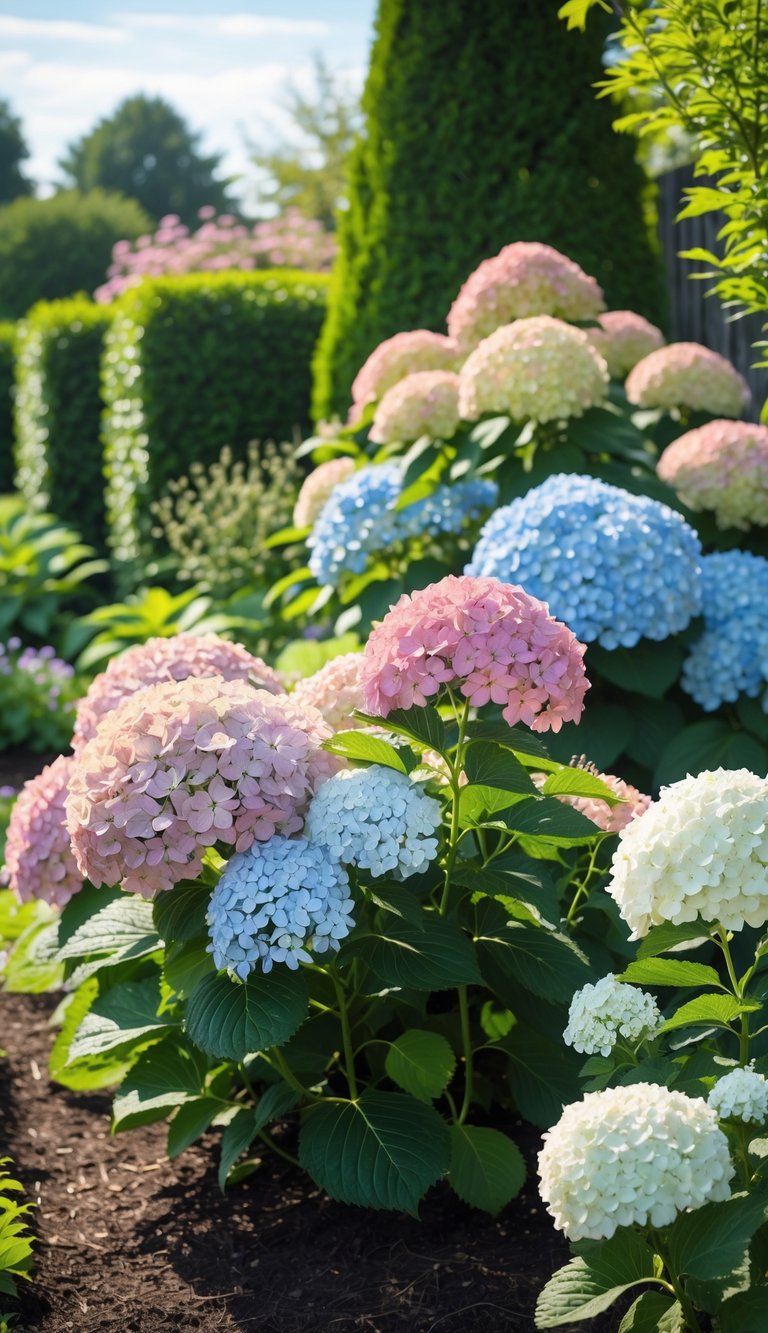
Every spring, when new leaves start popping, I give my hydrangeas a dose of balanced fertilizer. It helps them grow strong stems and huge blooms. I skip late-season fertilizing—otherwise, the growth gets weak and floppy, which nobody wants.
14. Include native oakleaf hydrangea for year-round interest
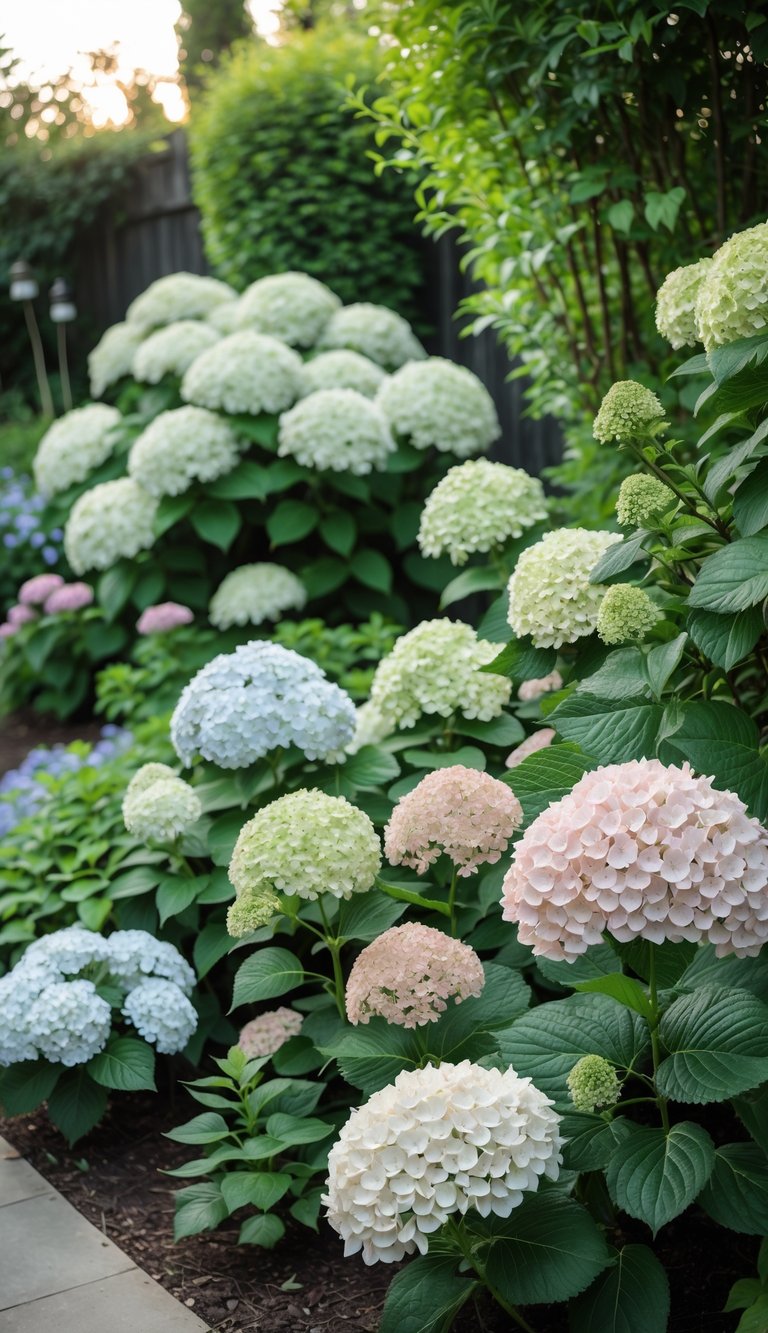
I like using oakleaf hydrangea for year-round interest. The bold leaves look great in spring and summer, then turn rich reds and burgundies in fall. Even in winter, the peeling bark adds something unique to the garden.
15. Arrange hydrangeas in mass plantings for dramatic color
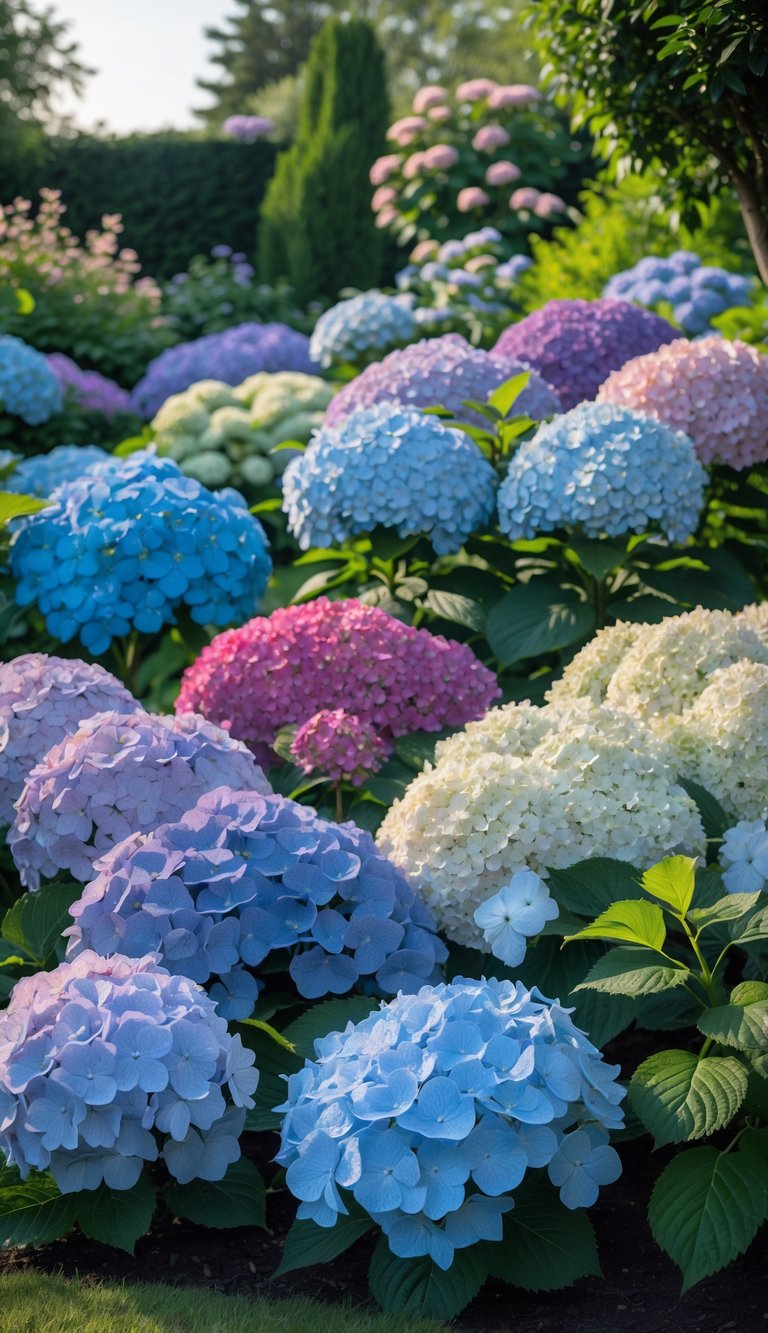
I like to group hydrangeas together in large clusters. When I plant a bunch of them close together, their blooms just sort of melt into this wild blanket of color.
This approach pops along borders or in those bigger, emptier patches in my garden. It really makes the flowers stand out, honestly—sometimes I catch myself staring a little too long.