


In This Article Show
Fall container gardens are an easy way to keep porches, patios, balconies, and entryways looking fresh after summer flowers begin to fade. Cooler temperatures open the door to hardy plants, rich seasonal colors, and textured arrangements that can stay attractive for weeks with less watering and maintenance than many warm-weather displays.
The strongest fall containers combine beauty with practical plant choices. Some can handle light frost, some provide herbs or vegetables, and others can be refreshed for winter without starting again. These ideas use realistic plant combinations that work well together and are simple enough to recreate at home.
1. Classic Mums and Trailing Ivy Planter
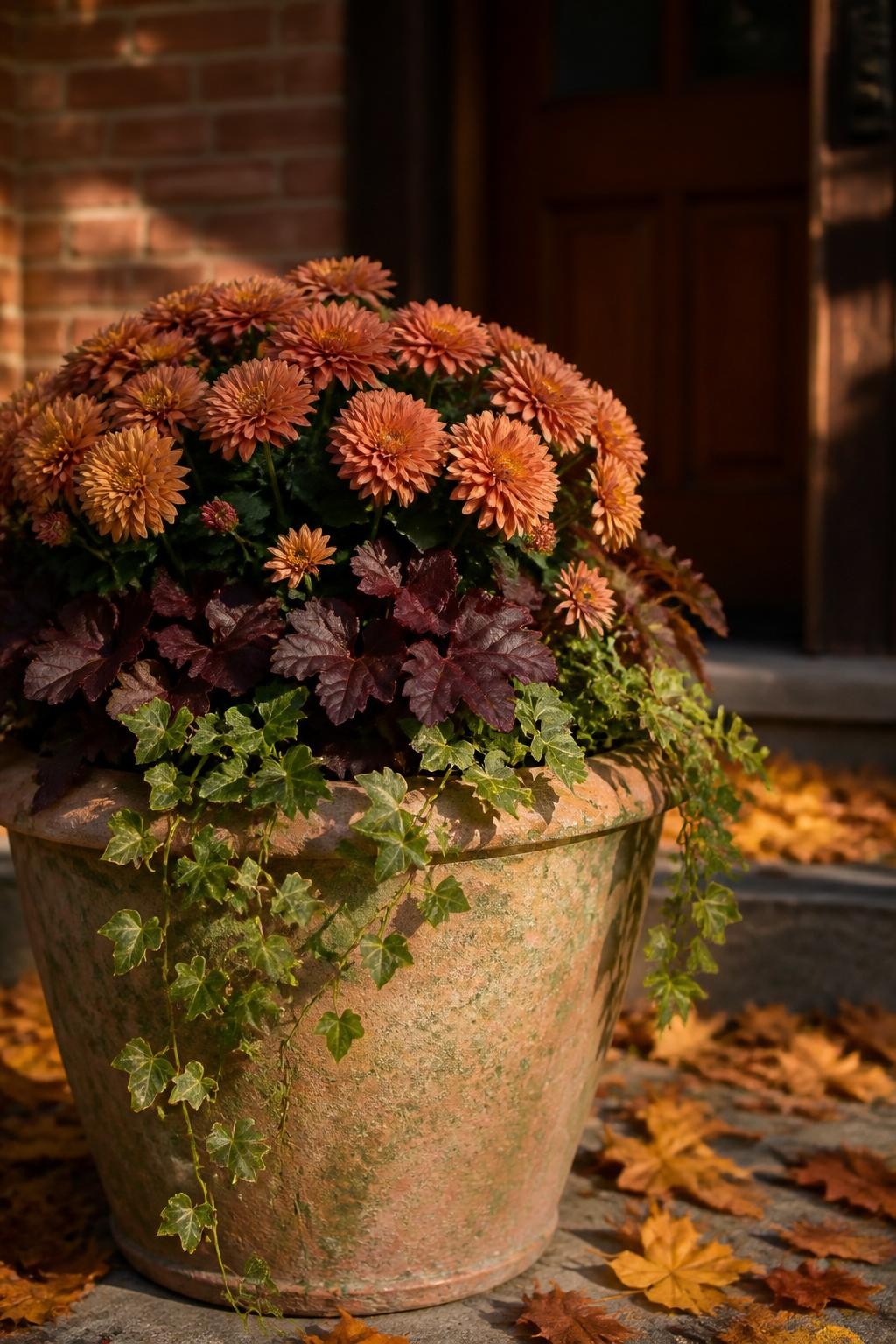
A full chrysanthemum gives this container an immediate burst of fall color, while ivy softens the edges and creates movement. Burgundy heuchera fills the space between them and continues looking attractive after some of the mum flowers begin to fade. Bronze, rust, deep red, or golden mums all work well for this arrangement.
Use a wide container with drainage holes so the plants have enough room. Keep the soil evenly moist because potted mums dry out faster than they appear to. When the mum finishes blooming, you can replace it with a small evergreen while leaving the ivy and heuchera in place for a winter update.
2. Cool-Season Salad Bowl
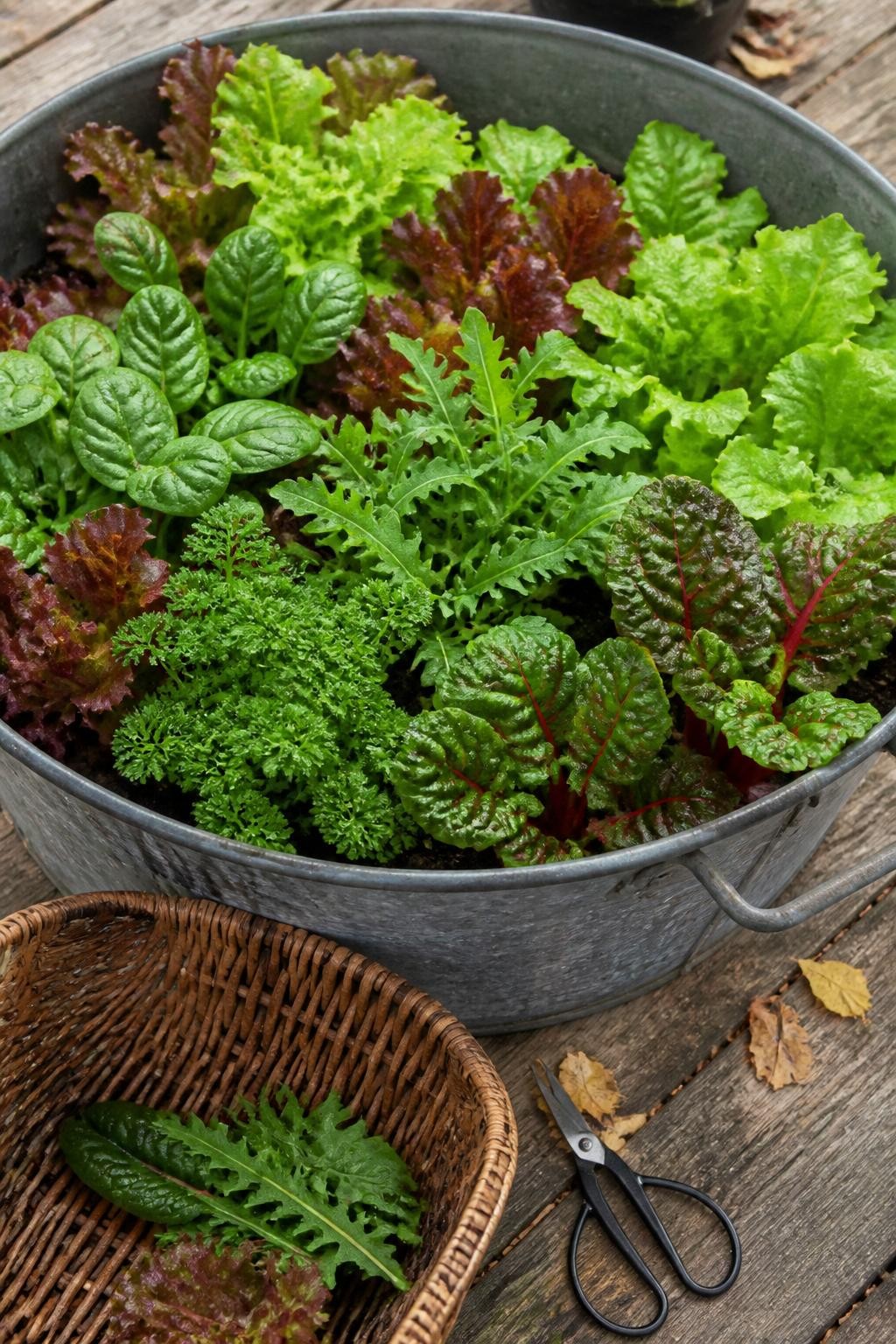
Turn a large bowl-shaped planter into a small edible garden filled with cool-season greens. Lettuce, spinach, arugula, baby kale, and parsley grow well together because they enjoy similar conditions. Mixing green and red varieties creates a container that looks decorative while giving you regular harvests.
Place the pot where it receives several hours of sun and harvest only the outer leaves so the plants can continue growing. Keep the soil lightly moist and add a diluted liquid fertilizer every few weeks. A lightweight frost cloth can help the greens last longer when cold nights arrive.
3. Ornamental Cabbage and Grass Display
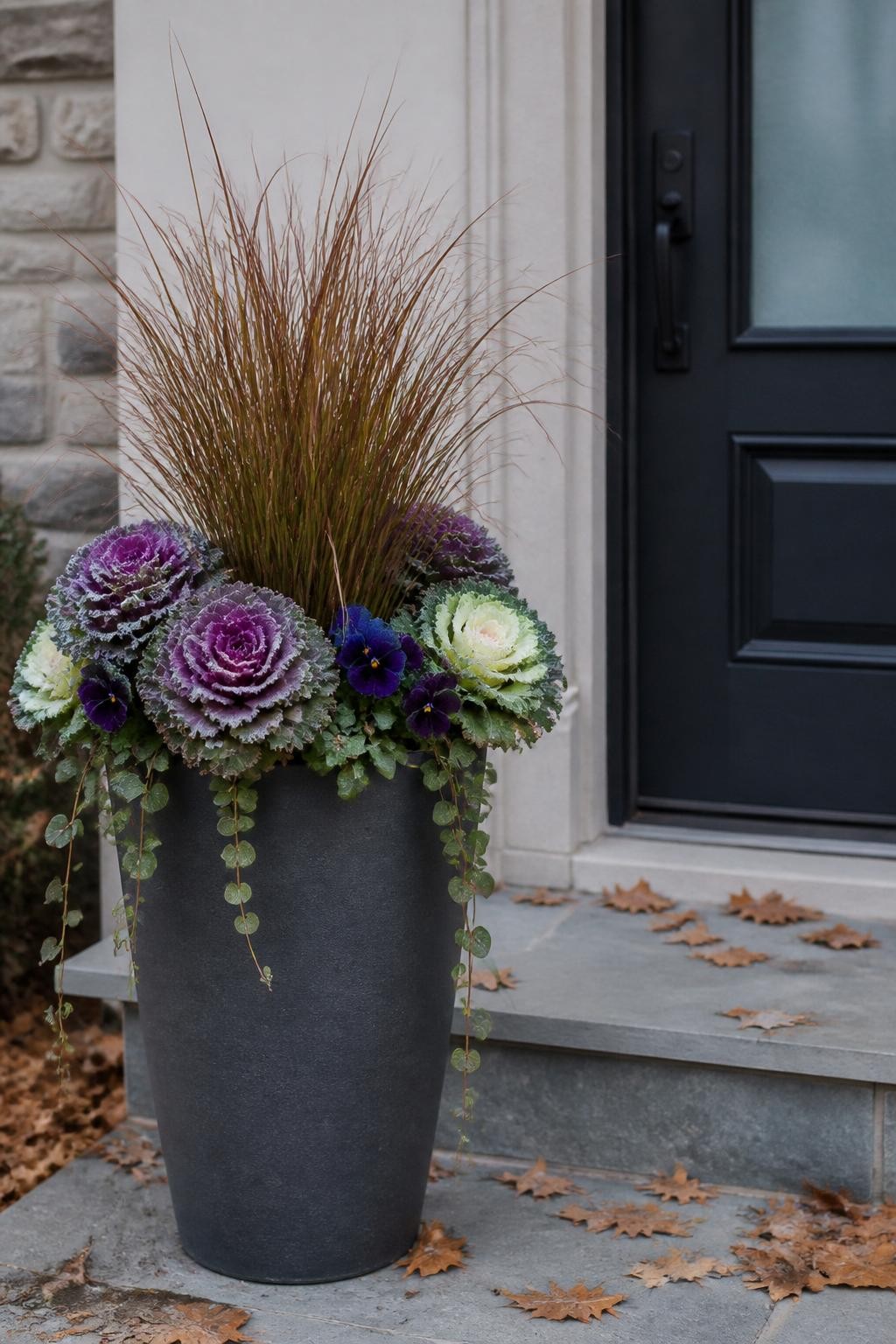
Ornamental cabbage creates bold rosettes that become more colorful as the weather cools. Pairing it with a fine-textured grass prevents the arrangement from looking too heavy, while pansies fill the lower gaps with small blooms. The contrast between broad cabbage leaves and narrow grass blades makes the container interesting from a distance.
Choose a deep container that will not tip when the grass moves in strong wind. These plants prefer bright light and regular moisture but should never sit in water. Ornamental cabbage can remain attractive after light frost, making this one of the longer-lasting fall combinations.
4. Rustic Herb Pot for the Kitchen Door
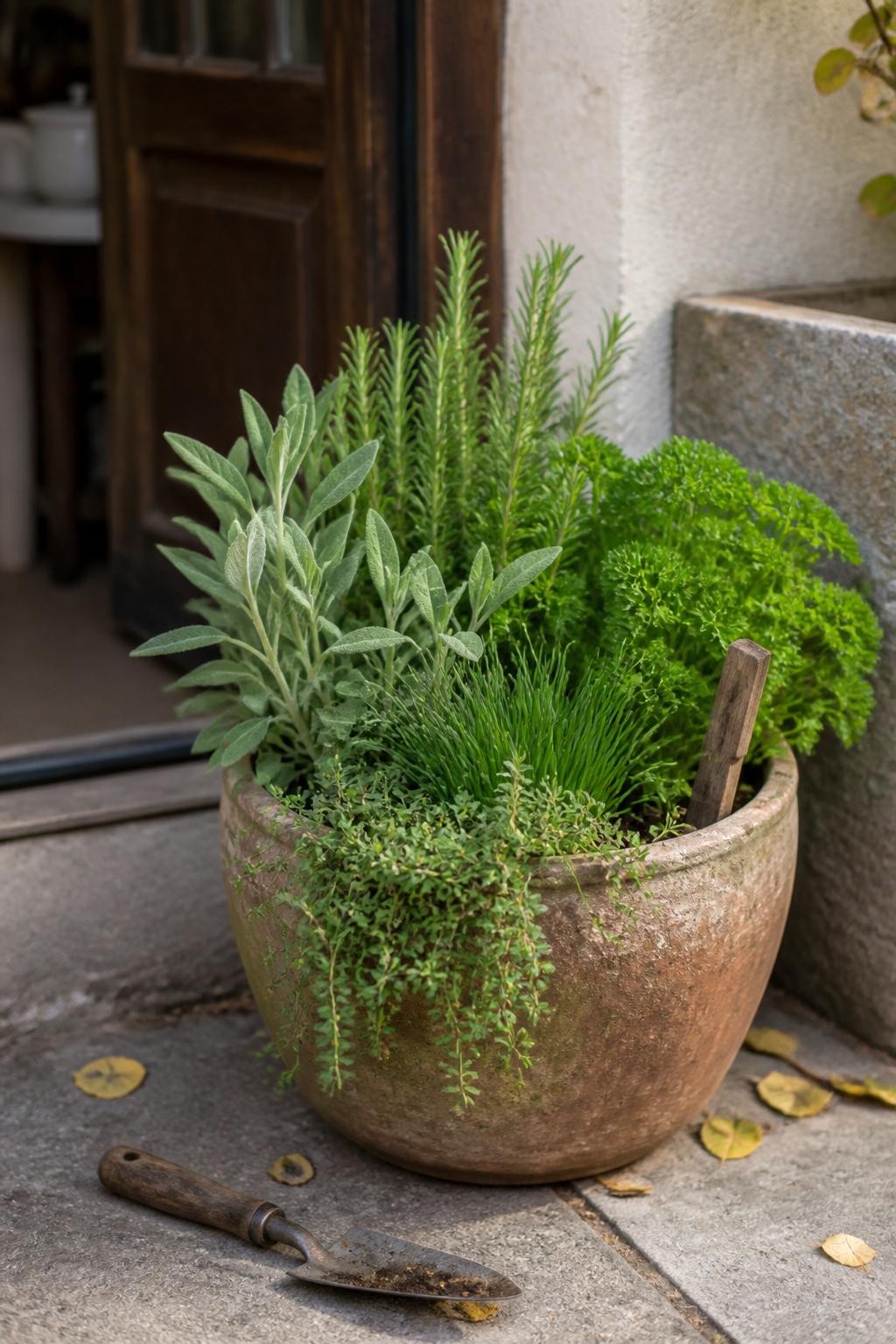
A fall herb container keeps useful ingredients close to the kitchen while giving the porch a soft green display. Rosemary adds height, sage provides broad silvery leaves, parsley fills the center, and thyme can trail over the rim. Chives also fit well if you want a light upright texture.
Use a container with excellent drainage, especially for rosemary, sage, and thyme. Water when the upper layer of soil begins to feel dry rather than following a strict schedule. Before hard frost, move tender herbs into a bright protected area or take cuttings so you can continue using them indoors.
5. Pansy and Violas Window Box
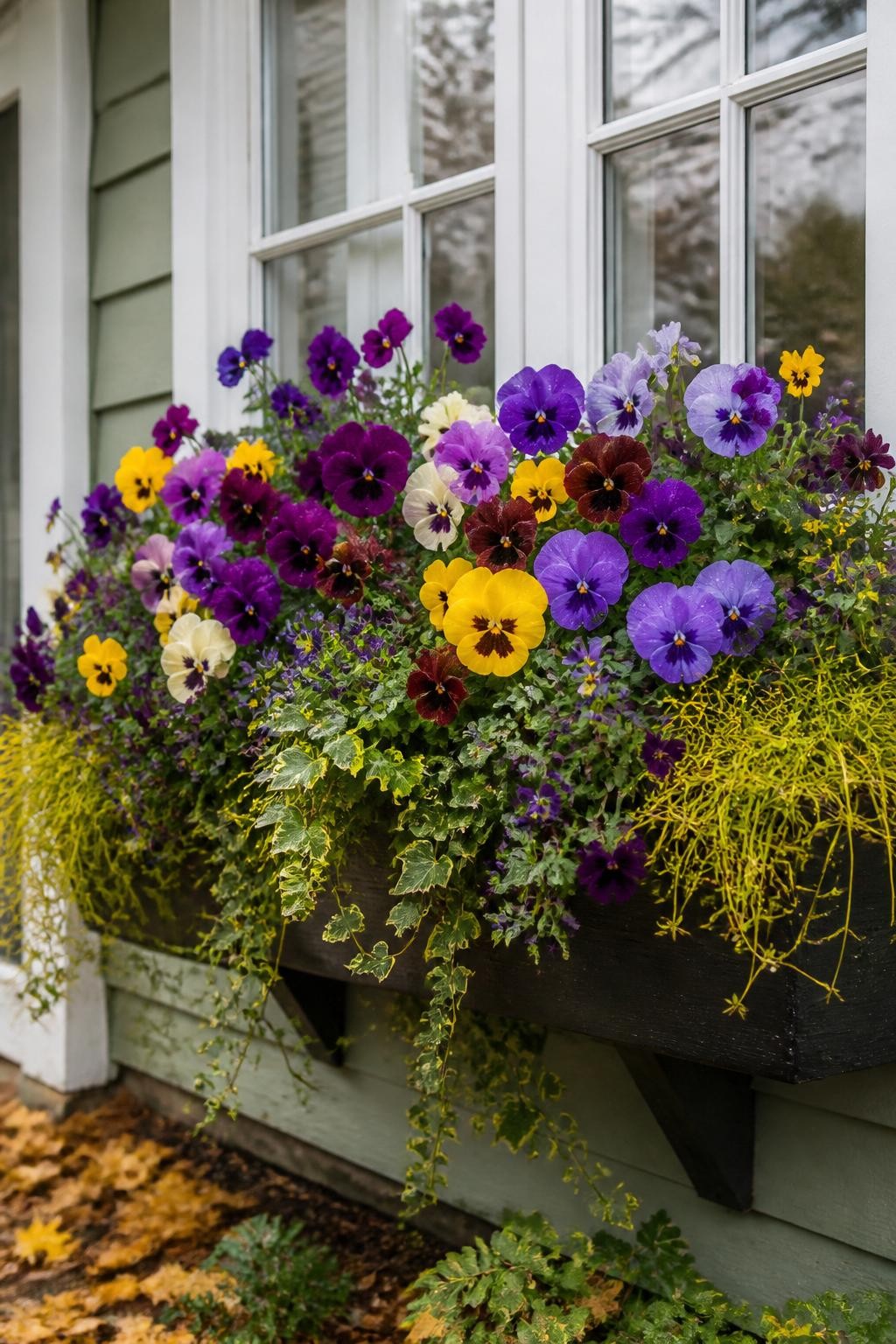
Pansies and violas are excellent choices for window boxes because they stay compact and bloom well in cooler weather. Combining both gives you a mix of large flower faces and smaller, more abundant blooms. A little ivy or sedge adds movement without covering the flowers.
Choose a box deep enough to hold moisture but make sure excess water can drain freely. Deadhead tired blooms every few days and water before the soil dries completely. In mild climates, this display may continue through winter and become even fuller again in early spring.
6. Small Evergreen Porch Pot
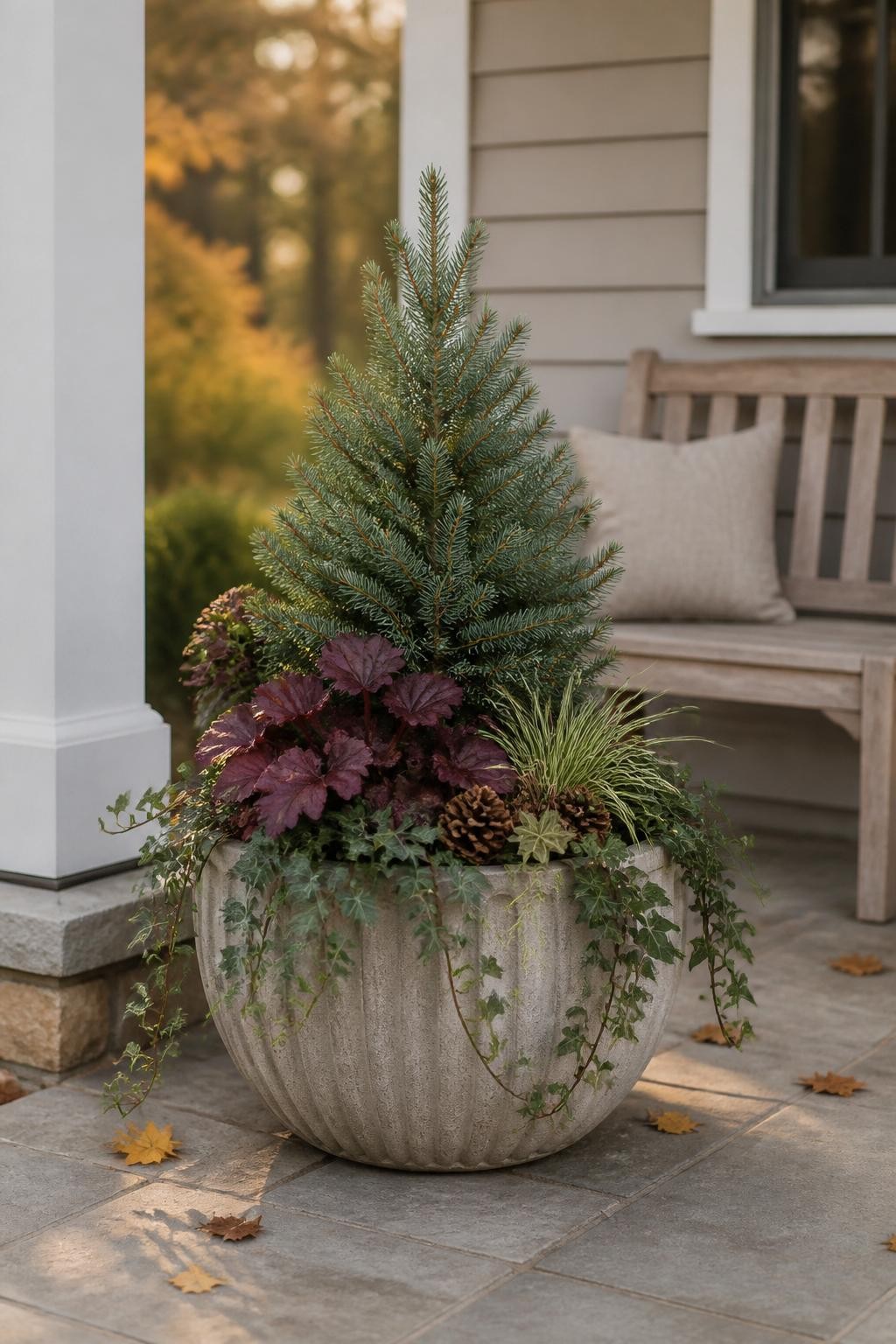
A dwarf spruce or another compact evergreen gives a container structure that lasts beyond fall. Adding heuchera, sedge, and ivy around the base keeps the display from looking too plain. This combination works especially well near a front door because it stays tidy and can be adapted for winter later.
Select a container that is wide and heavy enough to support the evergreen as it grows. Water it during dry autumn weather and again on mild winter days when the soil is not frozen. Avoid burying the trunk in mulch, and check the plant label to make sure the variety can survive winter in a container in your region.
7. Burgundy and Copper Foliage Arrangement
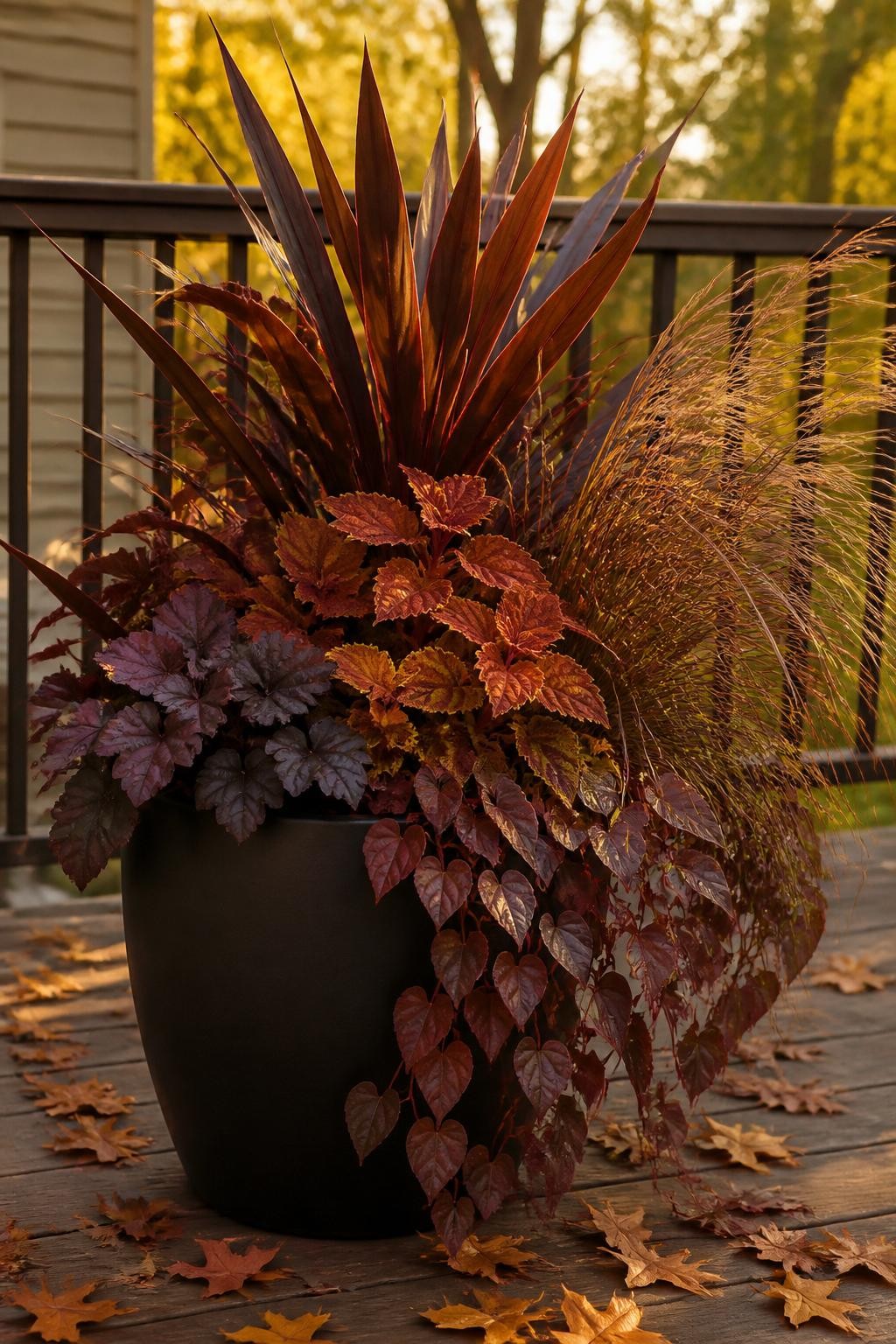
Flowers are not the only way to make a strong fall container. Burgundy, copper, bronze, and plum foliage can create a full seasonal display that does not depend on constant deadheading. Cordyline or a tall ornamental grass provides height, while heuchera, coleus, and trailing foliage build the lower layers.
This arrangement works best before severe frost, so it is ideal for early and mid-fall. Place it in bright light to help the leaf colors stay strong. When frost is expected, you can bring tender plants such as coleus indoors for a few nights or take cuttings to grow as houseplants.
8. Mini Pumpkin and Flower Planter
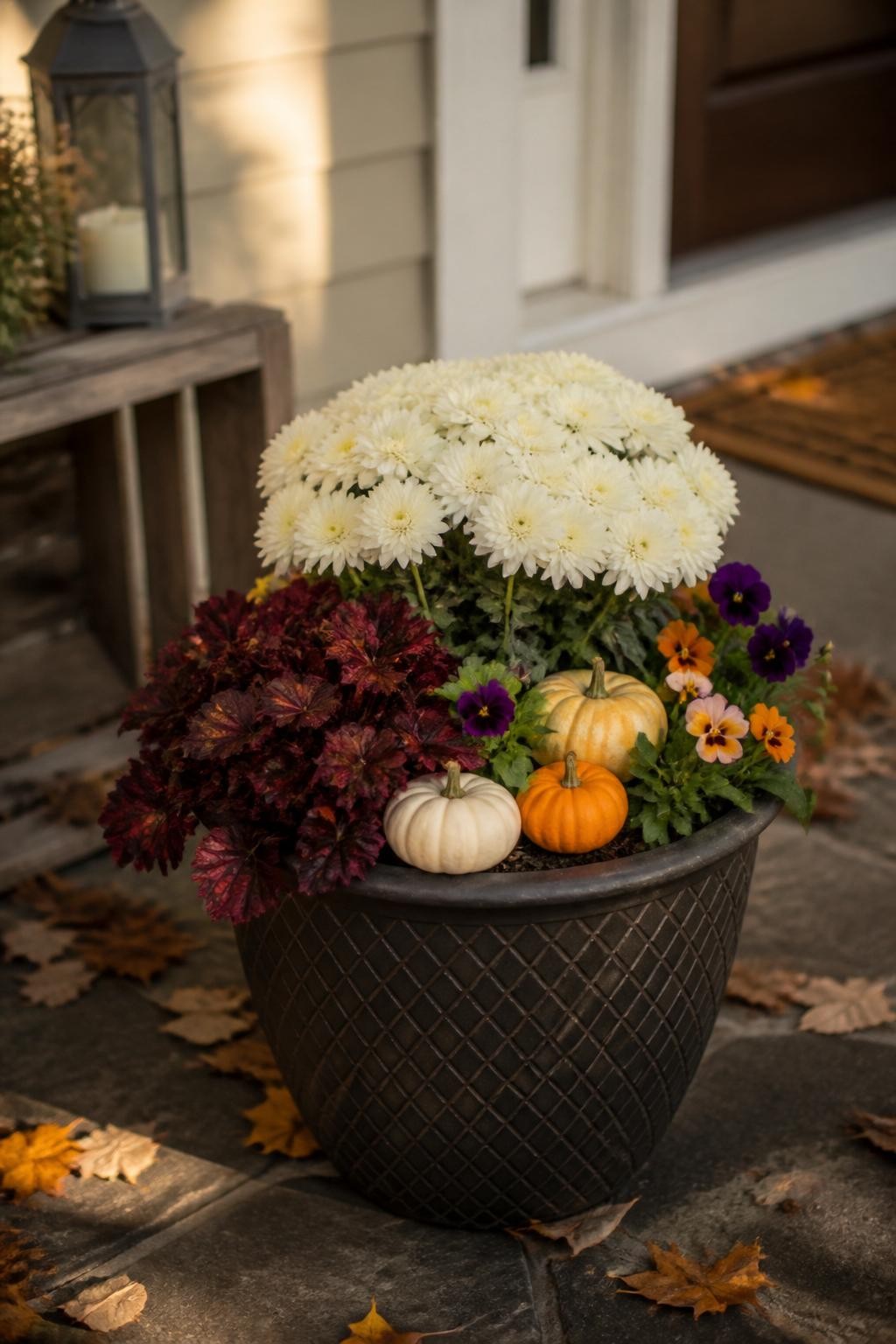
Mini pumpkins can be used as temporary accents inside a planted container without replacing the living plants. Nestle them between mums, violas, and heuchera to add shape and color. White pumpkins create a softer display, while orange varieties give a more traditional autumn look.
Keep the pumpkins resting above the wet soil by placing them on small flat stones or hidden saucers. This helps reduce rotting after rain or watering. Remove any pumpkin that becomes soft, and replace it with a pinecone, decorative gourd, or another small seasonal accent.
9. Pollinator-Friendly Aster Pot
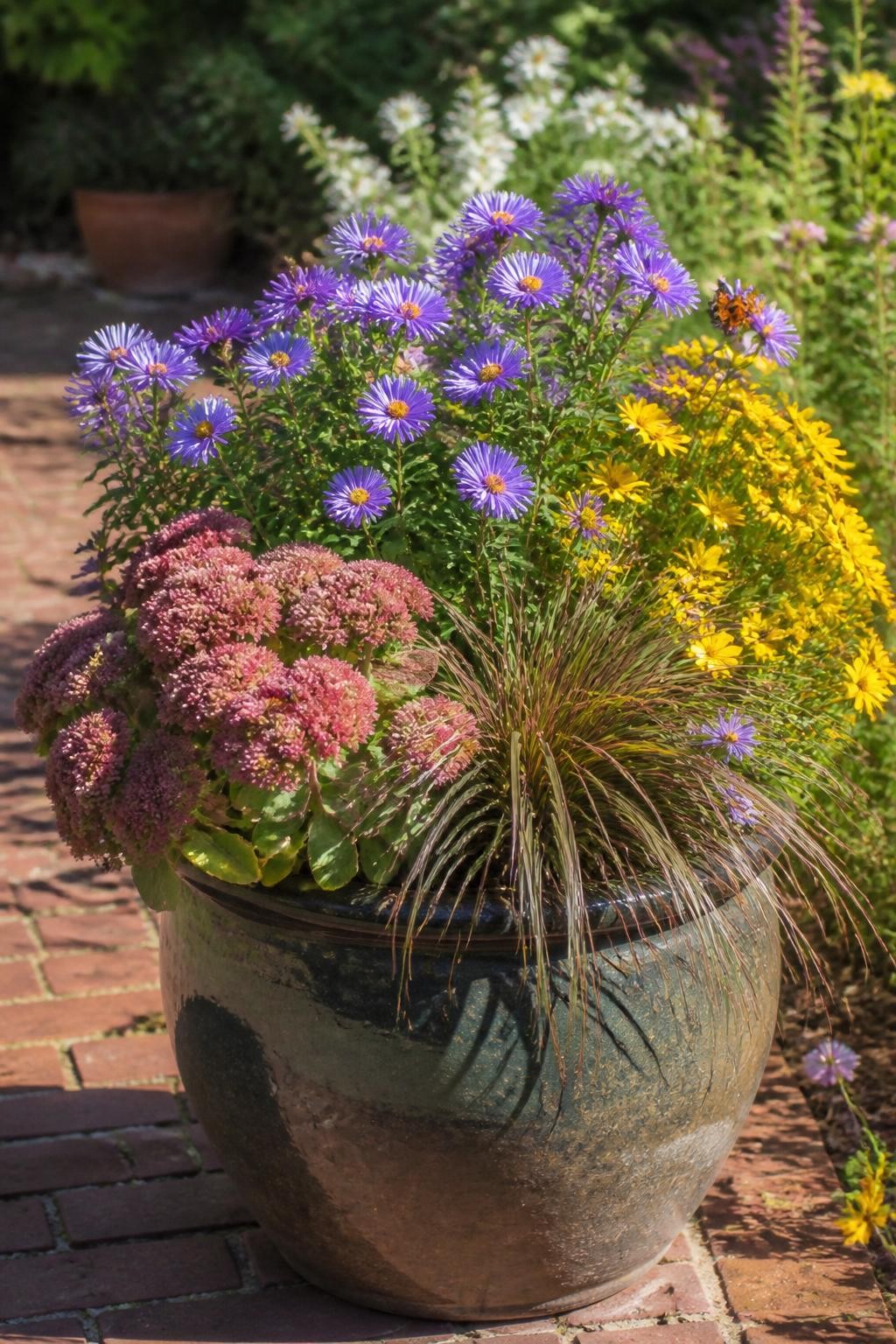
Asters, sedum, and late-blooming coreopsis provide food for bees and butterflies when fewer flowers are available. Together, they create a container filled with purple, gold, and soft rose tones. A small ornamental grass adds movement and provides extra structure.
Place this container in full sun where pollinators can reach it easily. Water deeply when the soil begins to dry and avoid using insecticides near the flowers. After blooming, you can leave some seedheads standing for birds or transplant the hardy perennials into the garden.
10. Layered Spring Bulb Container
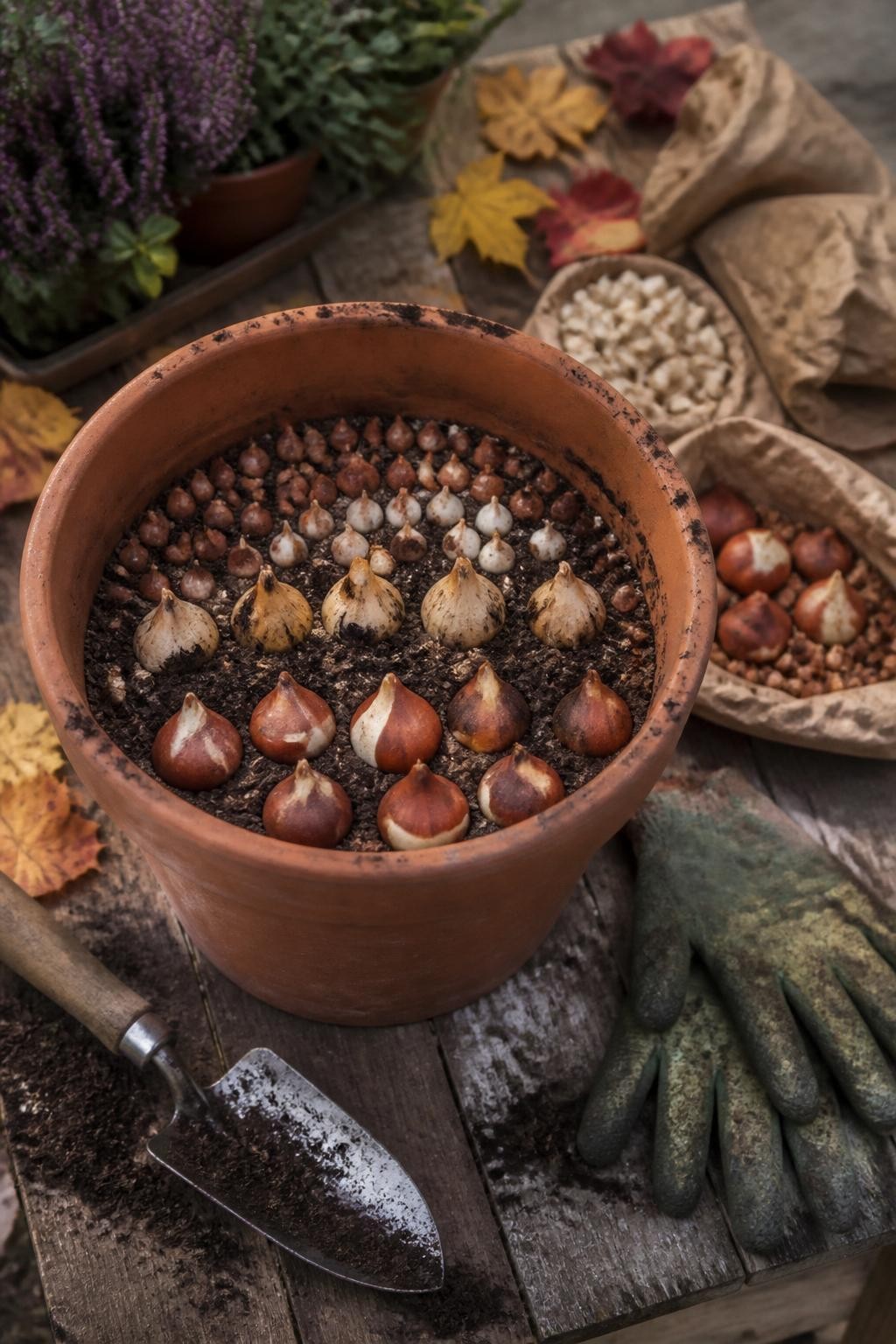
A layered bulb container gives you several waves of flowers from one pot next spring. Large bulbs such as tulips go near the bottom, medium daffodils or hyacinths sit above them, and small crocus or grape hyacinths fill the upper layer. The bulbs should be staggered so they are not placed directly on top of one another.
Use a deep container with good drainage and water it thoroughly after planting. Leave the pot outdoors in a sheltered place so the bulbs receive the cold period they need. In very cold regions, wrap the container or place it against a protected wall to reduce repeated freezing and thawing.
11. Compact Kale and Herb Planter
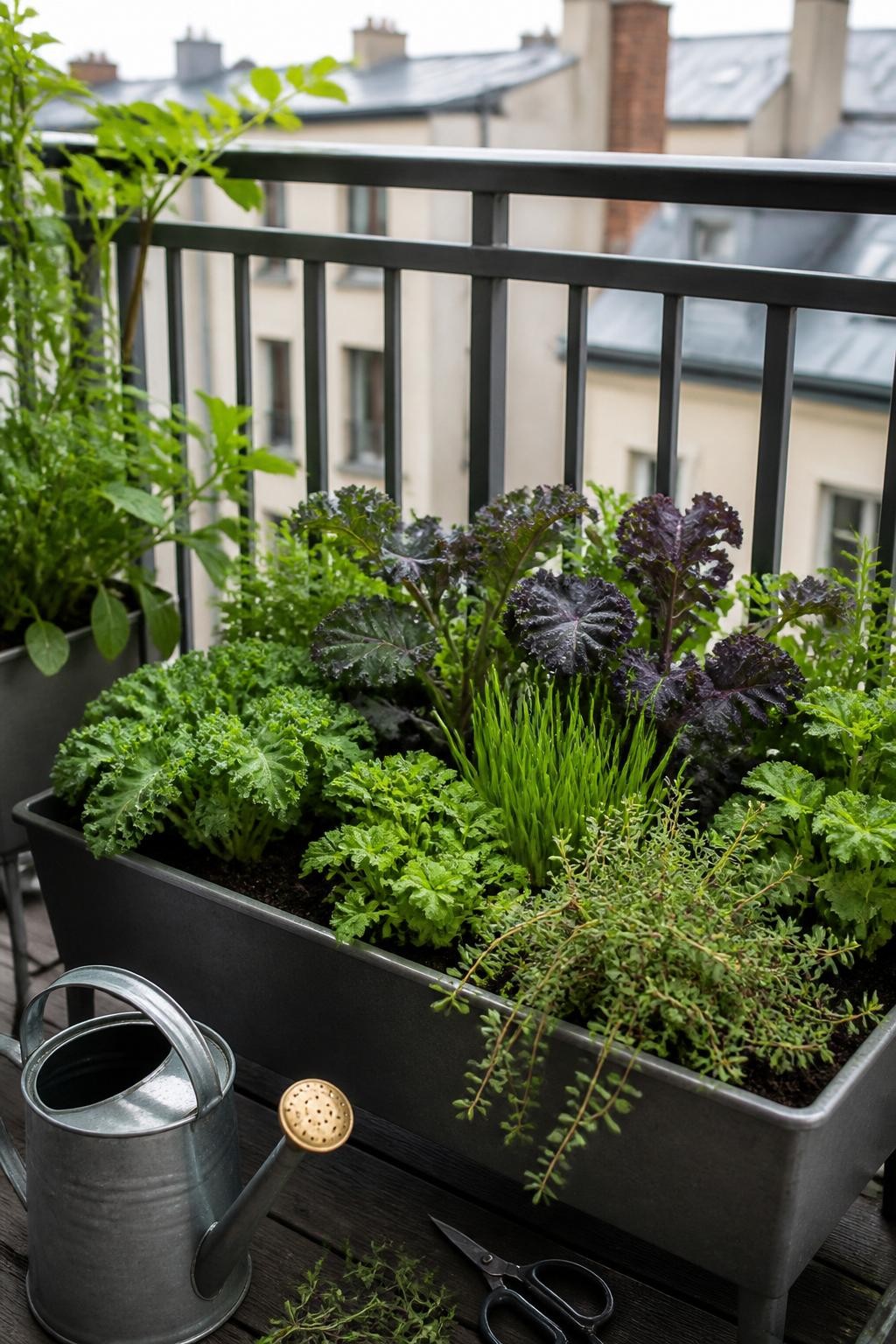
Kale grows well in cool weather and becomes sweeter after exposure to light frost. Mixing compact kale varieties with parsley, chives, and thyme creates a useful edible container that also looks full and attractive. Purple kale adds color without requiring ornamental plants.
Choose a pot that is at least twelve inches deep and place it in a sunny location. Harvest the outer kale leaves first and leave the center growing point untouched. Check the undersides of leaves for caterpillars and water regularly, since edible plants in containers can dry out quickly on windy fall days.
12. Woodland Shade Container
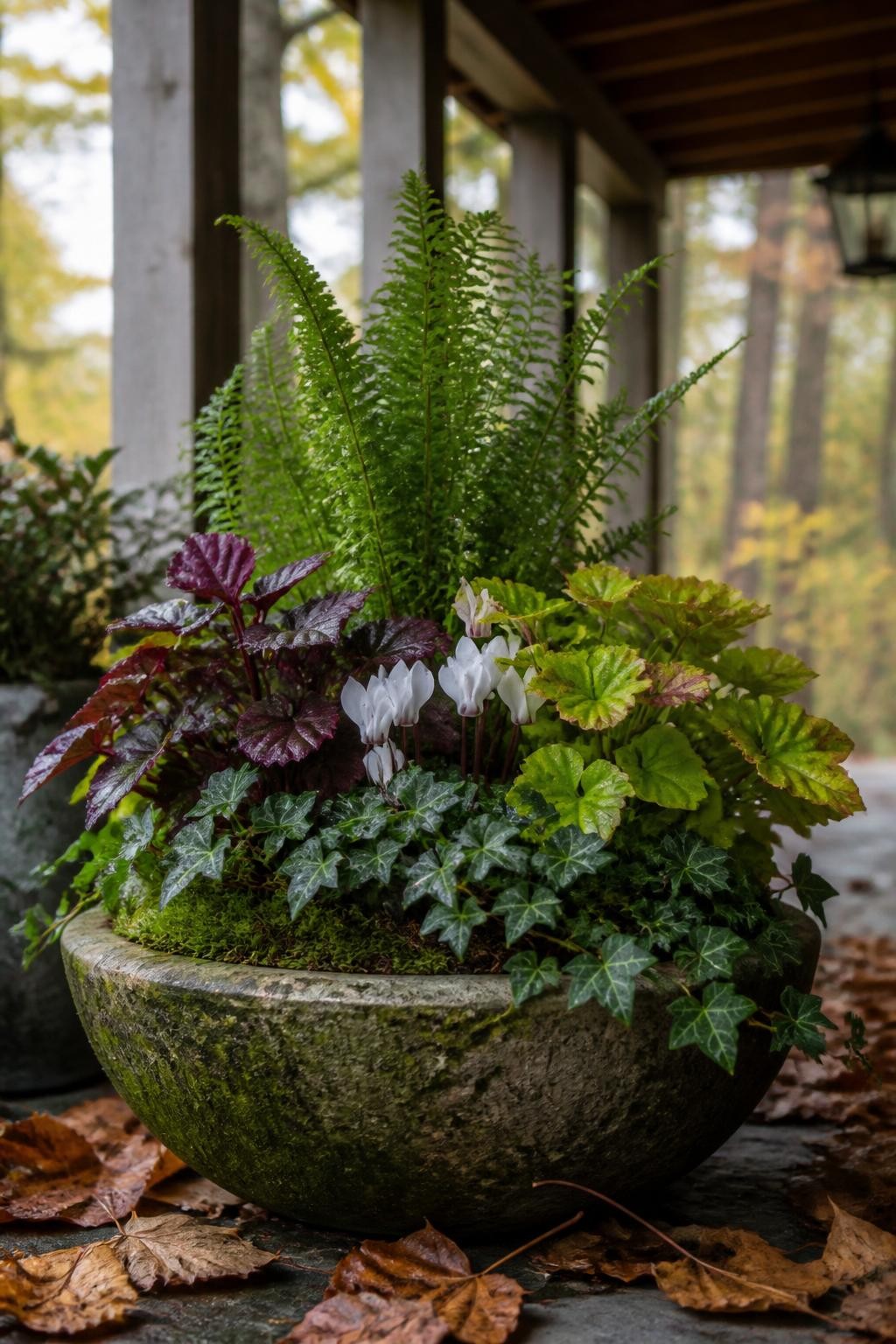
A shaded porch or balcony can still support a beautiful fall container. Ferns provide height and softness, heuchera adds reliable foliage color, cyclamen brings delicate blooms, and ivy trails over the edge. A little moss on the soil surface can help the arrangement feel natural and finished.
Keep this container away from strong afternoon sun and protect cyclamen from severe frost. Water carefully because shaded pots stay damp longer than sunny ones. When winter arrives, remove tender plants and keep the hardy foliage in place, or move the entire container to a sheltered area.