





In This Article Show
Fall is one of the most important seasons for lawn care. Cooler temperatures reduce heat stress, moisture stays in the soil longer, and many grass types begin putting more energy into root growth. The work you do now can help repair summer damage and give your lawn a stronger start when active growth returns.
Good fall lawn care is not about adding as many treatments as possible. It is about choosing the right jobs for your grass type, soil, and local weather. These practical steps can improve lawn thickness, reduce weeds, protect the roots, and prevent avoidable problems during winter.
1. Continue Mowing While the Grass Is Growing
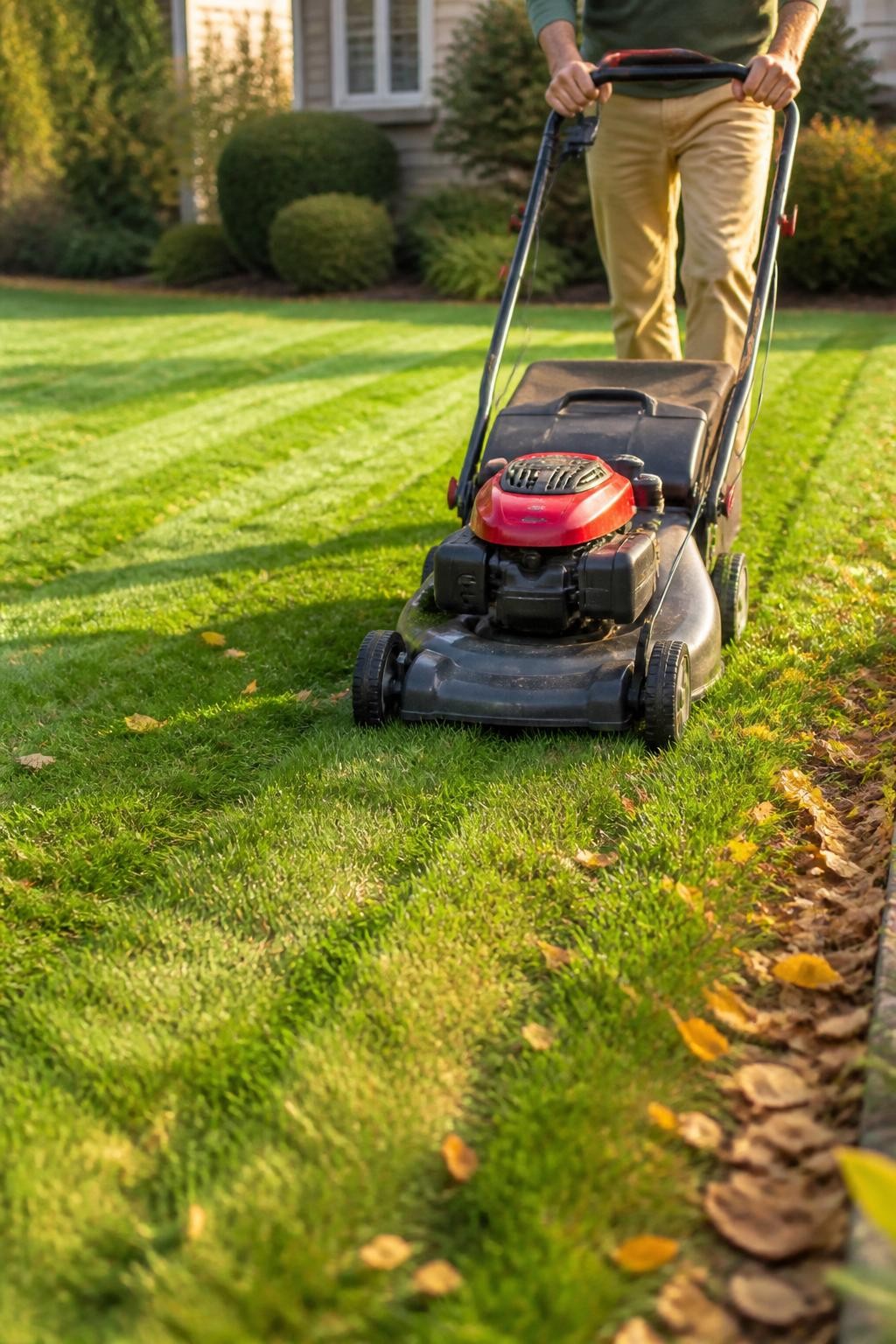
Do not stop mowing simply because summer has ended. Grass can continue growing during mild fall weather, especially after rain. Mow whenever the lawn becomes noticeably taller, removing no more than about one-third of the grass blade at one time.
Keeping the lawn at a sensible height helps sunlight reach the grass and prevents long blades from matting beneath wet leaves. Avoid cutting it extremely short before winter, since scalping can weaken the plants and expose the soil to weeds and cold damage.
2. Rake or Mulch Fallen Leaves Regularly
A light scattering of leaves usually causes little trouble, but a thick wet layer can block sunlight and trap moisture against the grass. This can lead to pale patches, fungal problems, and matted areas that are slow to recover.
Rake leaves into piles for composting or run over dry leaves with a mulching mower. Finely chopped leaves can settle between the grass blades and return useful organic matter to the soil. Do not leave large clumps sitting on the lawn after rain.
3. Aerate Compacted Areas
Lawns that receive heavy foot traffic can become compacted, making it harder for water, oxygen, and nutrients to reach the roots. Signs of compaction include hard soil, standing water, weak grass, and bare areas along common walking routes.
Core aeration removes small plugs of soil and is usually more effective than simply poking narrow holes. Concentrate on compacted areas rather than aerating automatically every year. Leave the soil plugs on the lawn, where they will break apart naturally.
4. Overseed Thin and Bare Patches
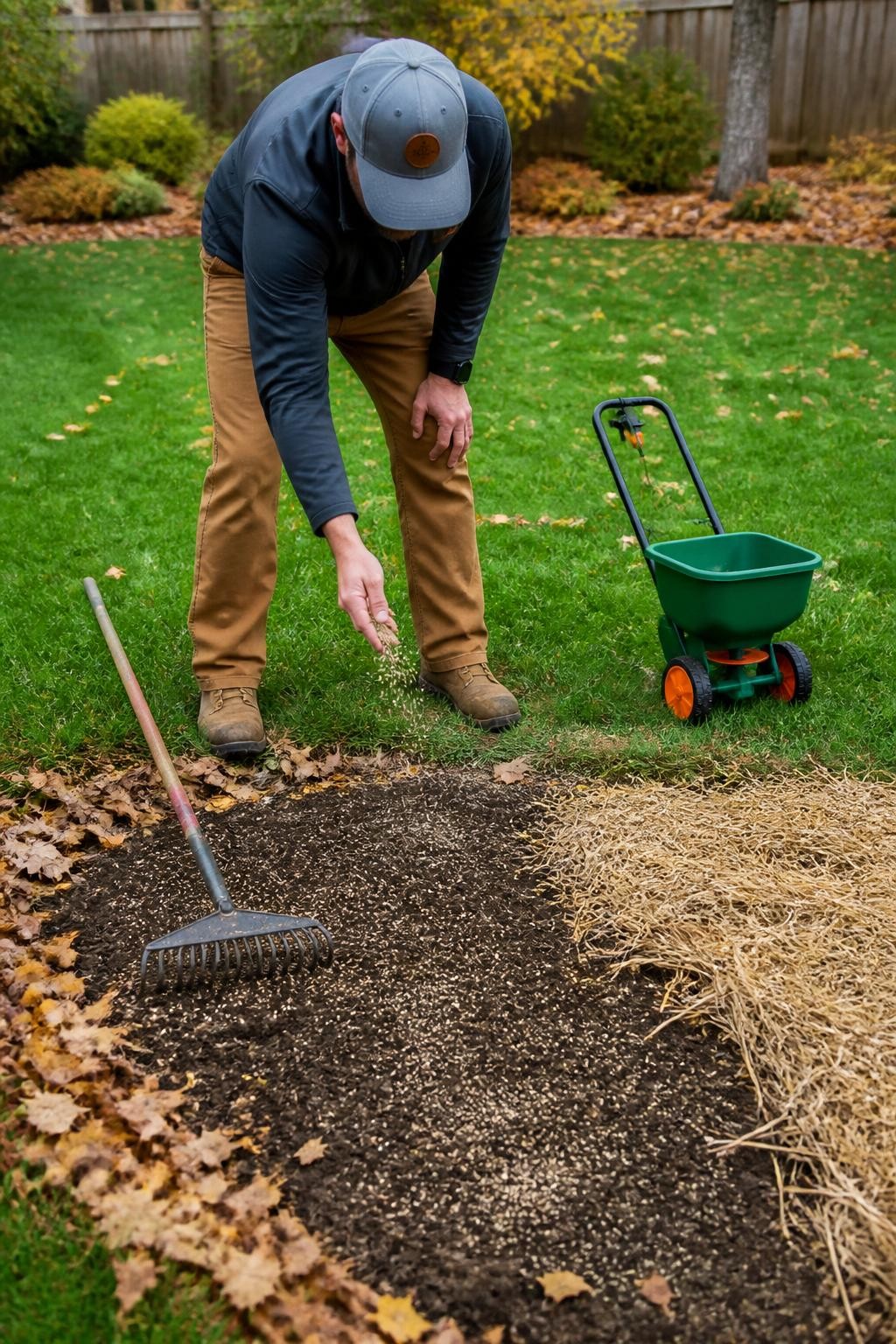
Fall can be an excellent time to overseed cool-season lawns because the soil is warm while the air is cooler. This combination encourages seed germination without the intense heat that can dry young grass quickly. Choose a seed blend suited to your sunlight, climate, and existing lawn.
Loosen bare soil before spreading seed so it makes direct contact with the ground. Keep the area consistently moist with light watering until the new grass is established. Avoid allowing fallen leaves to cover young seedlings during this vulnerable stage.
5. Apply Fertilizer Only When the Lawn Needs It
A fall fertilizer application can support root growth in many cool-season lawns, but more fertilizer is not always better. Applying the wrong amount or using it at the wrong time can waste money, encourage weak growth, and allow nutrients to wash into drains and waterways.
A soil test can show whether the lawn needs nitrogen, phosphorus, potassium, or a pH adjustment. Choose a lawn fertilizer that matches those results and follow the label carefully. Sweep any granules that land on paths, driveways, or patios back onto the grass.
6. Control Persistent Broadleaf Weeds
Fall can be a useful time to tackle perennial broadleaf weeds such as dandelions and plantain. These weeds are still moving energy into their roots, which can make properly timed treatments more effective than waiting until they flower heavily in spring.
Small numbers of weeds can be removed by hand after rain, when the soil is soft enough to release more of the root. For larger problems, use a treatment labeled for your lawn type and target only affected areas. Avoid spraying on windy days or near desirable garden plants.
7. Repair High-Traffic and Pet-Damaged Areas
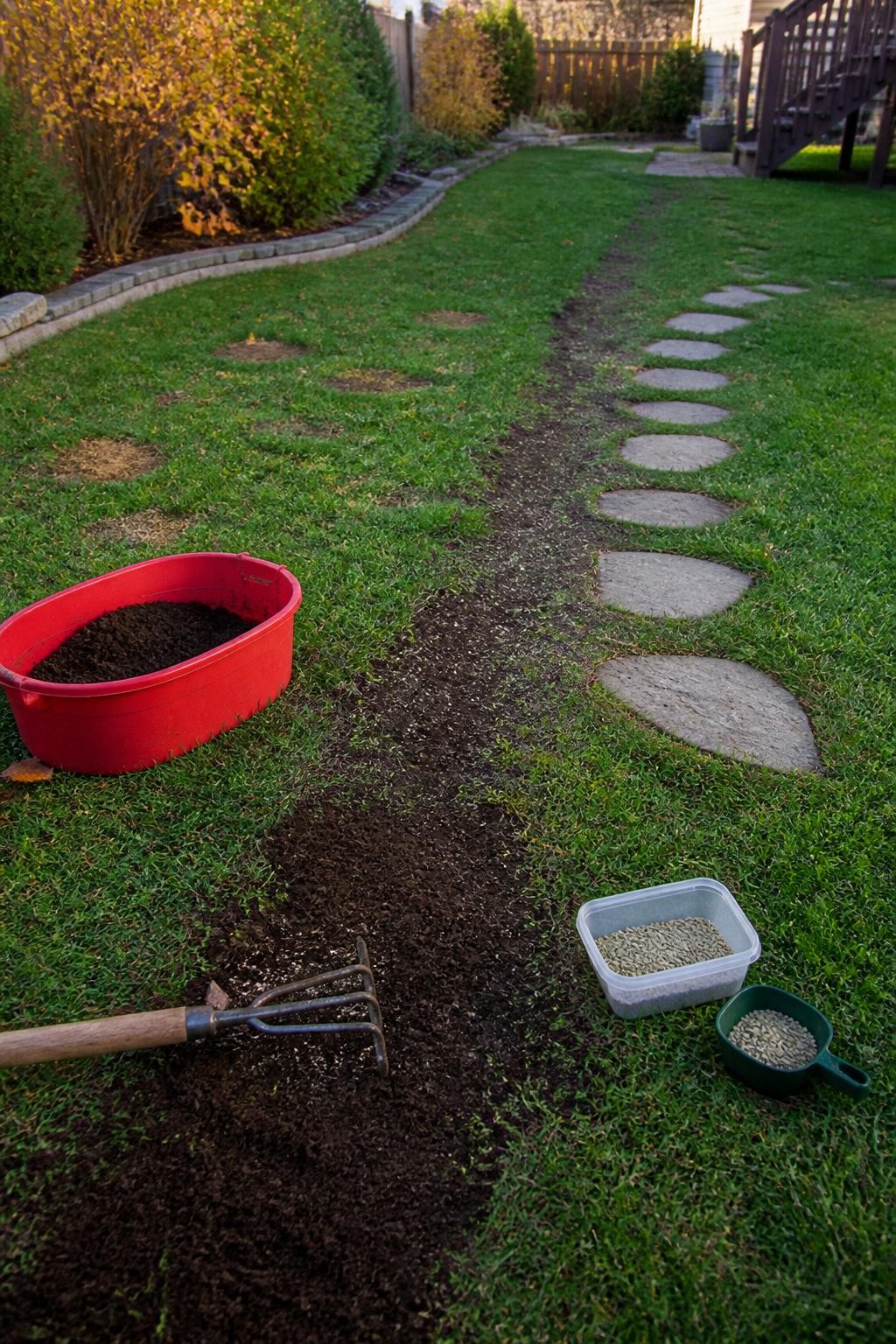
Repeated foot traffic, children’s play, pets, and garden equipment can leave thin tracks or bare patches. Start by loosening compacted soil and removing dead grass. Add a thin layer of good topsoil or compost before reseeding the area.
Reduce traffic while new grass develops by adding stepping stones, temporary markers, or a simple alternate route. For pet spots, water the area after use when practical and reseed only after damaged grass and excess thatch have been removed.
8. Reduce Watering as Temperatures Cool
Lawns generally lose moisture more slowly during fall, so they may not need the same watering schedule used in summer. Continuing to water too frequently can keep the soil overly wet and encourage shallow roots or disease.
Water only when rainfall is insufficient and the grass shows signs of dryness, such as folded blades or footprints that remain visible. Deep, occasional watering is usually better than light daily watering. Stop irrigation before freezing weather and drain outdoor watering systems where necessary.
9. Remove Excessive Thatch
Thatch is the layer of dead and living stems, roots, and plant material between the grass and soil. A thin layer can be helpful, but a thick buildup may stop water from reaching the roots and create shelter for lawn pests.
Check the lawn by cutting and lifting a small section of turf. If the thatch layer is unusually thick, use a dethatching rake or mechanical dethatcher during active grass growth. Avoid aggressive dethatching when the lawn is already drought-stressed or weak.
10. Edge the Lawn Before Winter
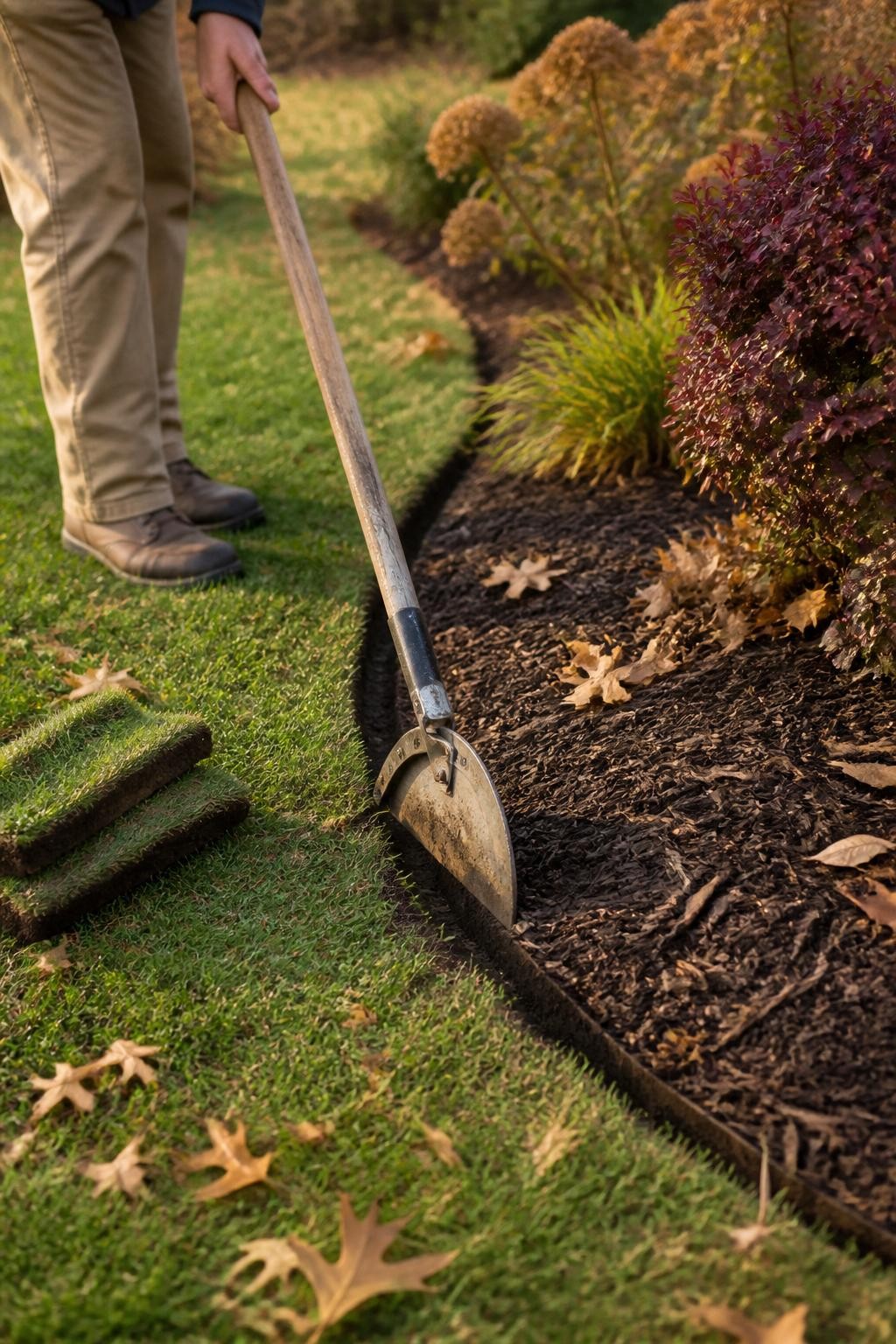
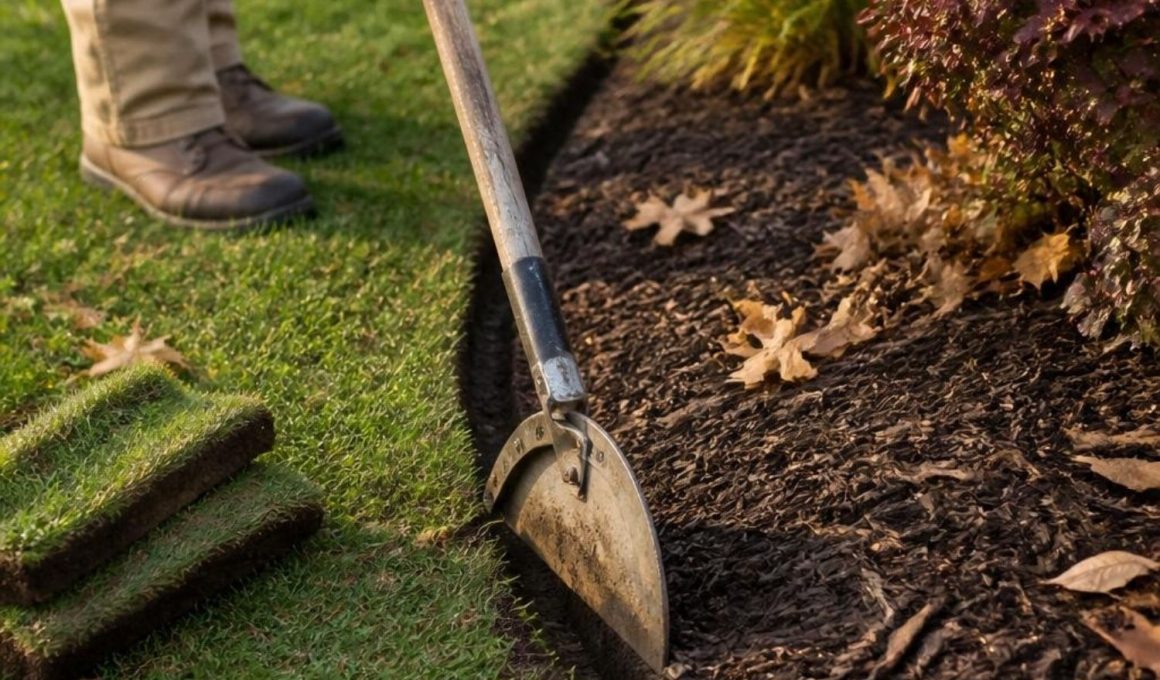
Cleaning lawn edges in fall helps prevent grass from creeping into flower beds and makes spring maintenance easier. Use an edging tool or sharp spade to redefine borders along paths, driveways, trees, and planted areas.
Keep the shape simple so mowing remains easy. Avoid piling soil or mulch over the cut grass edge, since buried grass may continue spreading beneath it. A clear border also makes it easier to spot weeds before they move into the lawn.
11. Service and Store Lawn Equipment Properly
Clean grass clippings, soil, and leaf debris from the mower before storage. Check the blade for damage and have it sharpened if the cuts looked torn or uneven during the season. A sharp blade produces cleaner cuts and places less stress on the grass.
Follow the equipment manufacturer’s instructions for fuel, batteries, oil, and winter storage. Clean spreaders and hand tools before putting them away, and store grass seed and fertilizer in dry, sealed containers where moisture and pests cannot damage them.