





In This Article Show
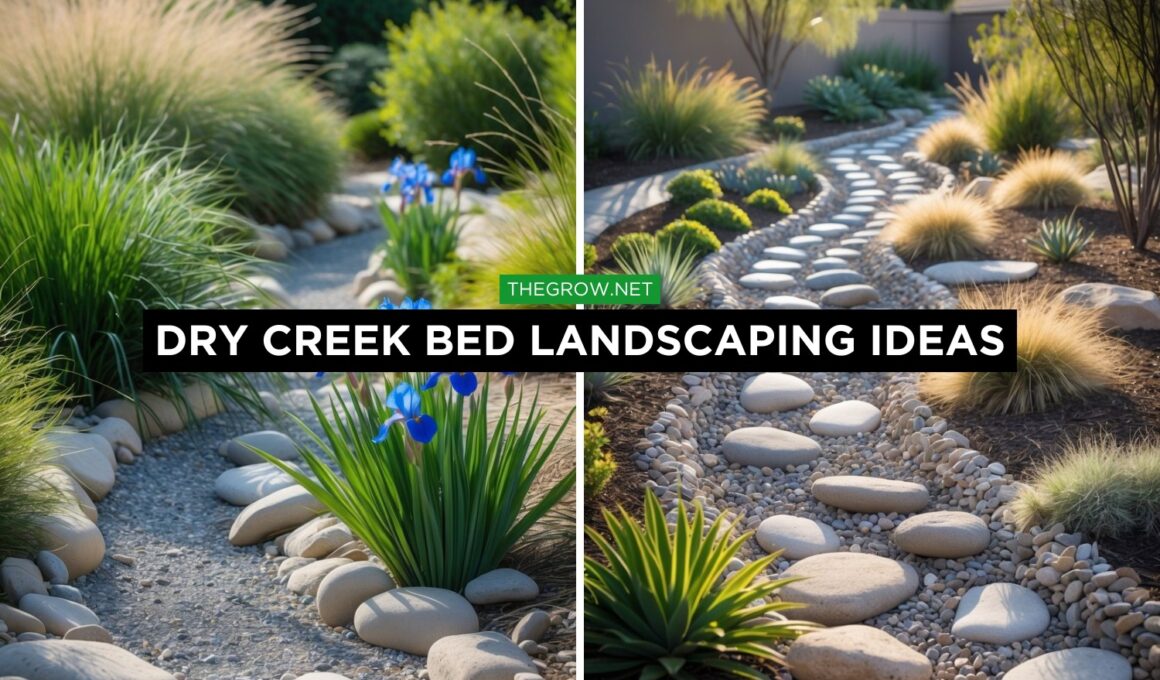
I’ve always found dry creek bed landscaping to be a great way to add both beauty and function to an outdoor space. These features help manage water flow and prevent erosion while blending naturally into your yard.

A well-designed dry creek bed can improve drainage and enhance the look of your landscape without needing constant maintenance.
In this article, I’ll share 18 ideas that make dry creek beds look natural and fit seamlessly into your garden or yard.
1. Use a mix of large boulders and mid-sized river rocks for varied texture
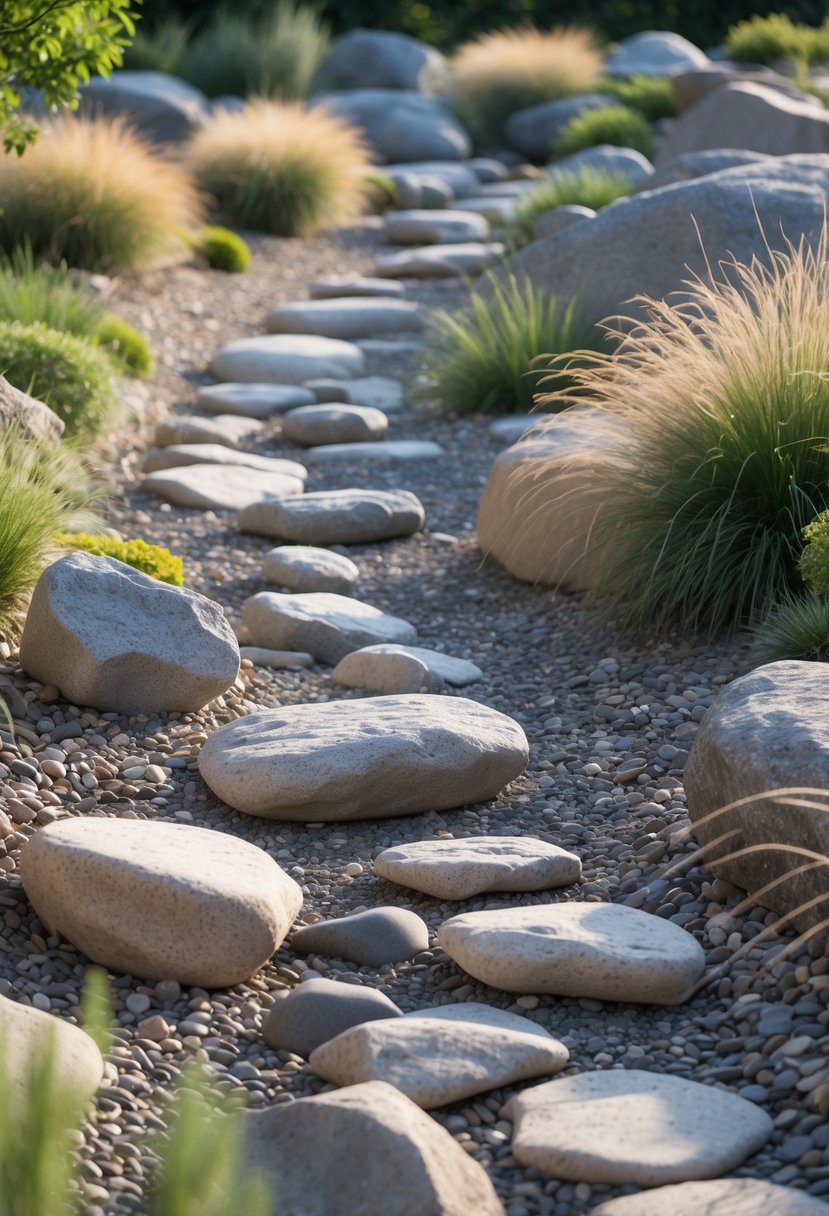
I like to combine large boulders with mid-sized river rocks because it creates a natural look. The big stones provide structure, while the smaller rocks fill in gaps and add detail. This mix makes the dry creek bed both functional and visually interesting.
2. Incorporate native plants like sedges and blue flag iris along the edges

I like planting sedges along the edges because their triangular stems add texture. They adapt well to many conditions and support local ecosystems.
Blue flag iris thrives near water and adds color. Pairing it with sedges helps create a natural look for the dry creek bed.
3. Create a dry riverbed effect with tan and gray stones for warmth
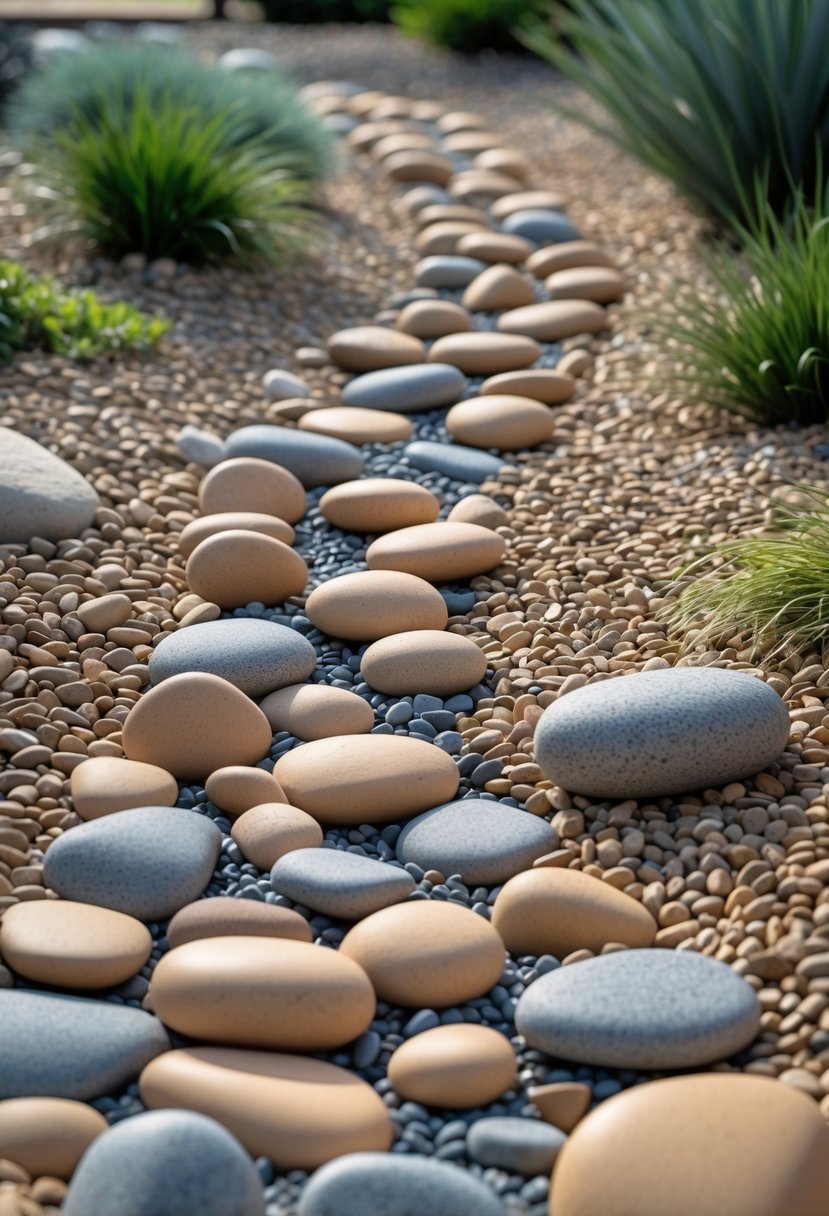
I find that using tan and gray stones adds a warm, natural look to a dry creek bed. The mix of these colors makes the space feel inviting without looking too harsh.
I like to use larger stones in gray for structure and fill in around them with smaller tan pebbles. This balance gives the riverbed a realistic feel.
4. Design gentle curves to mimic natural water flow
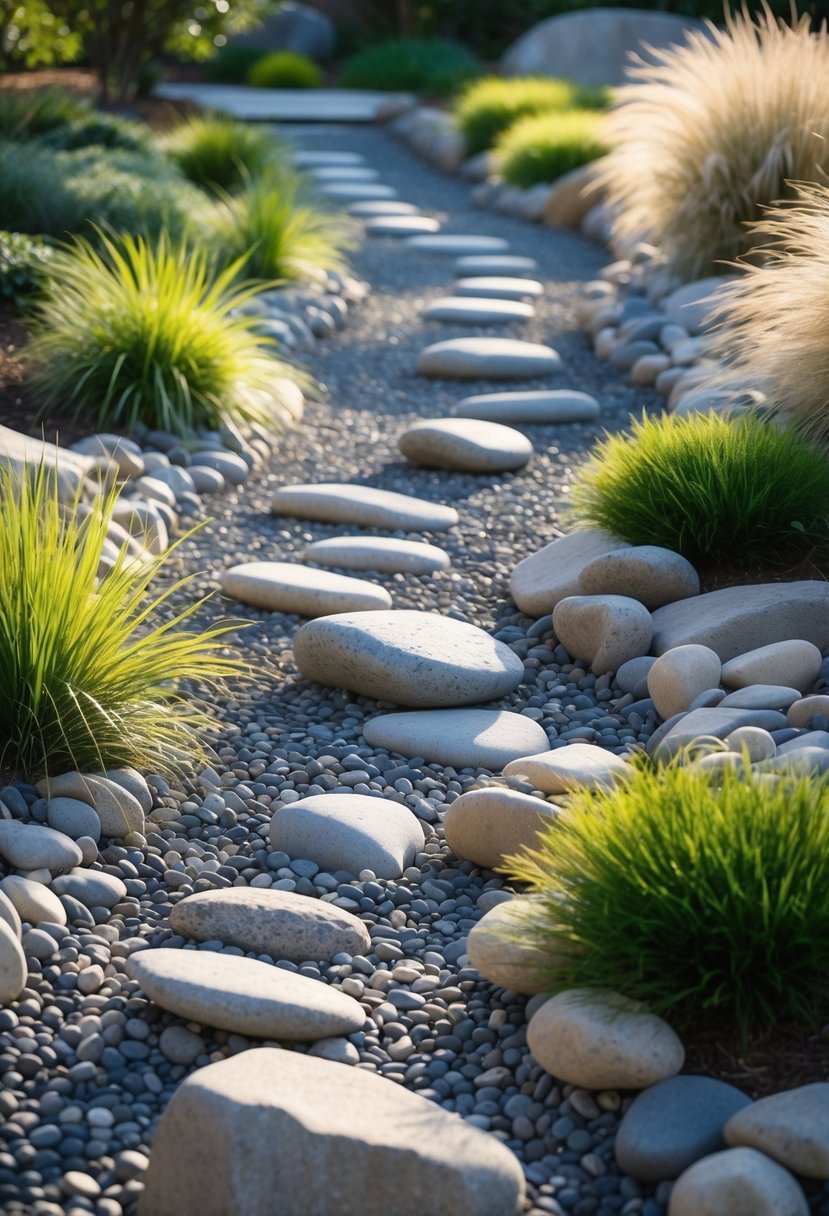
I design dry creek beds with soft curves to create a natural look. Straight lines look artificial and harsh. Curves slow water flow if it rains, reducing erosion and making the creek bed more functional. This approach also adds visual interest to the landscape.
5. Add mulch around plants to soften rocky edges
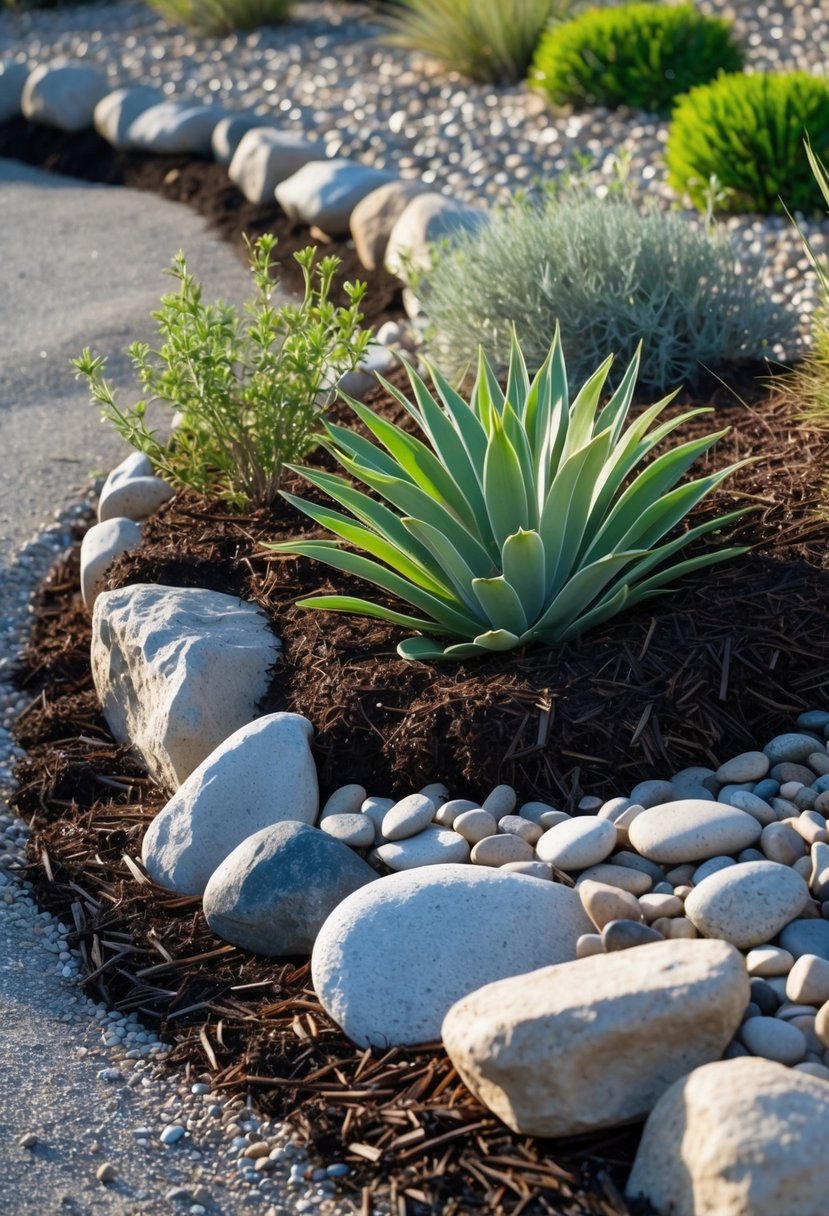
I use mulch around plants to create a smooth transition between rocks and greenery. Mulch helps soften the hard look of stones and adds a natural touch. It also helps keep moisture in the soil, benefiting nearby plants.
6. Install a hidden drain system beneath to manage water runoff
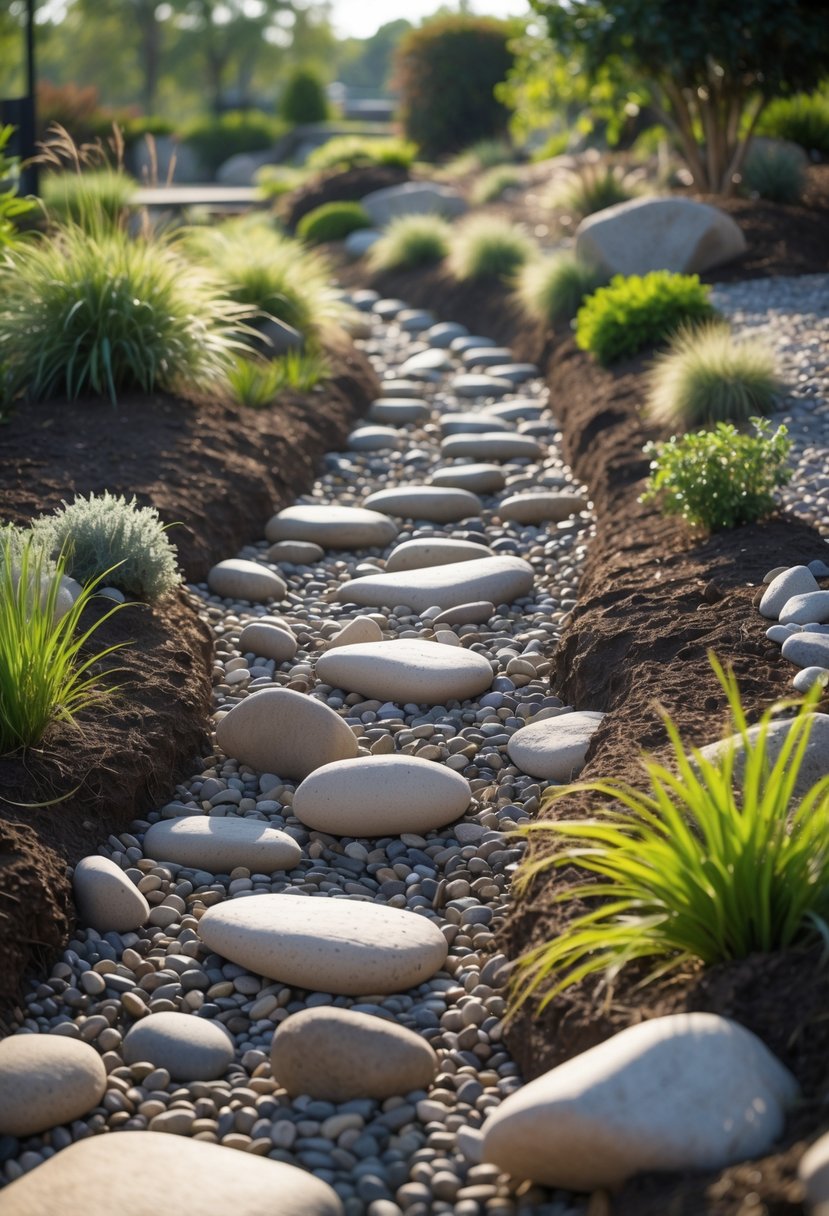
I recommend adding a hidden drain system under the dry creek bed. It helps move excess water away without damaging your yard.
This system keeps your landscape dry and prevents erosion during heavy rains. It also keeps the creek bed looking clean and natural.
7. Use contrasting stone colors and sizes at the creek bed bottom
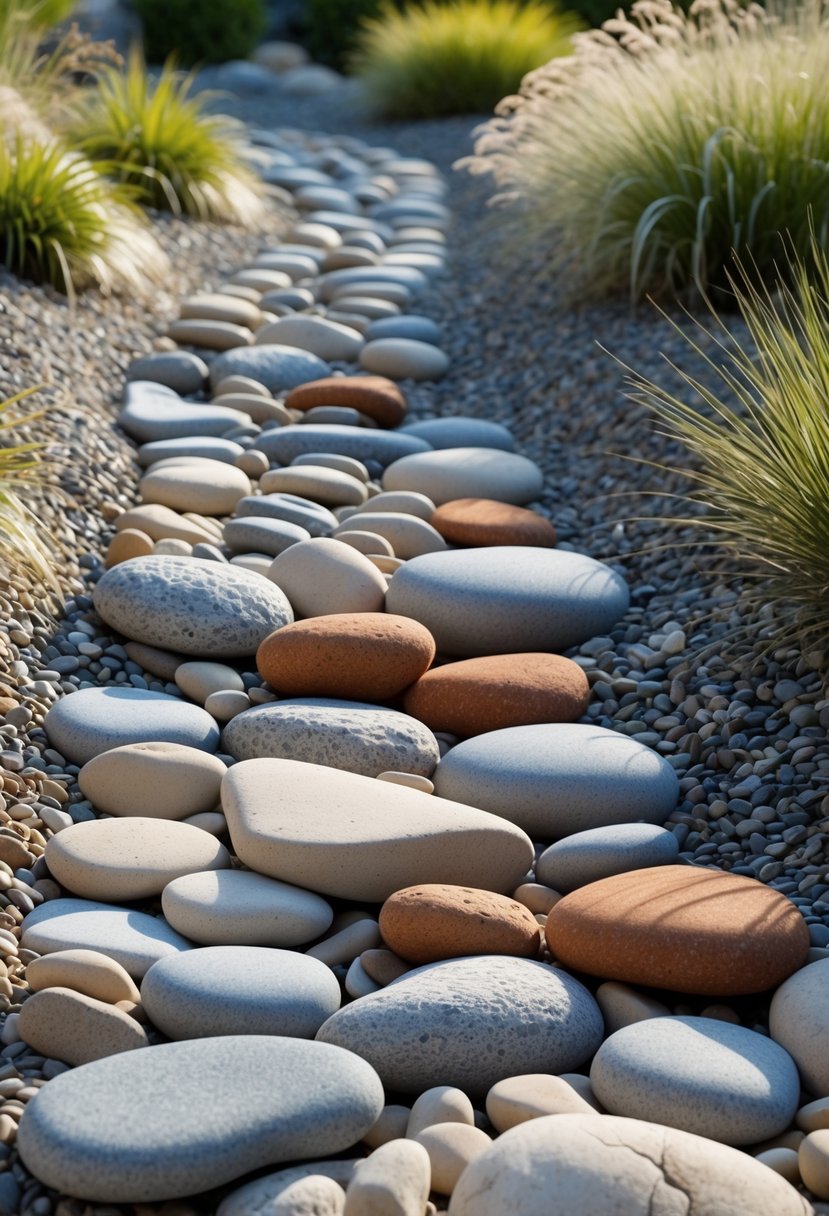
I like to use different colors and sizes of stones at the bottom of the creek bed. This adds visual interest and helps create a natural look. Bigger stones work well on the edges, while smaller stones fit nicely in the center.
8. Place buttonbush in wetter pockets for natural interest
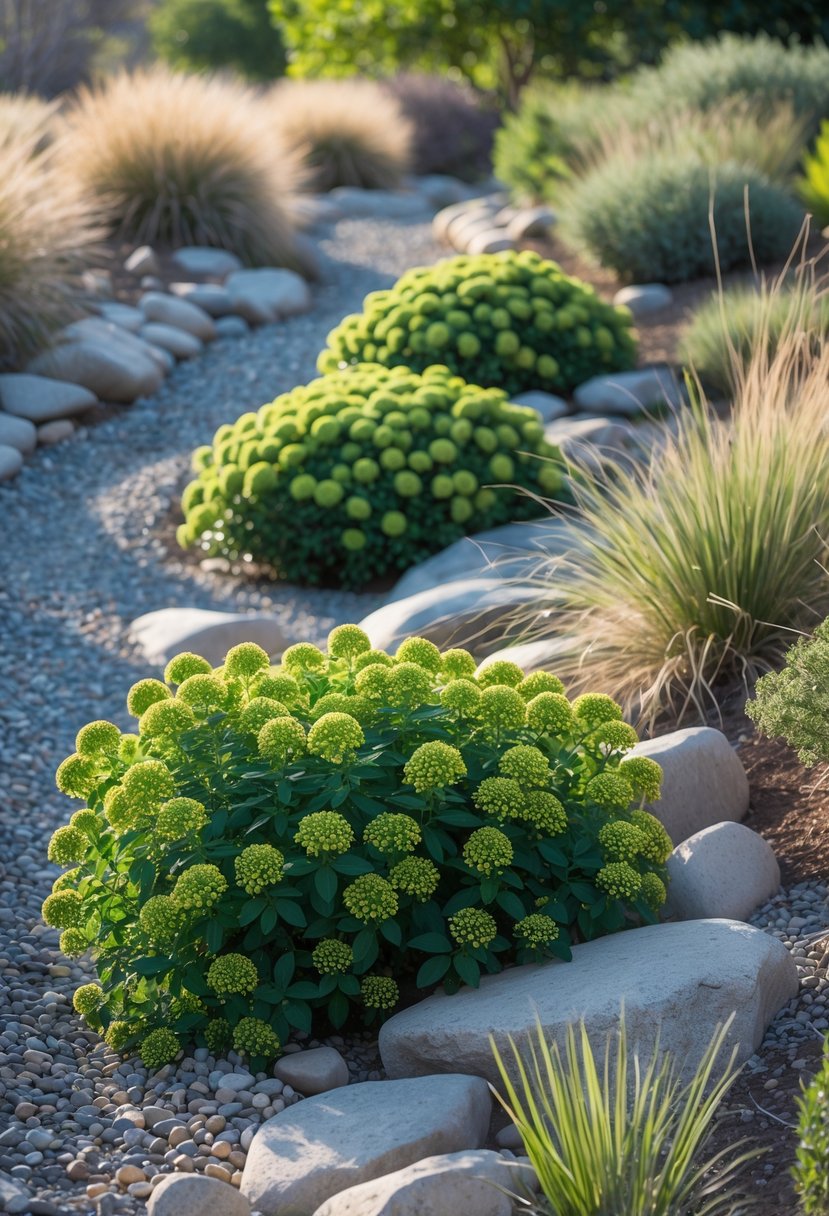
I like to add buttonbush in the wetter areas of my dry creek bed. It thrives in moist soil and adds texture with its round flower clusters. This plant helps bring life to spots that hold water longer.
9. Layer smaller pebbles over larger stones for depth
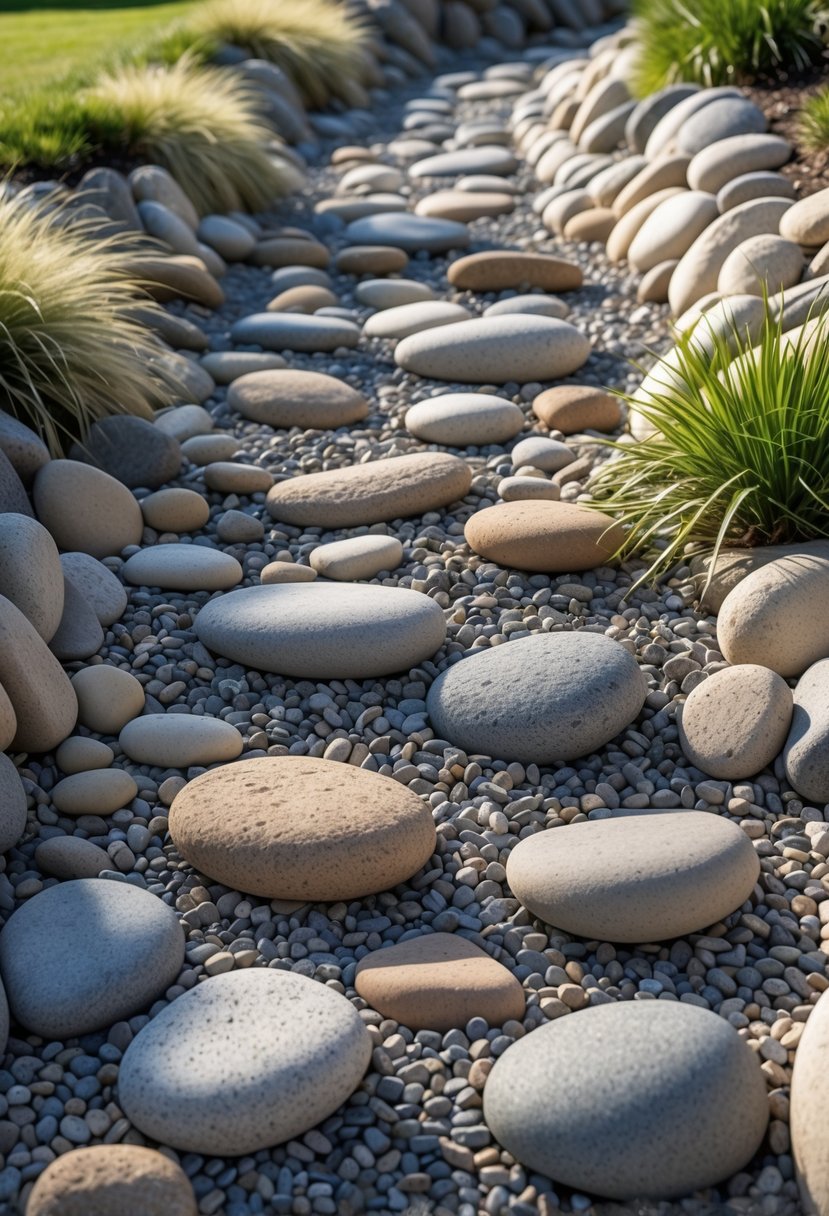
I like to start with large stones as a base for my dry creek bed. Then, I add smaller pebbles on top to create a natural look with more texture. This layering adds depth and makes the design feel more realistic.
10. Plant cardinal flower for seasonal color pops
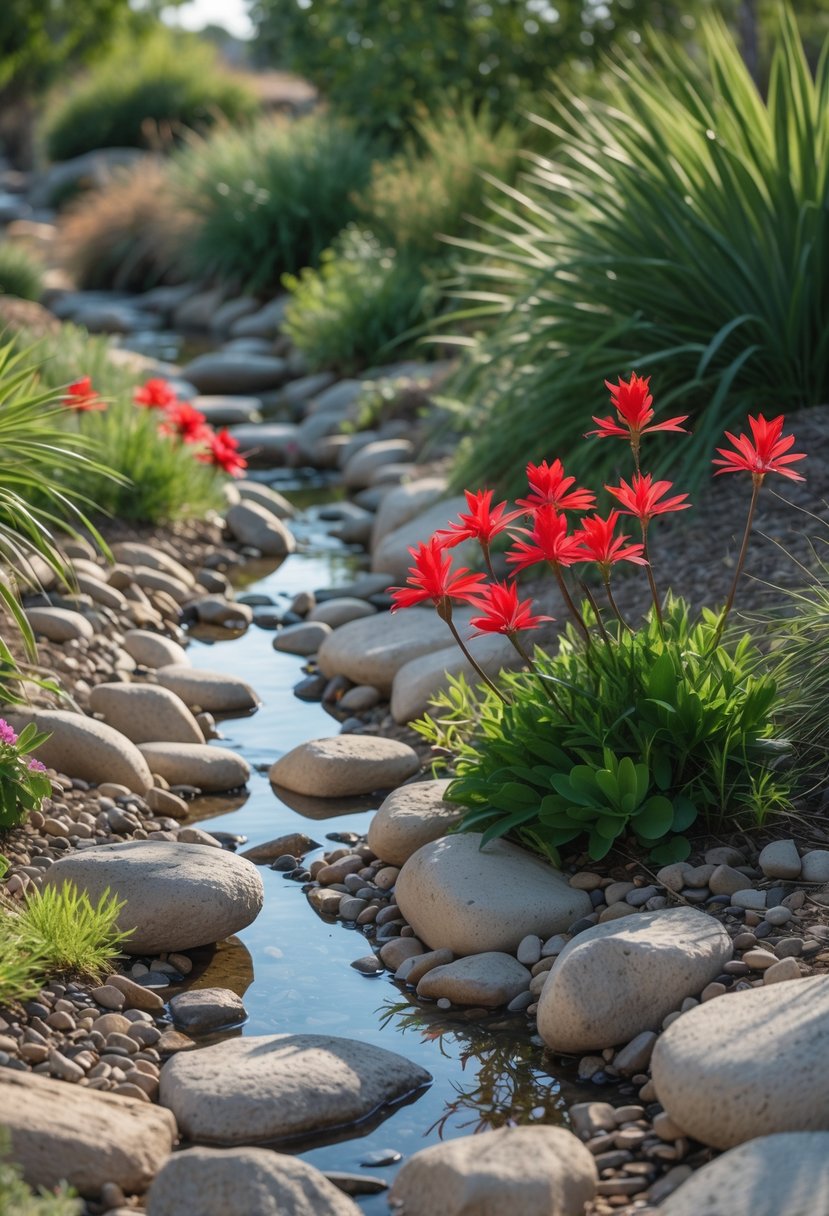
I like to add cardinal flowers near my dry creek bed. Their red blooms create bright spots of color.
These flowers do well in moist soil, which fits with the natural look of a dry creek bed.
Cardinal flowers also attract hummingbirds, adding life to the garden during the growing season.
11. Include ornamental grasses to sway with the breeze
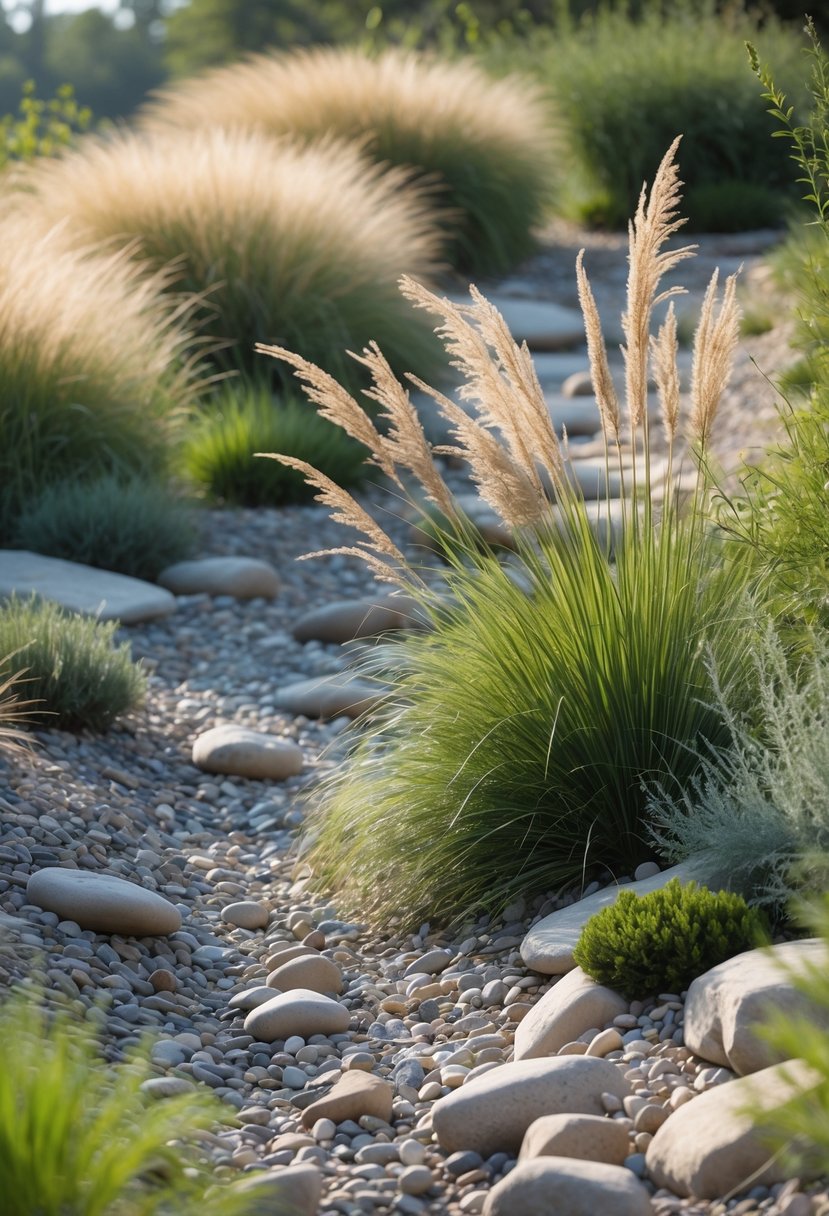
I like adding ornamental grasses along the dry creek bed. They create a soft, natural look while moving gently in the wind. This adds life and texture without needing much care. Grasses also blend well with rocks and other plants for a balanced design.
12. Build low stone retaining walls to define creek borders
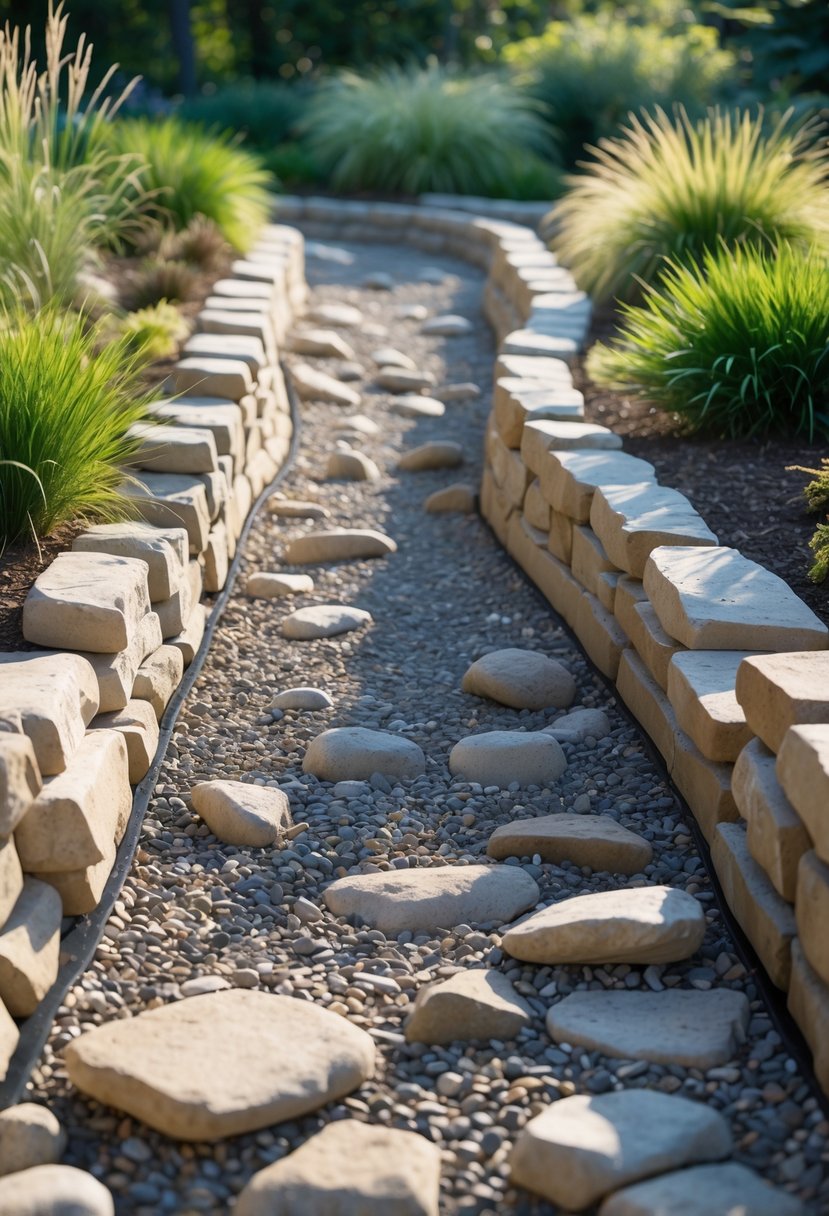
I use low stone retaining walls to give clear edges to the dry creek bed. These walls keep soil and plants from spilling into the creek area. They also add a clean, natural look that fits well in most yards.
13. Allow vines and ground covers to drape over edges
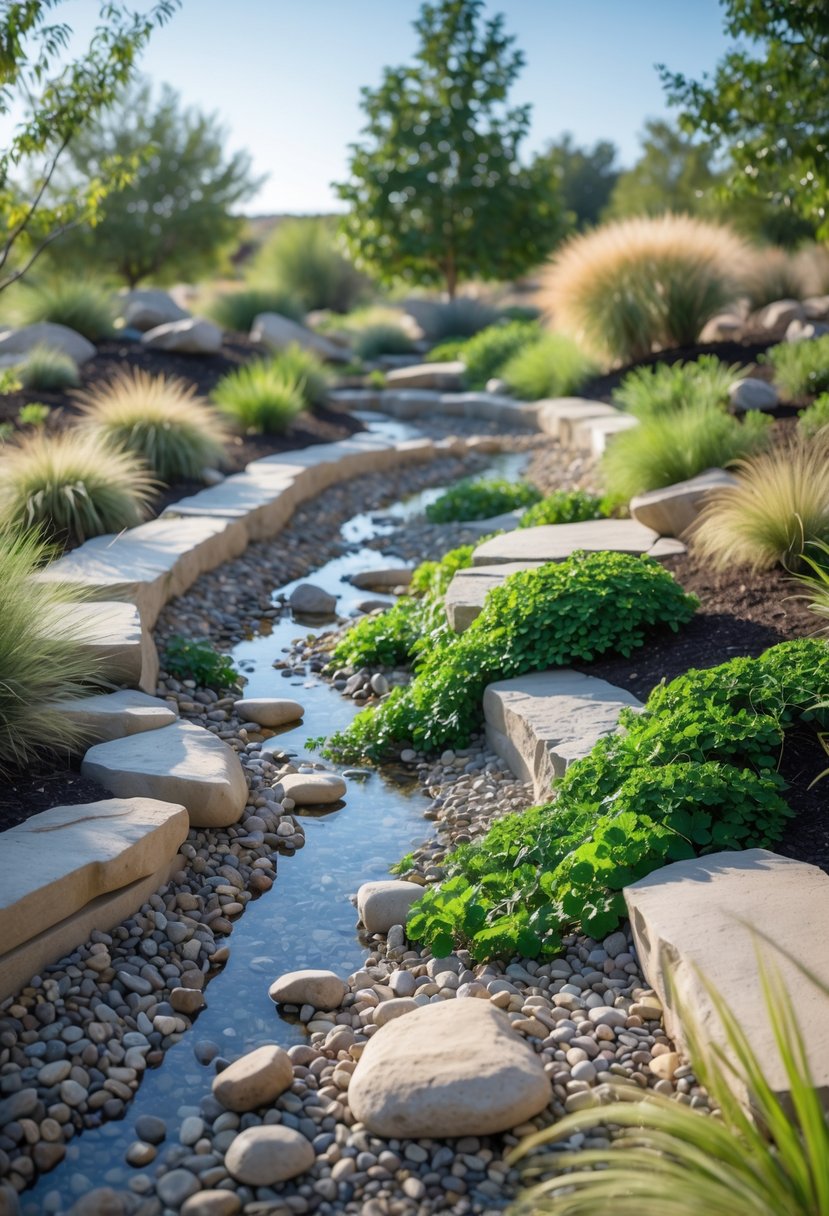
I like to plant vines and ground covers along the edges of dry creek beds. They soften hard lines and create a more natural look.
These plants gently hang over rocks and soil, making the creek bed feel like part of the landscape.
14. Combine natural stone with dry well features for drainage
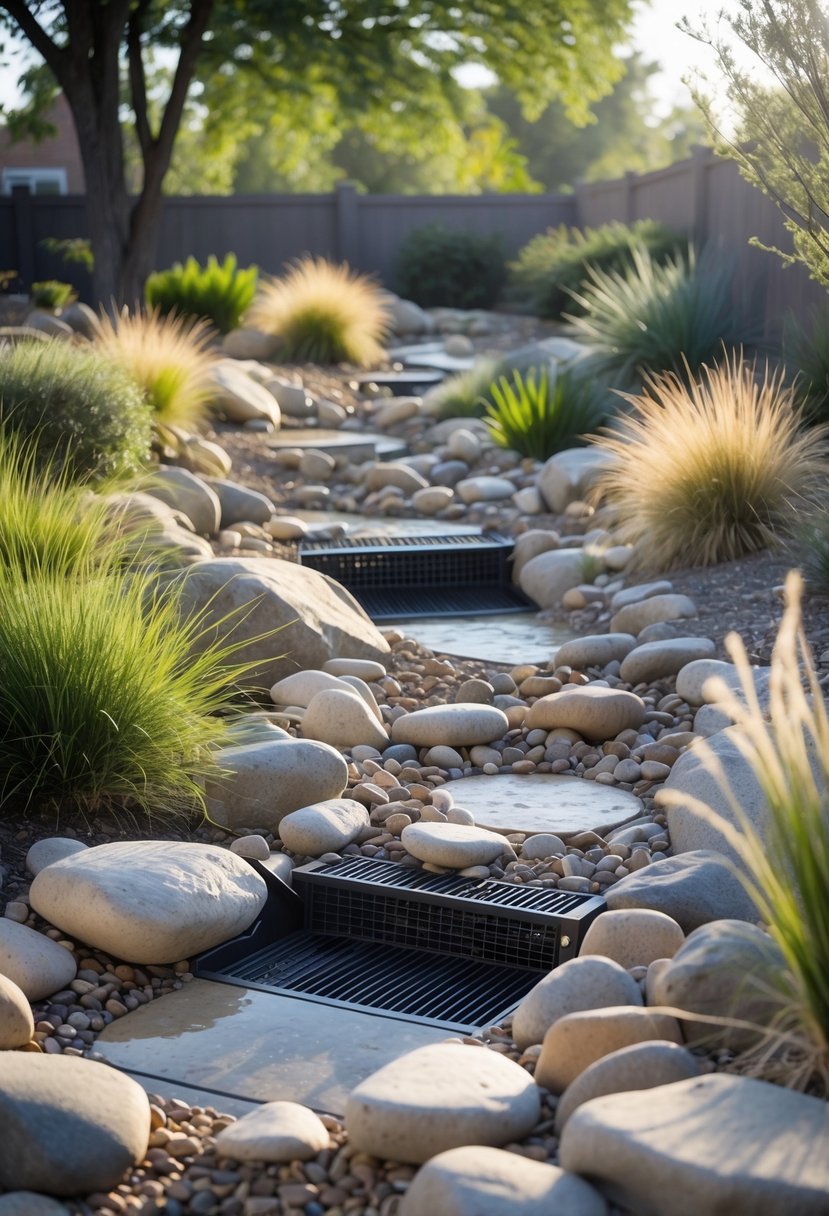
I use natural stones to line dry wells, helping water soak into the ground faster. Stones create a strong, attractive border that blends well with the surrounding landscape. This method improves drainage while keeping the area looking natural.
15. Plant wildflowers around the creek for natural appeal
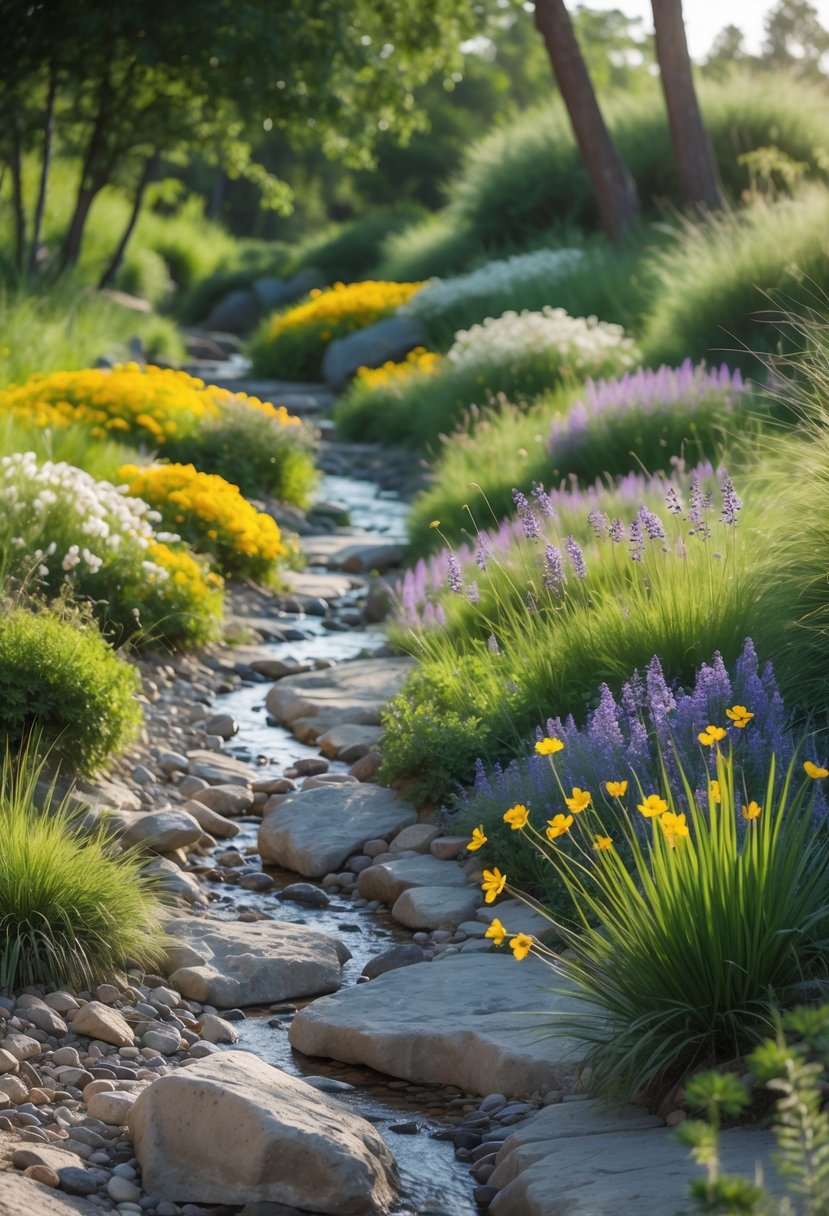
I like to plant wildflowers around my dry creek bed. They add color and attract bees and butterflies.
Wildflowers grow well in dry conditions, so they fit the creek’s environment. They also give the area a natural, relaxed look.
16. Use dry creek beds to connect different garden zones
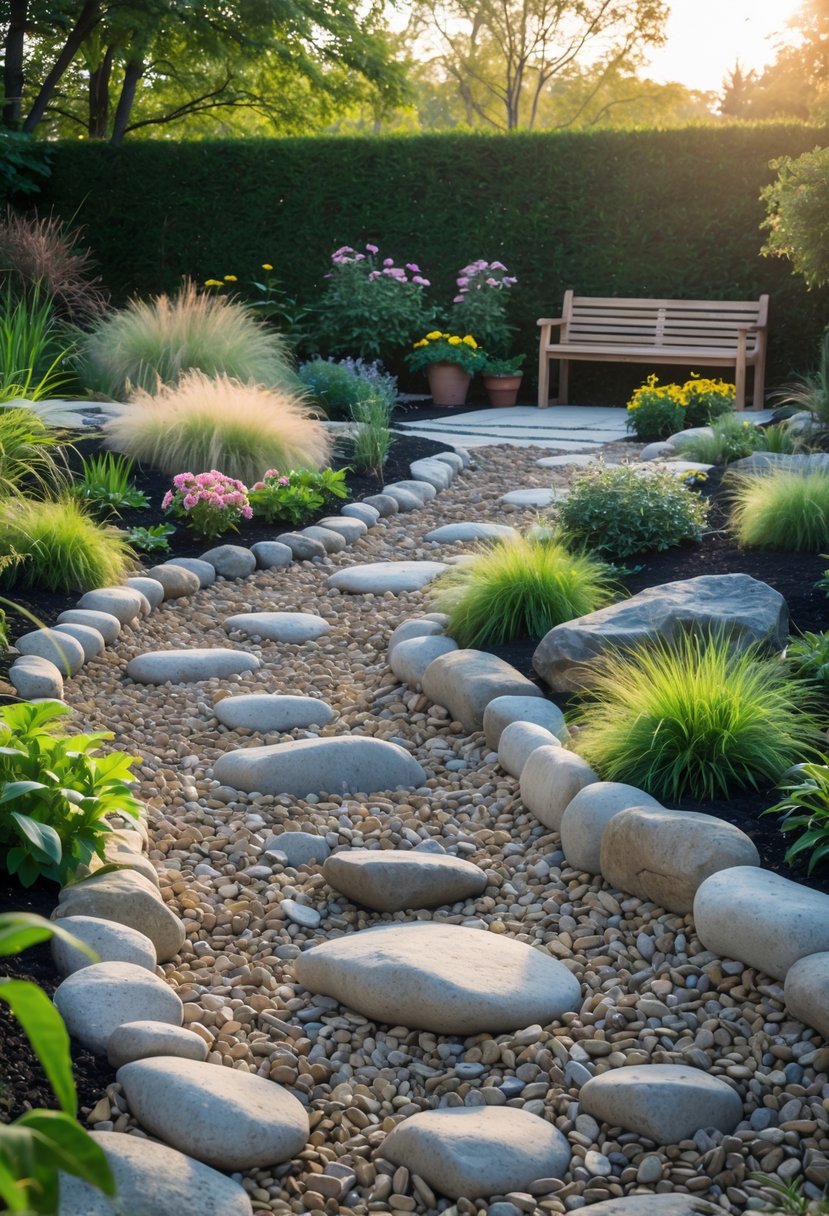
I use dry creek beds as natural pathways to link separate areas in my garden. They create a flow between spaces without needing fences or walls. This makes the garden feel larger and more connected.
17. Create a dry riverbed through a sloped front yard
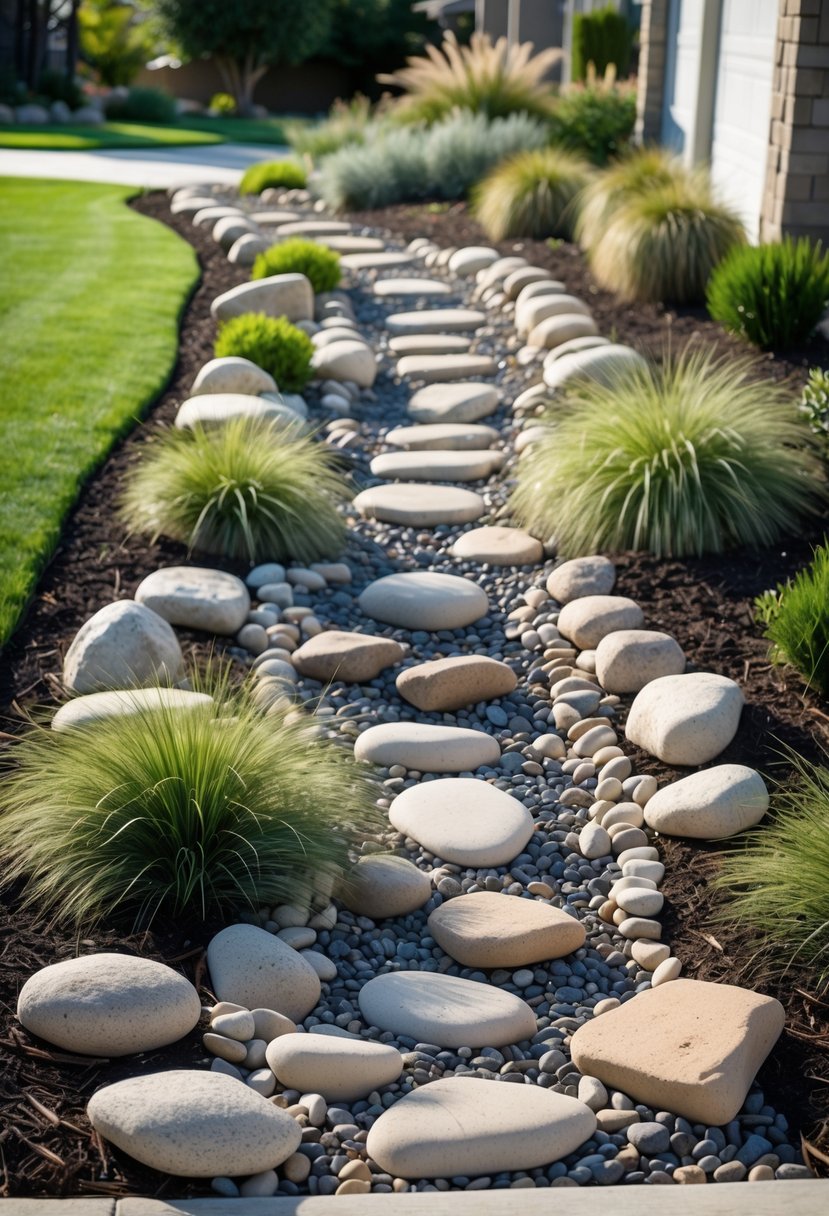
I suggest using varying sizes of rocks to shape the dry riverbed. The slope helps water flow naturally during rain.
I add drought-tolerant plants along the edges. This keeps the look green without needing much water.
The dry riverbed also helps prevent water pooling in my yard. It fits well with the landscape and looks natural.
18. Incorporate drought-tolerant plants for low maintenance
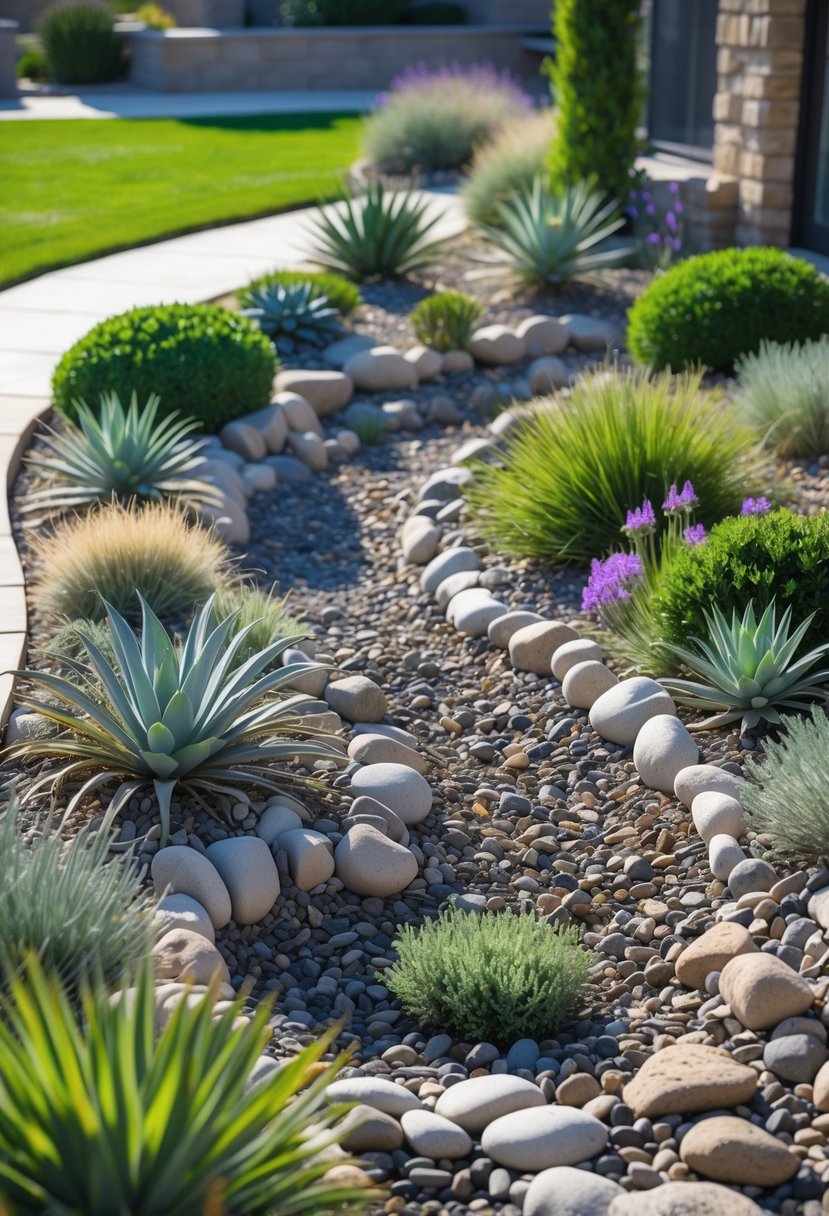
I choose drought-tolerant plants because they need little water and care. These plants help keep the dry creek bed natural and easy to maintain. Succulents, lavender, and ornamental grasses work well in this kind of setting.