





In This Article Show
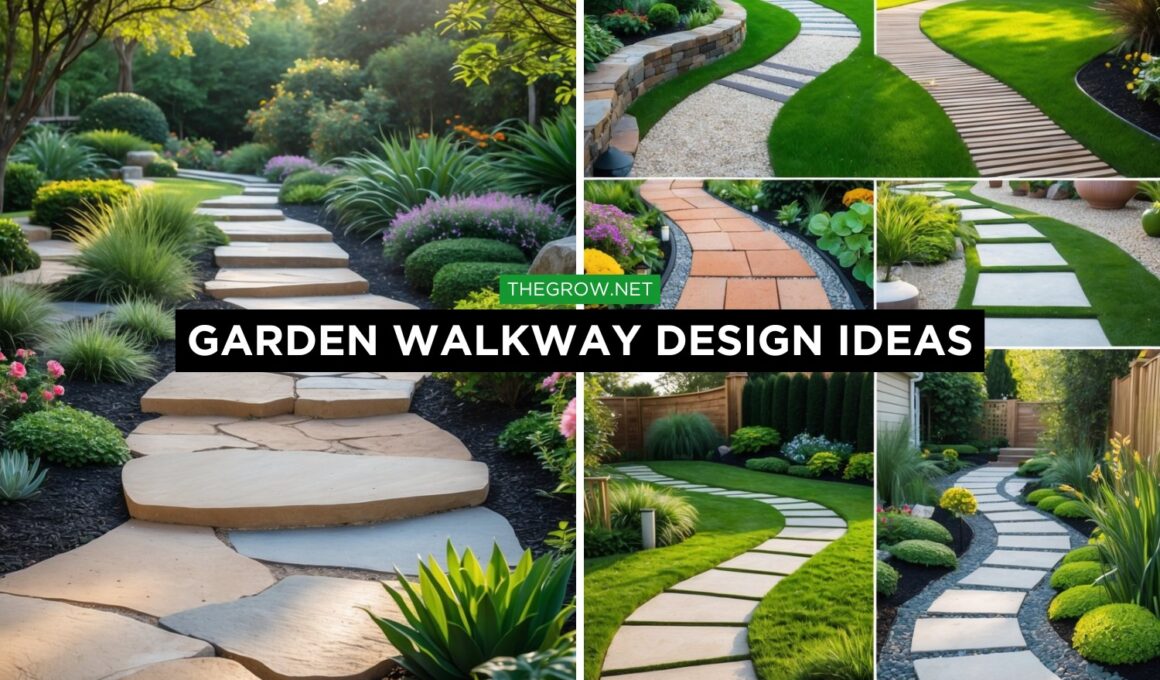
Creating a garden walkway can change the look and feel of your outdoor space. It helps guide visitors and adds a sense of order and style to your yard. I want to share ideas that can make your garden path both useful and attractive.
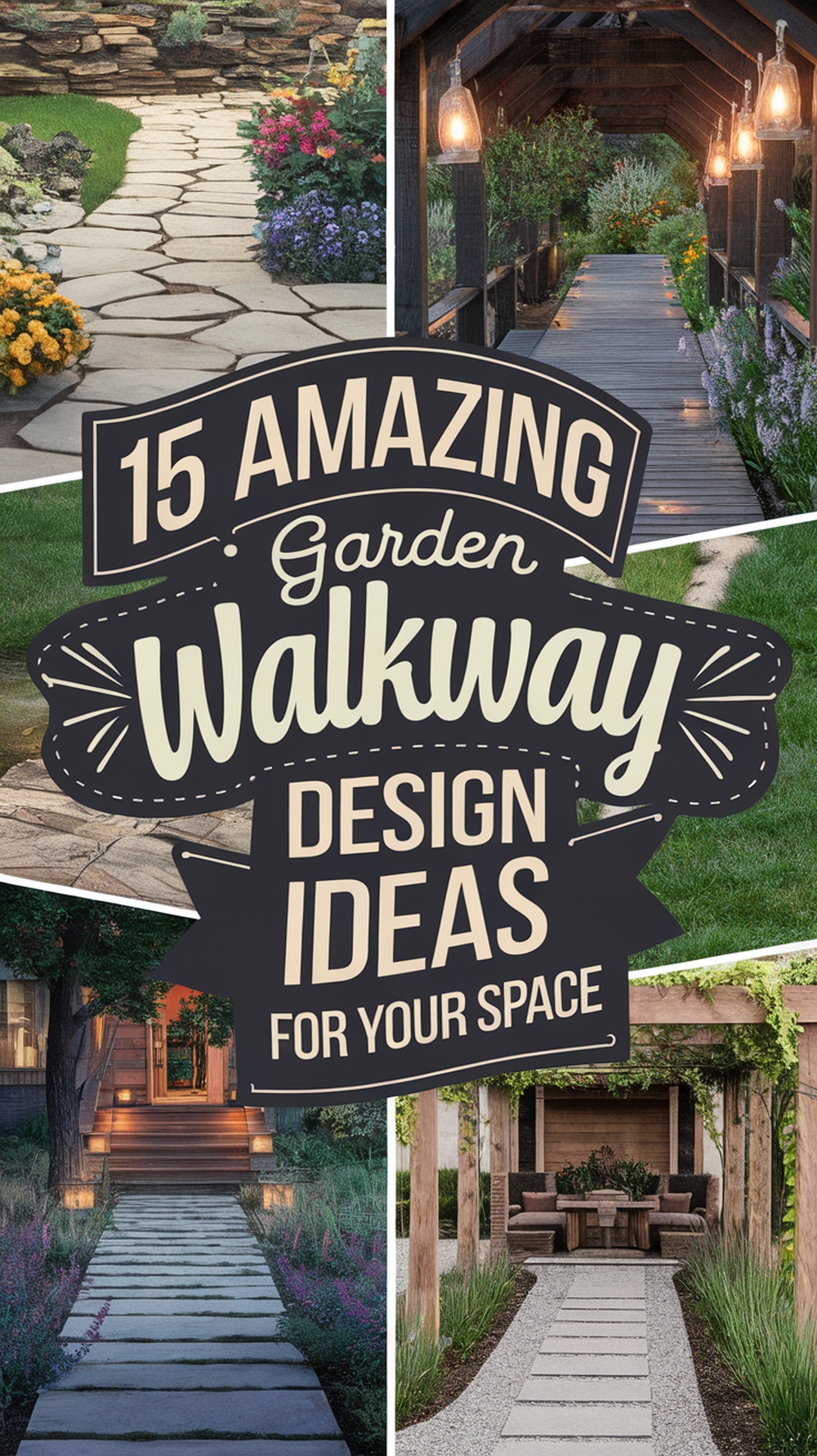
A well-designed garden walkway improves your garden’s beauty and function by providing a clear, inviting path.
Whether you prefer natural materials or clean modern lines, the right design can fit your space and taste perfectly.
1. Curved Natural Stone Pathway
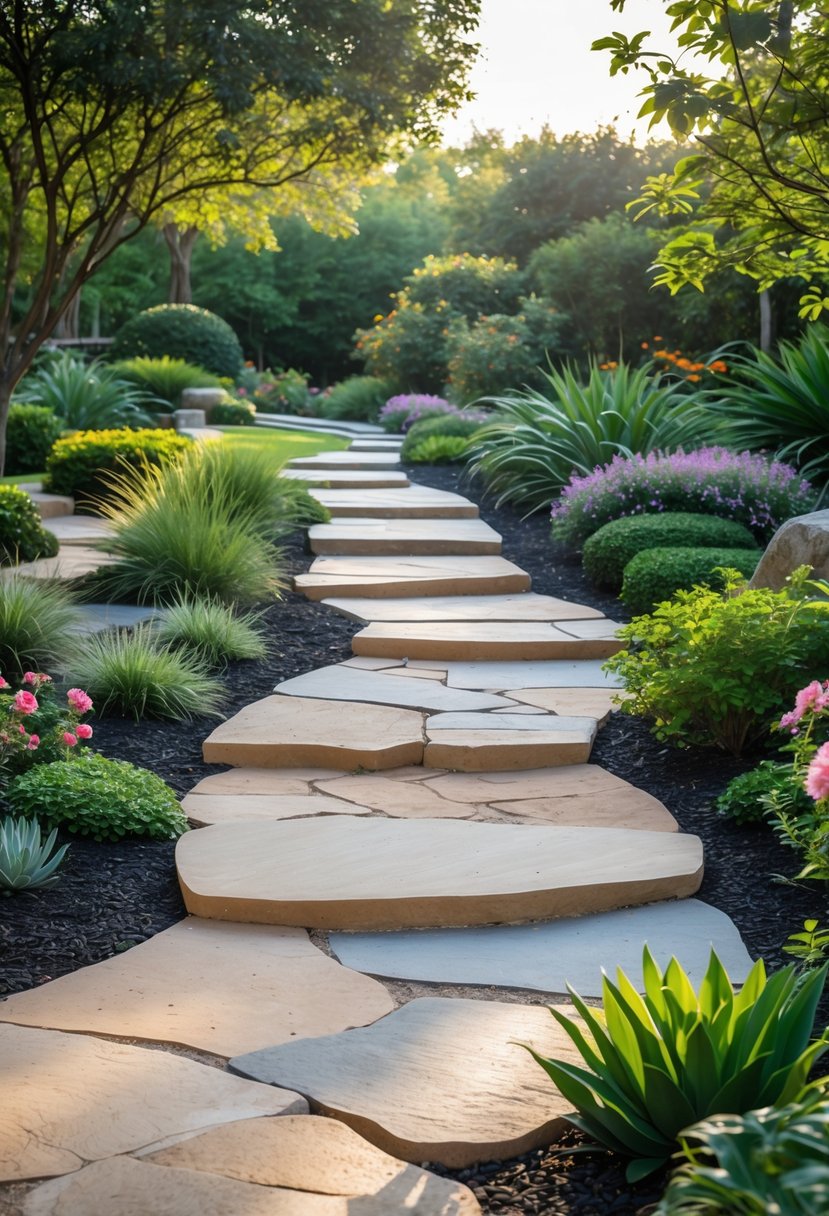
I like using natural stone for curved pathways because it adds a simple, elegant touch. The stones create a smooth, flowing line that fits well in any garden.
This type of path blends with plants and trees, making the space feel calm and natural. It’s both practical and pleasing to look at.
2. Rustic Stepping Stones with Moss
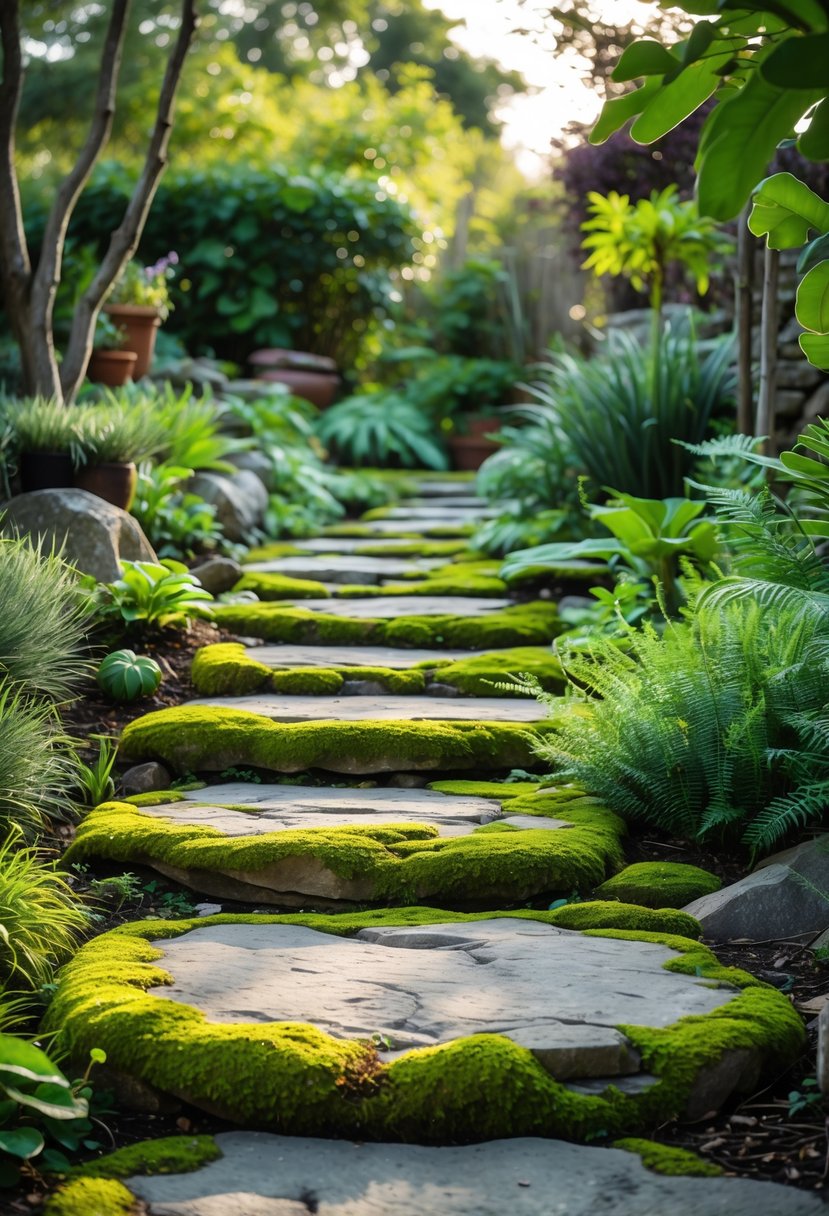
I like using rustic stones placed unevenly with moss growing between them. This look feels natural and blends well with garden plants. It also adds texture and a soft green color without much effort.
3. Modern Concrete Paver Walkway
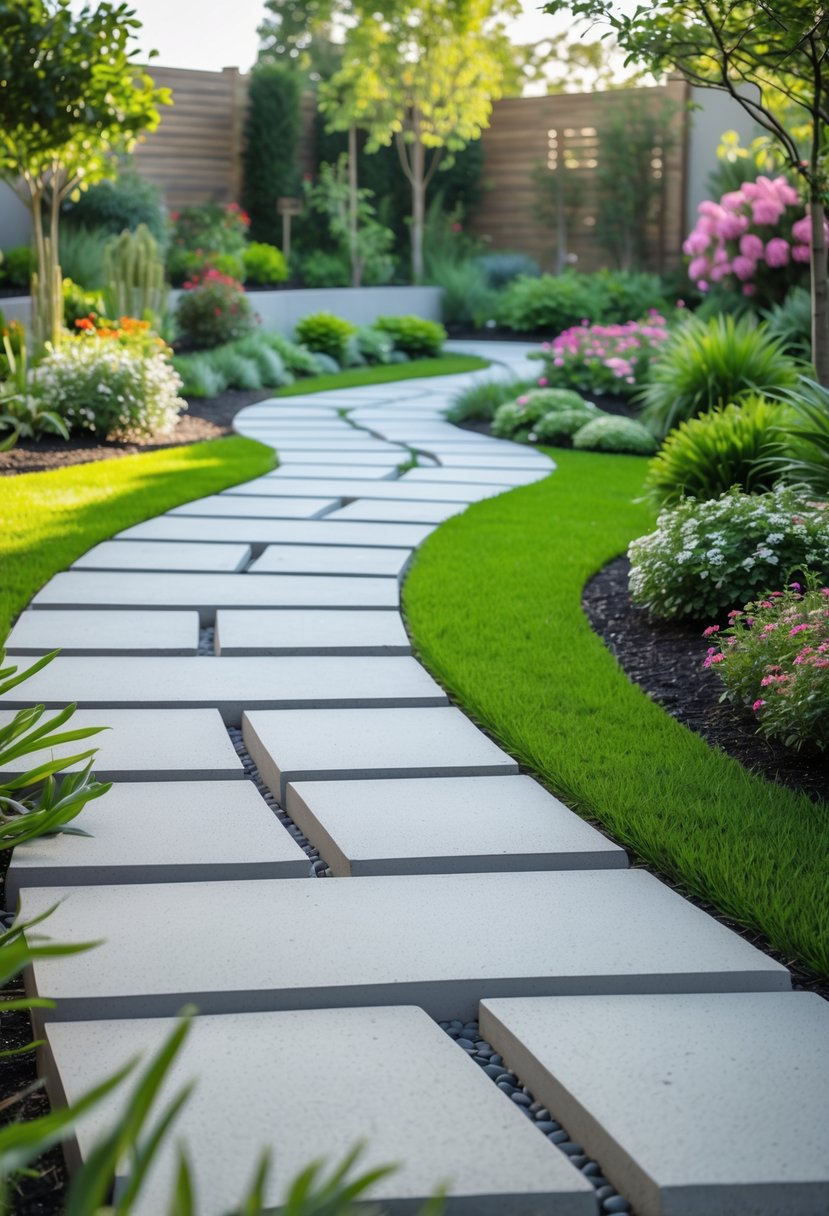
I like modern concrete paver walkways because they offer a clean and simple look. They use large square or rectangular pavers placed evenly with gaps filled by gravel or grass. This style fits well with contemporary homes and low-maintenance yards.
4. Gravel Path with Edging Plants
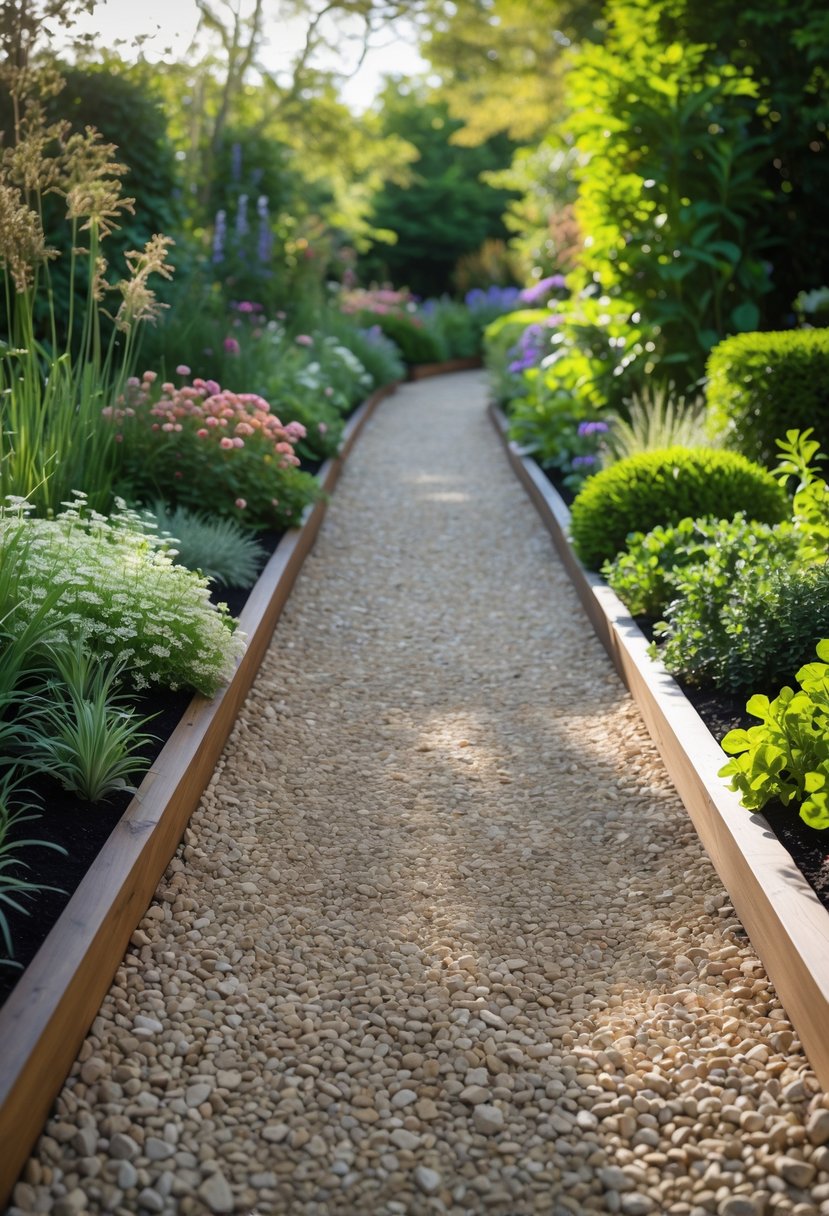
I like using edging plants along a gravel path. They create a clear boundary and soften the hard edges of the gravel. Small shrubs or low-growing flowers work well for this. It adds a natural look while keeping the path defined.
5. Wooden Boardwalk through Garden Beds
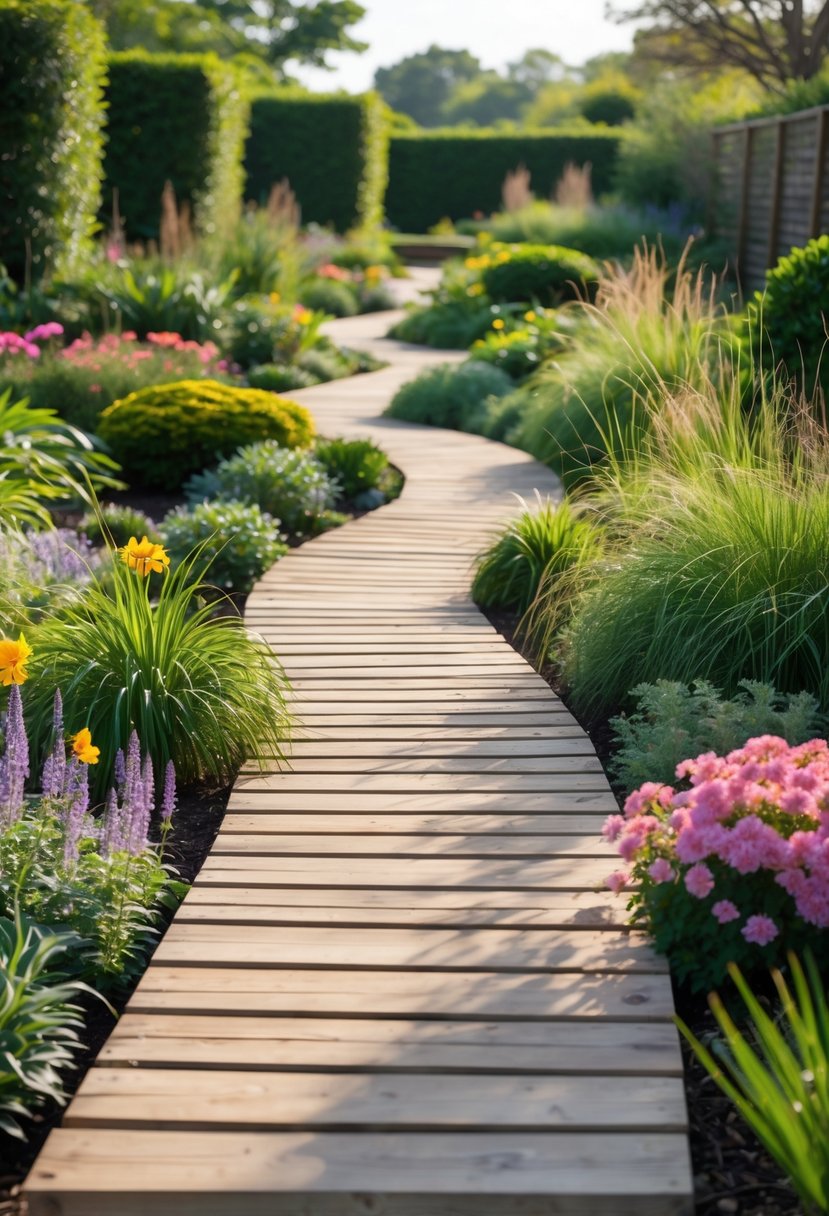
I find wooden boardwalks work well between garden beds. They create a neat path that keeps feet from damaging plants. The natural wood blends nicely with the greenery, adding simple beauty to the garden.
6. Brick Herringbone Pattern Walkway
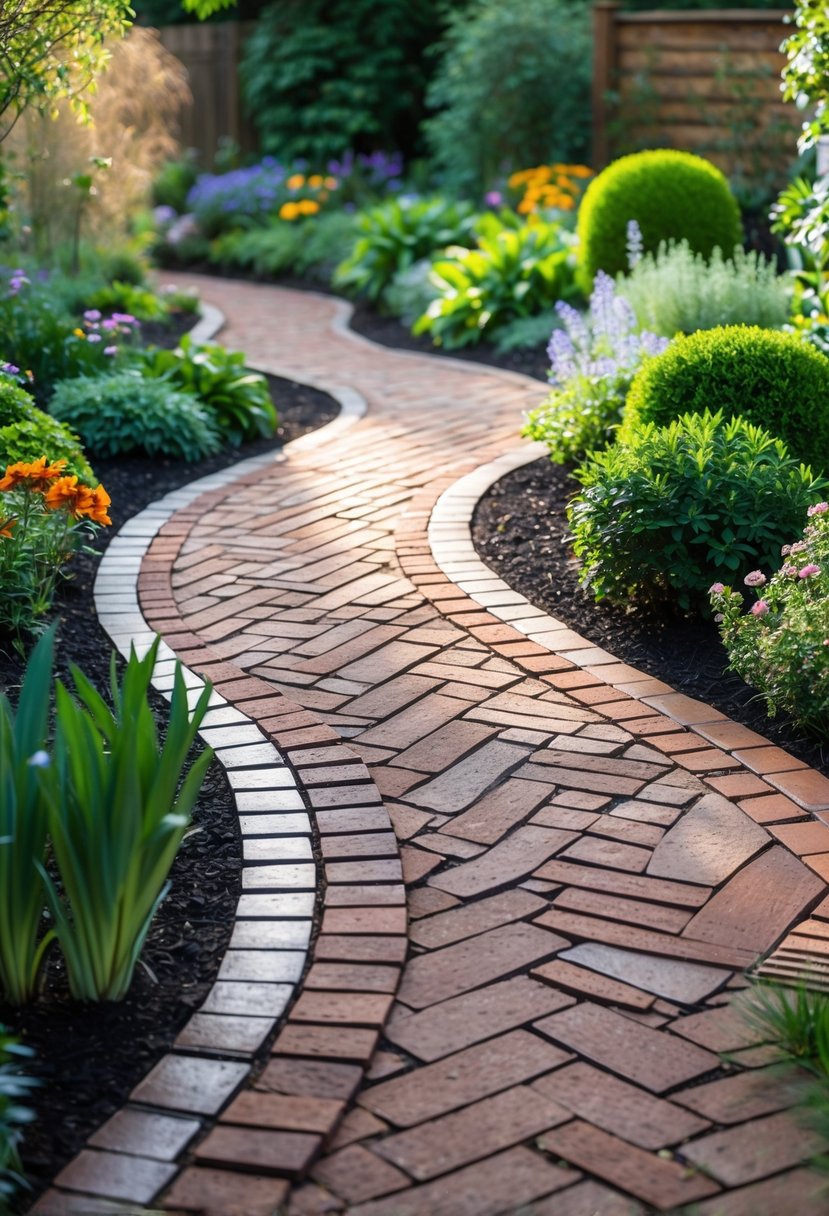
I like the brick herringbone pattern because it adds a classic look to a garden path. The bricks are laid in a zigzag design that looks neat and stays strong over time. It works well in places with heavy foot traffic.
7. Flagstone Path with Ground Cover
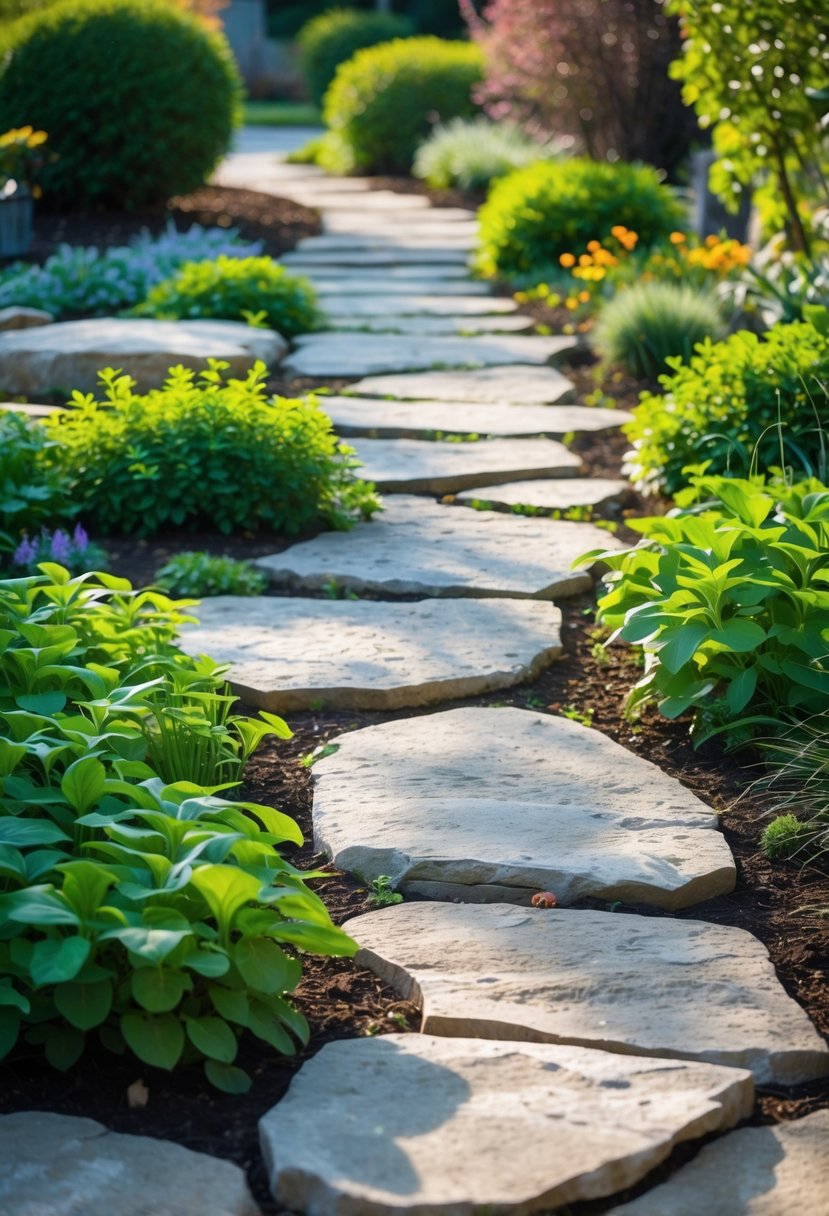
I like using flagstone paths mixed with low-growing ground cover plants. The stones create a solid walkway while the plants soften the edges. This design adds greenery and texture without needing much space.
The ground cover fills gaps between stones, preventing weeds and keeping the area neat. It also helps the path blend naturally into the garden. It’s a simple way to combine beauty and function.
8. Solar-Powered Path Lights Integration
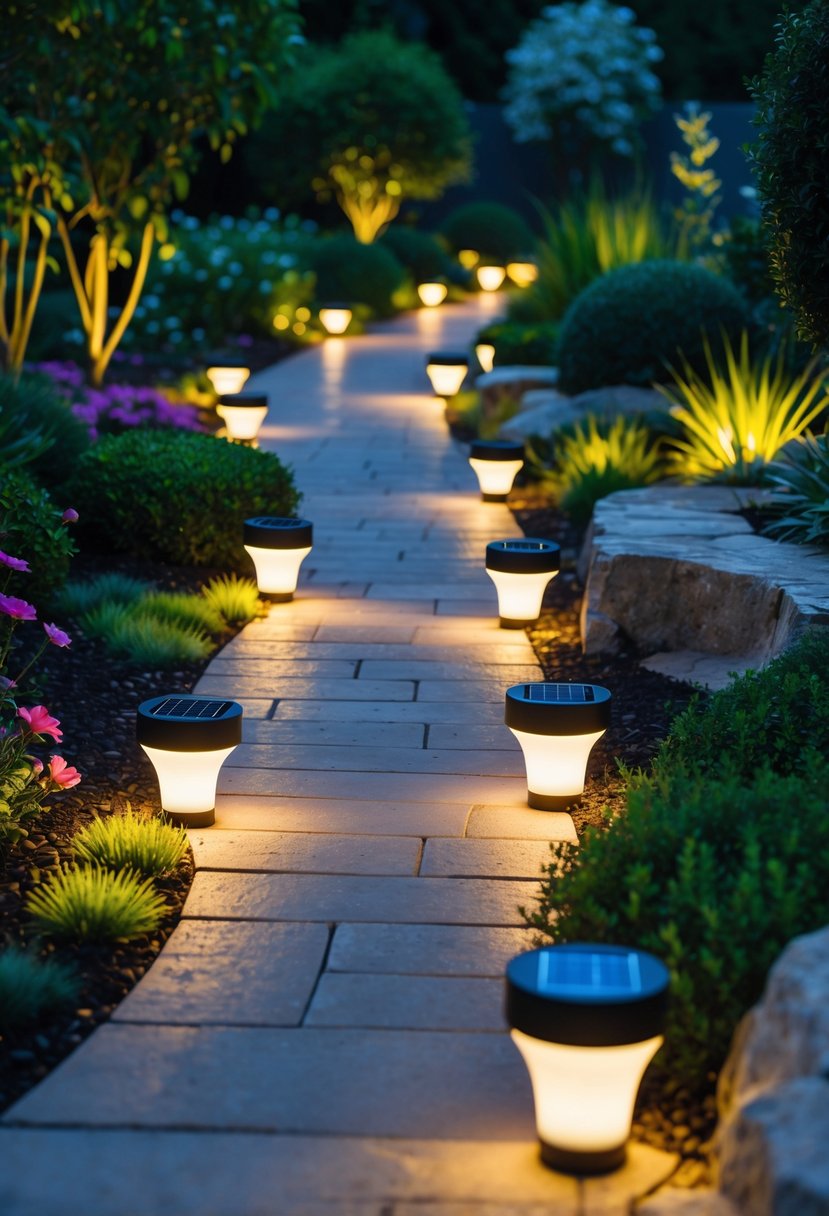
I use solar-powered path lights to brighten my garden walkway without adding to my energy bill. They are easy to install since no wiring is needed. These lights charge during the day and provide a soft glow at night, making my path safe and inviting.
9. Zen Garden Pebble Trail
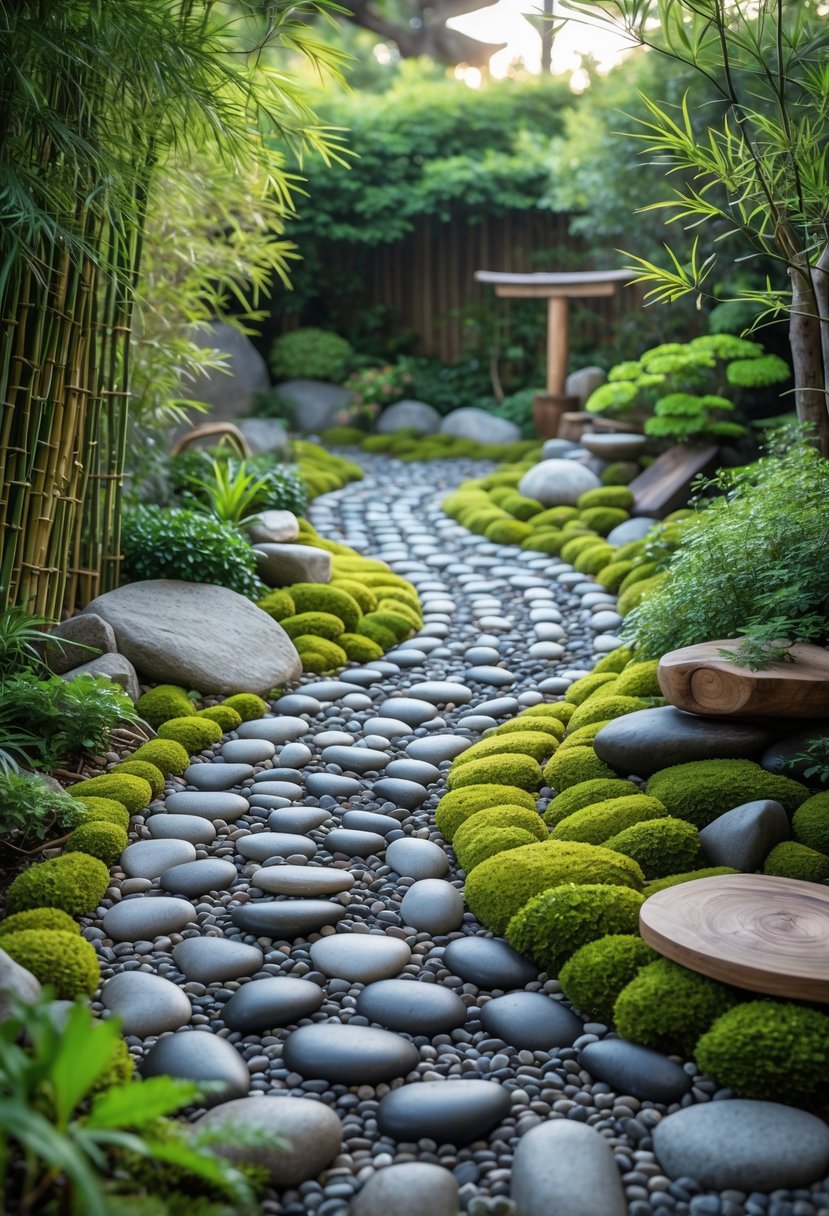
I like using small pebbles for a garden trail because they create a simple, peaceful look. The smooth texture feels nice underfoot and adds natural beauty to my space.
A pebble trail can guide visitors softly through the garden while keeping things low-maintenance. It fits well with a calm, Zen style garden.
10. Mosaic Tile Garden Path
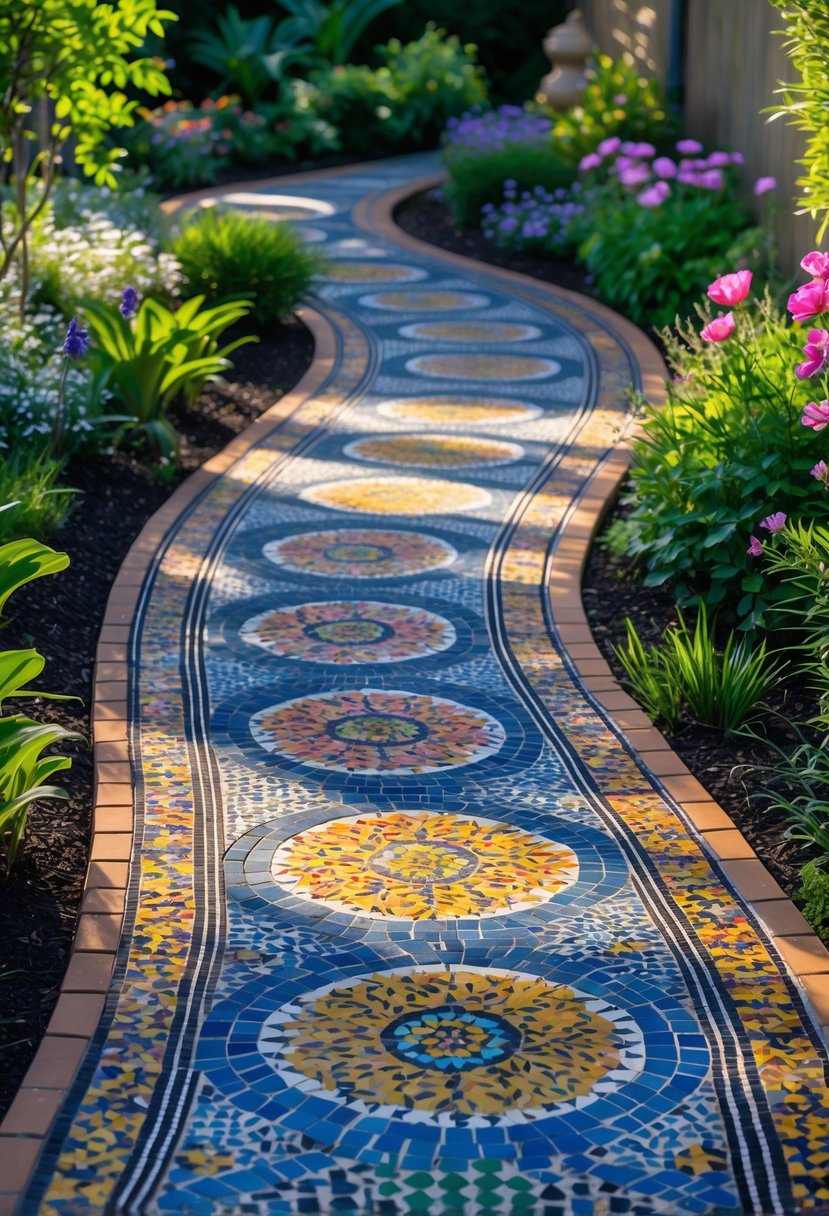
I like using mosaic tiles because they add color and style to a garden path. You can create simple or detailed patterns with stones, glass, or broken tiles. This makes the walkway both useful and visually interesting.
11. Recycled Glass Pathway Accents
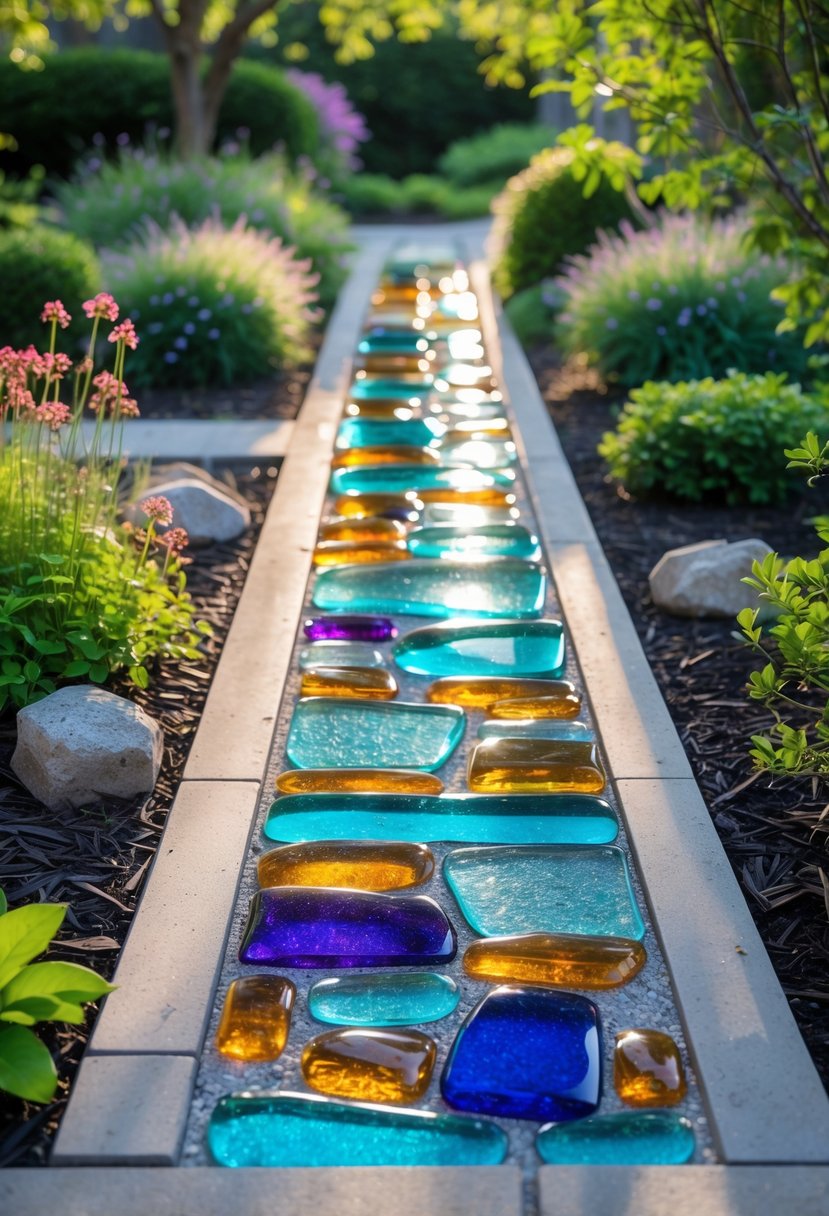
I like using recycled glass to add color and texture to a garden path. Small glass pieces or bottles can create eye-catching accents that reflect sunlight.
This material also helps water soak into the ground better than concrete, making it eco-friendly. It’s an easy way to brighten a walkway while reusing materials.
12. Raised Wooden Walkway over Wet Areas
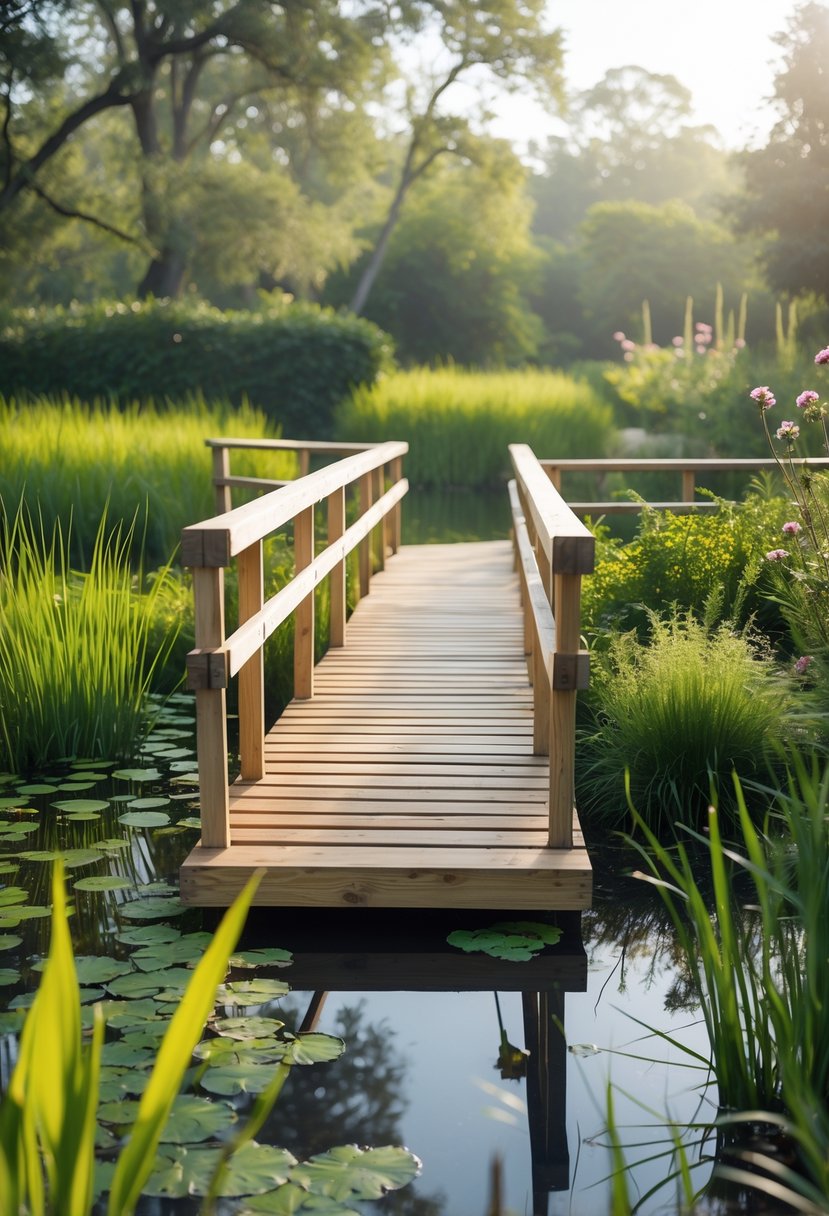
I find raised wooden walkways perfect for wet or muddy garden spots. They keep my path dry and protect the plants below. Building them requires strong materials and good drainage to last long.
13. Circular Patio Connecting Walkways
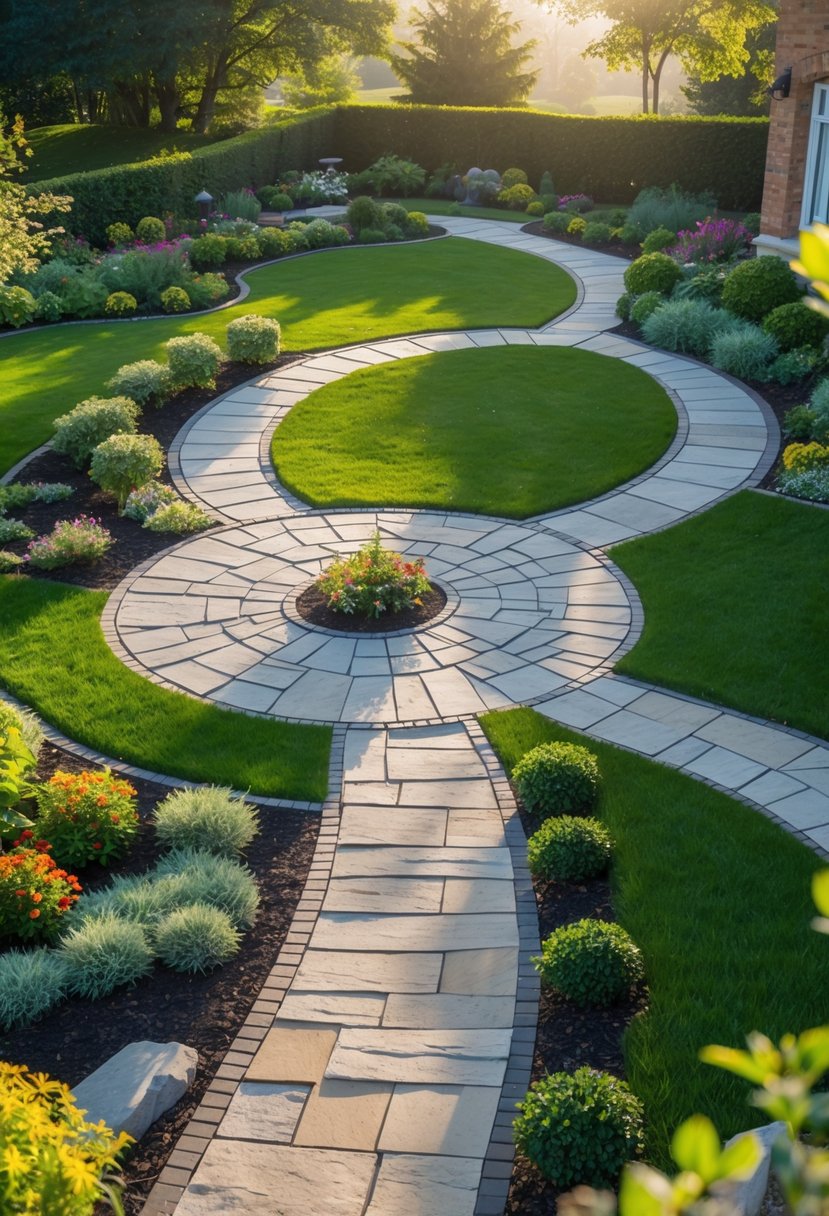
I like using circular patios as a central point in my garden. Connecting walkways from this circle create flow and make the space feel organized.
These paths guide visitors naturally and add interest without being too busy. They work well with stone or brick materials.
14. Mixed Material Walkway (Stone & Wood)
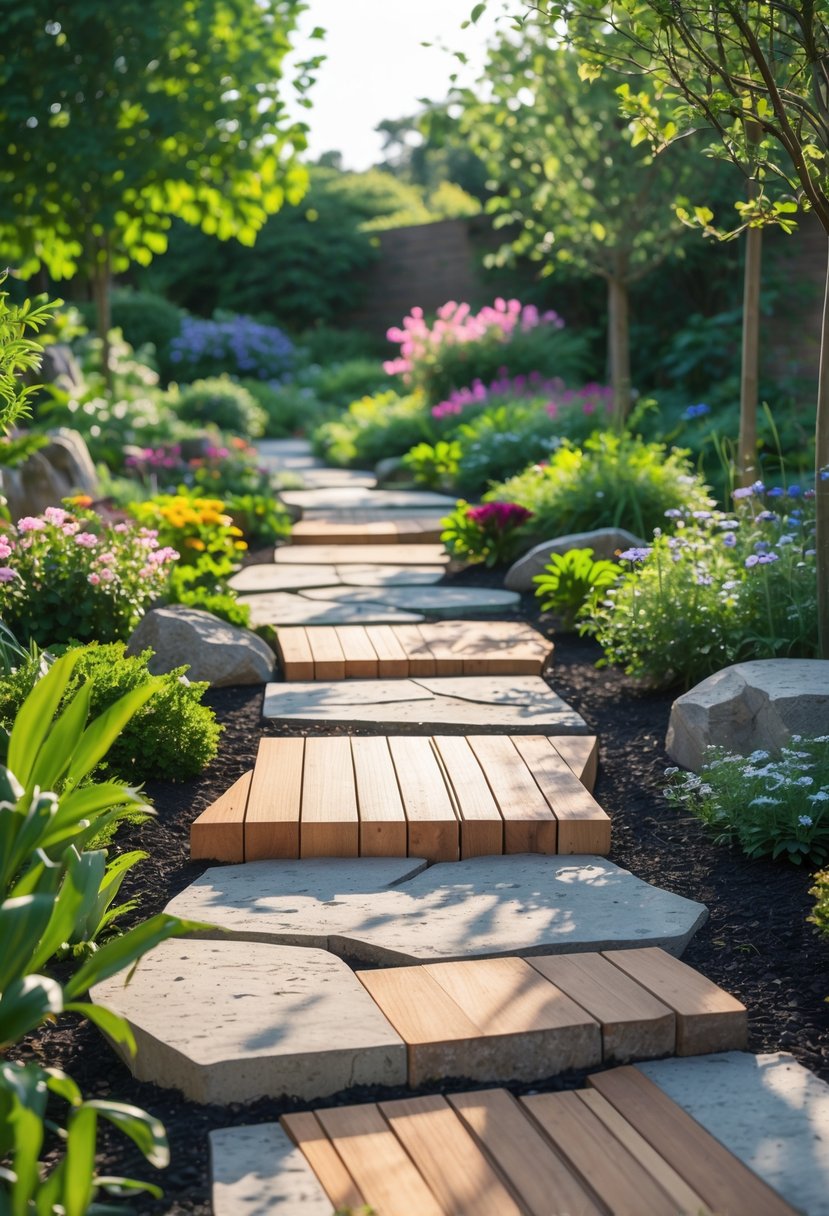
I like using stone and wood together for a walkway because it adds texture and visual interest. The cool, hard stone contrasts well with the warm, natural feel of wood.
This mix creates a balanced look that fits both modern and rustic gardens. It also lets me highlight different parts of my outdoor space.
15. Low-Maintenance Mulch Trail
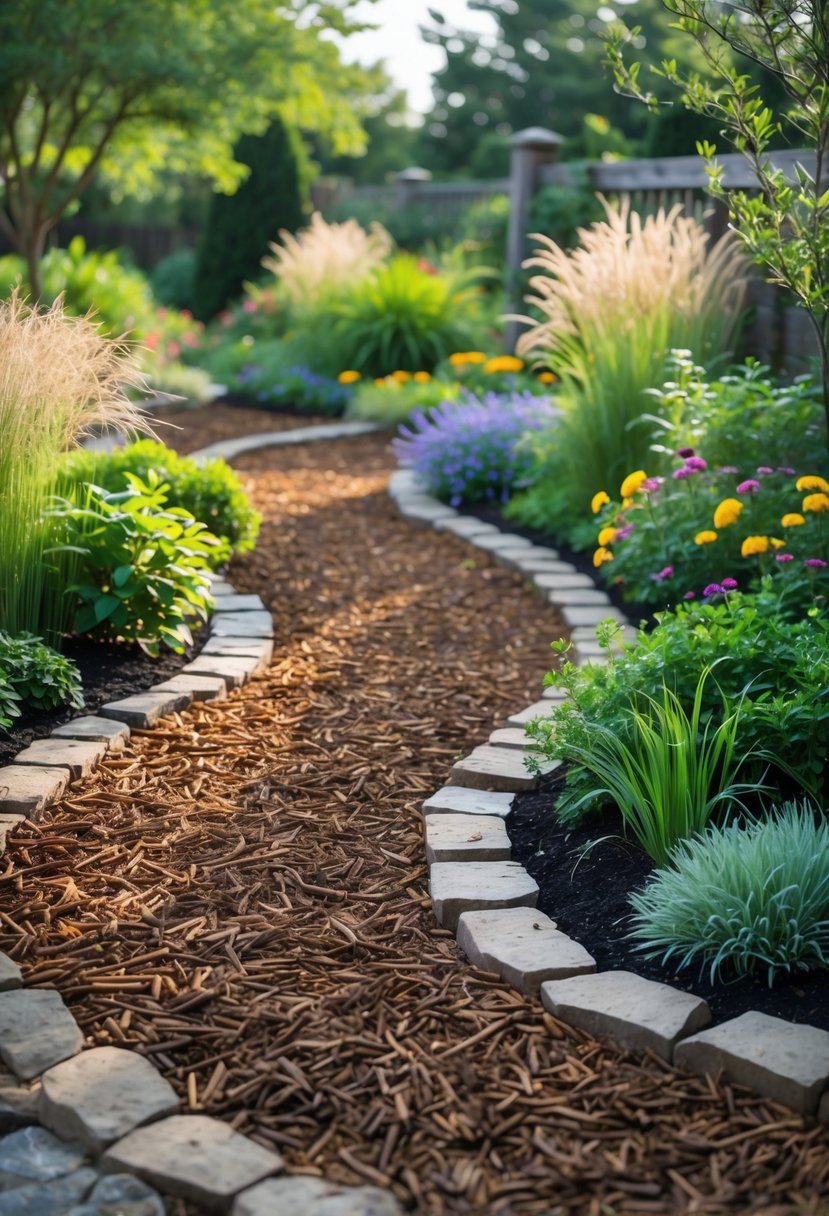
I like using mulch for garden walkways because it is simple and affordable. Mulch blends well with plants and helps keep the soil healthy. It also requires very little upkeep, making it a practical choice for many gardens.