






In This Article Show
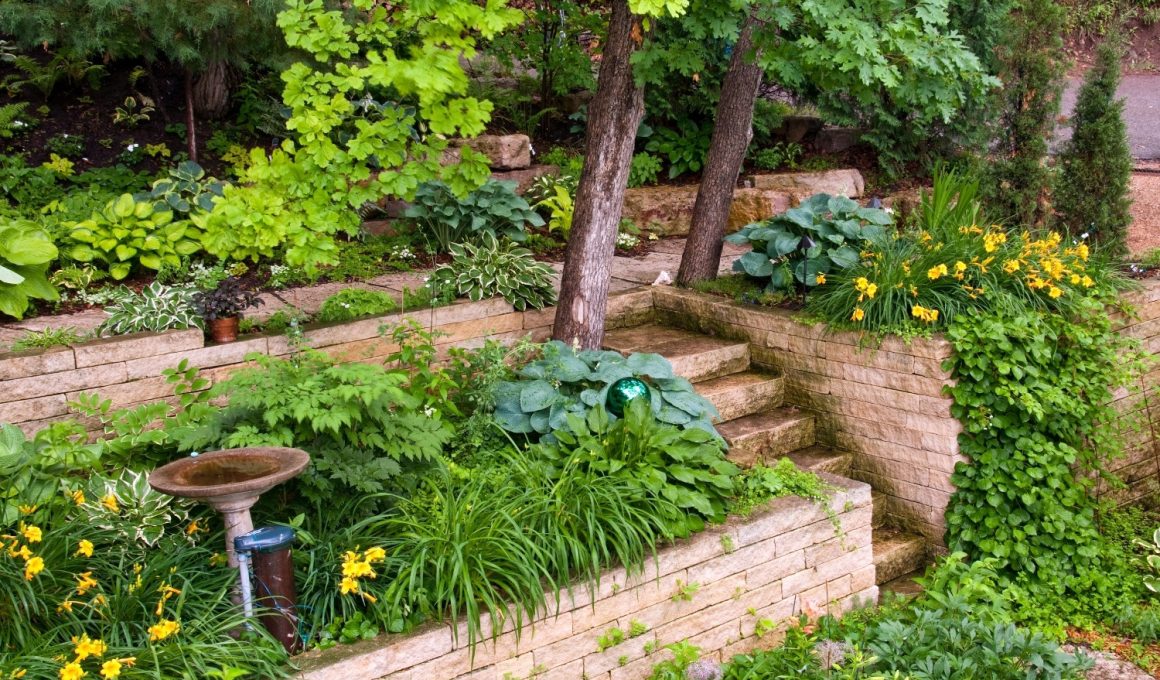
Retaining wall flower beds can do so much more than hold back soil. They can turn a sloped yard, patio edge, front garden, or backyard corner into something that feels layered, finished, and full of charm. I love how they add structure while still giving you room to soften everything with flowers, trailing plants, and greenery.
The prettiest retaining wall flower beds usually get the balance right between hardscape and planting. A good wall gives the space shape, while the flowers keep it from feeling stiff or heavy. These ideas are practical, realistic, and full of inspiration for gardens that need beauty and purpose at the same time.
1. Tiered Stone Retaining Wall Flower Bed
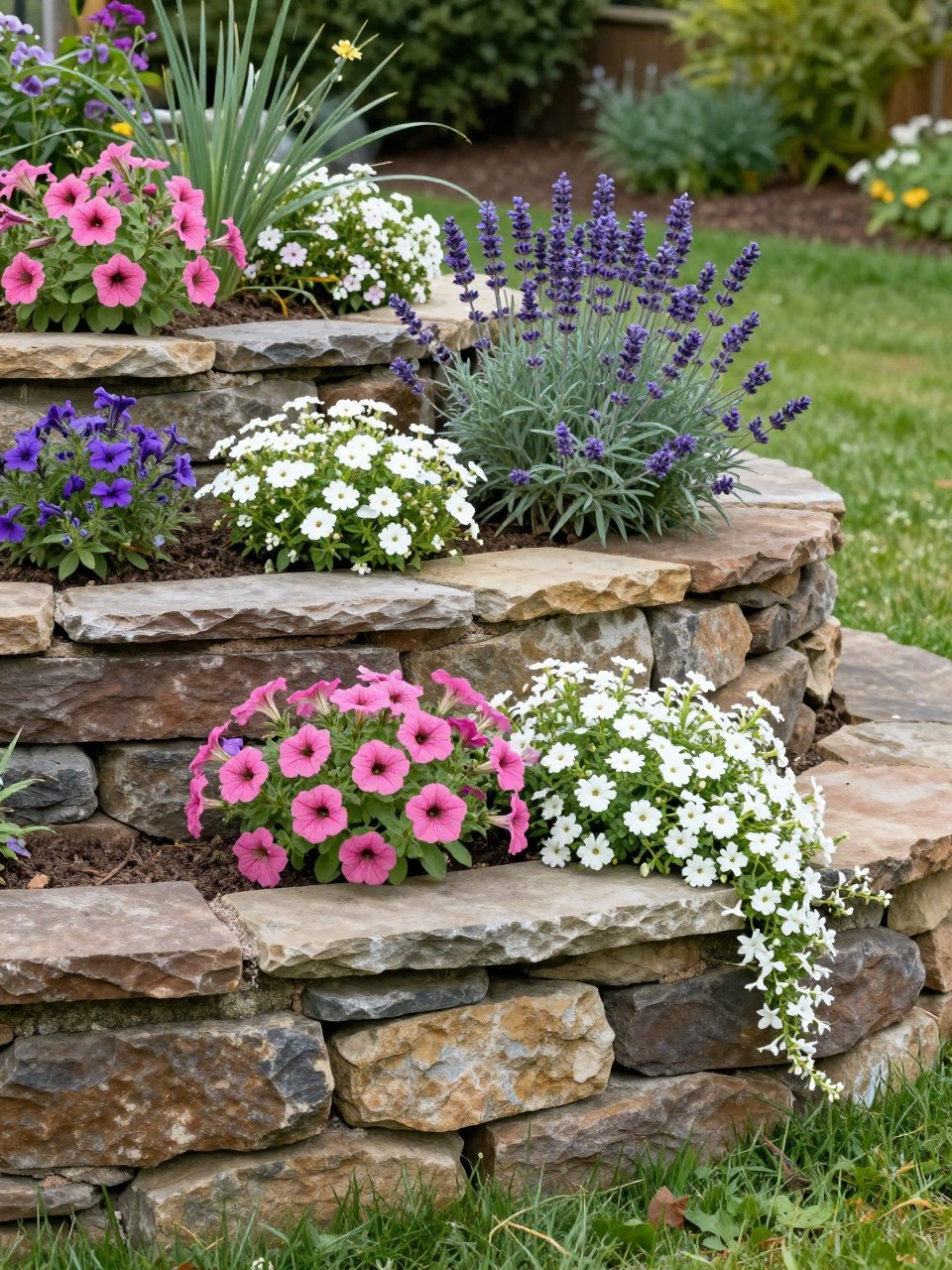
A tiered retaining wall flower bed is one of the best ways to make a sloped yard look more polished. The layers create depth right away, and they give you more room to mix flowers with different heights, textures, and colors.
This look works especially well with stone because the rough texture feels timeless and natural. Let a few trailing plants soften the wall edge so the whole design feels lush instead of too hard or formal.
2. Brick Retaining Wall With Cottage Flowers
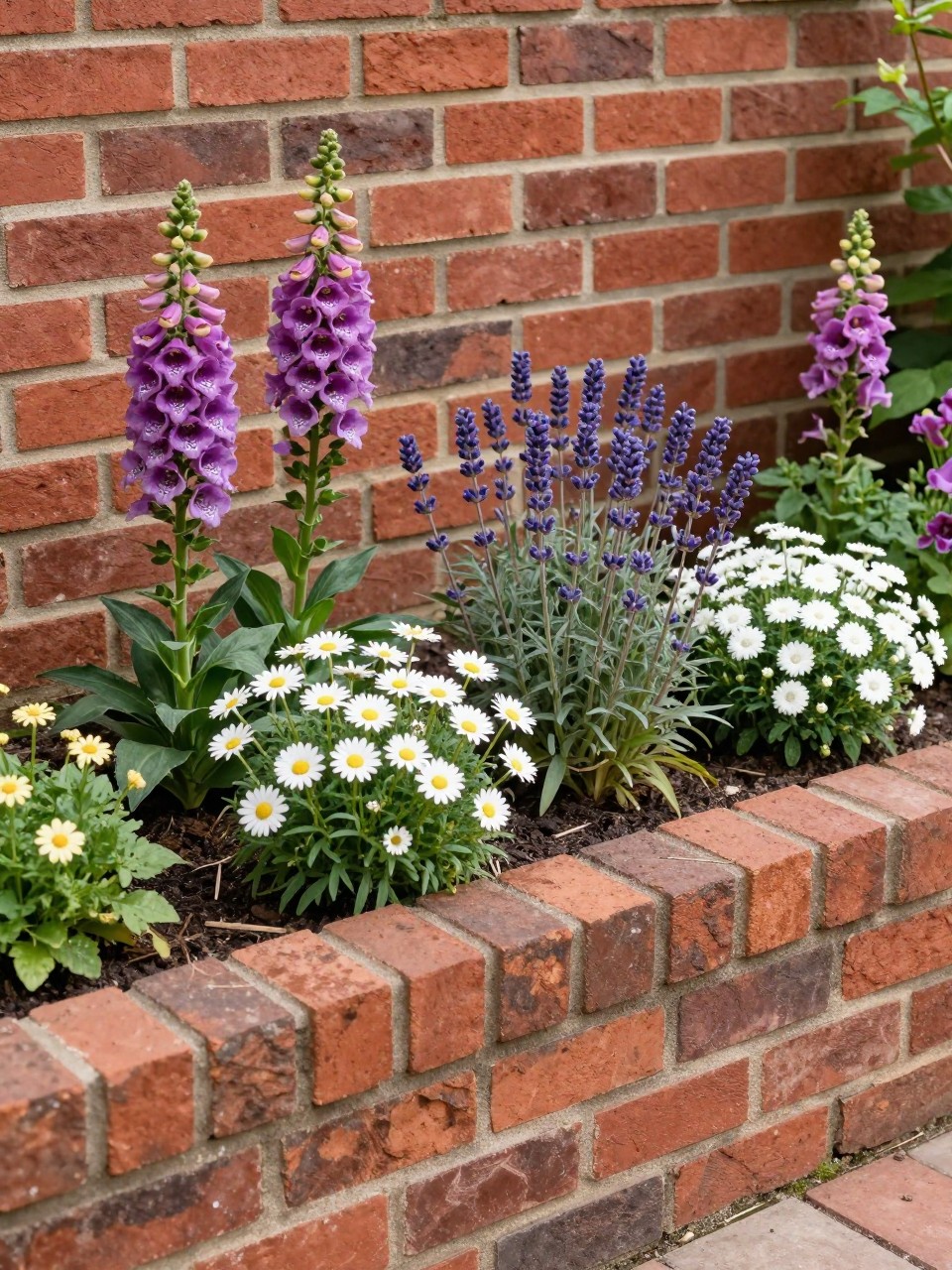
A brick retaining wall gives a flower bed a classic and welcoming feel. It is especially pretty in cottage-style gardens where soft flowers can balance the clean shape of the wall.
The warm tone of brick looks beautiful with pink, purple, white, and blue blooms. If you want the bed to feel extra charming, mix upright flowers with fillers and a few spillers to blur the wall just a little.
3. Modern Concrete Retaining Wall Flower Bed
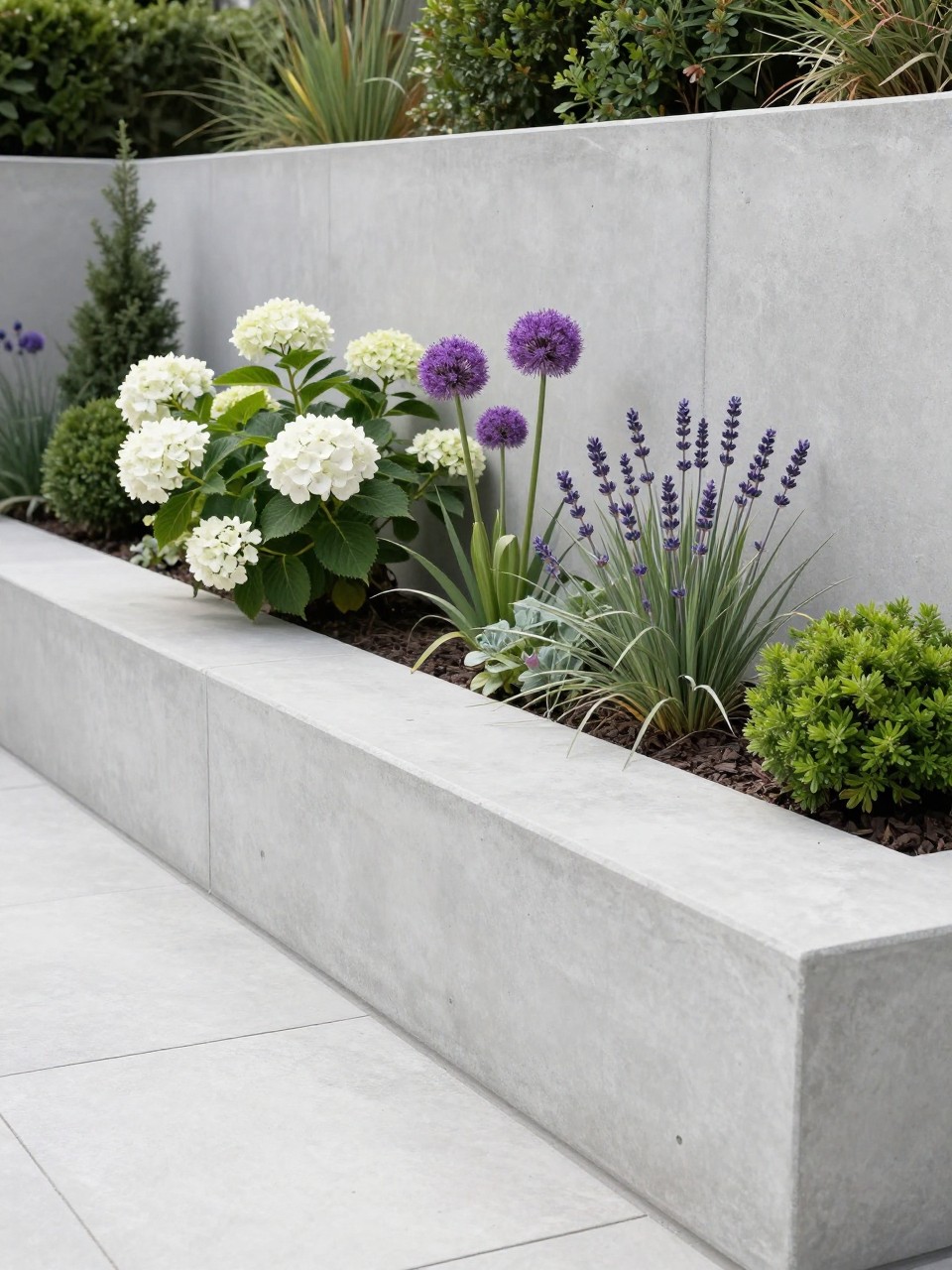
A concrete retaining wall can look very clean and stylish when paired with the right plants. It works well in modern gardens where you want simple structure but still want the softness of flowers.
Try combining neat flowering plants with grasses and evergreen shapes so the bed feels balanced all year. White and purple flowers look especially striking against cool gray concrete.
4. Retaining Wall Flower Bed With Cascading Blooms
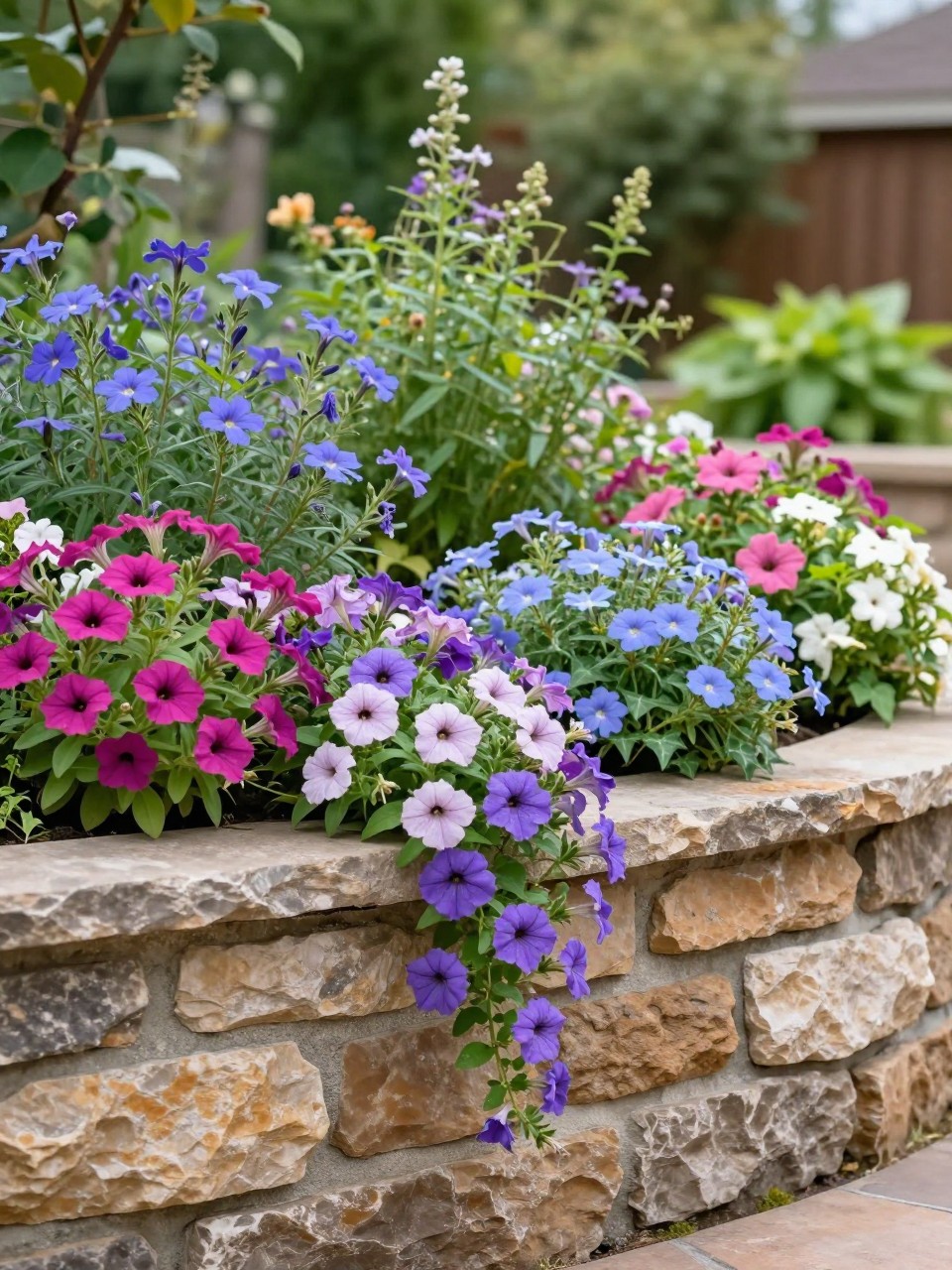
If you want a retaining wall to feel softer and more romantic, cascading flowers are such a pretty choice. They help break up the hard line of the wall and make the whole bed feel fuller and more alive.
This idea works best when you plant spillers close to the top edge. Mix them with a few upright blooms behind them so the bed still has shape and does not look too flat from a distance.
5. Front Yard Retaining Wall Flower Bed
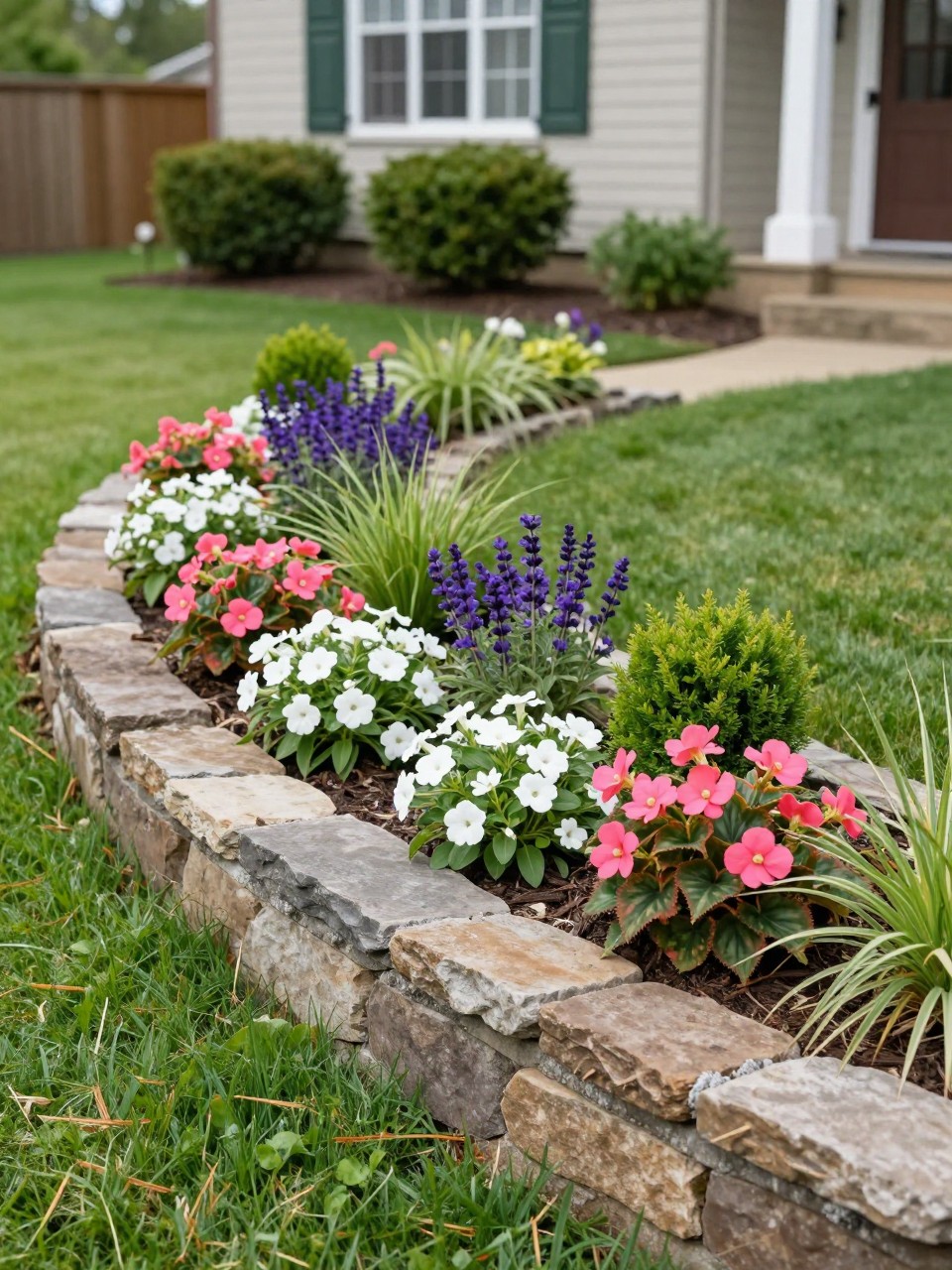
A front yard retaining wall flower bed can make the whole entrance of a home feel more finished. It creates a clear garden zone and helps a sloped front lawn look neat and intentional.
For a front yard, it helps to keep the planting tidy and easy to maintain. Use a few dependable flowers, repeat colors for a cleaner look, and add one or two small shrubs so the bed has structure even when flowers are not in peak bloom.
6. Raised Retaining Wall Bed With Mixed Perennials
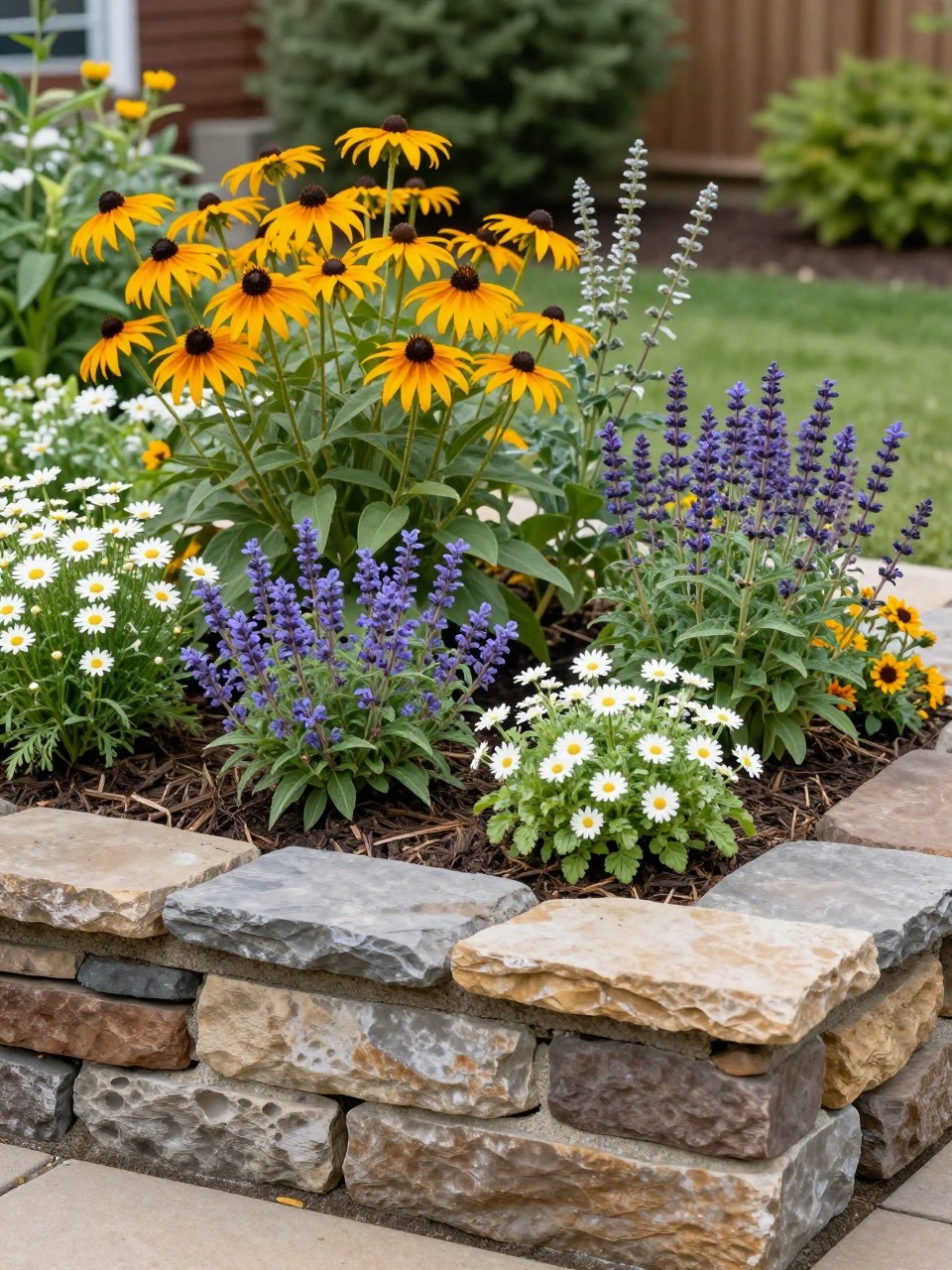
A raised retaining wall bed filled with perennials is a smart long-term choice. Once the plants settle in, you get a flower bed that returns year after year and still looks full and colorful.
This style feels relaxed but still practical. The mix of perennial flowers gives the wall a softer look, and it also makes the space easier to care for compared to replanting annuals every season.
7. Retaining Wall Flower Bed Along Steps
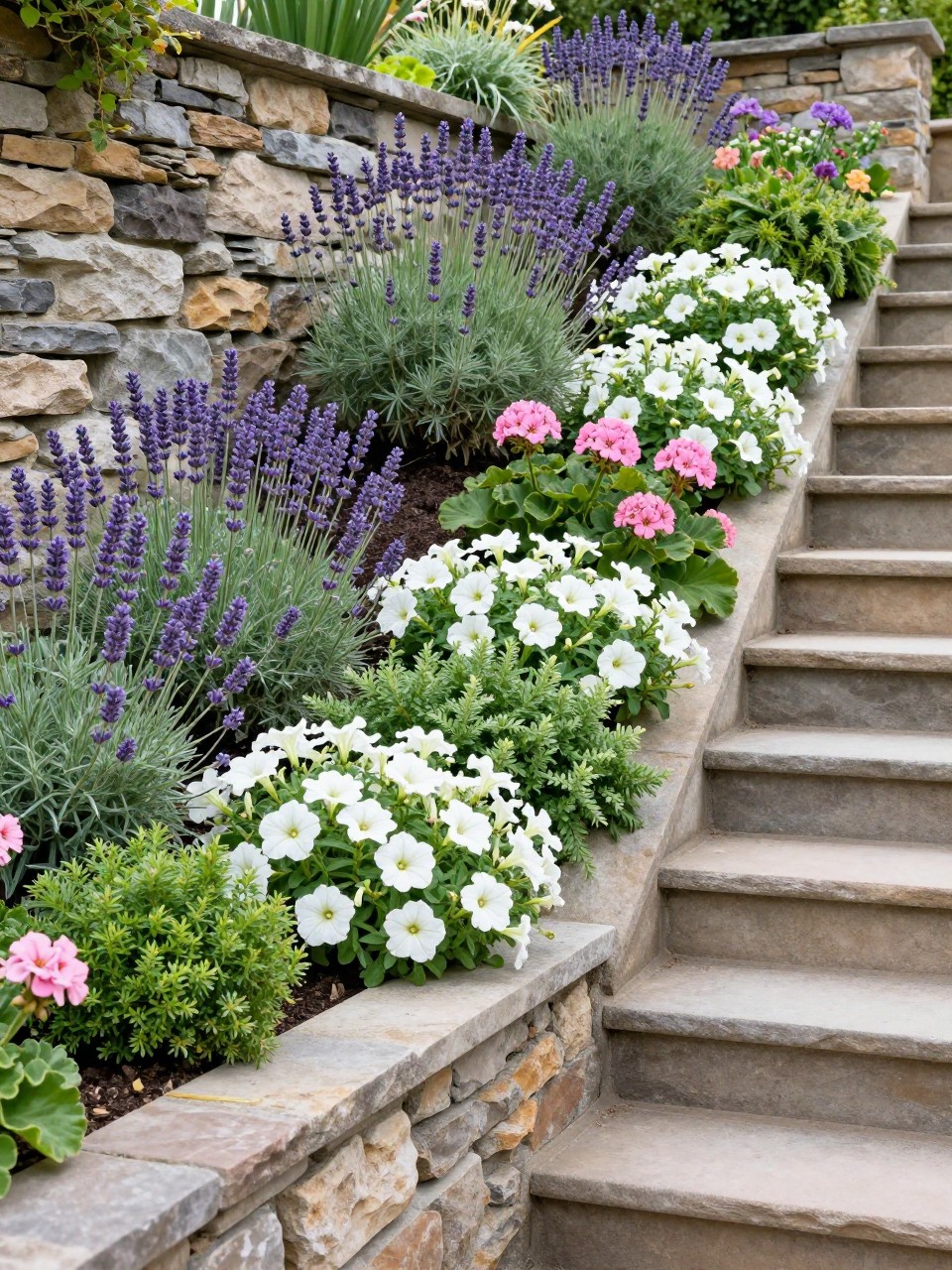
A retaining wall beside steps can make a sloped garden feel far more inviting. It frames the staircase nicely and turns a plain path into one of the prettiest features in the yard.
This look works best when the plants stay fairly balanced in height. You want enough fullness to soften the hardscape, but not so much that the flowers crowd the steps or make the space feel too busy.
8. Rustic Timber Retaining Wall Flower Bed
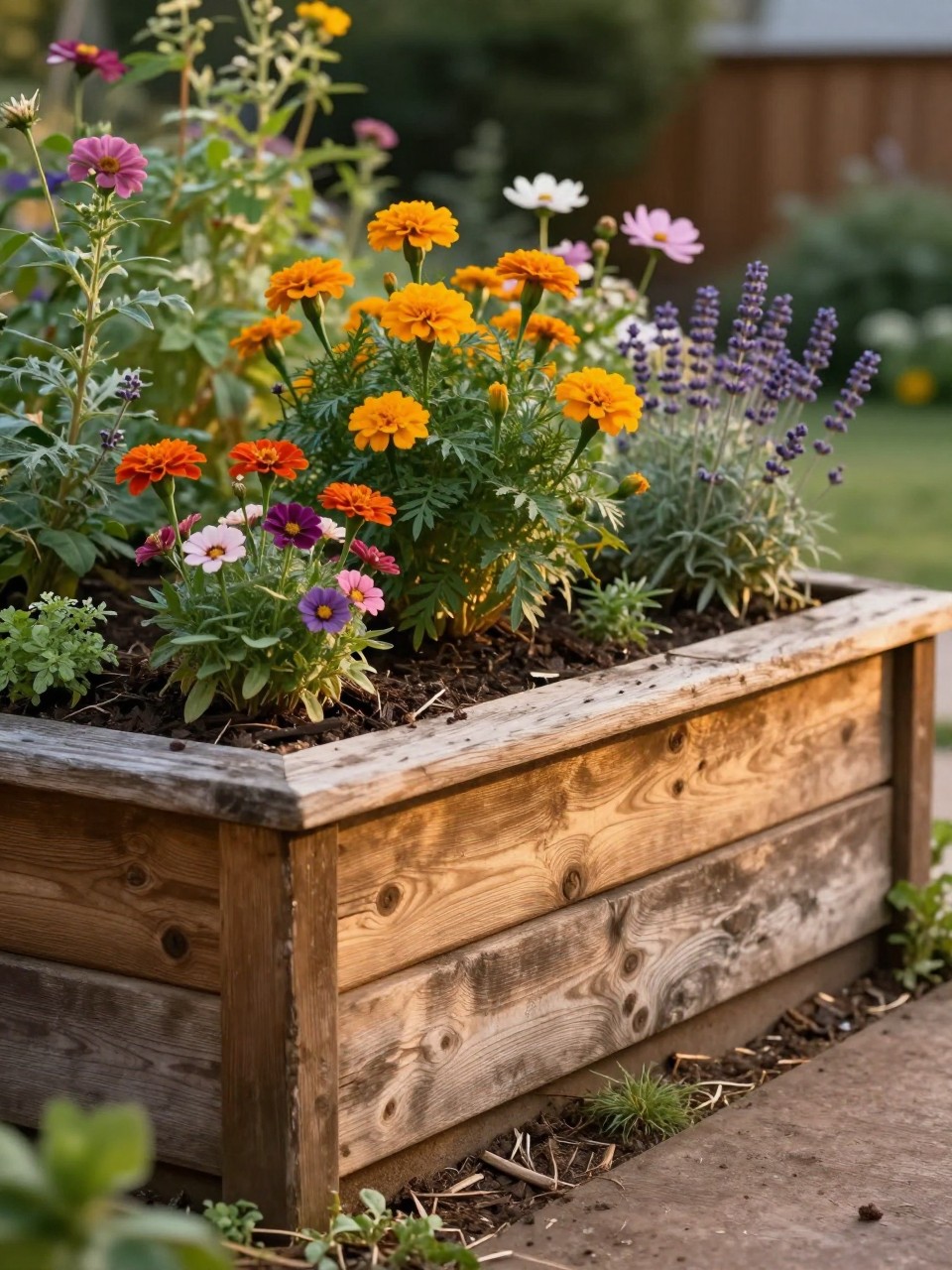
Timber retaining walls have a relaxed garden feel that suits casual and rustic spaces so well. They add warmth right away and look lovely with cheerful flowers in bright seasonal colors.
This is a great option for a backyard that already has wood fencing, raised beds, or a natural cottage look. To keep it from feeling heavy, plant the top edge generously so the flowers help soften the straight line of the wood.
9. Retaining Wall Bed With Drought-Tolerant Flowers
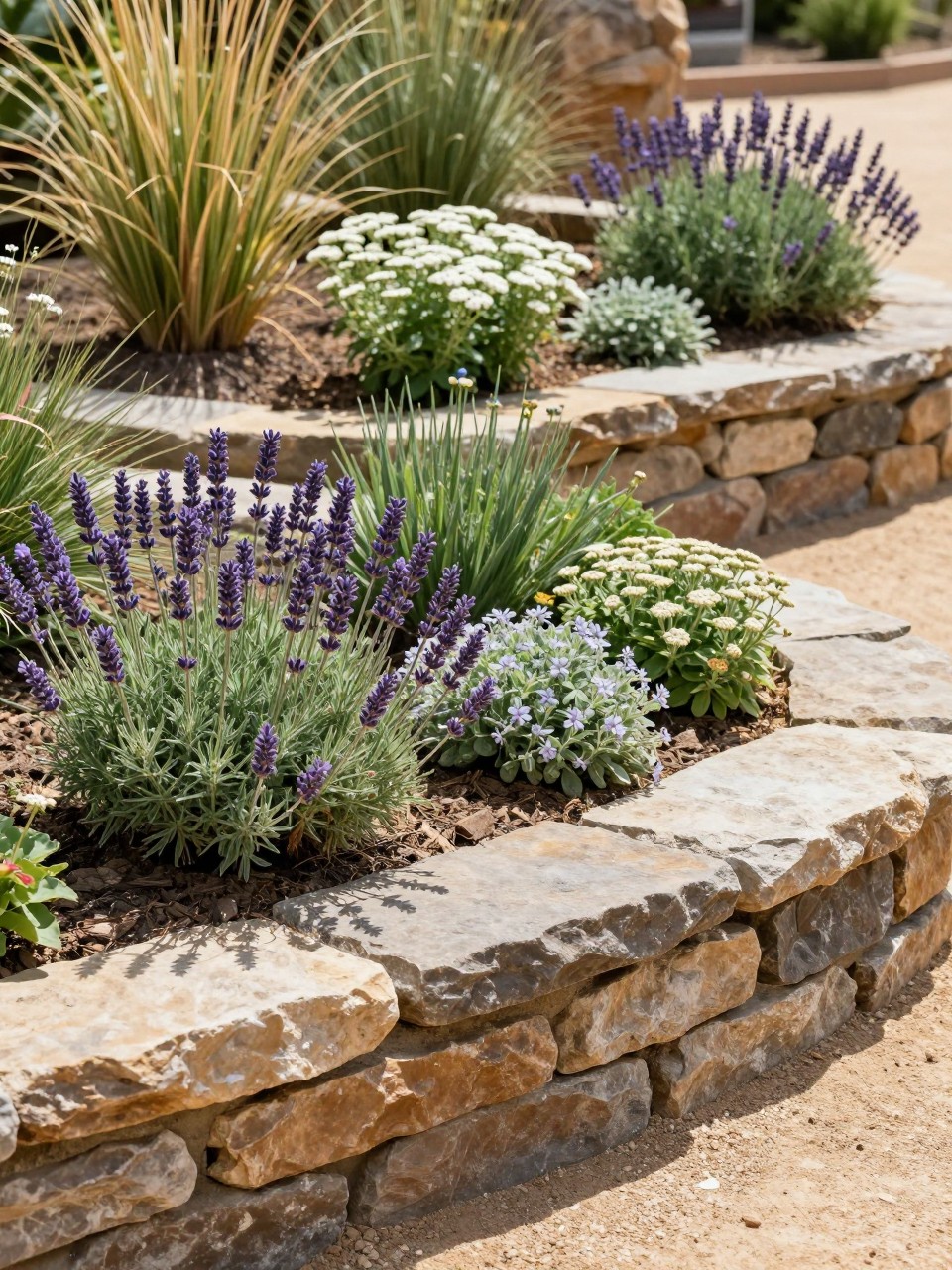
A drought-tolerant retaining wall flower bed is a great fit for hot, sunny parts of the yard. It gives you color and texture without needing as much water or upkeep as thirstier flower combinations.
Plants like lavender, sedum, gaura, and salvia look beautiful in this kind of setting. They also pair nicely with stone walls, gravel details, and grasses, which gives the whole area a relaxed but well-planned look.
10. Retaining Wall Flower Bed With Built-In Seating Feel
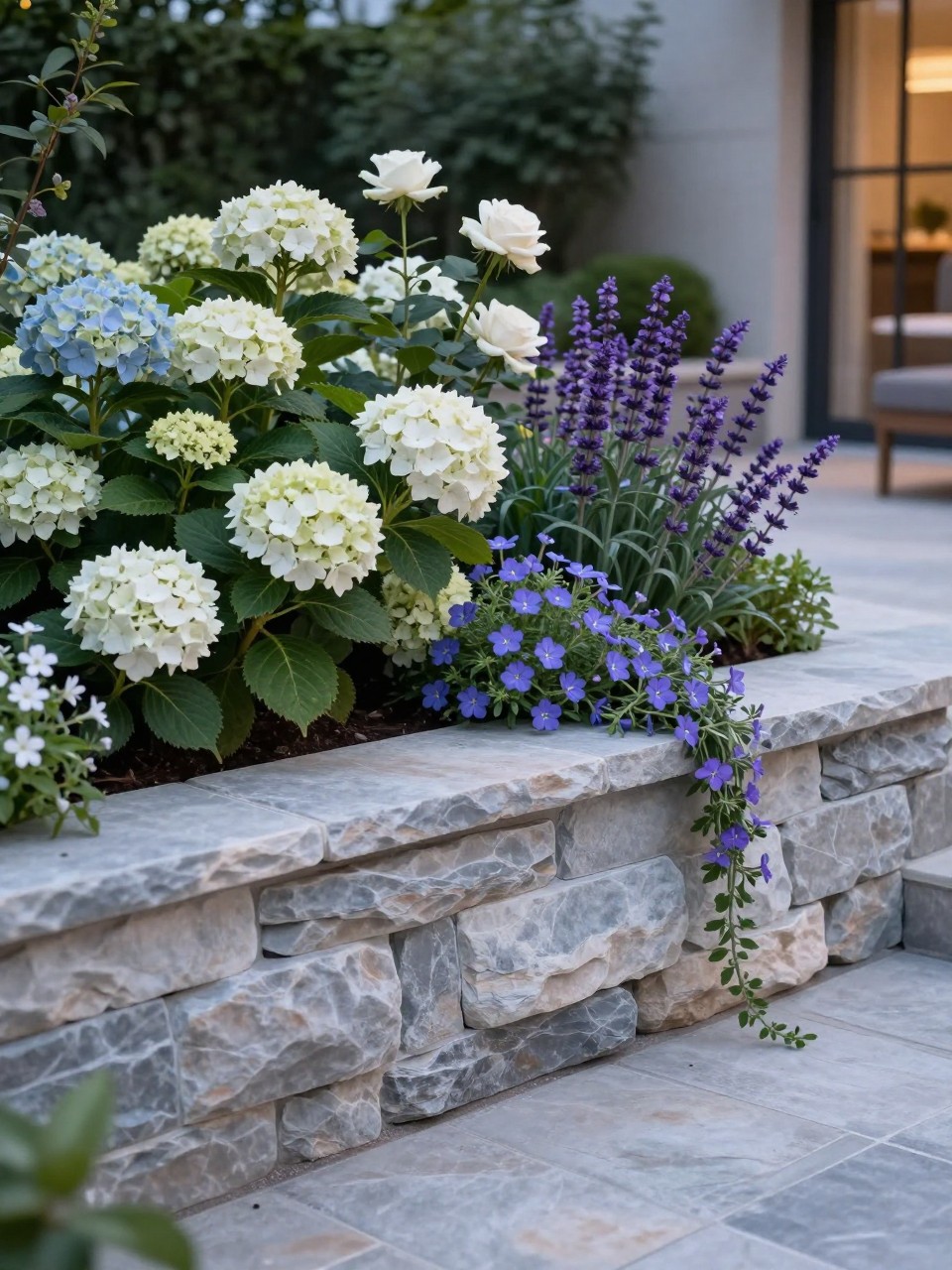
A low retaining wall near a patio can do double duty by defining a flower bed while also feeling like part of the seating area. It helps the garden blend more naturally into the outdoor living space.
Flowers around this kind of wall should feel lush but still controlled. Choose blooms that add softness and color without blocking the clean shape of the wall or making the patio area feel crowded.
11. Curved Retaining Wall Flower Bed
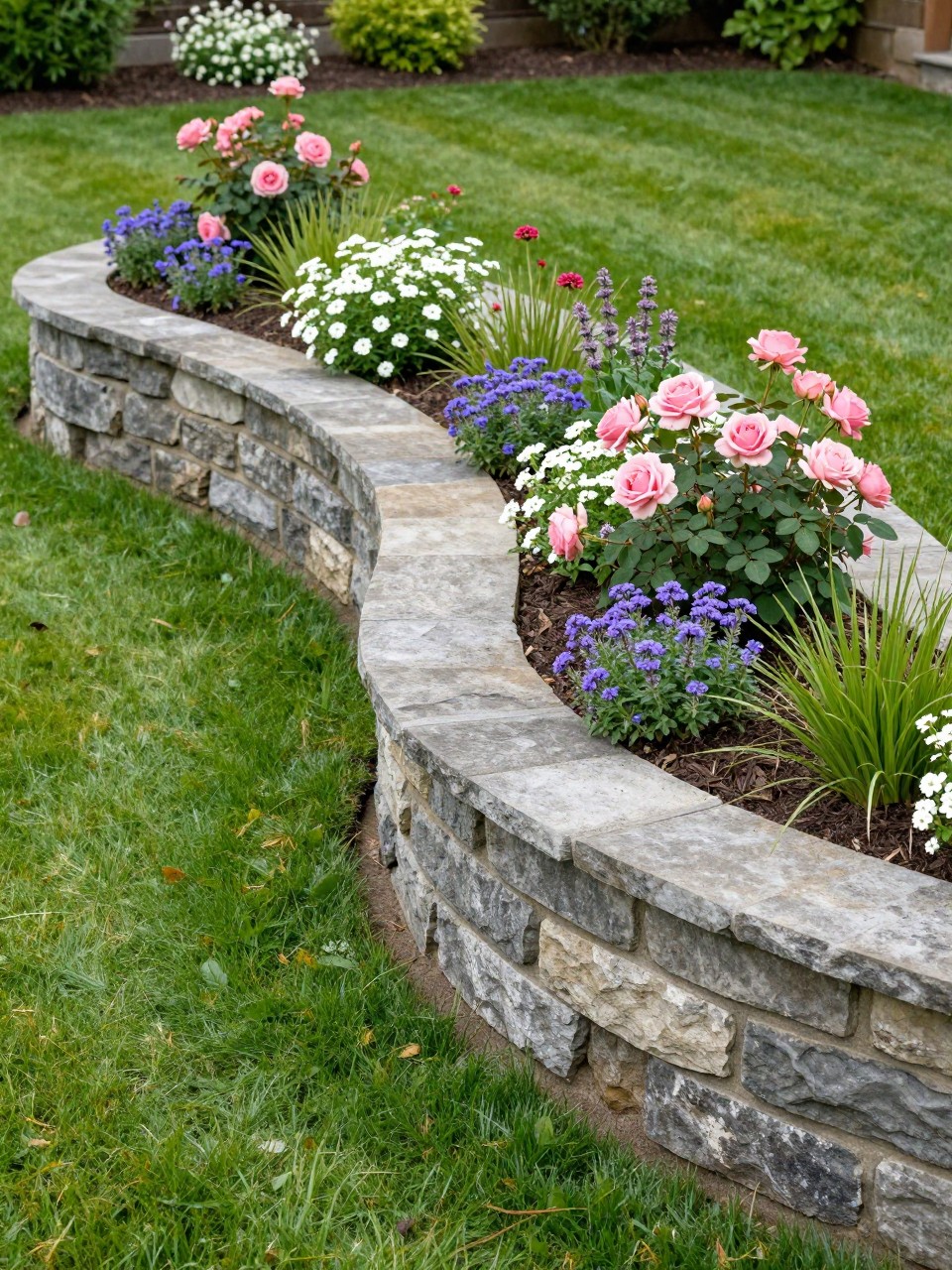
A curved retaining wall flower bed often feels softer and more elegant than a straight one. The curve helps the garden look more natural and can guide the eye beautifully through the yard.
This is a nice choice if you want the bed to feel a little more graceful and less rigid. Repeating a few flower colors across the curve helps the design feel calm and pulled together.
12. Retaining Wall Flower Bed With Shrubs and Seasonal Flowers
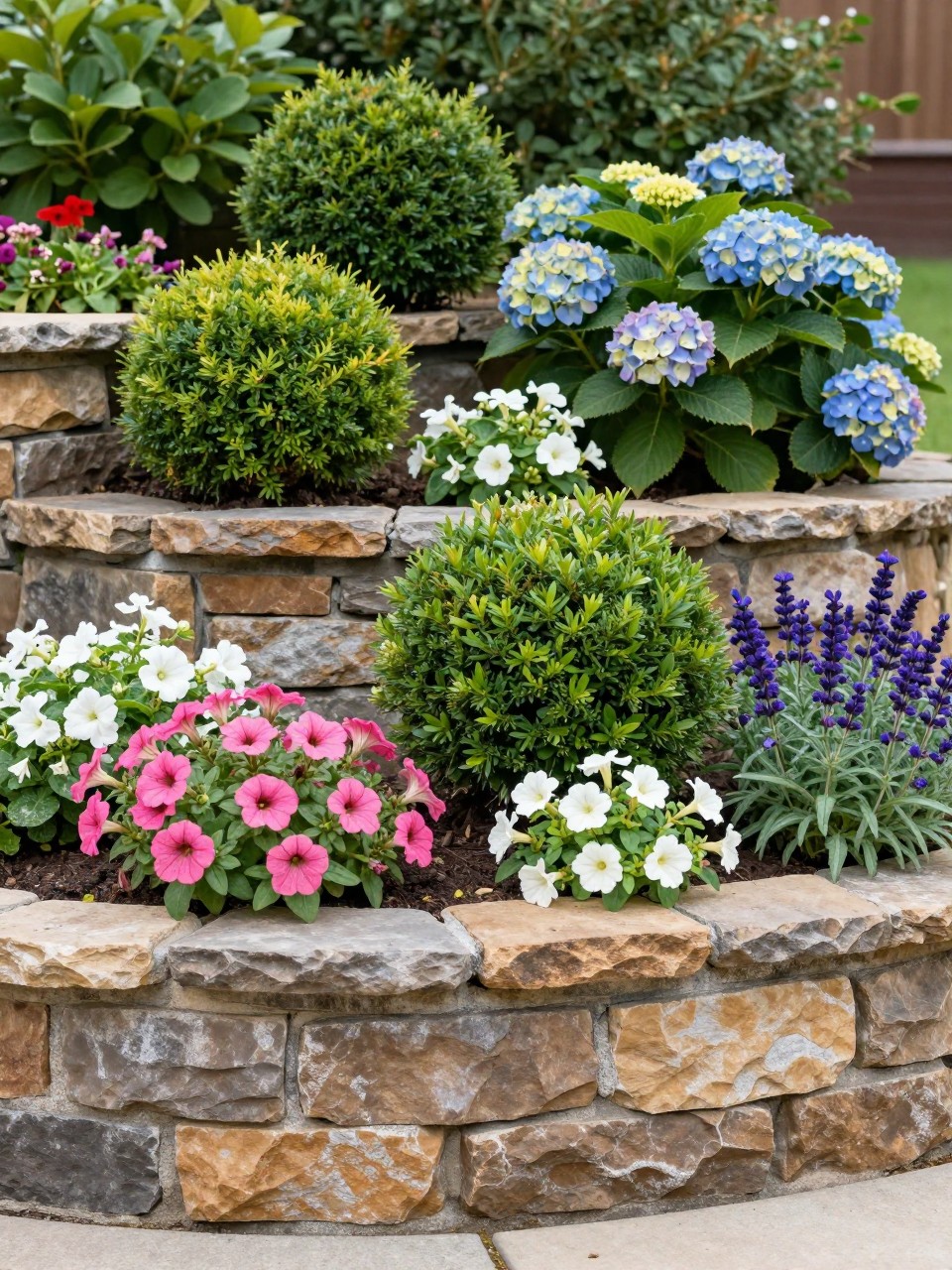
Mixing shrubs with seasonal flowers gives a retaining wall bed a fuller and more dependable look. The shrubs hold the shape of the planting, while the flowers bring in color that you can refresh through the year.
This approach is especially useful if you want the bed to look good in every season. Even when the flowers change, the shrubs keep the wall from looking bare or unfinished.
13. Retaining Wall Flower Bed With Lighting
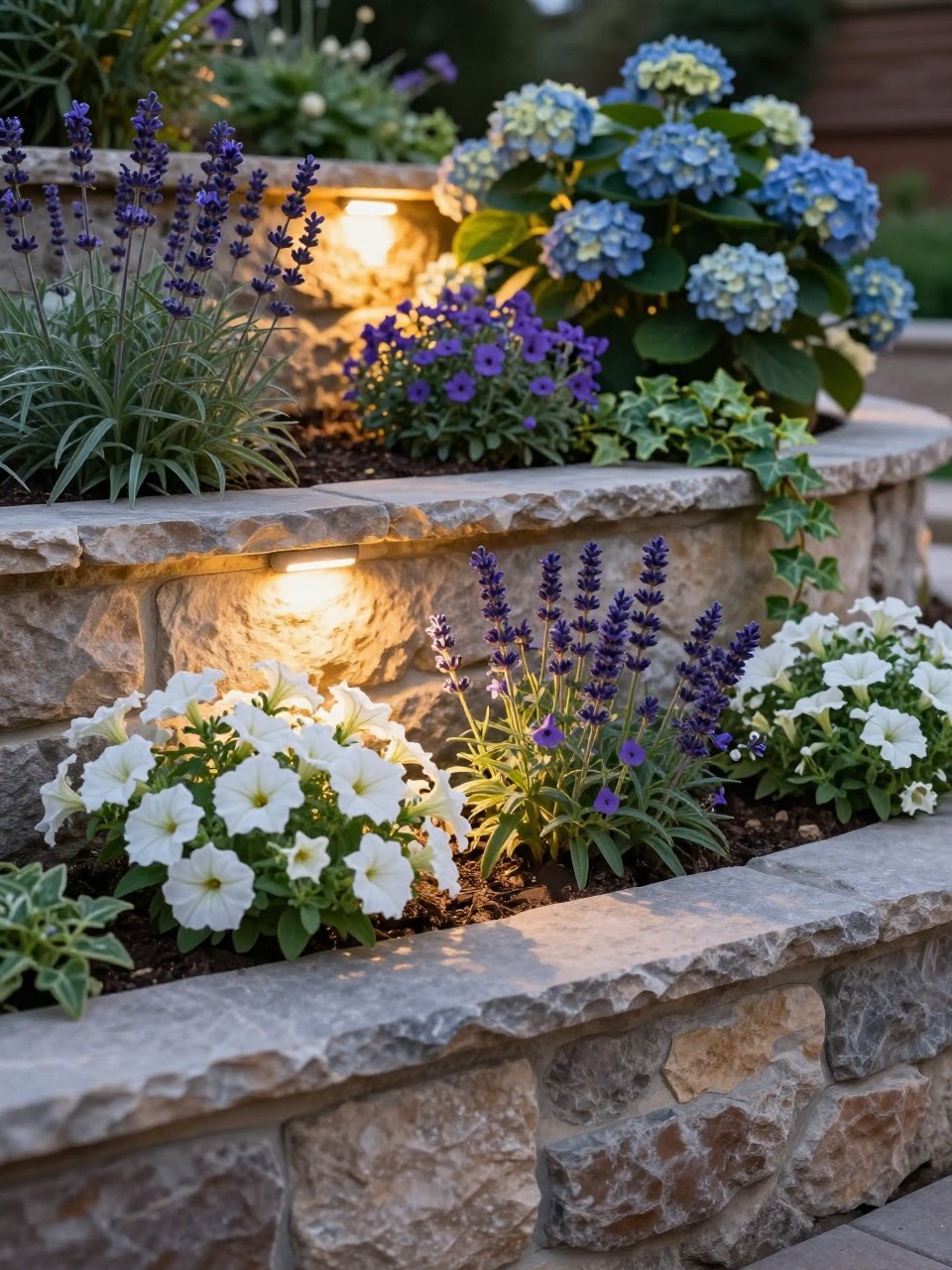
Lighting can make a retaining wall flower bed feel even more special once the sun goes down. It highlights the texture of the wall, adds warmth to the flowers, and makes the garden feel more inviting at night.
This idea works especially well near patios, front walkways, or entertaining areas. Keep the lighting soft and warm so it shows off the planting without making the space feel too harsh or overly bright.