




In This Article Show
A pantry can look tidy one day and become difficult to use again a week later. Open packets get pushed behind larger boxes, canned food disappears at the back, and newly bought groceries are placed wherever there is space.
Good pantry organization is not about transferring every ingredient into matching containers. It is about helping you see what you have, reach what you use often, and notice what needs replacing before your next shopping trip.
These ideas work in walk-in pantries, kitchen cupboards, deep cabinets, and small apartment storage spaces. Choose the systems that fit your household, eating habits, and available space instead of trying to copy a pantry that looks attractive but is difficult to maintain.
1. Create a First-to-Use Basket

Keep one basket for food that is already open, close to its best-before date, or likely to be forgotten. This gives everyone a clear place to check before opening something new.
Place the basket at eye level and review it before making your meal plan. It works especially well for snacks, pasta, bread products, sauces, and baking ingredients.
2. Use Deep Drawers for Pantry Staples
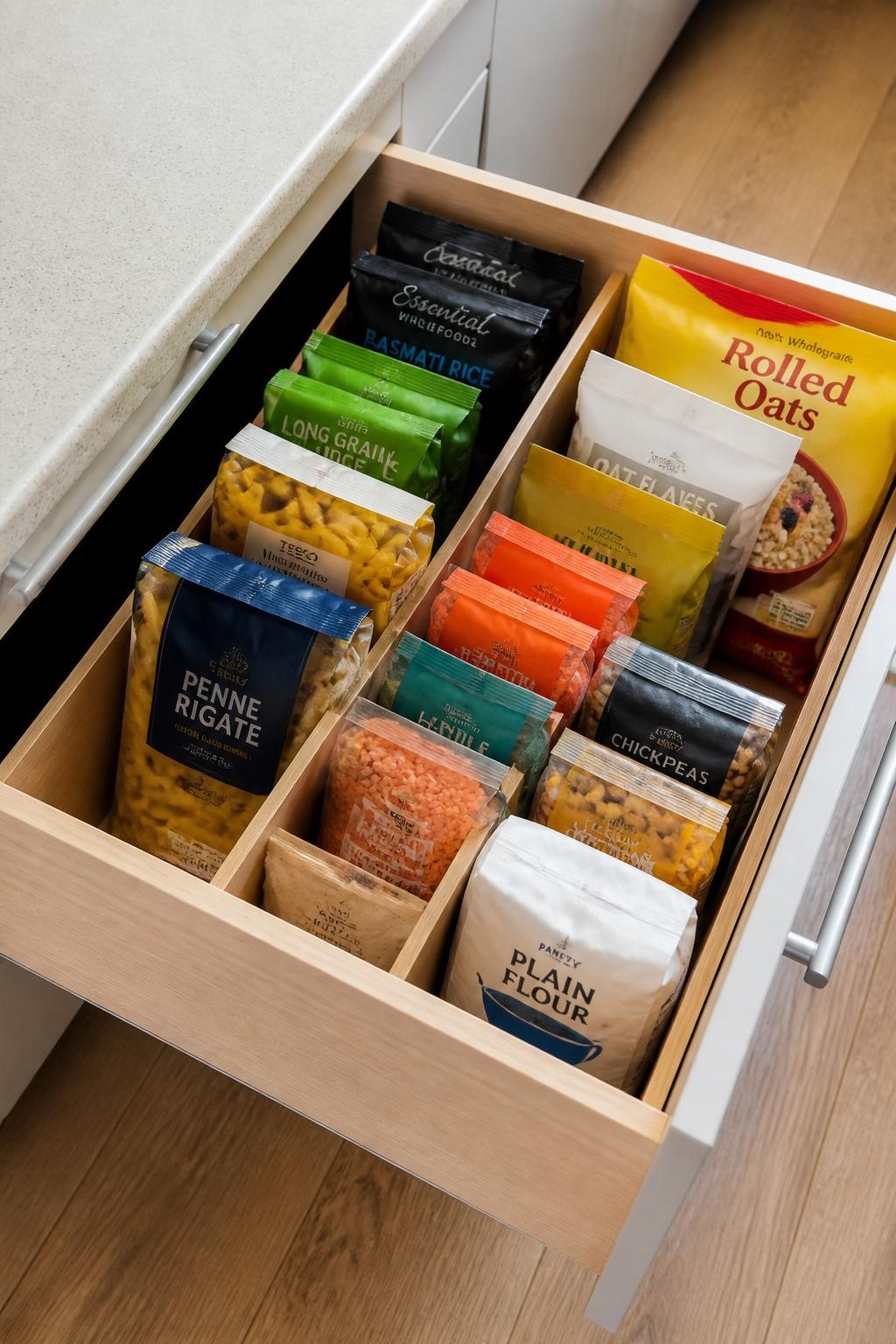
Deep drawers can be easier to use than low pantry shelves because you can see everything from above. They are ideal for packets that usually fall over or disappear behind one another.
Add adjustable dividers to create sections for grains, breakfast foods, baking supplies, and dried beans. Store packets upright whenever possible so labels remain visible.
3. Add Tiered Shelves for Canned Food

Cans placed in several rows are difficult to check because the front row hides everything behind it. A tiered shelf raises the back rows so each label can be seen.
Arrange cans by use rather than only by type. For example, keep meal starters together, baking tins in another section, and quick lunch ingredients on a separate level.
4. Turn One Shelf Into a Breakfast Station
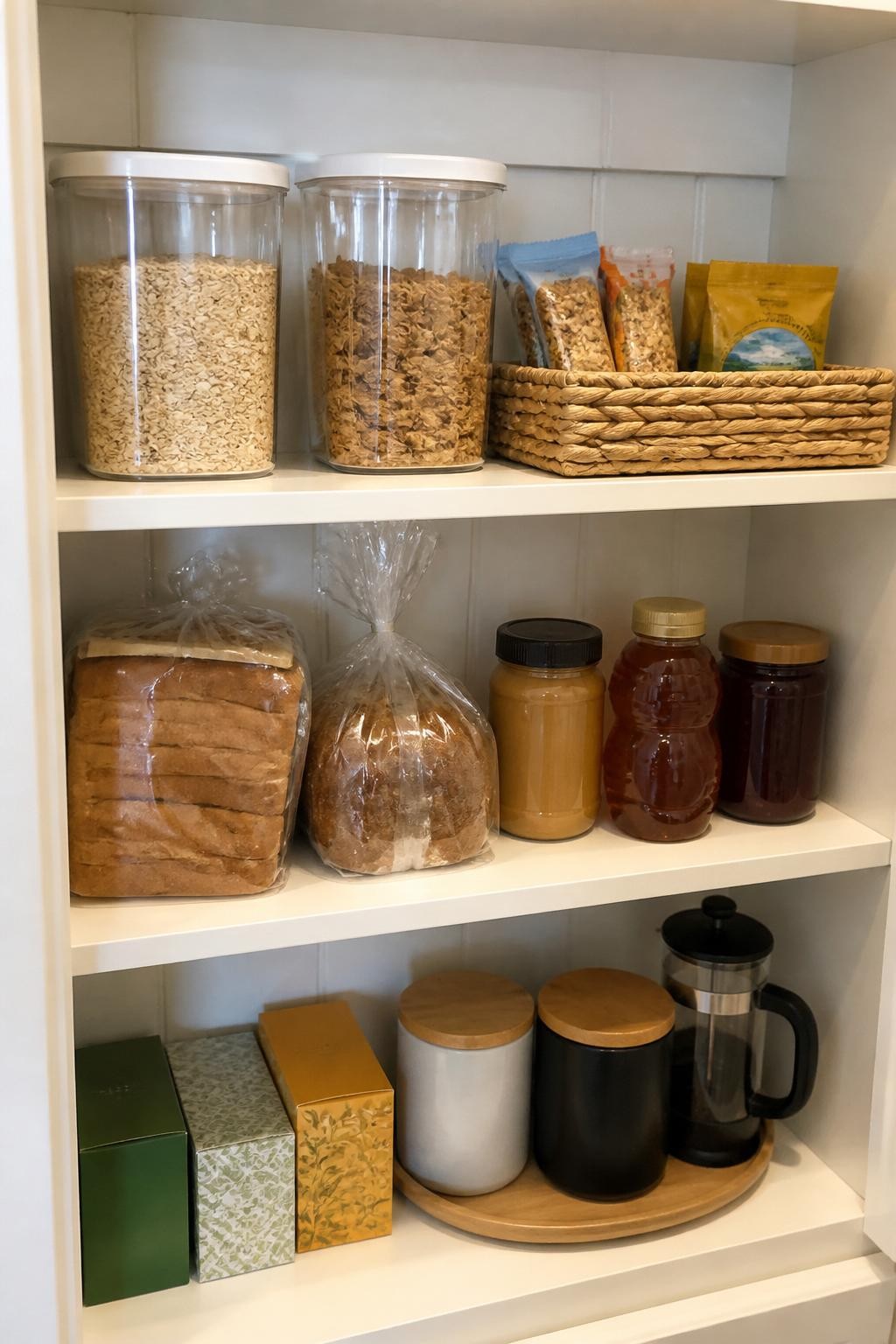
Grouping breakfast items together makes busy mornings easier and stops family members from searching through the whole pantry.
Keep cereal, oats, spreads, tea, coffee, and breakfast snacks in one area. Place children’s options lower down and hot drink supplies on a higher shelf when needed.
5. Store Open Packets in Handled Bins
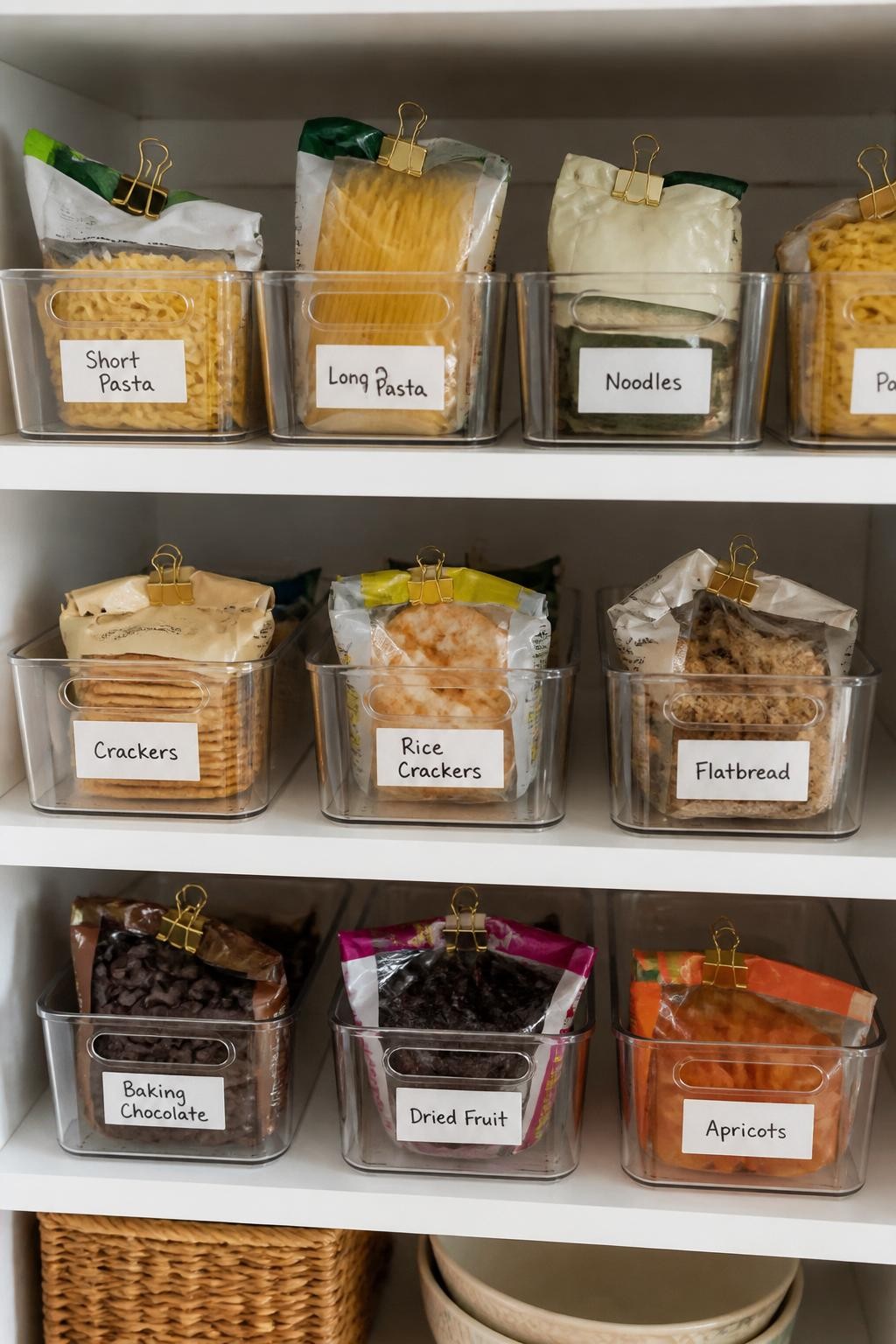
Handled bins allow you to pull out an entire category instead of moving several packets one at a time. They are especially useful on deep or high shelves.
Use them for open snacks, pasta, baking additions, or meal packets. Avoid mixing unrelated foods in the same bin, since that makes items easy to overlook.
6. Build a Simple Snack Drawer

A snack drawer keeps smaller packets from filling several pantry shelves. It also makes it easier to see when a particular snack is running low.
Use small dividers or open boxes to separate sweet snacks, savoury snacks, lunchbox items, and healthier options. Remove bulky outer cartons when the individual packets are clearly labelled.
7. Keep Baking Ingredients on a Portable Tray
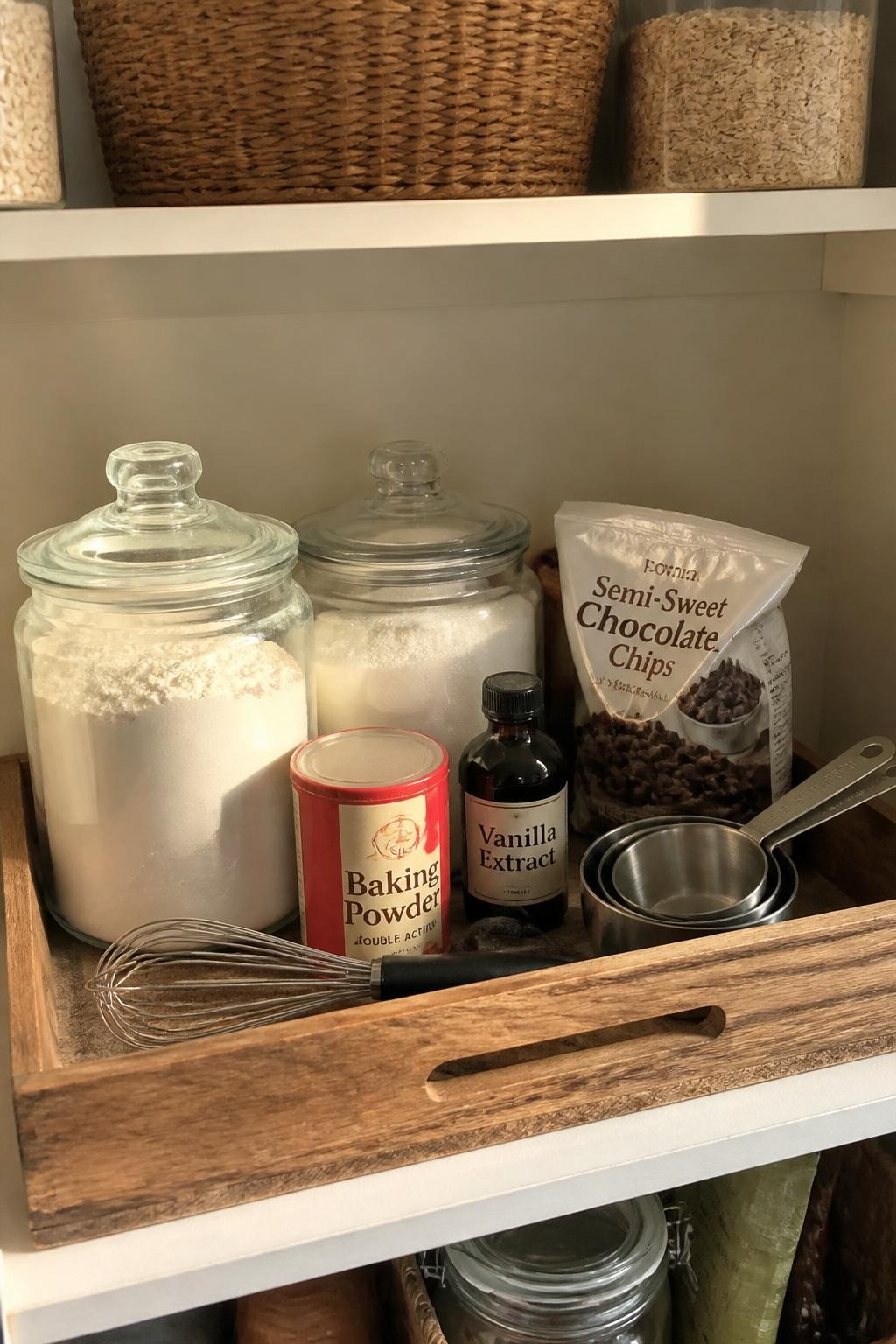
Store frequently used baking supplies together on a tray so they can be carried to the counter in one trip.
This works well for flour, sugar, raising agents, vanilla, measuring tools, and small decorations. Keep heavy or rarely used ingredients on the shelf to prevent the tray from becoming difficult to lift.
8. Install Narrow Shelves on the Pantry Door

The pantry door can provide useful storage for smaller items that become lost on deep shelves. Narrow racks keep them visible without taking over the main pantry.
Use this area for spices, sauces, tea, wraps, or lightweight packets. Check that the shelves are shallow enough for the door to close without hitting the pantry contents.
9. Make a Weekly Dinner Basket
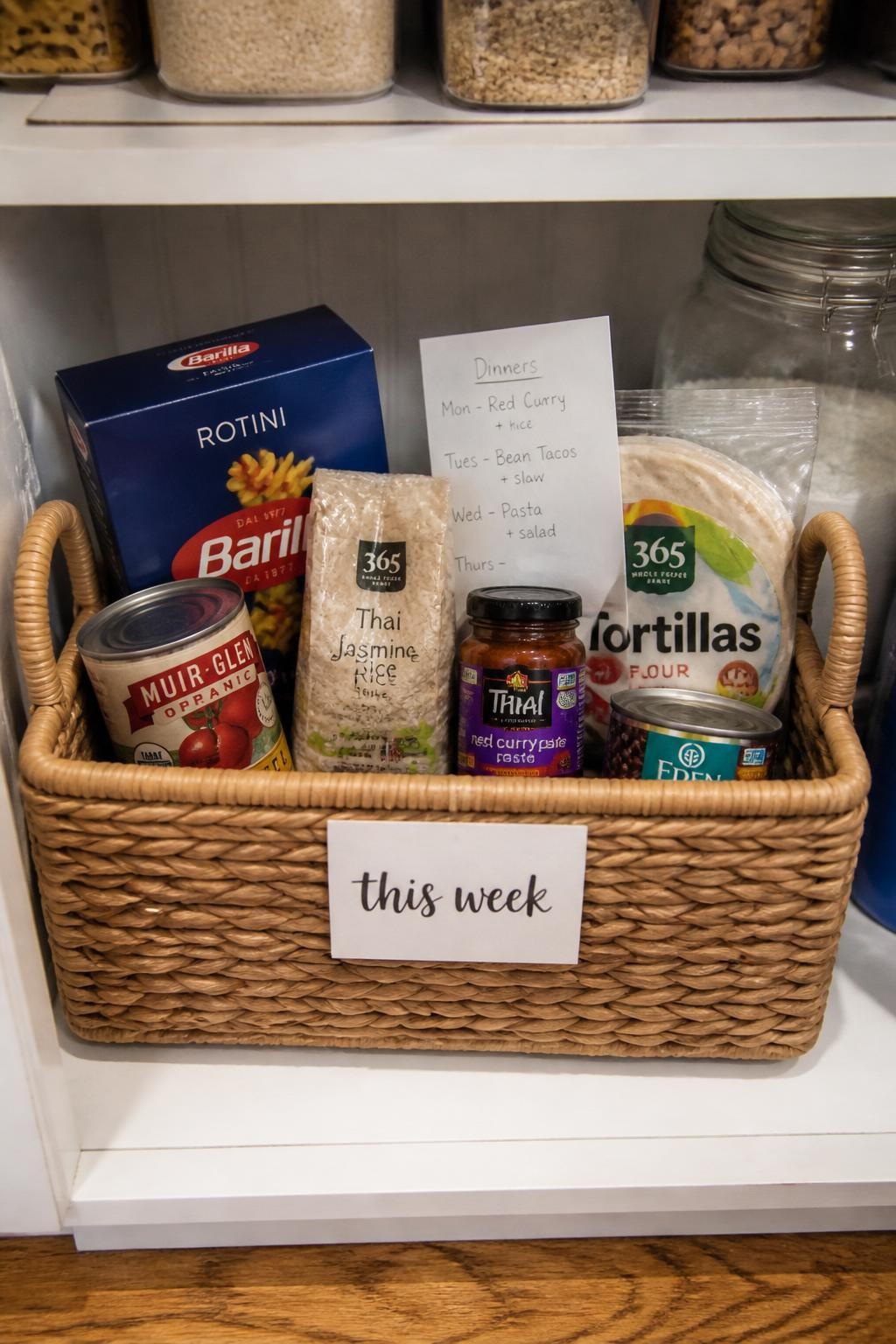
Place the shelf-stable ingredients for your planned dinners into one basket at the beginning of the week. This helps you see which meals are ready and which still need fresh ingredients.
Do not include every ingredient from the pantry. Gather only the items assigned to that week’s meals and return any unused food during your next planning session.
10. Use Turntables for Sauces and Condiments

Turntables make good use of deep pantry corners where bottles are usually difficult to reach. A quick spin brings items from the back to the front.
Group similar bottles together and avoid overcrowding the tray. Tall bottles should remain in the centre or toward the back so they do not tip when it turns.
11. Separate Meal Ingredients by Cuisine
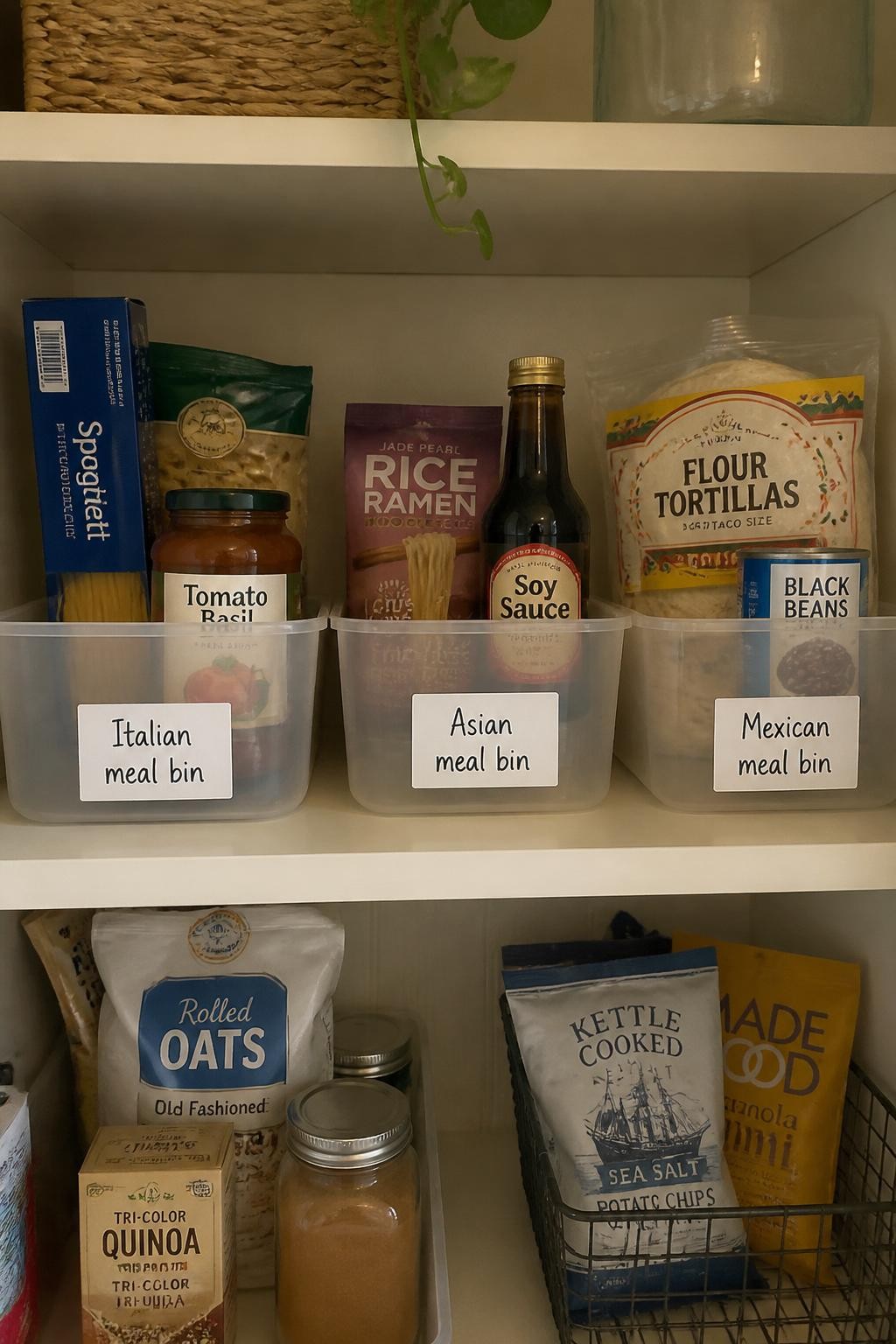
If your household regularly cooks a few types of meals, organize some pantry items by cuisine rather than by ingredient.
A pasta-night bin could hold pasta, sauce, and seasoning, while another stores noodles, rice vinegar, and stir-fry sauces. This makes meal preparation faster without reorganizing the entire pantry.
12. Add a Backstock Shelf With Limits
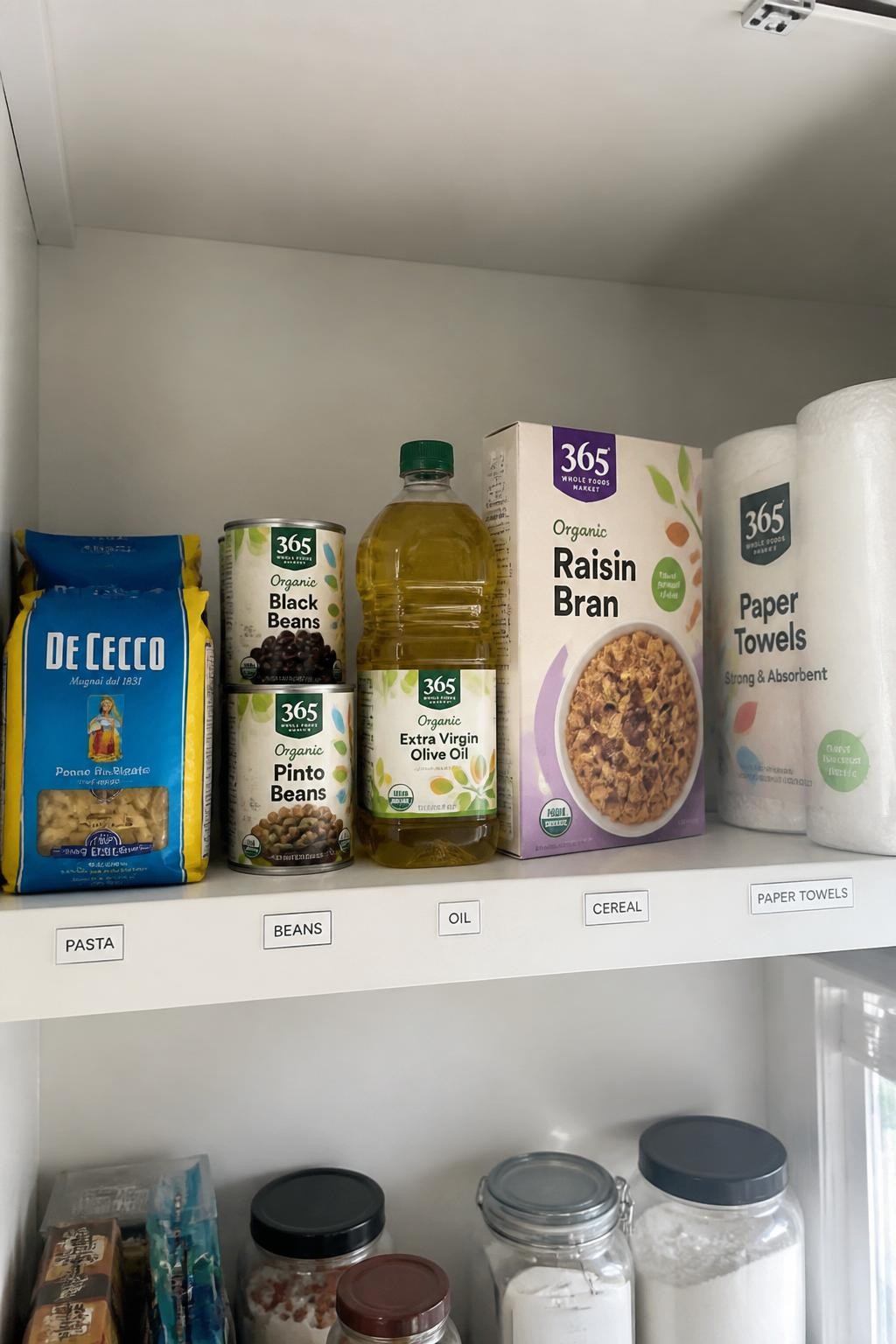
Buying a few extras can be useful, but too much backstock makes it harder to see what you already own. Give backup items one clearly defined shelf.
Set a simple limit for each staple based on how quickly your household uses it. Bring older items forward before adding the new groceries behind them.
13. Create a Small Appliance Supply Zone

Accessories for air fryers, coffee machines, blenders, and other appliances often end up scattered across several cupboards. Keeping them together makes each appliance easier to use.
Assign one shelf or bin to appliance supplies. Remove accessories that belong to appliances you no longer own so the space stays useful.
14. Use Shelf Baskets for Root Vegetables
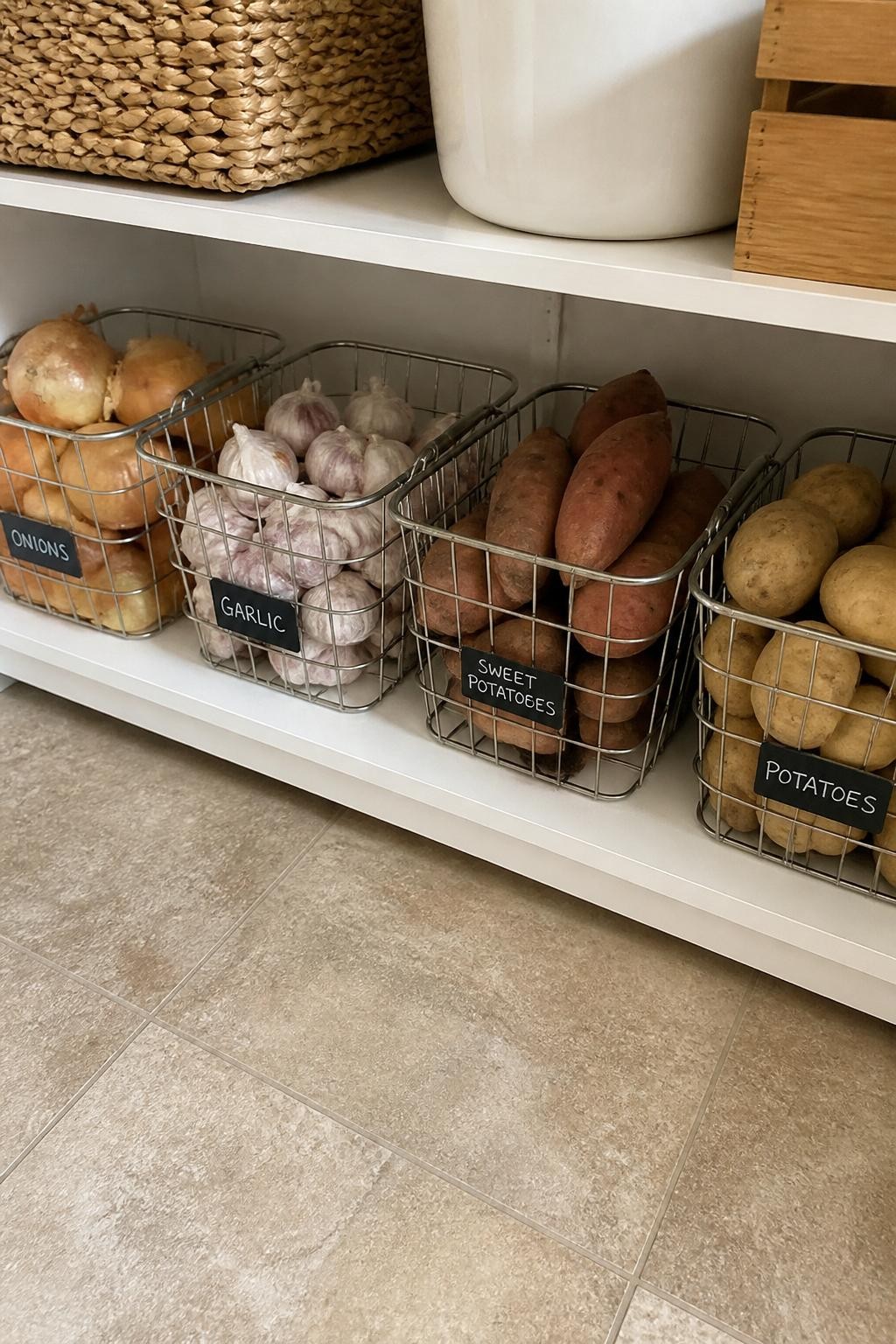
Potatoes, onions, and garlic need airflow and can create clutter when left in shopping bags. Open wire or woven baskets keep them contained while allowing ventilation.
Separate potatoes from onions and check the baskets regularly for soft or damaged produce. Place them in a cool, dark part of the pantry away from heat-producing appliances.
15. Leave One Shelf Partly Empty

An empty section gives you space for groceries that do not fit your usual categories, ingredients for an upcoming event, or temporary household changes.
Without spare room, new items are pushed into random gaps and the pantry becomes messy again. Even half of a shelf can make the whole system easier to maintain.