




In This Article Show
Fall is a great time to refresh a front yard because cooler weather makes planting easier and helps many plants settle in without the stress of summer heat. The right mix of flowers, foliage, grasses, and compact evergreens can keep an entry garden looking colorful and well cared for even as other plants begin to fade.
The most useful front-yard plants do more than provide a few weeks of color. They should suit the available sunlight, work with the scale of the house, and remain attractive through changing weather.
These choices can be used in foundation beds, walkway borders, porch containers, and small front gardens.
1. Chrysanthemums for Bold Seasonal Color
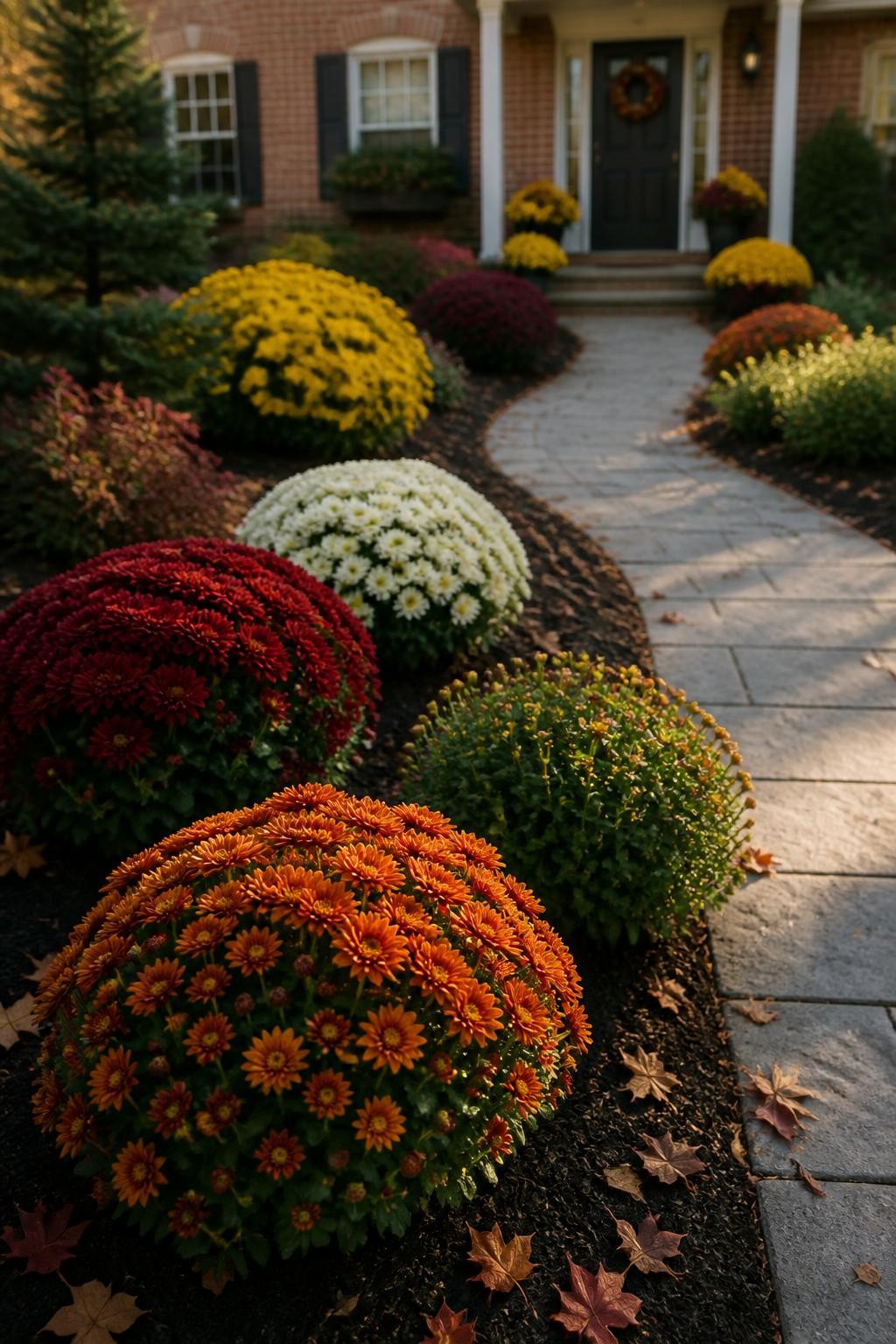
Chrysanthemums are one of the quickest ways to bring strong fall color into a front yard. Their rounded growth makes them especially useful near steps, along pathways, or at the front of a foundation bed. Bronze, rust, burgundy, gold, and cream varieties blend naturally with autumn foliage and exterior materials such as brick, stone, and wood.
Choose plants with plenty of closed buds if you want the display to last longer. Keep the soil evenly moist while the plants are blooming, especially when they are growing in containers. Hardy garden mums may return in suitable climates when planted early enough to establish before freezing weather.
2. Pansies Along Walkways and Bed Edges
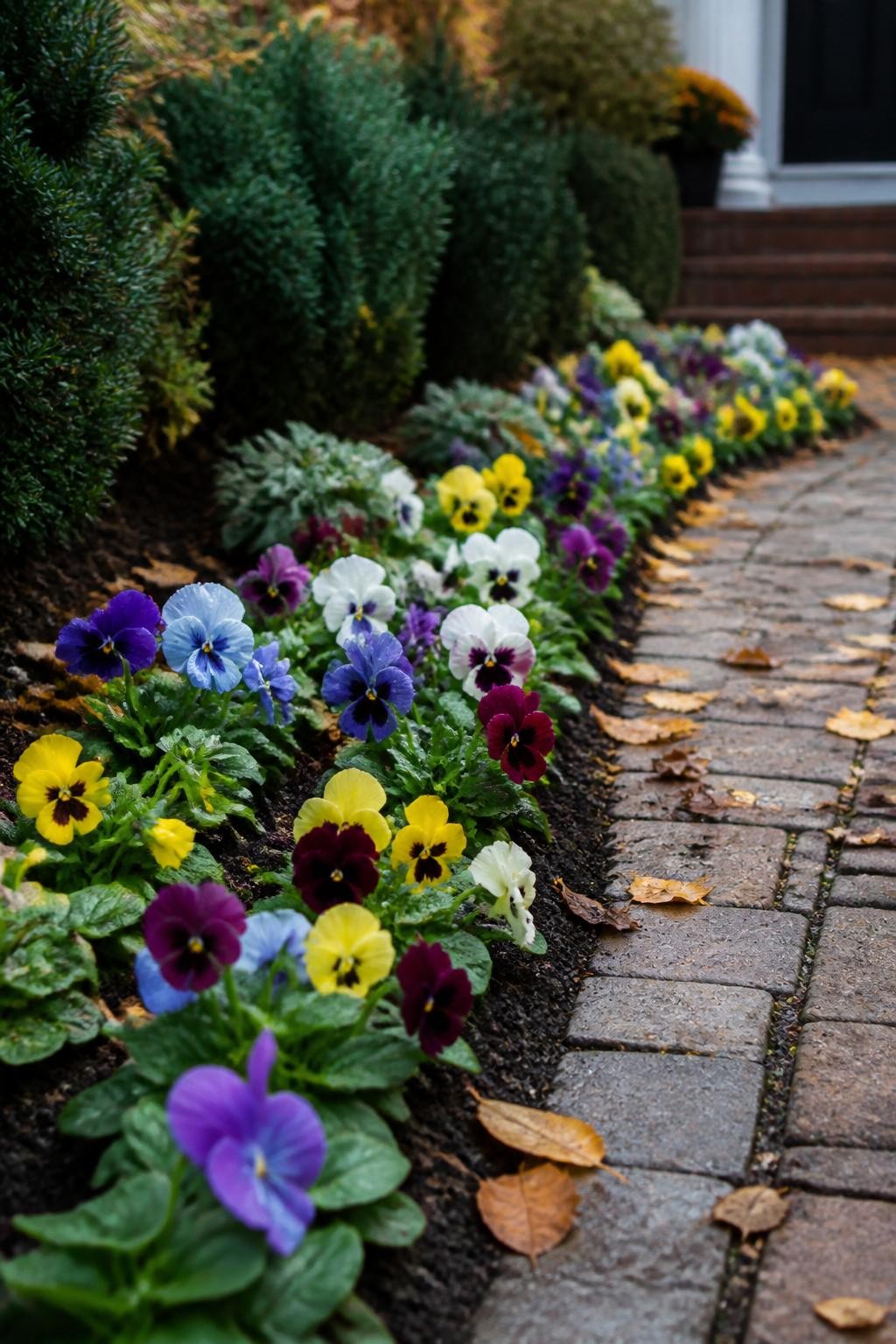
Pansies are ideal for the front edge of flower beds because their low growth keeps them from blocking larger plants. They can also be planted along sidewalks, around mailboxes, or beneath taller shrubs. Their broad range of colors makes it easy to coordinate them with the house exterior or other fall plants.
Plant pansies in sun or partial sun and keep them watered while they develop roots. Removing faded flowers can encourage more blooms, although many modern varieties need little attention. In mild areas, pansies may flower throughout winter and become even fuller in spring.
3. Asters for Late Pollinator Activity
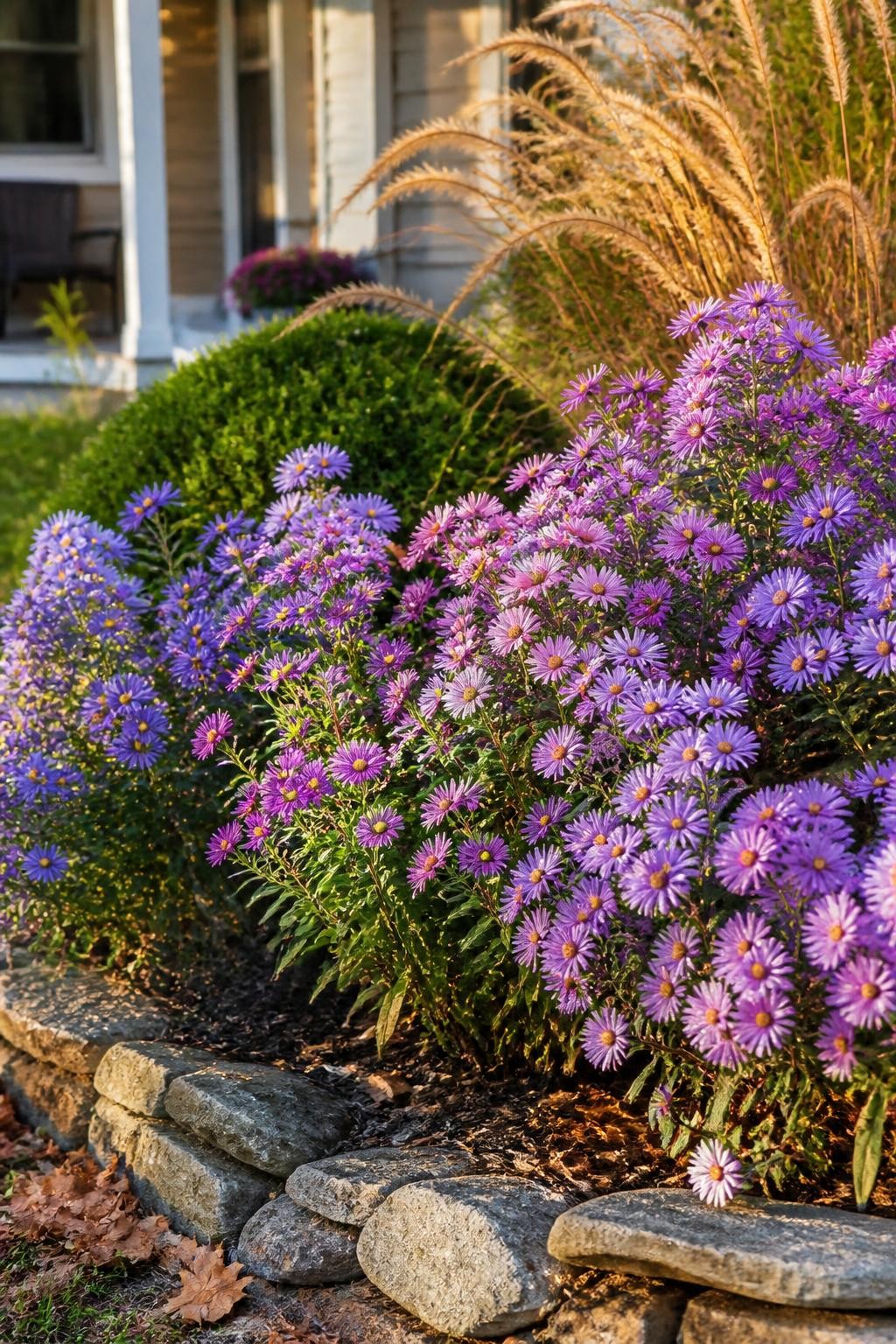
Asters bring fresh flowers to the yard when many summer perennials have stopped blooming. Their daisy-like flowers create soft clouds of purple, blue, pink, or white and help bridge the visual gap between summer color and winter structure. They are also valuable to late-season bees and butterflies.
Place asters in a sunny part of the front yard where they have enough room for air to move between the stems. Compact varieties work well near walkways, while taller selections are better toward the back of a border. Water new plants regularly during their first fall so the roots can establish.
4. Heuchera for Long-Lasting Foliage
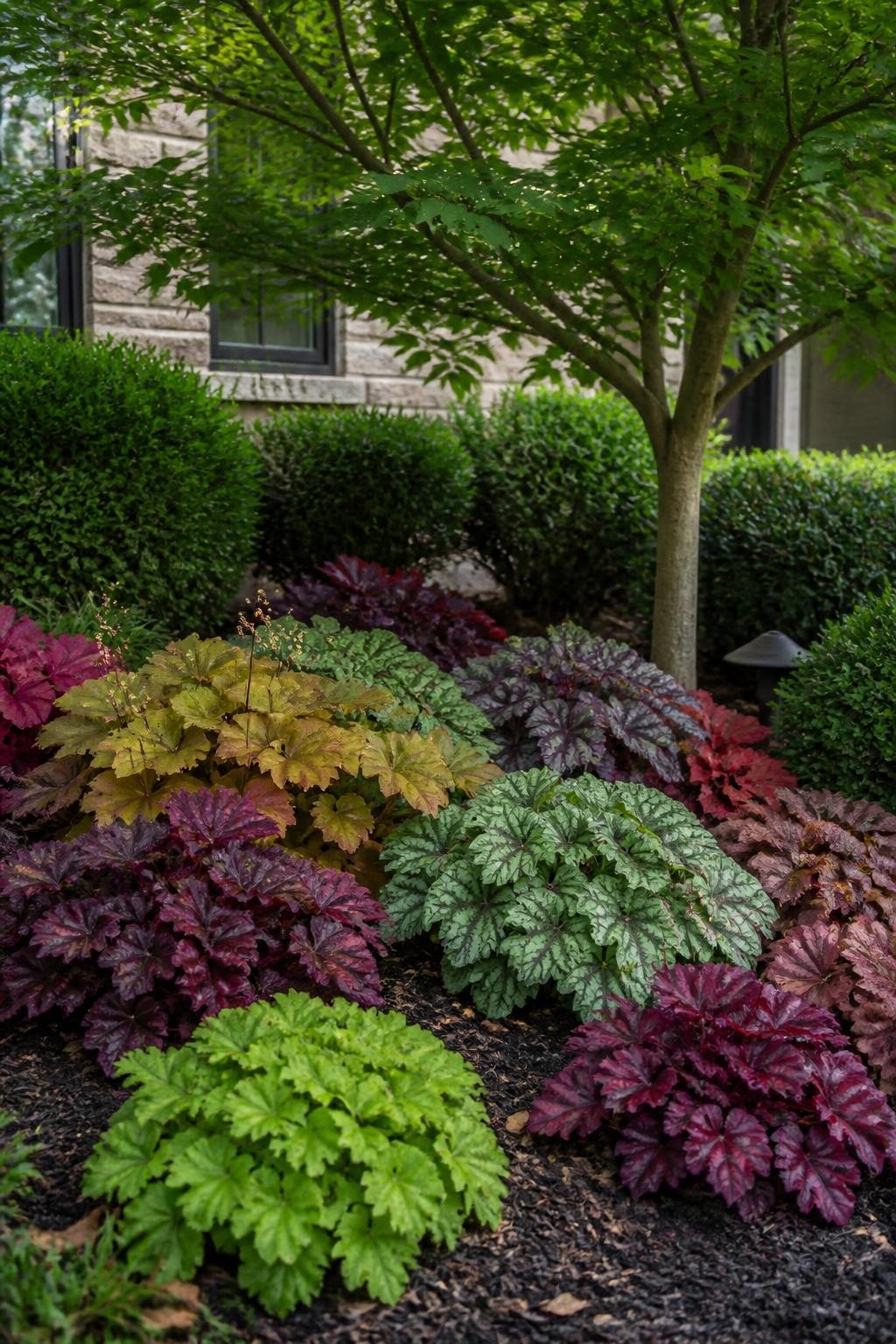
Heuchera is useful when you want color without relying completely on flowers. Its leaves come in deep burgundy, plum, copper, lime, silver, and caramel shades, making it easy to create a layered fall planting. The compact mounds look neat along foundations and beneath taller shrubs.
Most heuchera varieties perform well in partial shade, although sunlight needs vary by leaf color and climate. Plant them in soil that drains well, and avoid burying the crown. In many areas, the foliage remains visible through much of winter, giving the front yard longer-lasting interest.
5. Ornamental Kale for Sculptural Texture
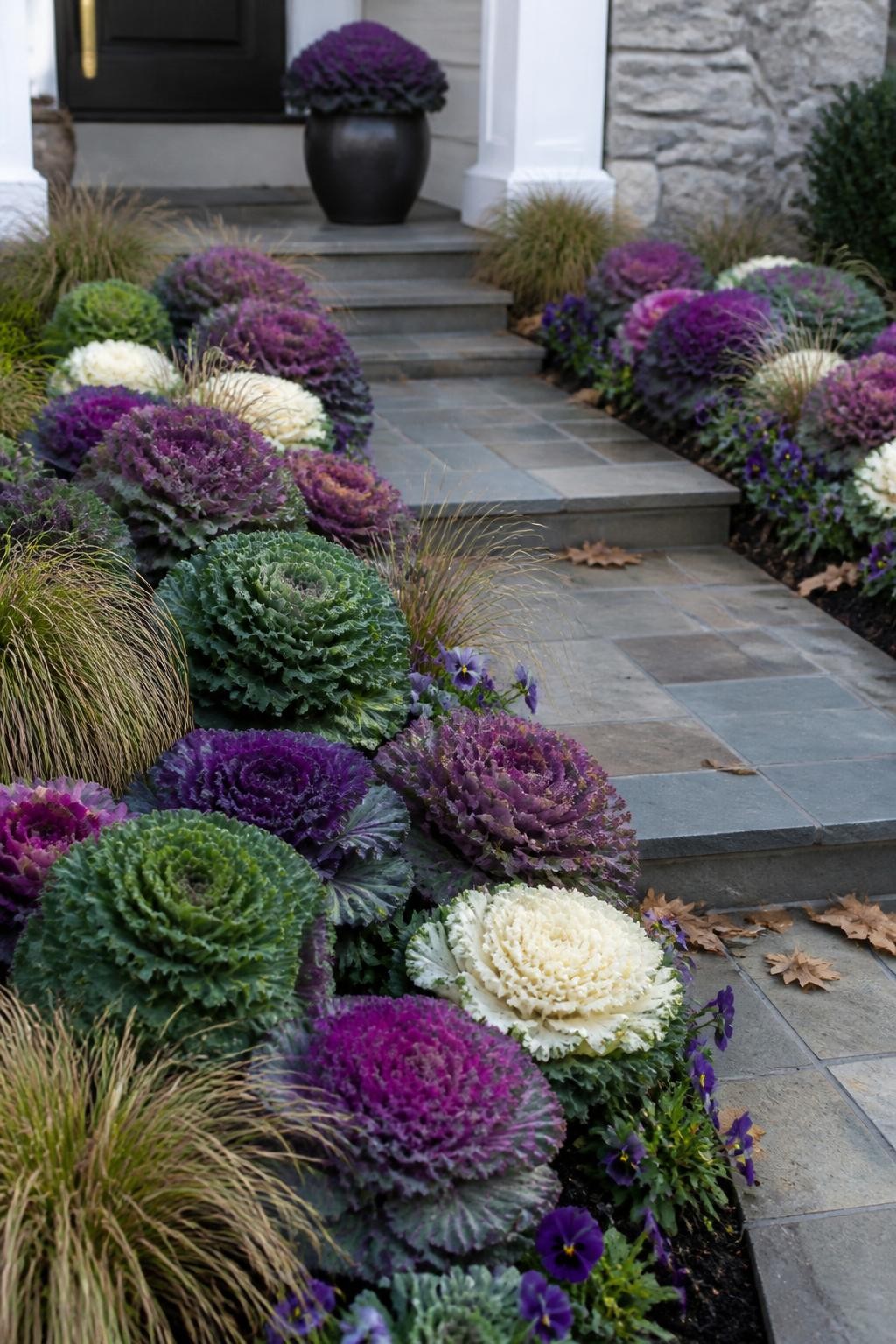
Ornamental kale provides broad ruffled leaves and bold rosette shapes that stand out among smaller fall flowers. Its color often becomes stronger as temperatures cool, making it a reliable option for beds near the entryway. It looks particularly effective when several plants are repeated instead of using only one.
Give each plant enough room to reach its mature width, since crowded kale can lose its strong shape. It prefers bright light, regular moisture, and well-drained soil. The plants can tolerate light frost and may remain attractive after more delicate flowers have declined.
6. Sedum for Easy Late-Season Structure
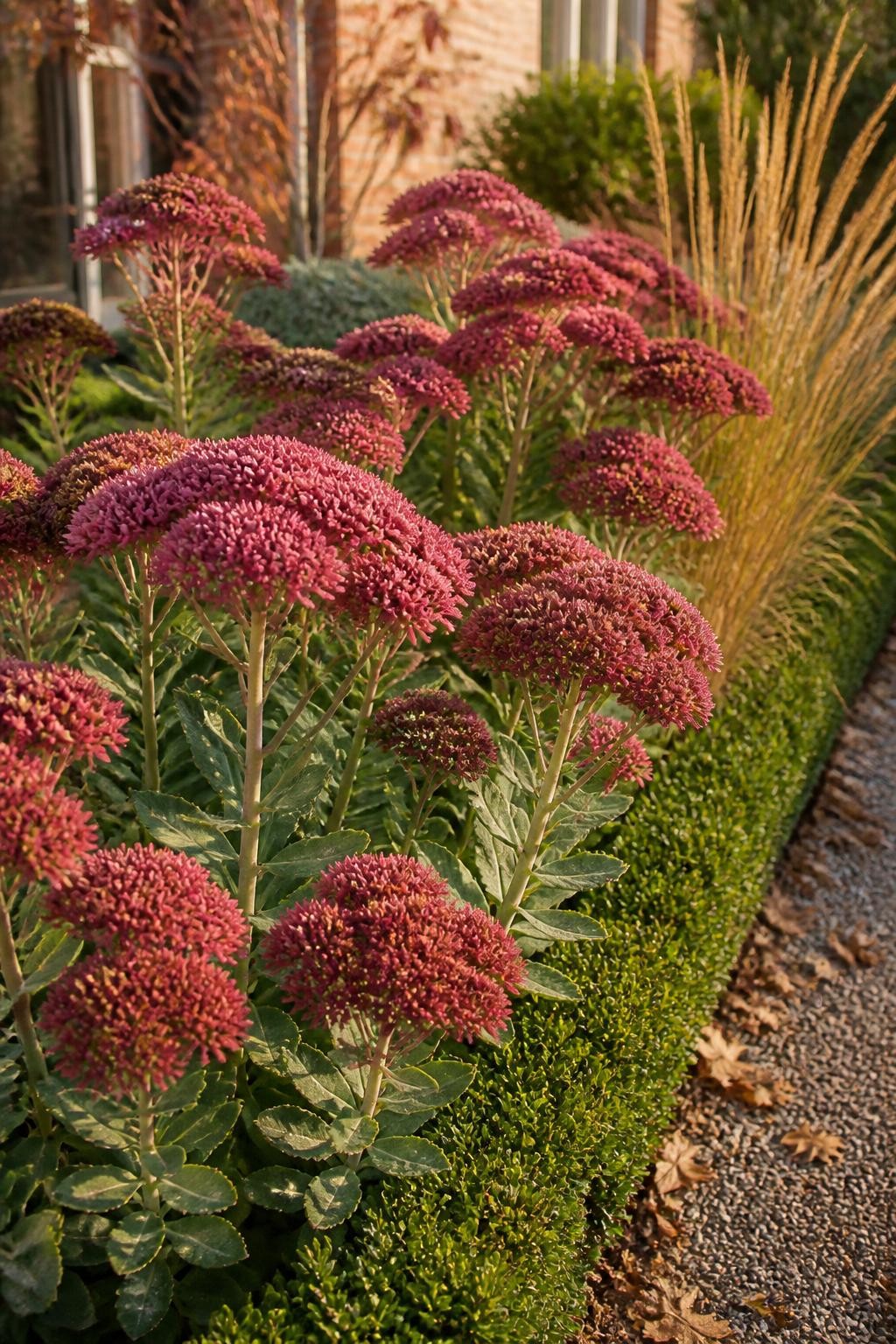
Upright sedum is a dependable front-yard perennial because it stays attractive through several stages. The sturdy green growth forms in spring, the flowers appear later in the season, and the dried heads can remain standing into winter. This makes sedum useful for gardeners who want structure with very little maintenance.
Plant sedum in full sun and avoid soil that remains wet for long periods. Once established, it handles dry conditions better than many flowering perennials. Leave the faded flower heads standing if you like their winter shape, then cut them back before new spring growth appears.
7. Violas for Filling Small Gaps
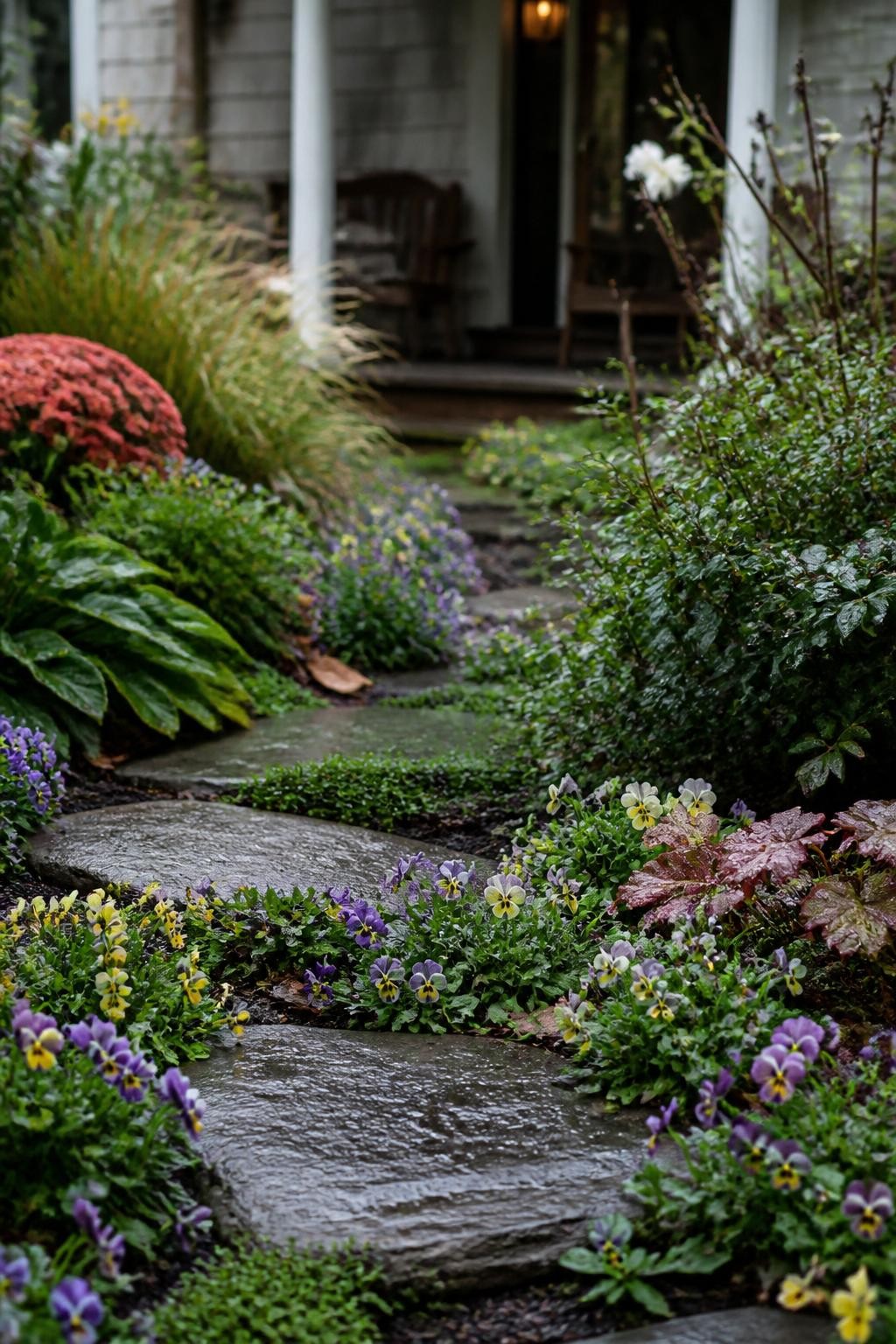
Violas are helpful for filling narrow spaces where larger plants would feel crowded. They can soften the edges of steps, cover small openings between established perennials, and bring color to compact front gardens. Their smaller flowers often appear in greater numbers than pansies, producing a full but delicate effect.
Plant them in groups rather than spreading single plants across a large bed. They prefer cool weather, consistent moisture, and sun or light shade. In mild winters, violas can continue blooming for months and may self-seed in suitable garden conditions.
8. Ornamental Grasses for Movement and Height
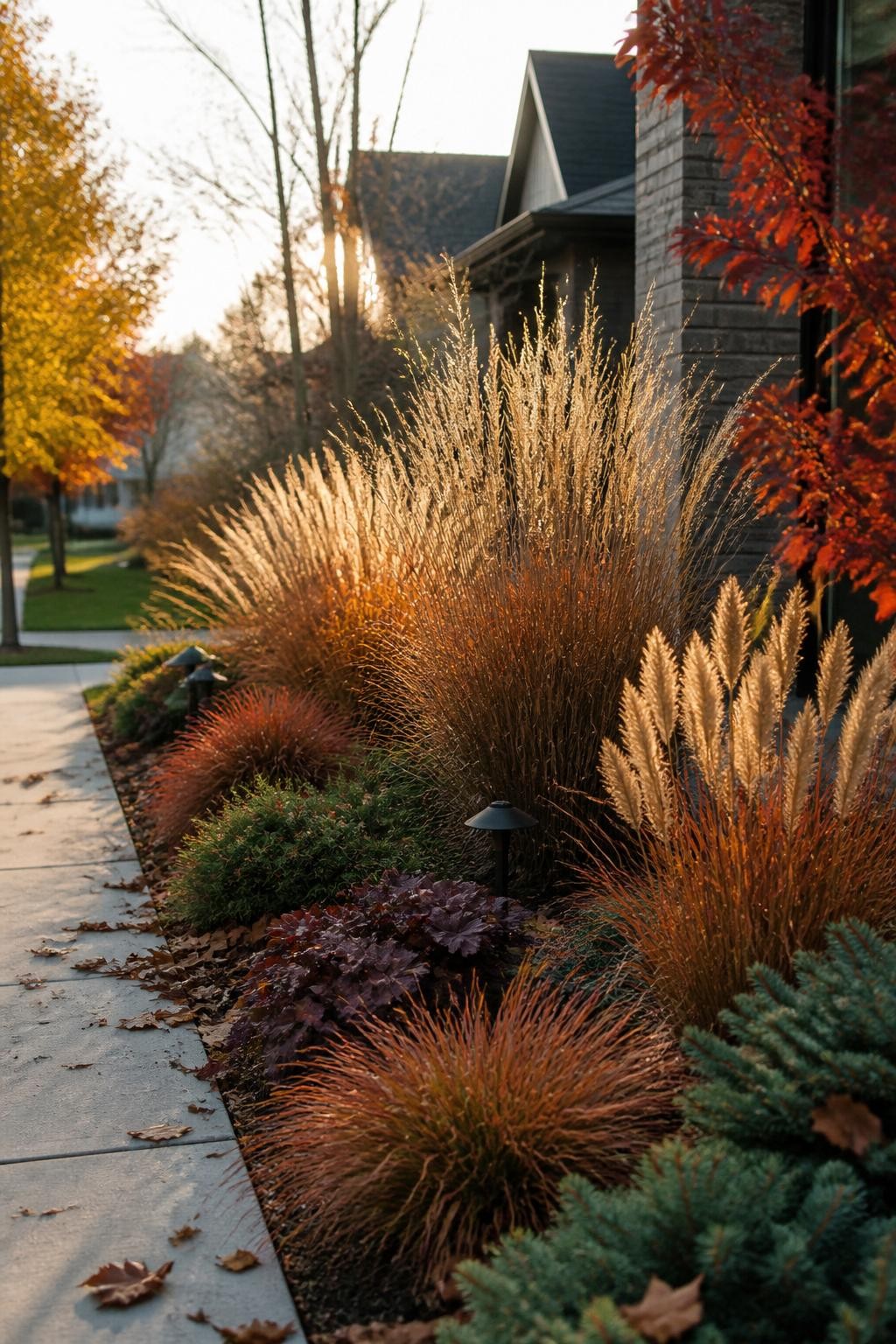
Ornamental grasses add movement, height, and texture to a front yard when many flowering plants begin to flatten or disappear. Their seedheads catch low autumn light and can soften the straight lines of paths, walls, and driveways. Compact grasses work near walkways, while taller types can anchor the back of a foundation bed.
Choose a variety that matches the available space because some grasses spread or grow much larger than expected. Most prefer full sun and well-drained soil. Leave the dried stems standing through winter if they remain upright, then cut them back before new growth begins.
9. Hellebores for Shaded Foundation Beds
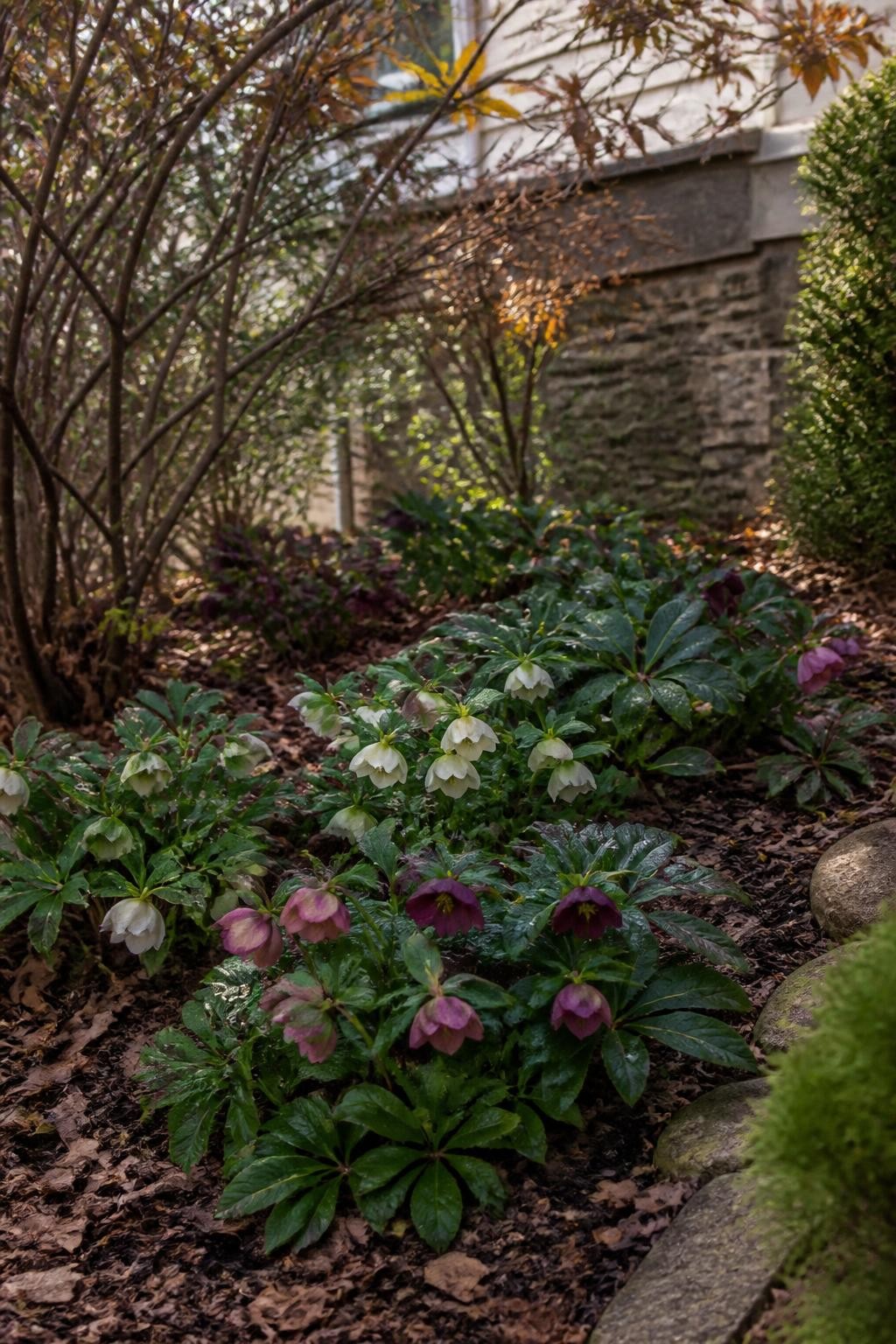
Hellebores are excellent for front yards with shaded areas beneath trees, beside porches, or along the north-facing side of a house. Their evergreen or semi-evergreen foliage keeps beds from looking empty, and their flowers appear in late winter or early spring when color is especially welcome.
Plant hellebores in rich, well-drained soil and protect them from intense afternoon sun. They can take a little time to settle in, but established plants are long-lived and require limited maintenance. Place them where their low, nodding flowers can be seen easily from a walkway or front window.
10. Snapdragons for Upright Flower Spikes
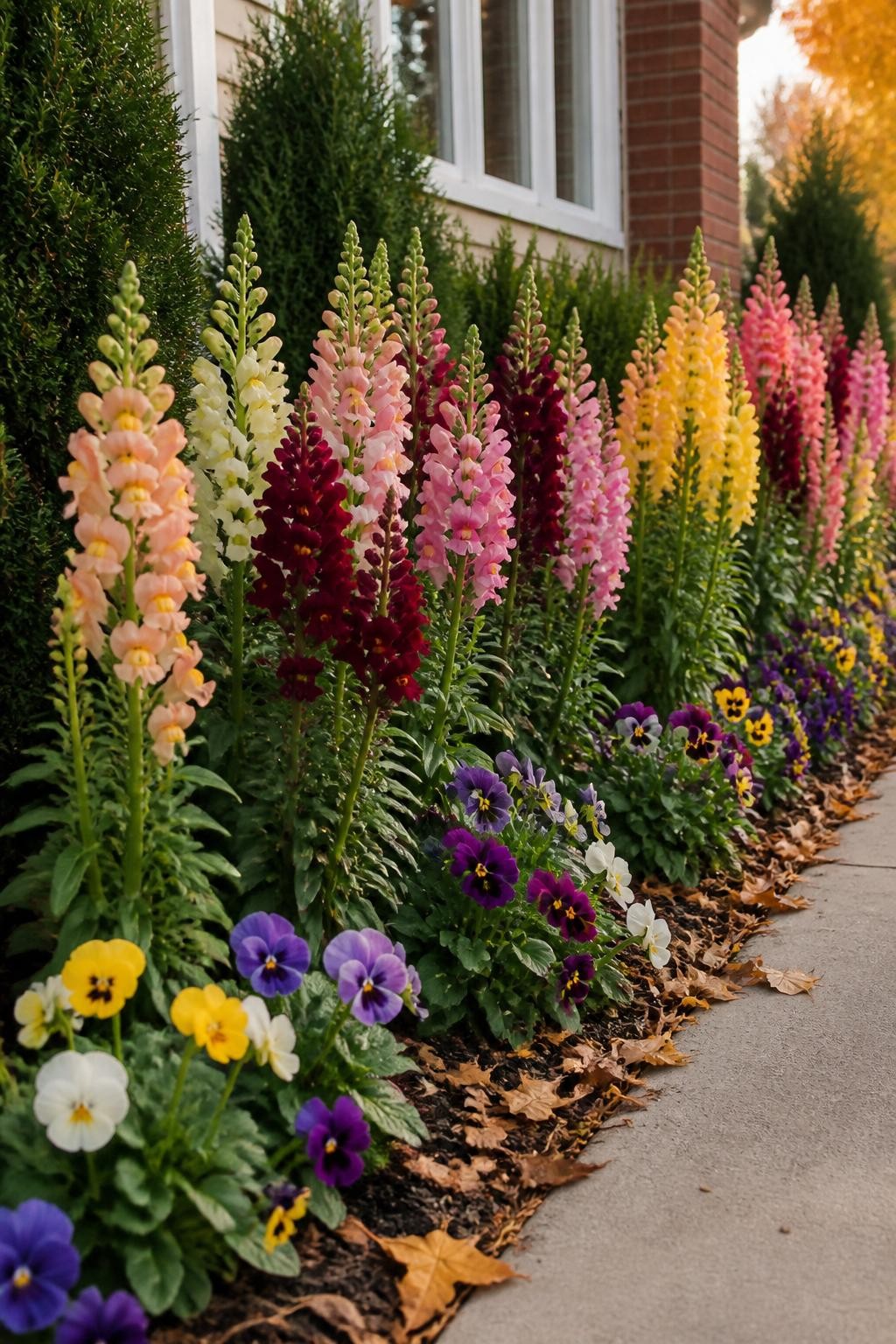
Snapdragons bring vertical color to front beds without requiring a large shrub or ornamental grass. Their flower spikes help add height behind lower plants and look especially effective near porch columns, fences, or the middle section of a layered border.
They perform best during cool weather and may continue blooming through light frost in mild climates. Give them sun, good drainage, and regular deadheading. Taller varieties may need discreet support when planted in windy or exposed front yards.
11. Cyclamen for Sheltered Entrances
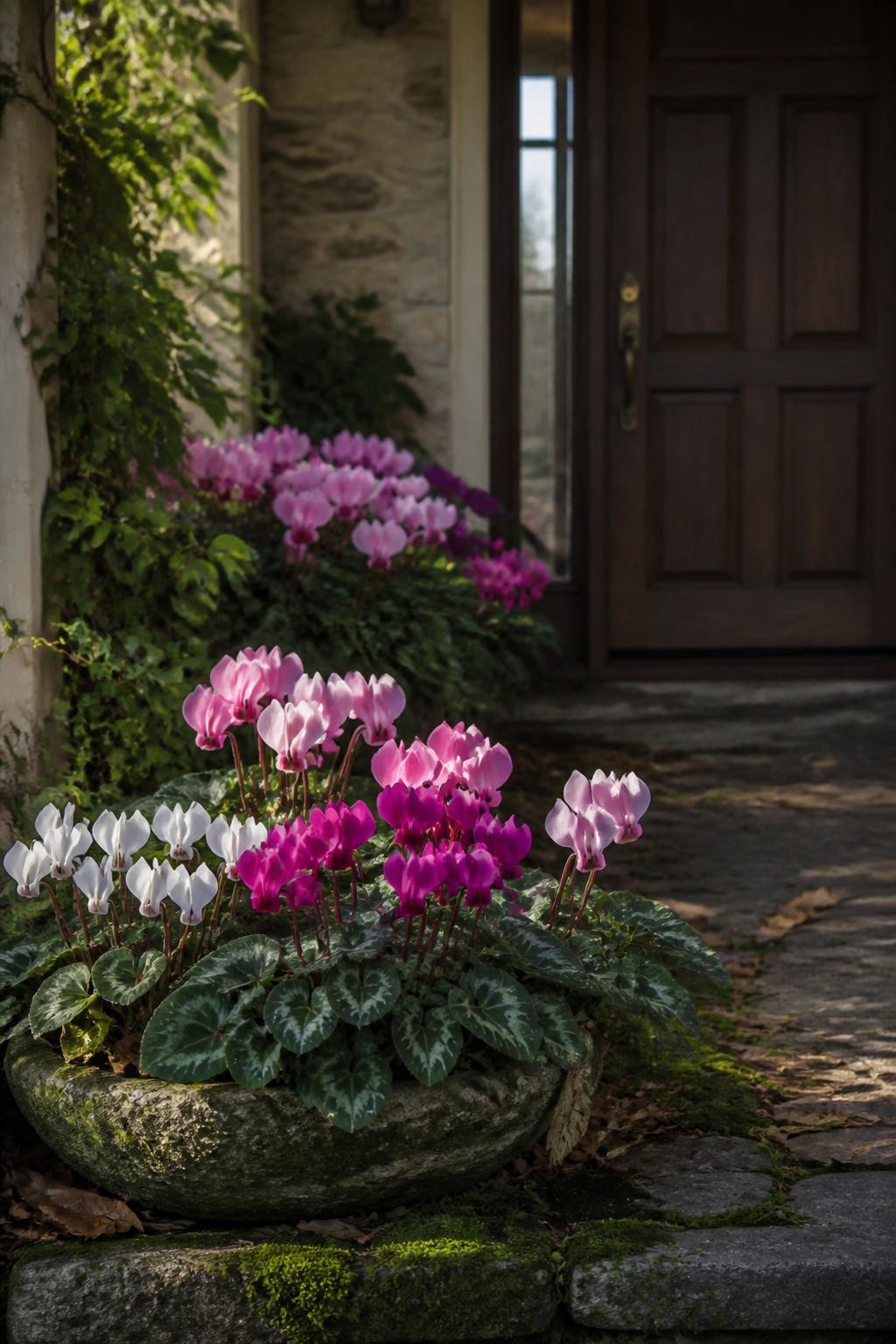
Cyclamen gives a front entrance a softer and more refined fall look. Its swept-back flowers and patterned leaves work well in sheltered beds, porch containers, and shaded areas near the house. White and pale pink varieties create a light display, while deep rose and magenta add stronger color.
Keep cyclamen away from waterlogged soil and harsh afternoon sun. Container-grown plants are easier to move when severe weather arrives. In regions with mild winters, hardy cyclamen can become a long-term groundcover beneath shrubs and small trees.
12. Sweet Alyssum for Soft Bed Edges
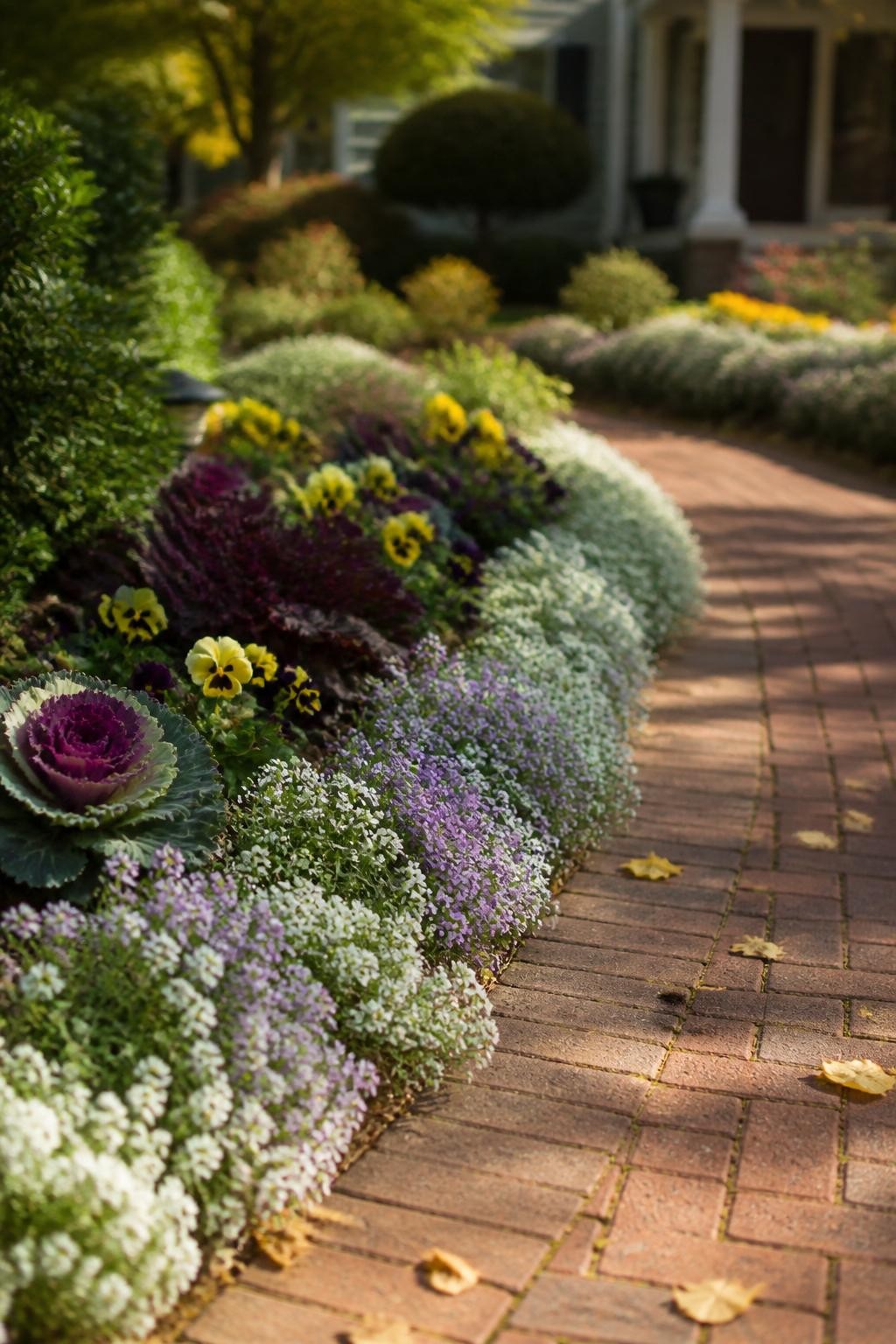
Sweet alyssum is useful for creating a soft transition between a walkway and taller plants. Its tiny flowers form low mounds that fill exposed soil and make newly planted beds look more established. The light fragrance is an added benefit near entrances and seating areas.
Plant alyssum in sun or partial sun and trim it lightly if it begins to look stretched. It performs best in cool weather and can continue blooming well into fall. White varieties brighten dark beds, while lavender shades blend naturally with purple asters and burgundy foliage.
13. Dwarf Evergreens for Reliable Structure
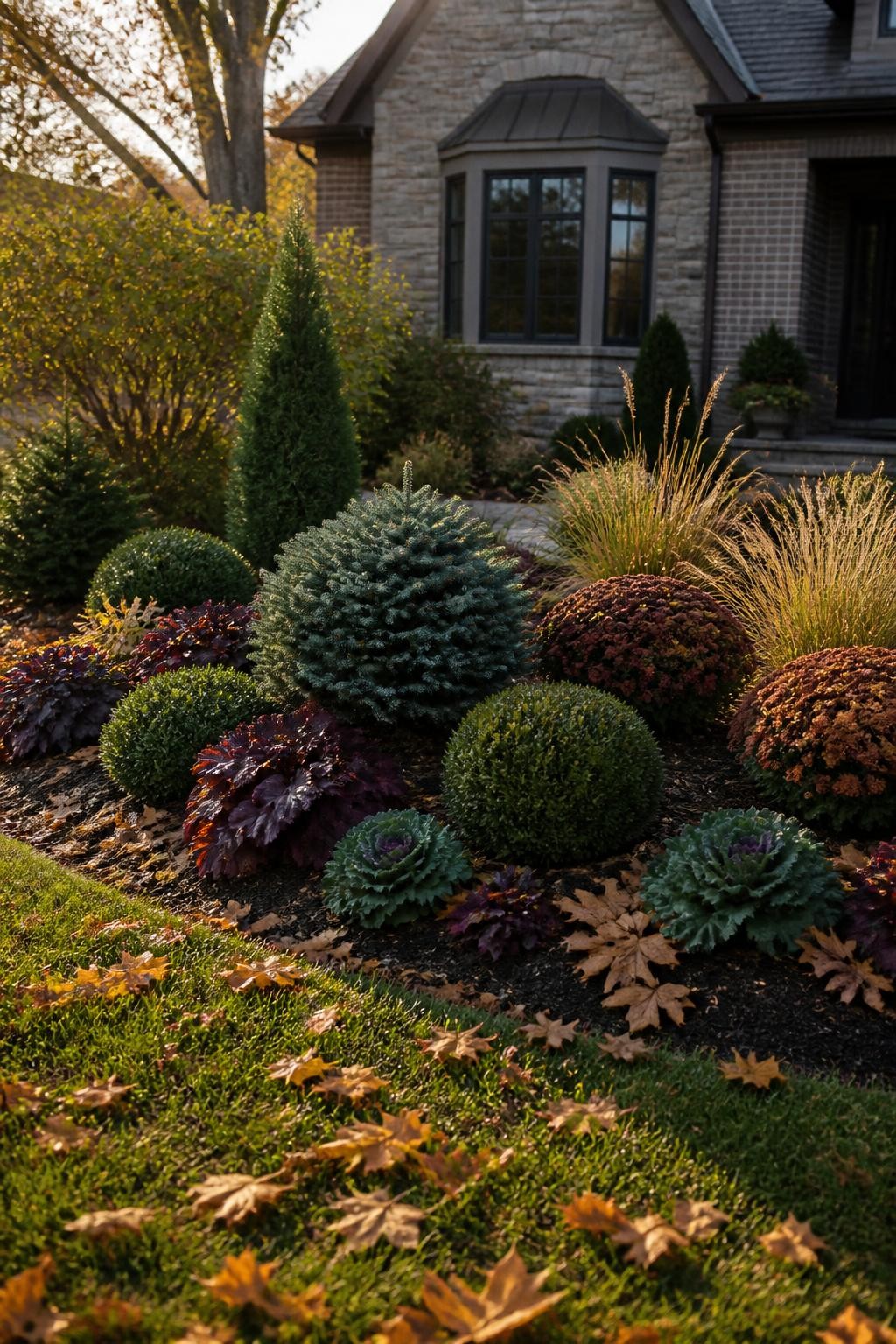
Dwarf evergreens give the front yard a dependable framework that remains after seasonal flowers are gone. Compact spruce, juniper, boxwood, and other small conifers can anchor corners, frame an entrance, or provide a green backdrop for brighter fall plants.
Check the mature size before planting because even plants labeled dwarf can become wider over time. Position them far enough from walls, windows, and walkways to grow naturally without frequent trimming. Water new evergreens deeply through dry fall weather until the ground freezes.