






In This Article Show
A sloped backyard might feel like a landscaping challenge, but it actually offers unique opportunities to create a stunning outdoor space with visual depth and character.

Many homeowners struggle with uneven terrain, unsure how to make their hillside functional and beautiful.The key to successful sloped landscaping lies in working with your yard’s natural contours rather than fighting against them.
Through strategic planning and creative design solutions, I can help you transform your sloped property into multiple functional zones that prevent erosion while maximizing usable space.
From terraced gardens and retaining walls to multi-level patios and strategic plant placement, there are numerous ways to turn your challenging slope into your yard’s greatest asset.
1. Install terraced garden beds to create flat planting areas
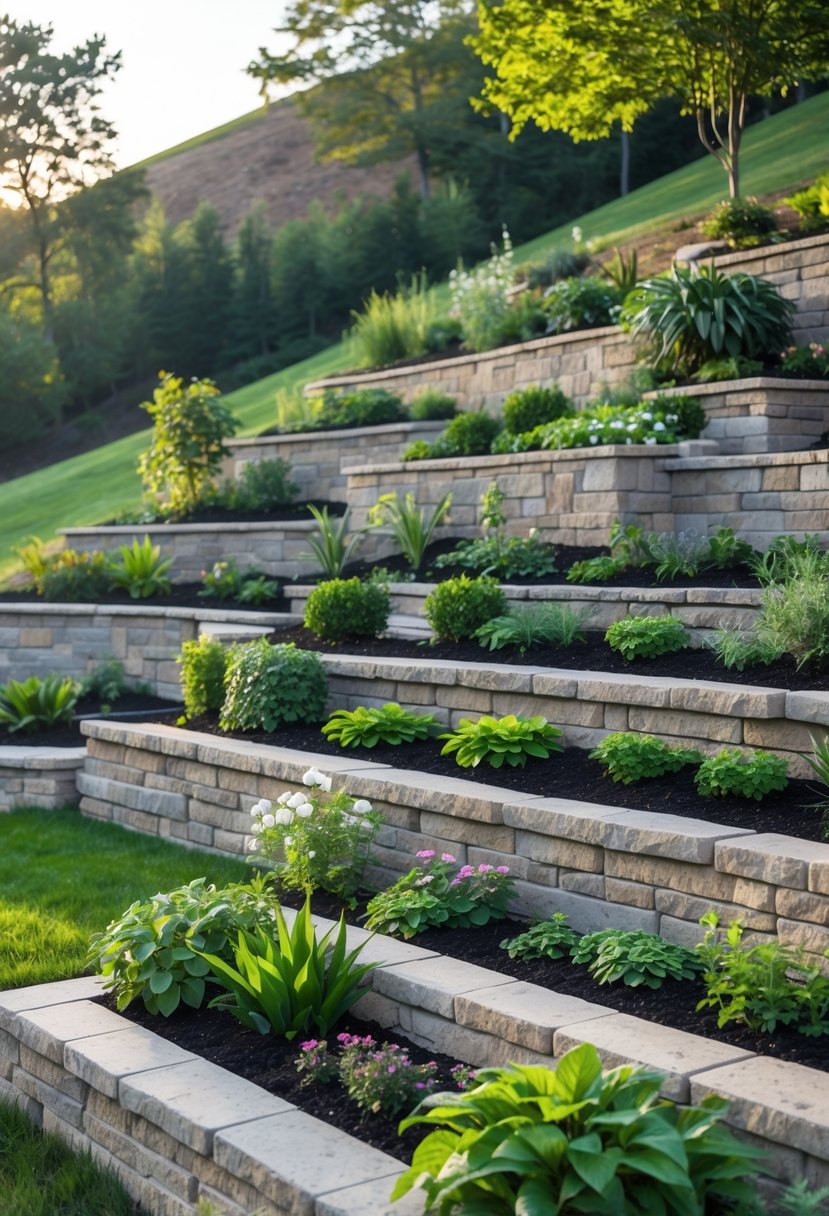
I recommend building terraced garden beds to turn your sloped yard into usable growing space. These stepped levels create flat areas where you can plant flowers, vegetables, and herbs easily.
Terraced beds prevent soil from washing away during heavy rain. They also help water drain properly instead of running straight down the hill.
You can build terraces using retaining walls made from wood, stone, or blocks. Each level should be wide enough for the plants you want to grow.
2. Build retaining walls using natural stone for stability
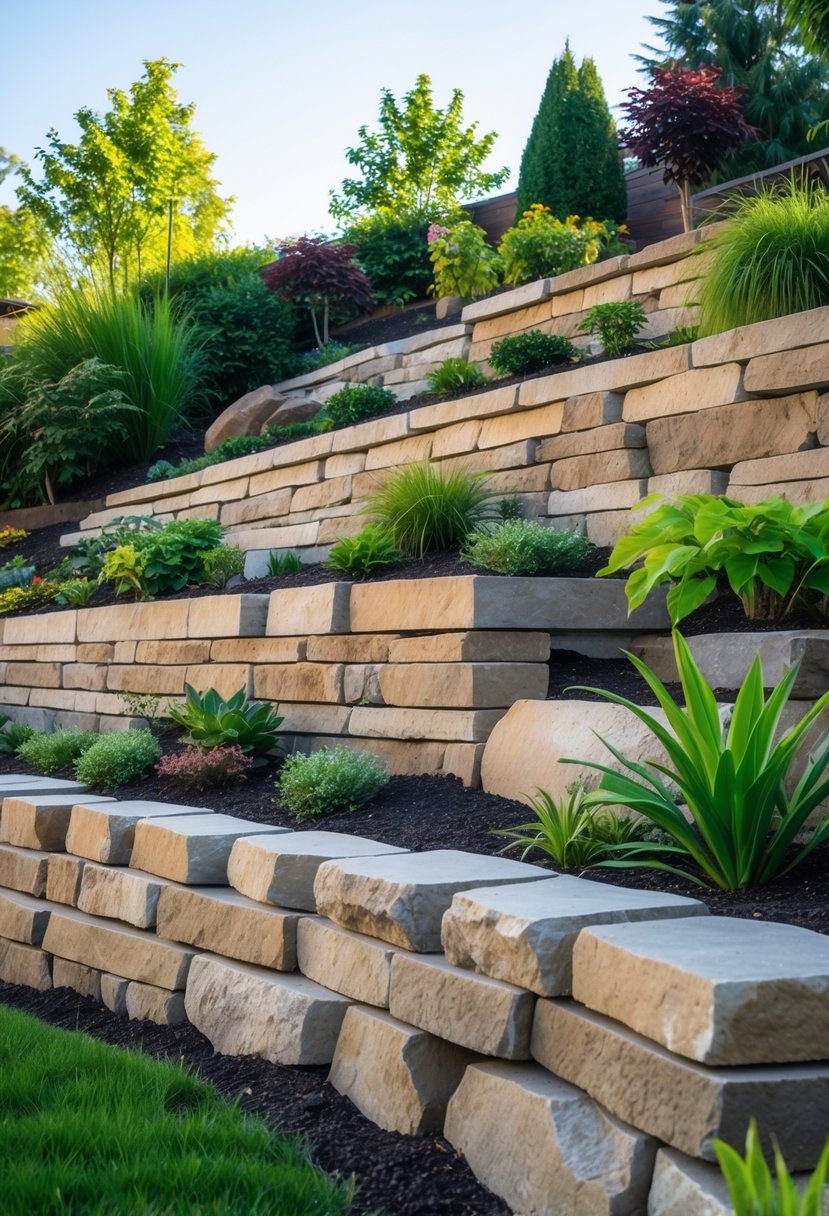
I recommend natural stone retaining walls for sloped backyards because they provide excellent stability and erosion control. These walls last for decades when built properly.
Natural stone blends seamlessly with your landscape. I find limestone and granite work best for most projects.
Stone walls create flat areas on steep slopes. You can use these spaces for gardens or outdoor seating areas.
I suggest stacking stones carefully to create strong walls. Each stone should fit snugly against the others for maximum stability.
These walls prevent soil from washing away during heavy rains. They also add natural texture and color to your yard.
3. Create multi-level patios for distinct outdoor zones
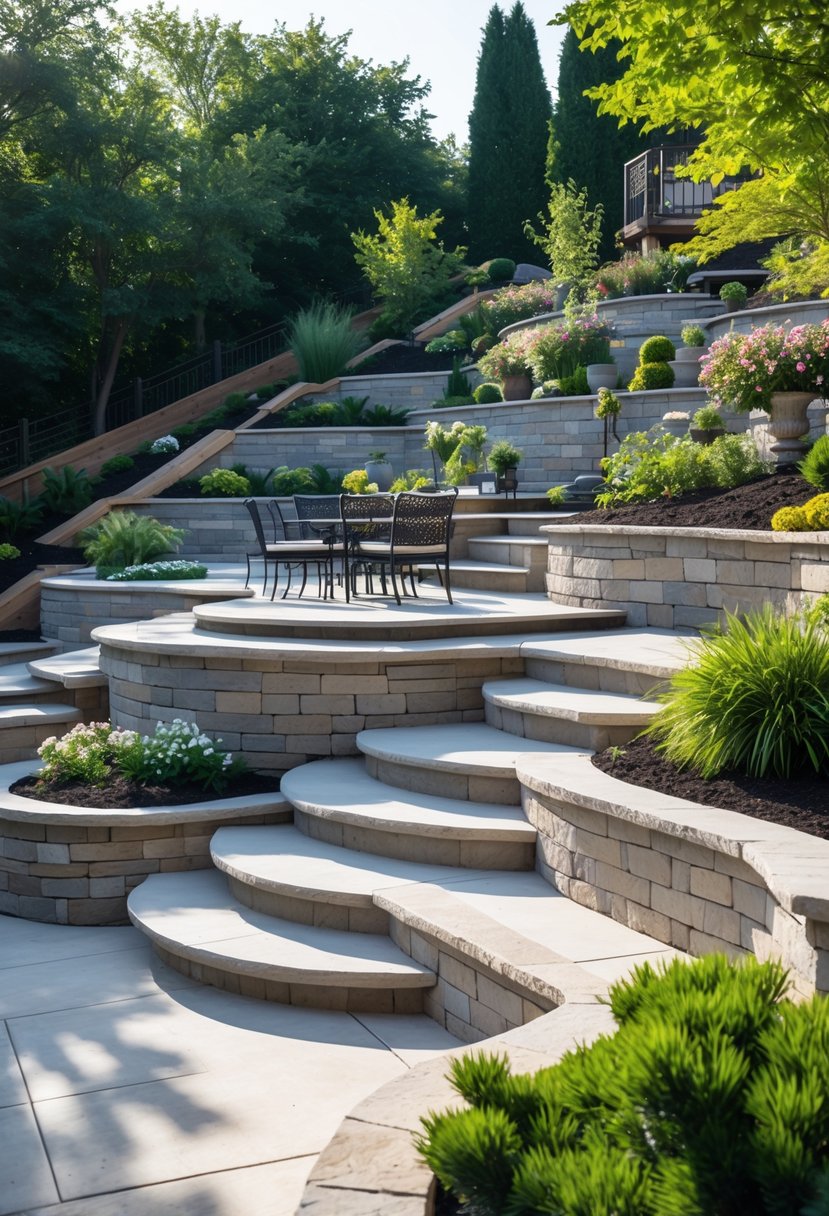
I transform sloped yards by building patios at different heights. This creates separate areas for dining, relaxing, and entertaining.
Multi-level patios turn uneven ground into an advantage. Each level serves a different purpose in my outdoor space.
I use retaining walls to create flat surfaces on slopes. This gives me stable areas for furniture and activities.
The upper level works well for quiet morning coffee. Lower levels are perfect for larger gatherings and cooking areas.
I connect the levels with steps or pathways. This makes moving between zones easy and safe.
Different materials on each level add visual interest. I might use stone on one level and wood on another.
Multi-level designs maximize my usable outdoor space. They turn challenging slopes into functional living areas.
4. Incorporate stone or gravel pathways for easy navigation
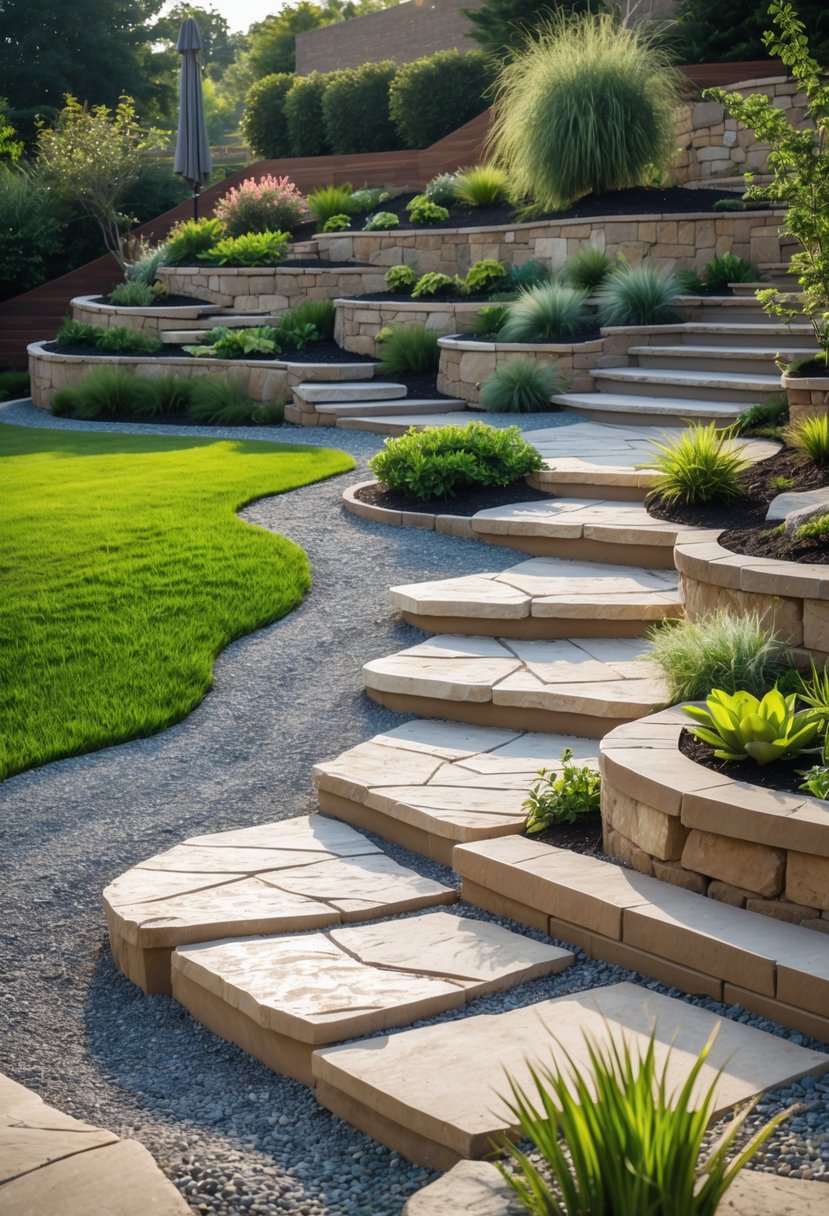
I find that stone and gravel pathways solve the biggest challenge of sloped yards – safe movement between levels.
Gravel paths cost less than stone but still look professional. I recommend using stepping stones with gravel fill for the best results.
Stone pathways last longer and handle heavy foot traffic better. Natural stone blends well with most landscape designs.
5. Add raised flower beds to manage soil erosion

I build raised flower beds on slopes to stop soil from washing away. The beds create level planting areas that hold dirt in place.
Raised beds work like small retaining walls. They catch water and nutrients before they run downhill.
I make sure each bed sits level even on uneven ground. This prevents erosion while giving plants better growing conditions.
The raised structure keeps soil stable during heavy rains. Plants grow better when their roots stay put.
6. Use ground covers like creeping thyme to stabilize slopes

I recommend creeping thyme for sloped yards because it grows fast and creates thick mats. This plant stops soil from washing away during heavy rains.
Creeping thyme works best in sunny spots with good drainage. It spreads quickly across slopes without needing much care from you.
7. Install a fire pit area on a leveled terrace
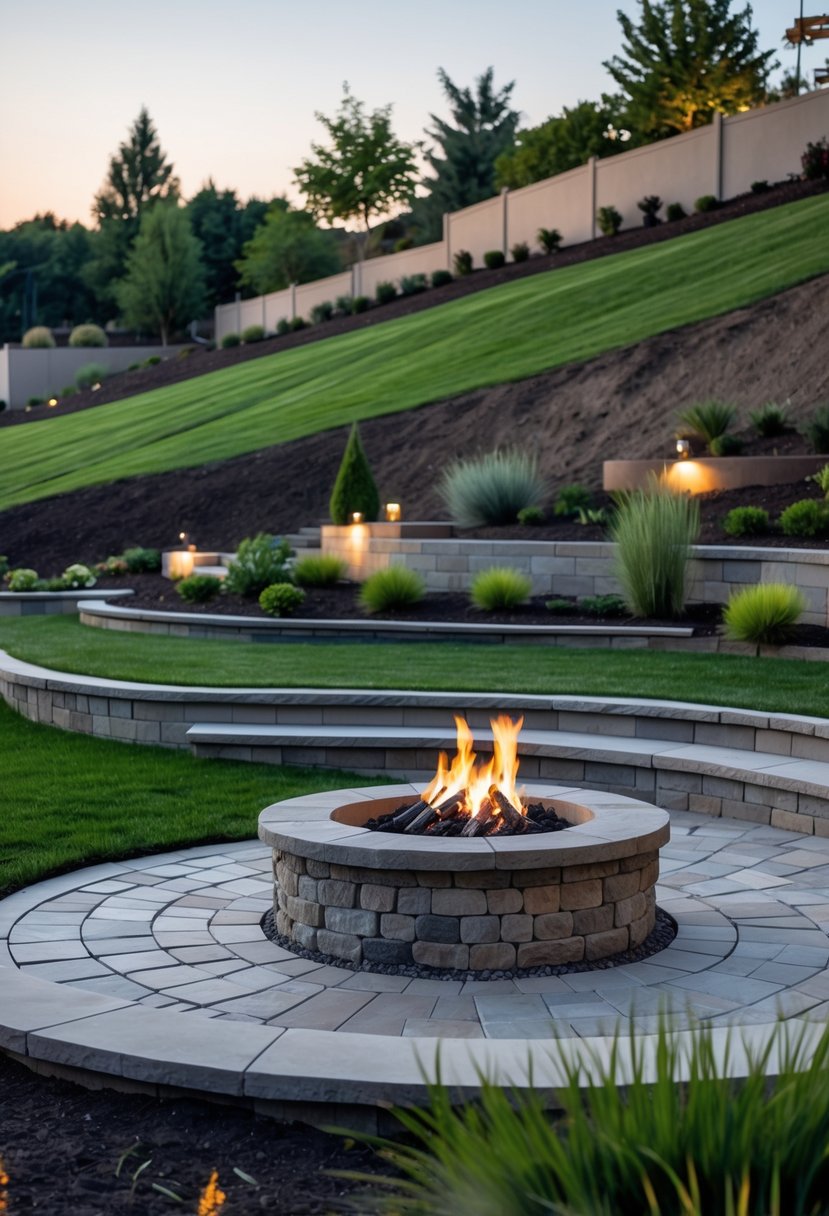
I create level ground by building a terrace into my sloped yard. This gives me stable space for a safe fire pit.
I use retaining walls to hold back soil. Then I fill the area with gravel and sand to make it flat.
8. Build staircases with durable materials to connect levels
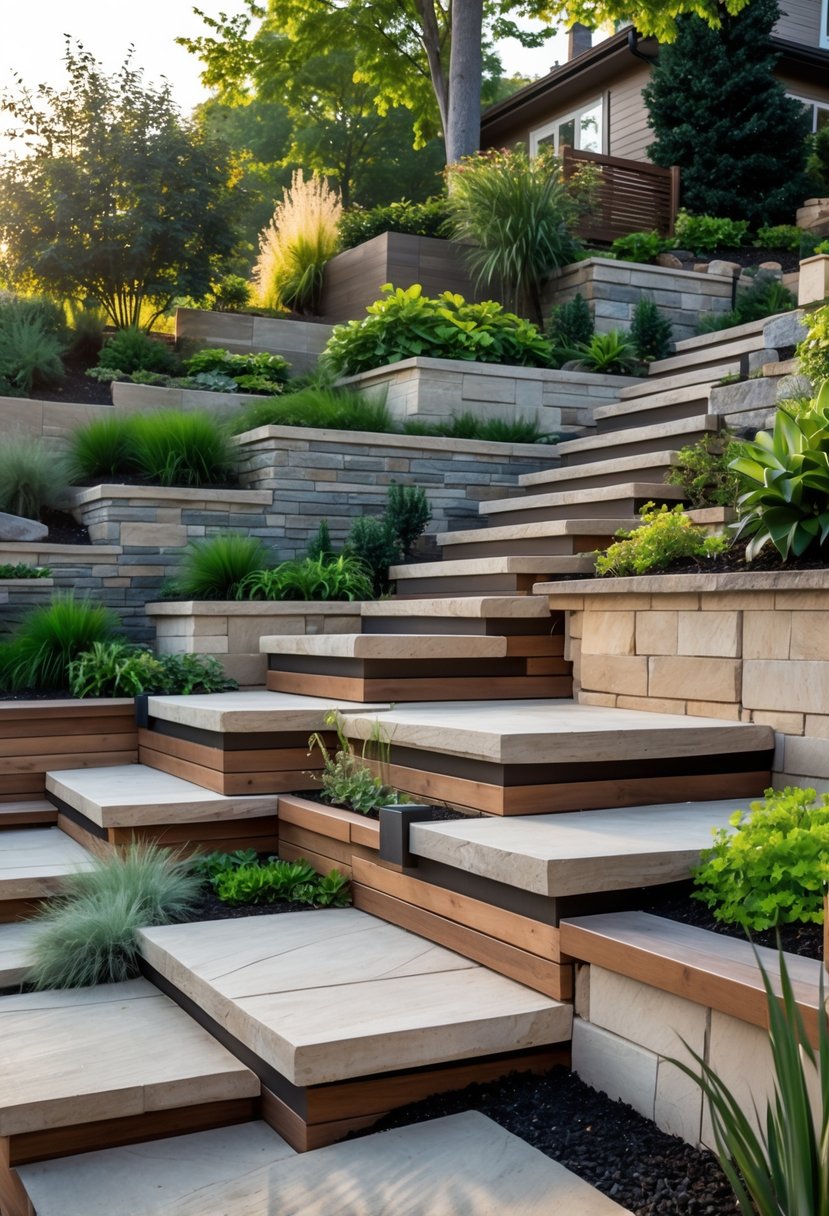
I recommend using natural stone for outdoor stairs on slopes. Stone lasts for decades and handles weather well.
Concrete stairs work great too. They cost less than stone but still last many years.
Wood stairs look nice but need more care. I suggest treating them yearly to prevent rot.
Brick stairs blend well with many home styles. They resist weather damage when installed properly.
9. Plant drought-resistant shrubs to reduce maintenance
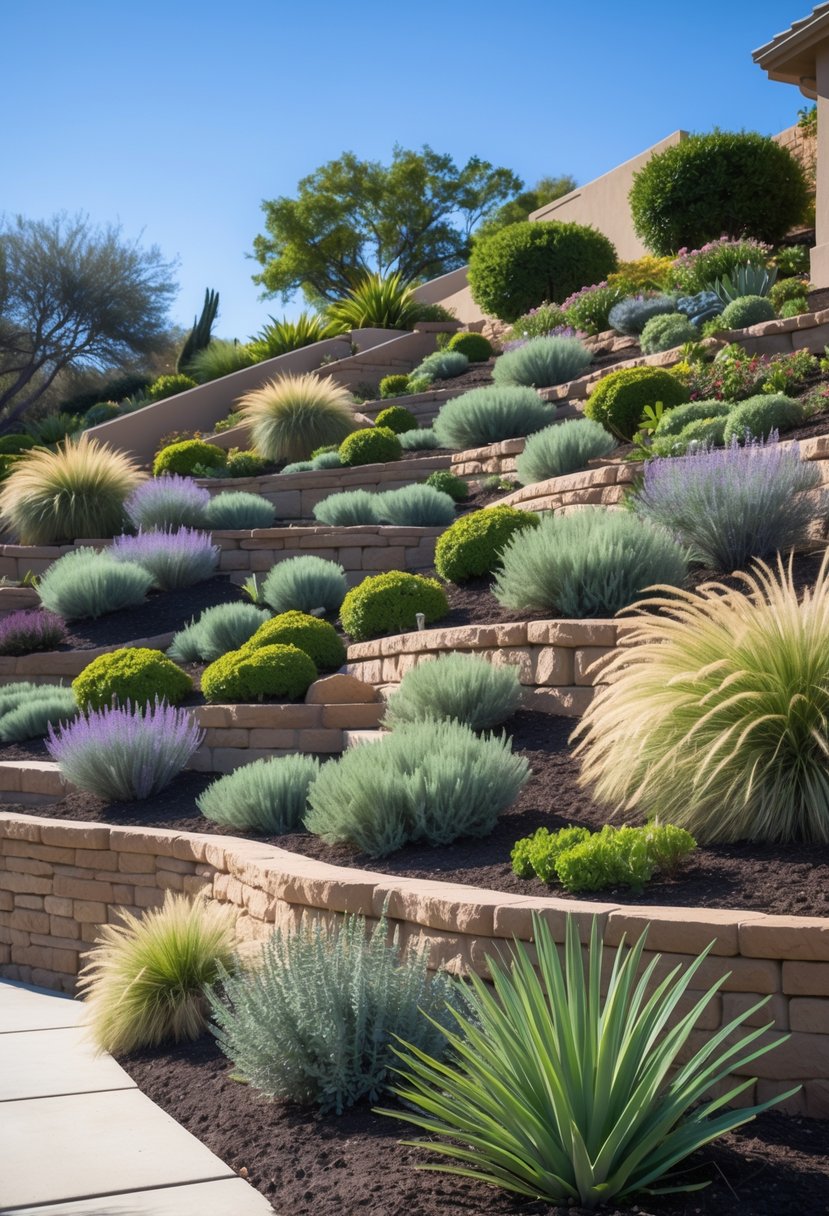
I recommend planting drought-resistant shrubs on slopes because they need less water and care. These plants work well where water runs off quickly.
Forsythia and spirea are good choices for sloped areas. They help stop soil from washing away while looking nice.
10. Create a dry creek bed for drainage and visual interest
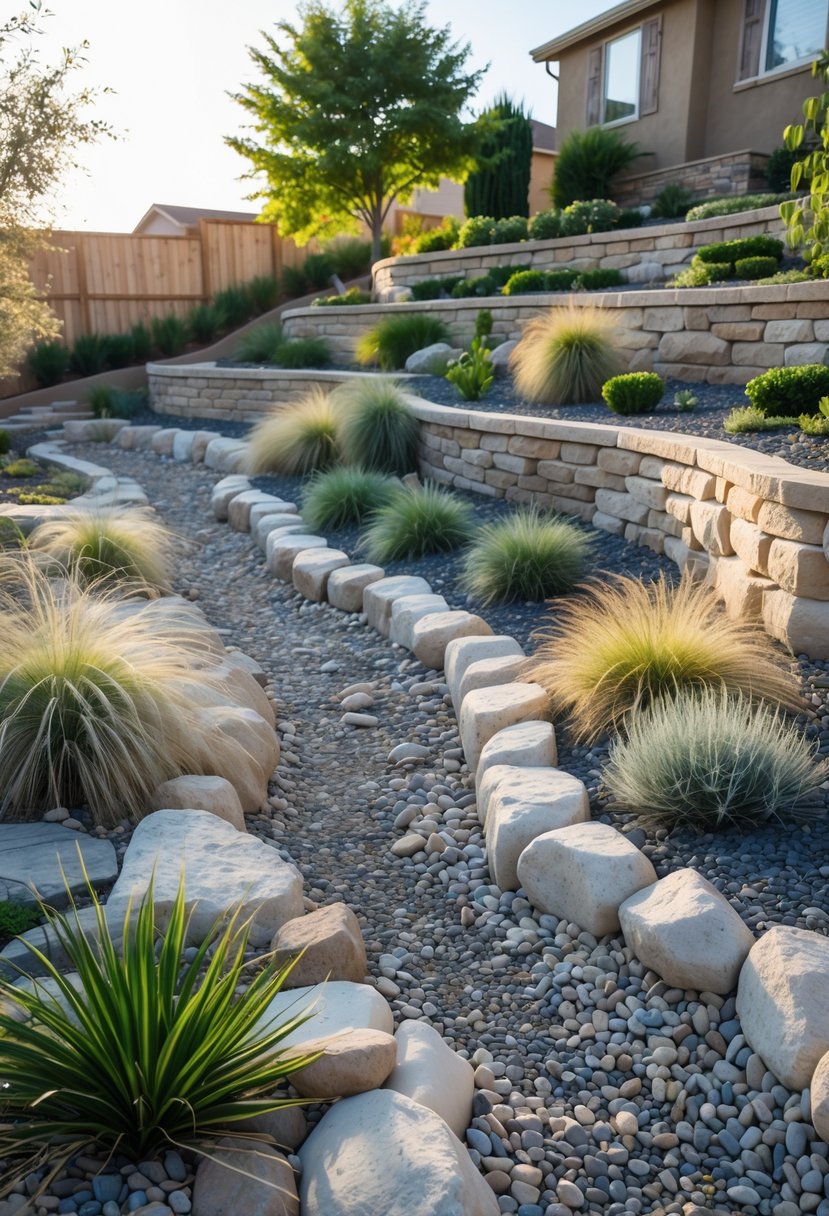
I recommend building a dry creek bed to solve drainage problems on sloped yards. This natural-looking feature directs water flow while adding beauty to your landscape.
The project uses rocks, stones, and pebbles of different sizes. I place larger boulders along the edges and smaller stones in the center to create a realistic riverbed look.
A dry creek bed works by channeling water that would normally pool or cause erosion. During heavy rain, it becomes a temporary stream that safely moves water away from problem areas.
I start by digging a shallow channel that follows your yard’s natural slope. The bed should be wider at curves and narrower at straight sections to look more natural.
This solution requires minimal maintenance once installed. I find it works well in desert landscapes or low-water gardens where traditional drainage might not fit the design.
11. Build a wooden deck overlooking the slope
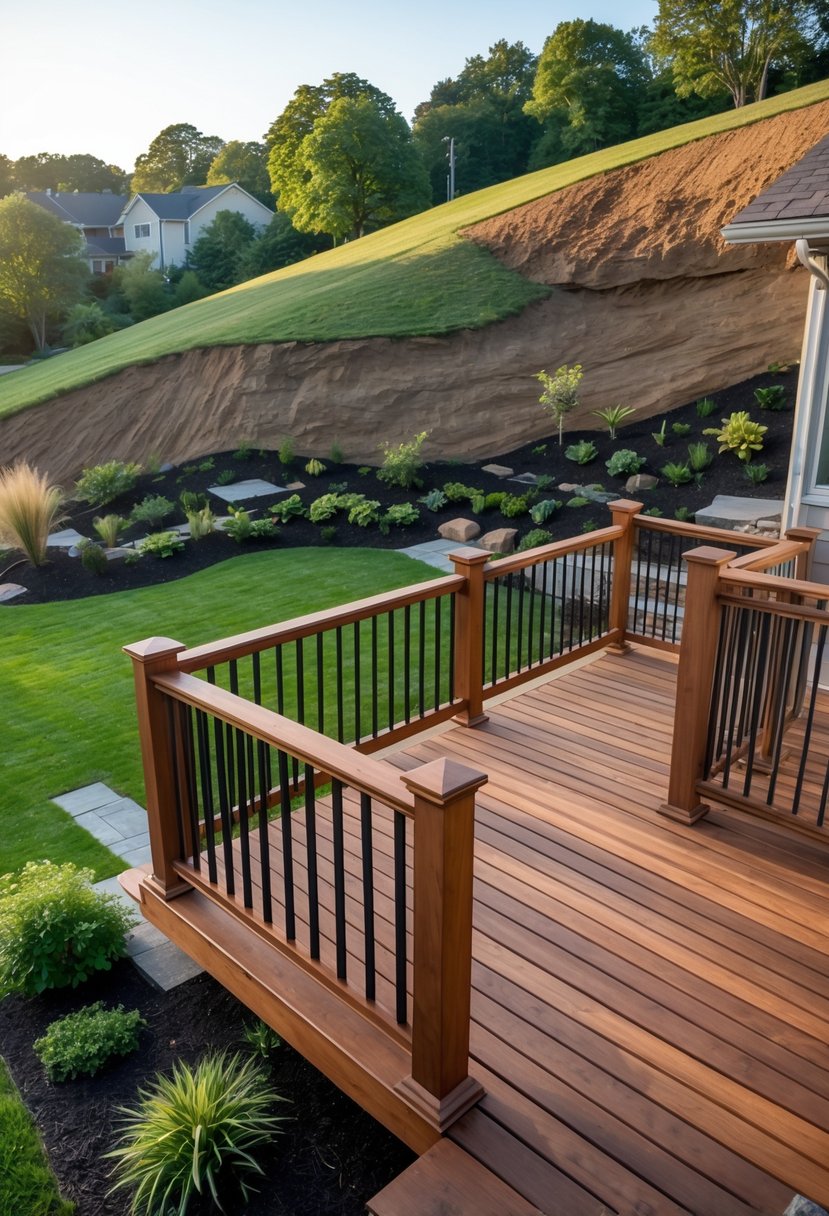
I recommend building a wooden deck that extends over your sloped yard. This creates usable outdoor space without changing the ground below.
The deck acts as a viewing platform. You can enjoy your entire yard from above while keeping the natural slope intact.
12. Use gabion baskets filled with rocks for retaining walls
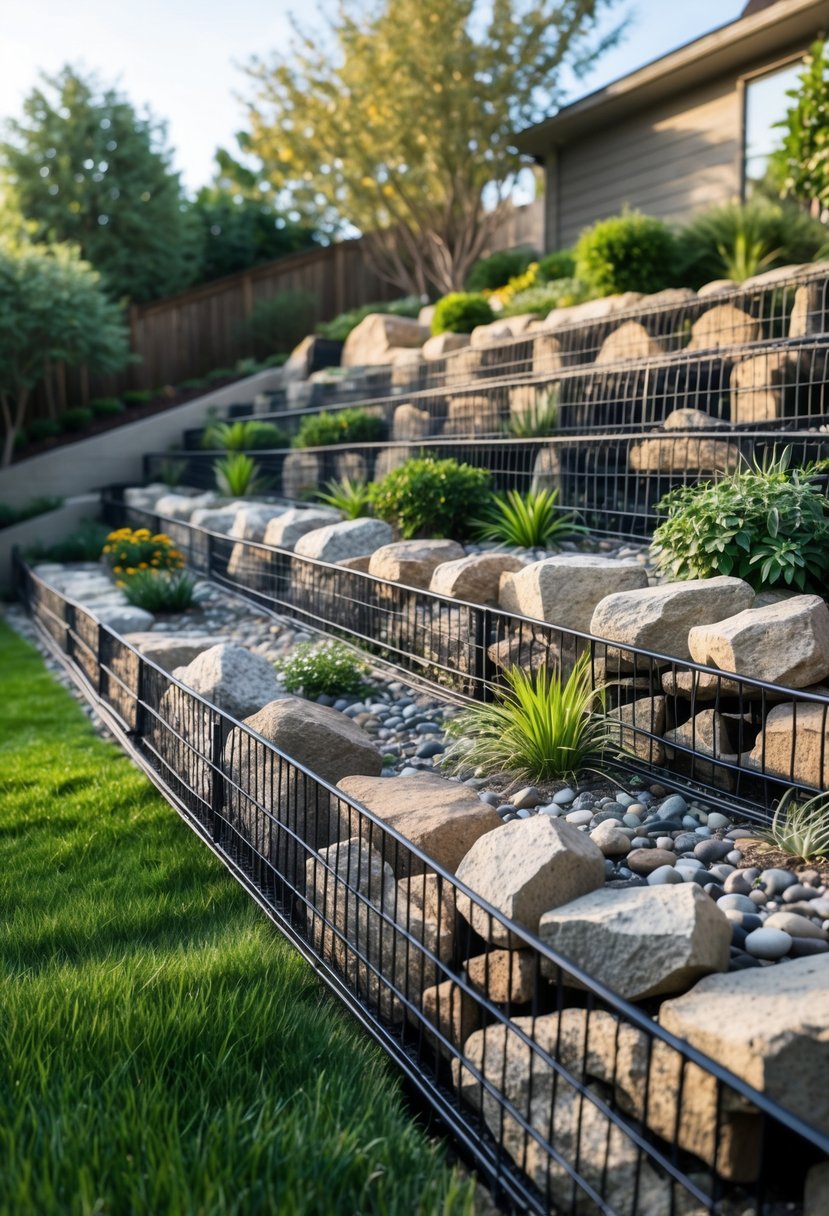
I recommend gabion baskets as an effective solution for sloped yards. These wire mesh containers hold rocks and create strong retaining walls.
Gabion walls prevent soil erosion on slopes. They provide stability while looking natural in your landscape.
You can build gabion retaining walls yourself. Fill the wire baskets with local stones or recycled materials for a budget-friendly project.
These walls work well on uneven terrain. The flexible design adapts to ground movement better than solid concrete walls.
I suggest using gabion walls for steep slopes that need extra support. They blend well with natural landscaping while solving drainage issues.
13. Install outdoor seating areas on flat terraces
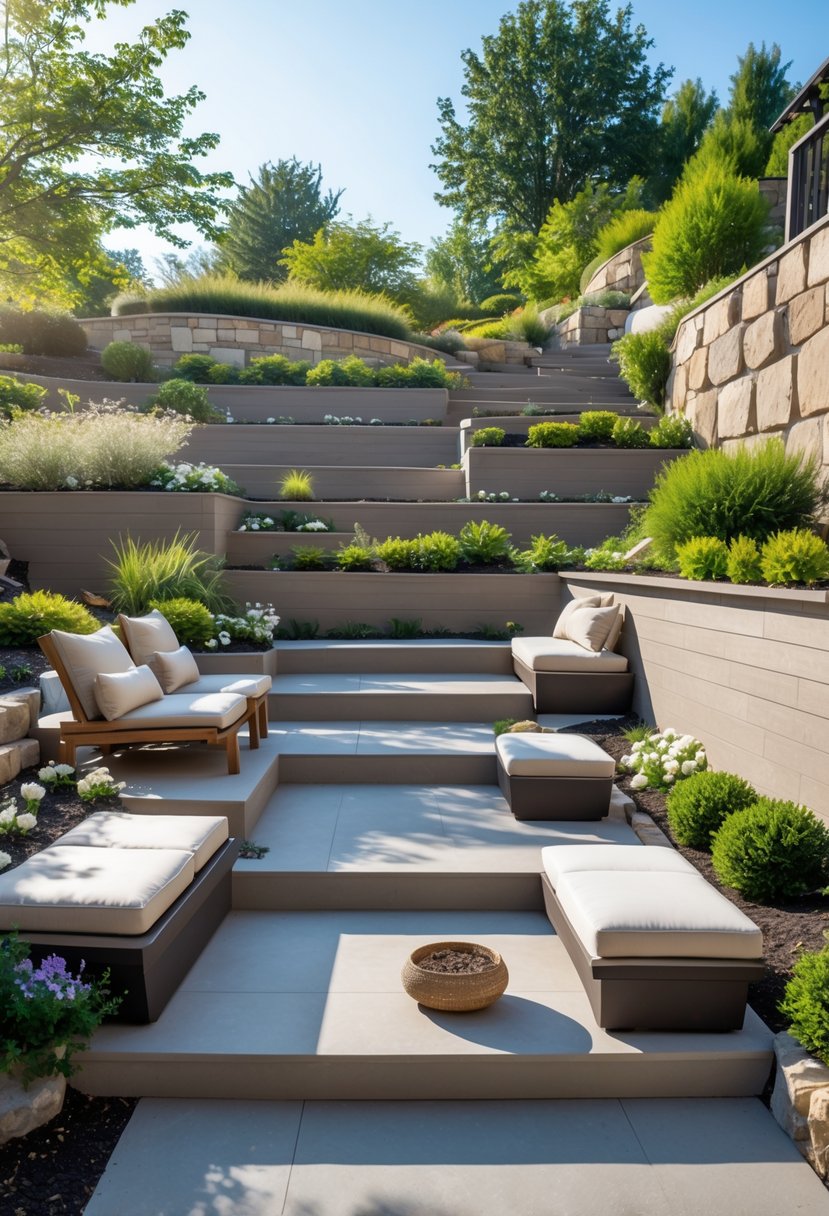
I create level terraces by cutting into the slope and building retaining walls. These flat areas work perfectly for outdoor furniture.
I place comfortable seating like chairs, benches, or sofas on each terrace. The level ground keeps furniture stable and safe.
Fire pits work well on terraces too. They provide warmth and create natural gathering spots for family and friends.
14. Incorporate native plants suited for hillside conditions

I choose native plants because they grow naturally in my area’s climate. These plants need less water and care than non-native varieties.
Native plants have deep root systems. Their roots help hold soil in place and prevent erosion on slopes.
I select drought-tolerant native species for my hillside. They survive dry conditions without constant watering or maintenance.
15. Design a play area on a safe, level platform
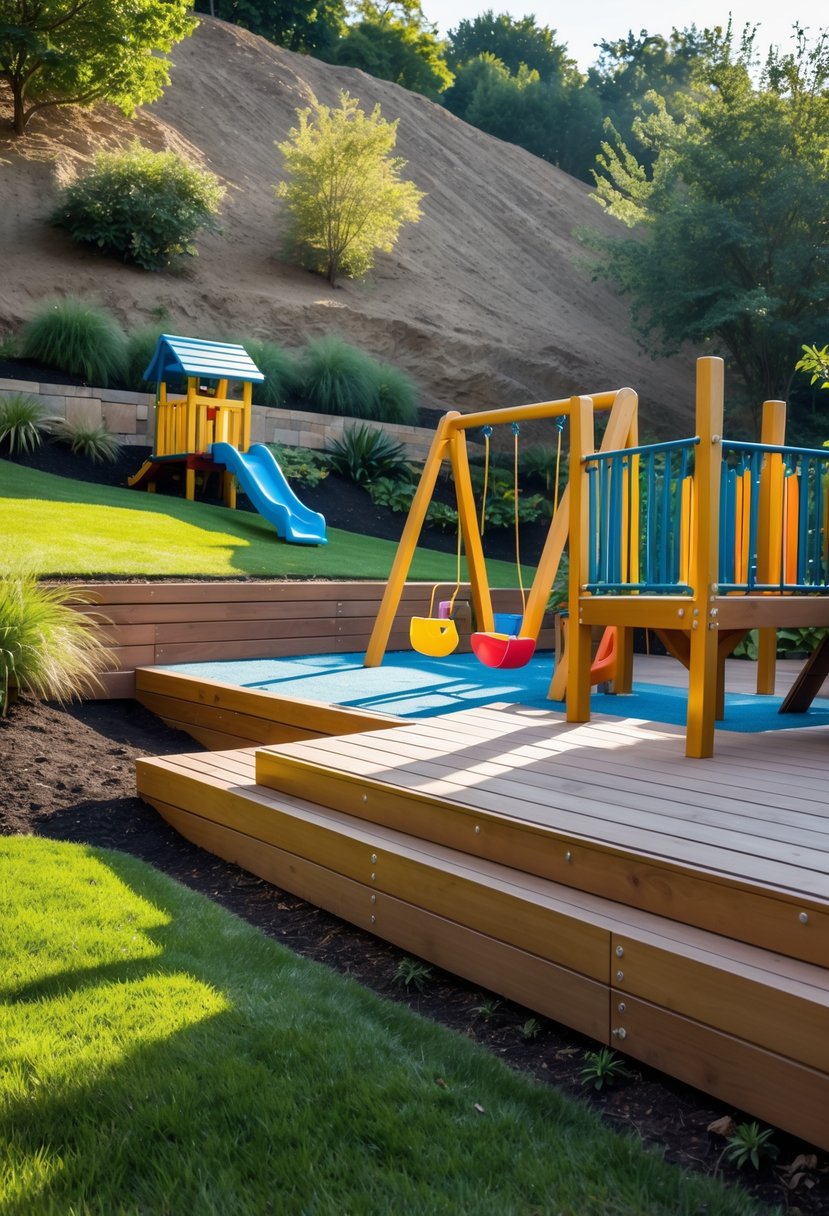
I recommend creating a level platform for playground equipment on sloped yards. This ensures children’s safety during play.
You can build a retaining wall to create flat ground. Fill the space with proper drainage materials first.
Consider modular swing sets designed for uneven terrain. These adapt to slopes while maintaining stability and safety standards.
16. Add built-in planter boxes on retaining walls
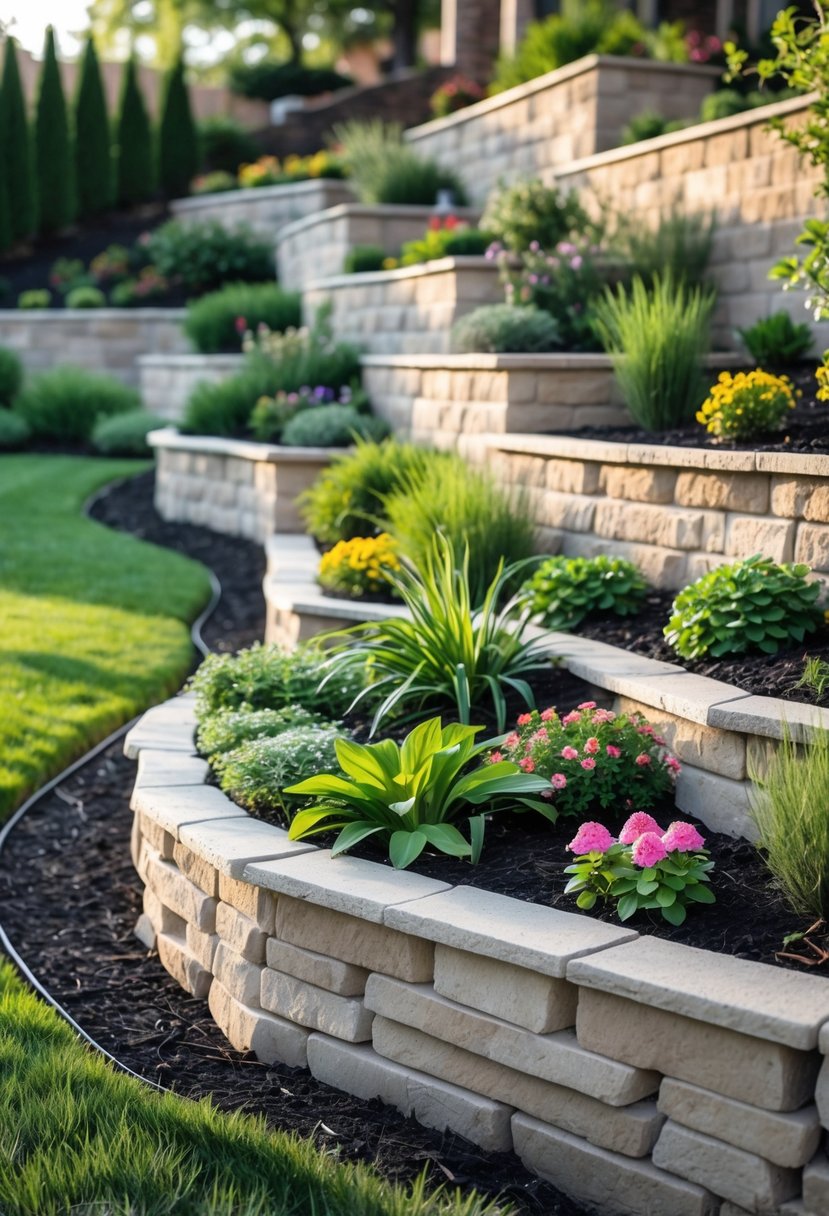
I recommend adding planter boxes directly into retaining wall designs. This saves space while creating colorful garden areas on slopes.
Built-in planters work well with stone or block retaining walls. They add texture and visual interest to plain wall surfaces.
17. Install solar landscape lighting along pathways

Solar lights work great on sloped yards. I can place them along walkways without running electrical wires uphill.
These lights charge during the day using sunlight. They turn on automatically at night to light my path.
Installation is simple on uneven ground. I just stake them into the soil wherever I need light along my slope.
Solar pathway lights help guests walk safely on my sloped terrain. They mark the edges of paths and stairs clearly.