





In This Article Show
Indoor fairy gardens bring magic and wonder into your home while creating a peaceful hobby you can enjoy year-round. These tiny landscapes combine living plants, miniature decorations, and creative containers to build enchanting worlds that fit on any tabletop or shelf.

Creating your own indoor fairy garden lets you design a miniature magical world using everyday materials and simple techniques.
From vintage teapots transformed into planters to handcrafted tiny houses made from sticks, these projects work well in small spaces and require minimal gardening experience.
You can add elements like glowing LED lights, aromatic herbs, and delicate figurines to make each garden uniquely yours.
1. Repurpose vintage teapots as unique containers
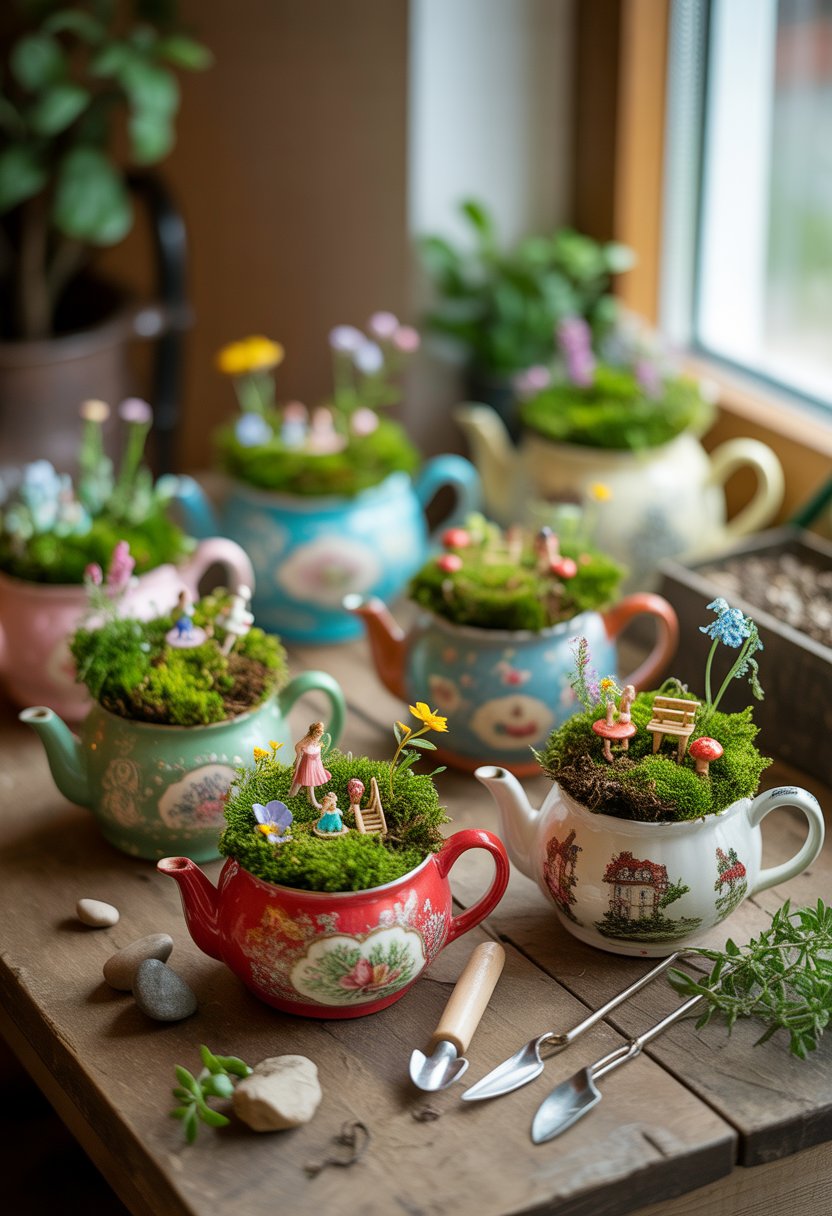
I love using old teapots for fairy gardens. They make perfect tiny homes for miniature plants and fairy accessories.
The spout creates a charming doorway for fairies. You can add small succulents or moss inside the main chamber.
2. Craft miniature houses from popsicle sticks and twigs
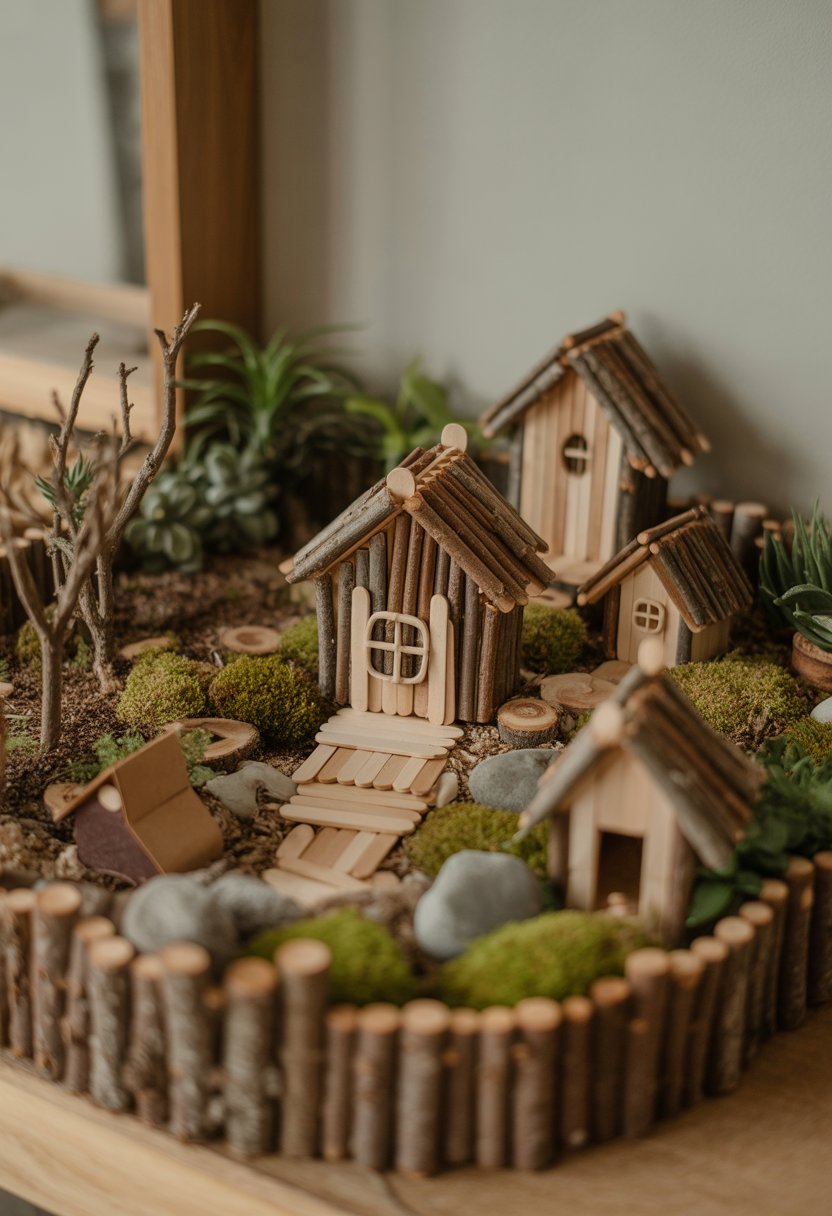
I love making fairy houses from popsicle sticks because they’re simple and cheap. You can create different shapes and sizes for your indoor garden.
3. Use live moss as ground cover for natural texture
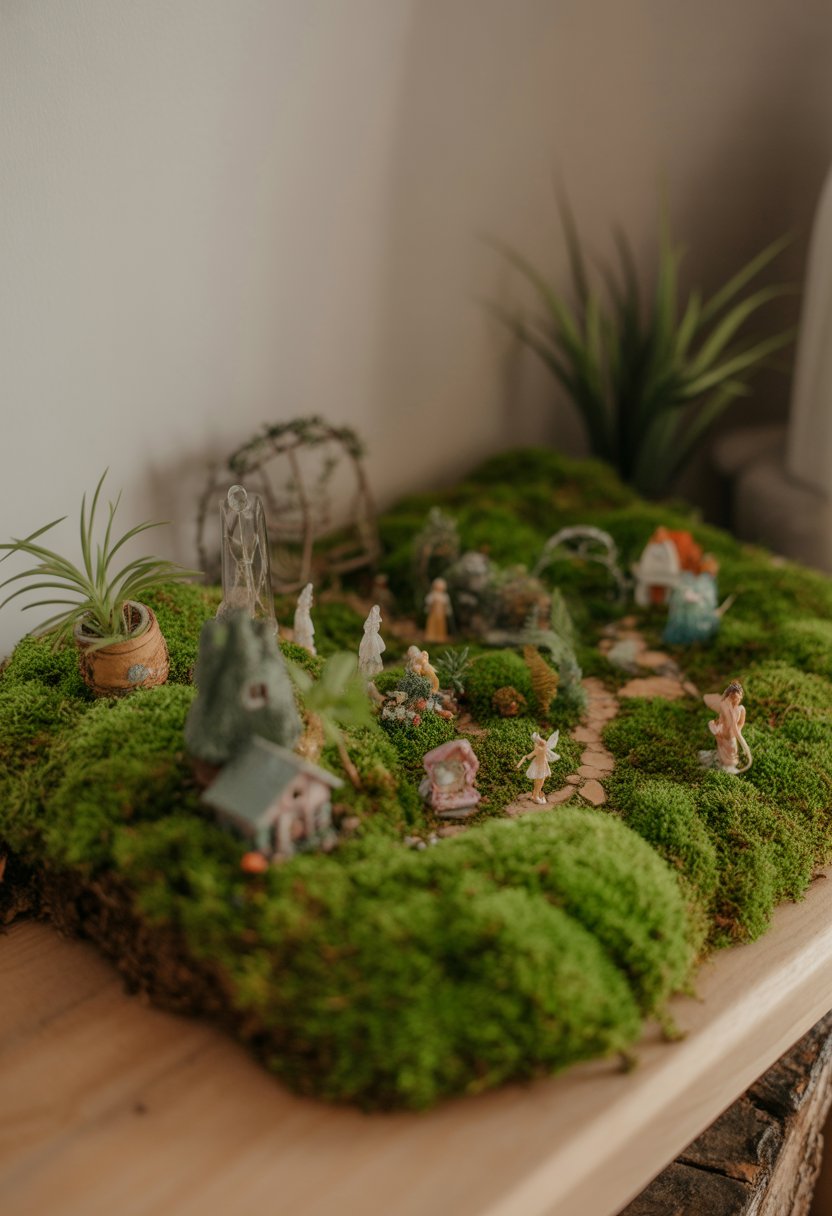
I recommend using live moss to create a lush, natural carpet in your fairy garden. Moss adds soft green texture that mimics a real forest floor.
Live moss works well in containers and requires minimal care. It thrives in shady, moist indoor conditions.
4. Incorporate tiny LED fairy lights for magical ambiance
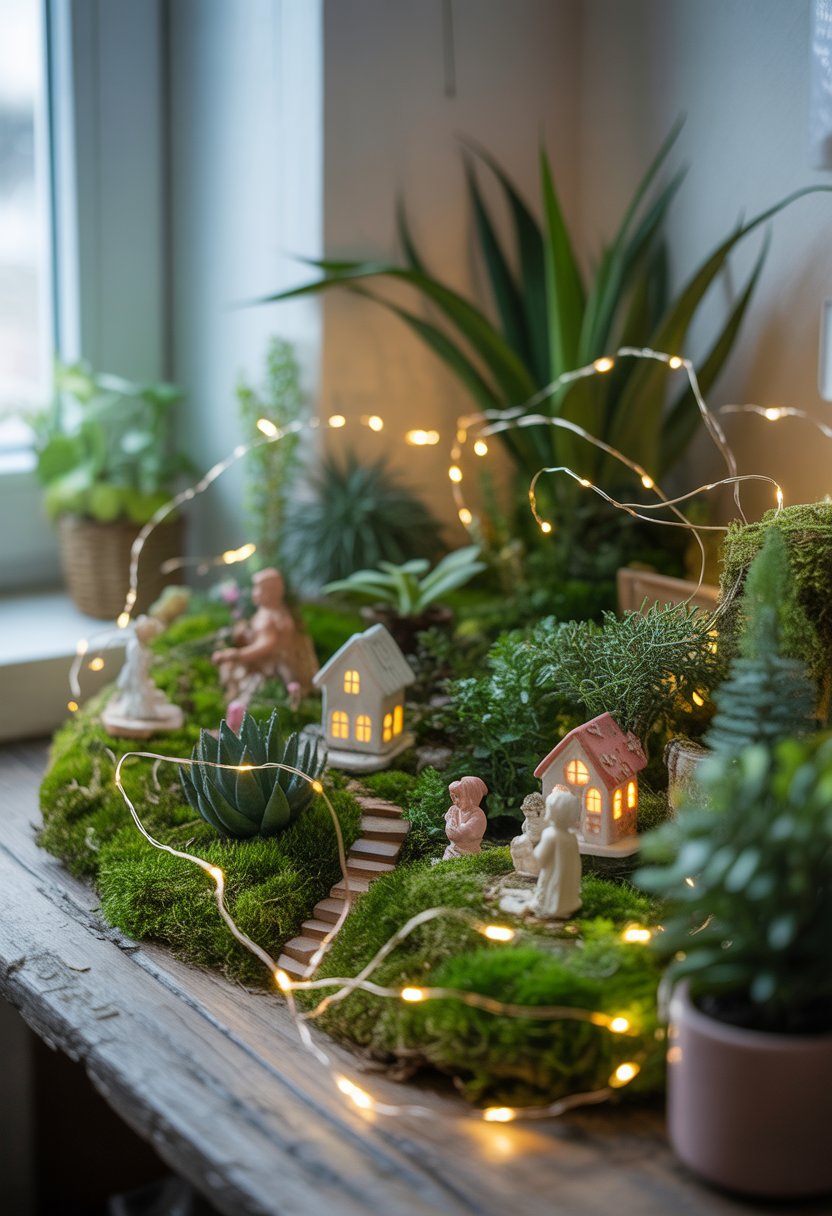
I find that tiny LED lights instantly transform any indoor fairy garden into something special. These small lights create a warm glow that makes the space feel alive.
Battery-powered LED strings work best for container gardens. I can easily hide the battery pack behind plants or decorations.
I like to weave the lights around miniature trees and houses. This creates depth and draws attention to different areas of the garden.
5. Add miniature ceramic furniture pieces
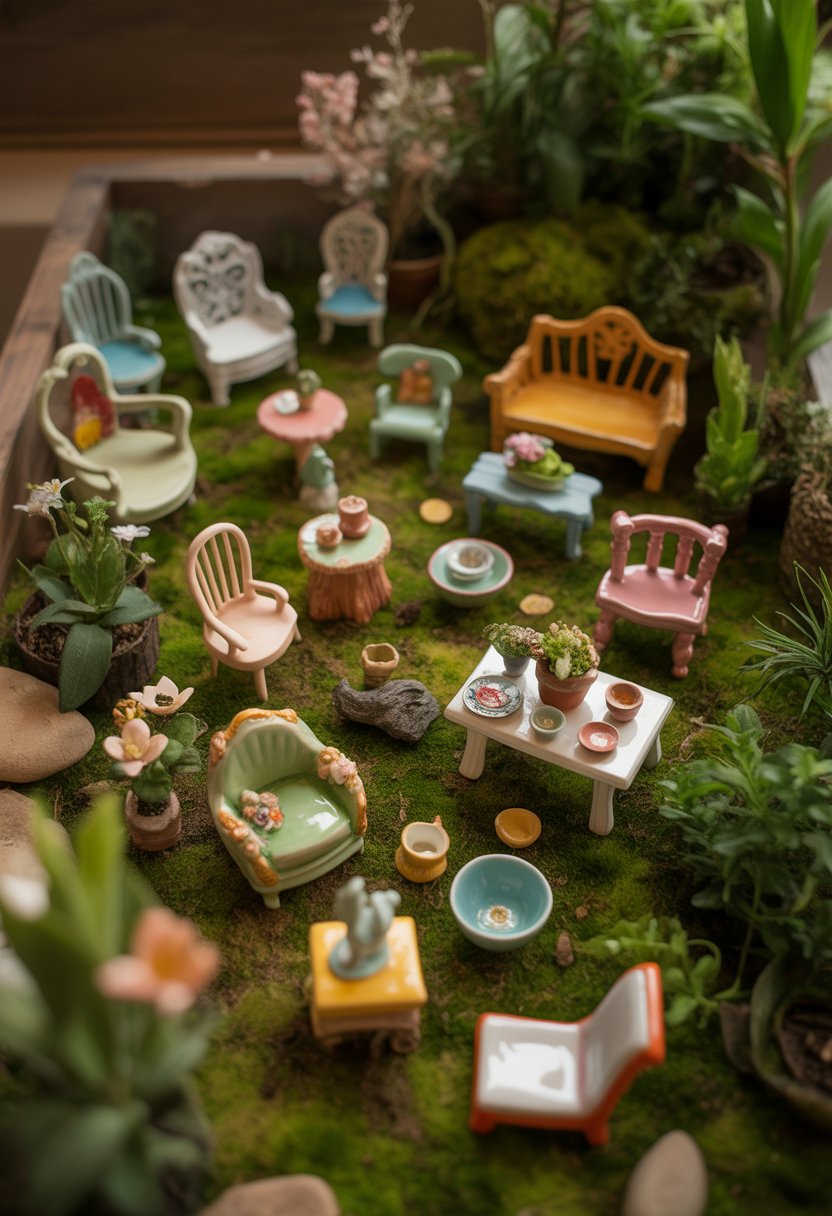
I place tiny ceramic chairs and tables in my fairy gardens. These small pieces make the space feel lived-in.
Ceramic furniture lasts longer than plastic options. I can find these pieces at craft stores or online shops.
6. Include small aromatic herbs like thyme or lavender
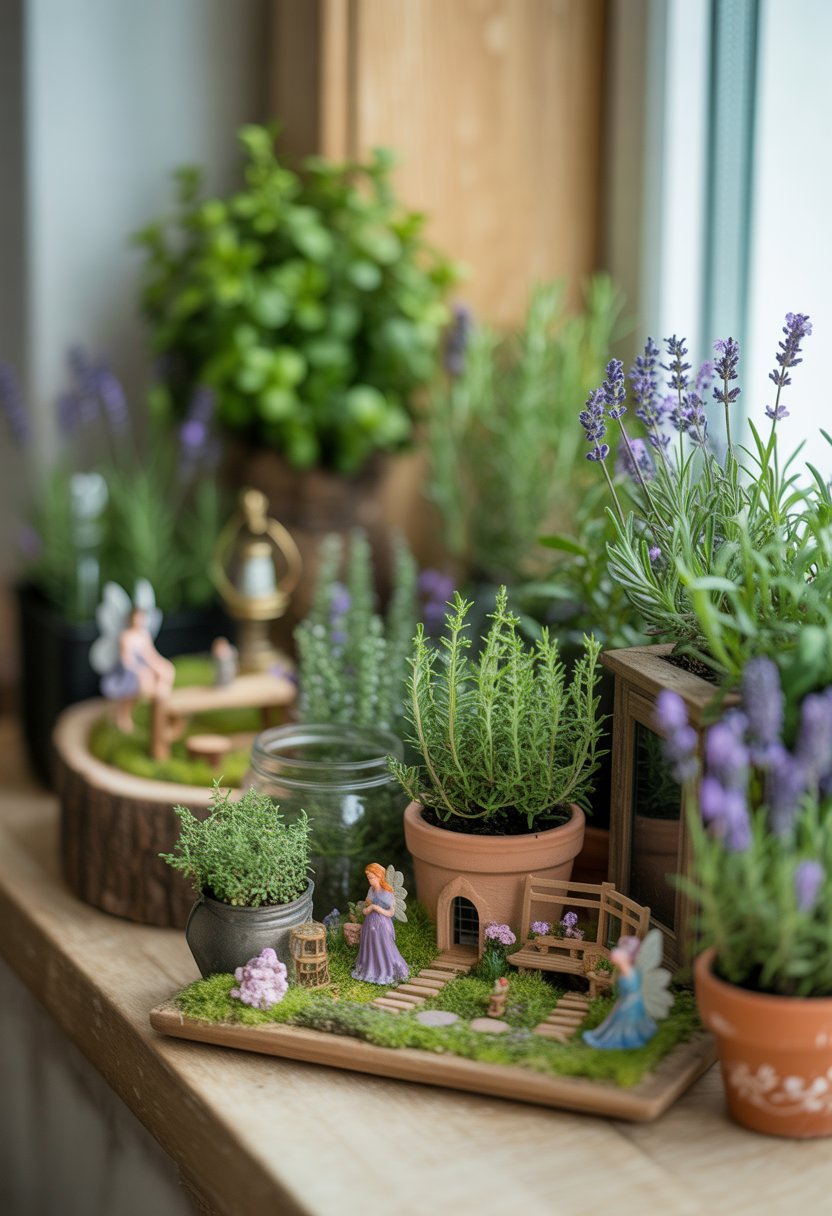
I add small herbs to my fairy gardens for natural fragrance. Thyme and lavender work perfectly in tiny spaces.
These herbs stay small and smell amazing. They make my fairy garden feel magical.
7. Use glass terrariums with drainage layers
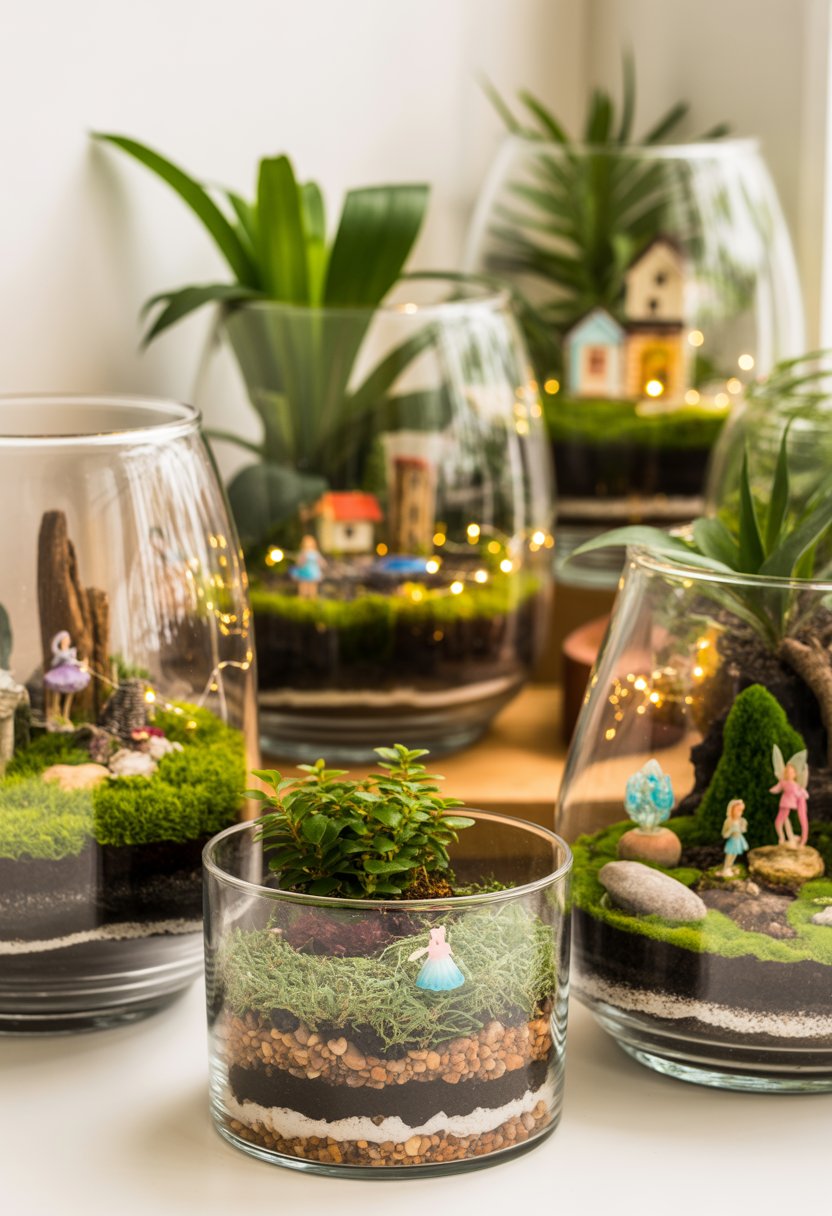
Glass terrariums let me see all the fairy garden details inside. I choose containers with wide openings for easy decorating.
I start with small pebbles at the bottom. This drainage layer prevents water from flooding my plants.
I add activated charcoal next, then potting soil. The larger my terrarium, the thicker I make the drainage layer.
8. Scatter tiny pebbles and stones as pathways
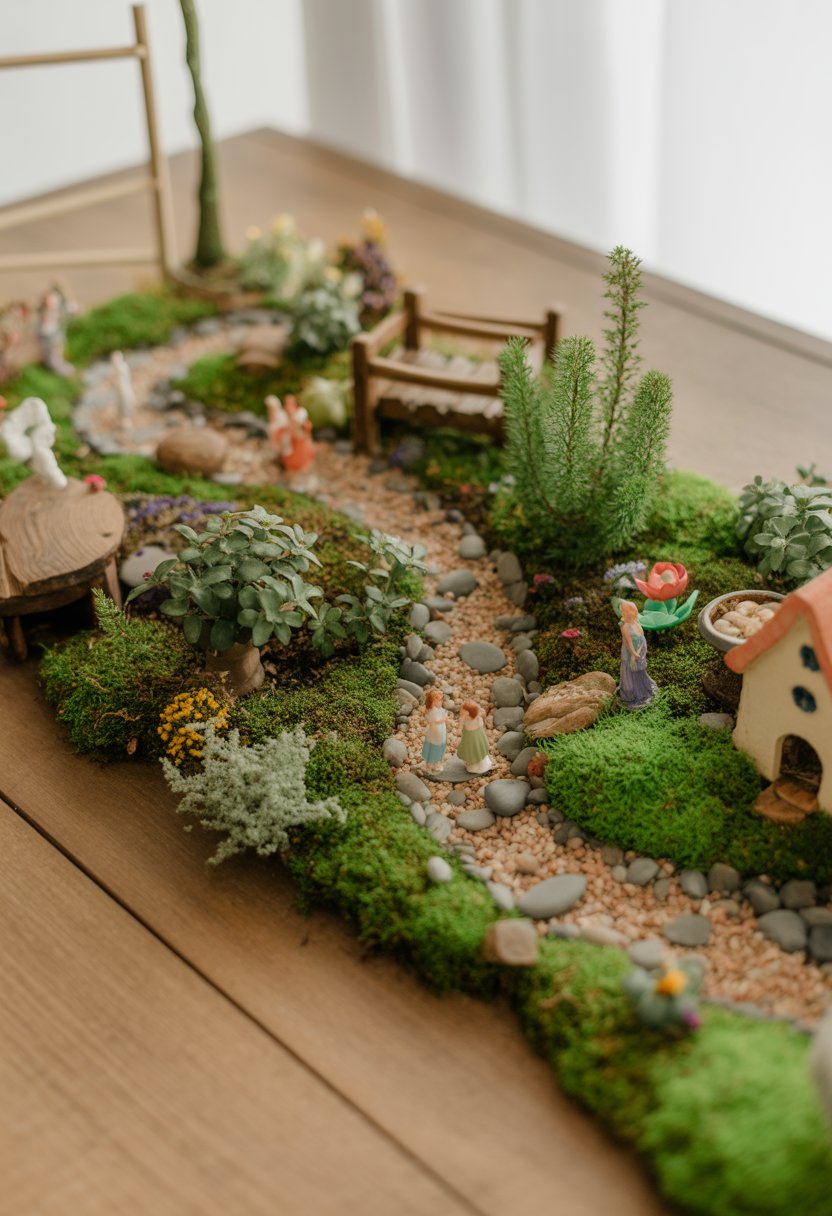
I create winding paths using small pebbles and stones. These materials add structure to my indoor fairy garden.
I mix light and dark stones for visual texture. The contrast makes pathways stand out against green plants.
9. Decorate with faux mushrooms and acorn caps

I love using faux mushrooms to add whimsy to my indoor fairy gardens. These decorative pieces create magical charm without maintenance.
Acorn caps make perfect tiny mushroom tops. I collect them from my yard and attach small twigs as stems.
Craft stores sell mushroom supplies in various sizes. I choose ones that fit my container’s scale for the best look.
10. Use wooden crates for rustic fairy garden bases
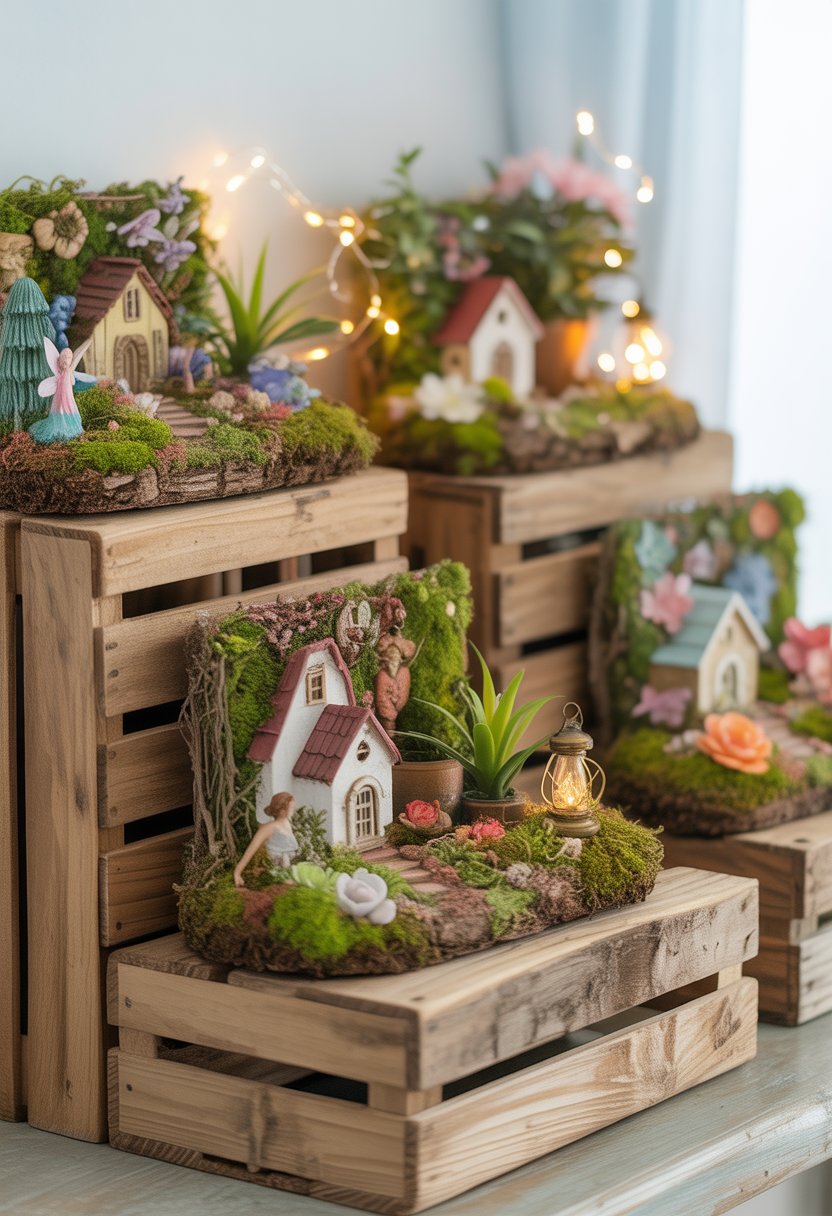
I love using wooden crates for fairy gardens. They bring natural warmth to any space.
The weathered wood creates a charming backdrop. It works perfectly with tiny plants and miniature decorations.
11. Plant small flowering plants like African violets
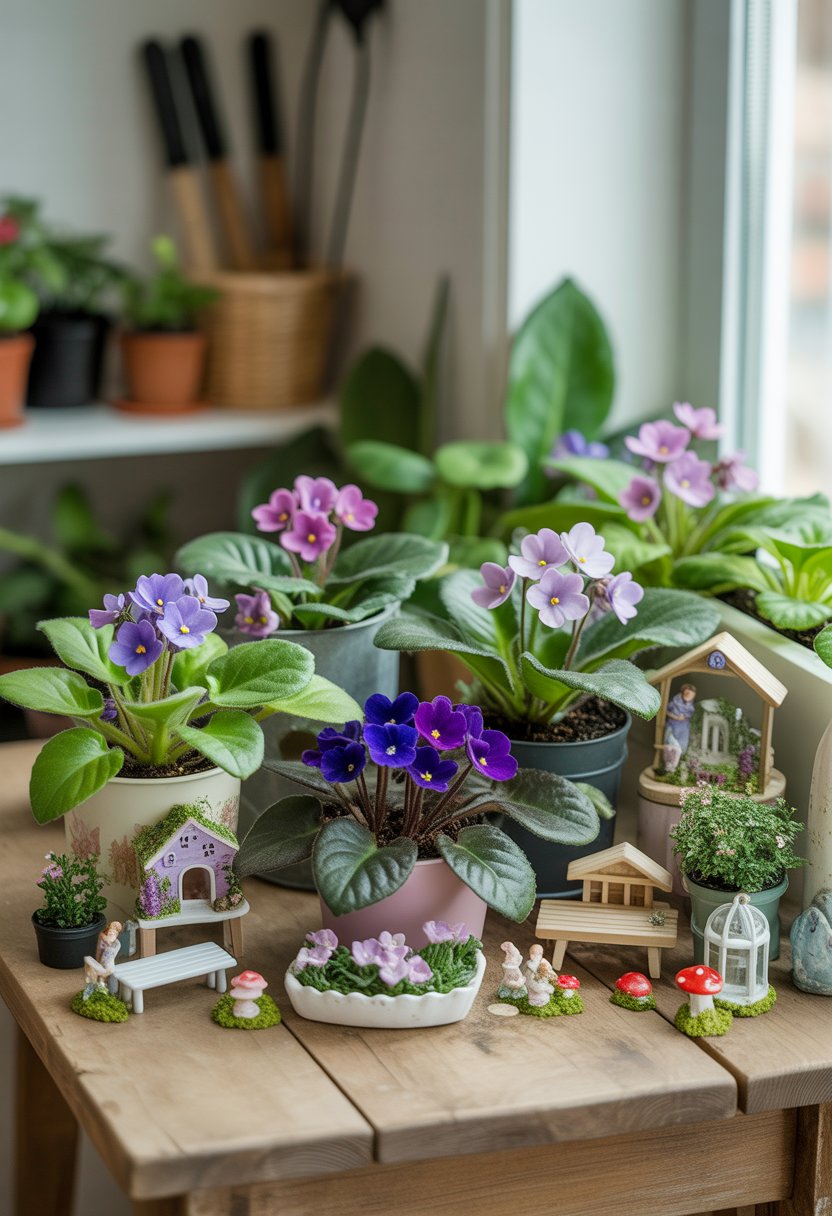
I recommend African violets for fairy gardens because they stay compact at just 6 inches tall. These plants produce beautiful flowers in purple, pink, white, and blue colors.
Their fuzzy green leaves add nice texture to miniature gardens. African violets bloom multiple times per year with proper care.
I suggest watering them from below using a saucer. This keeps their leaves dry and prevents damage.
12. Create fairy doors attached to indoor plant pots
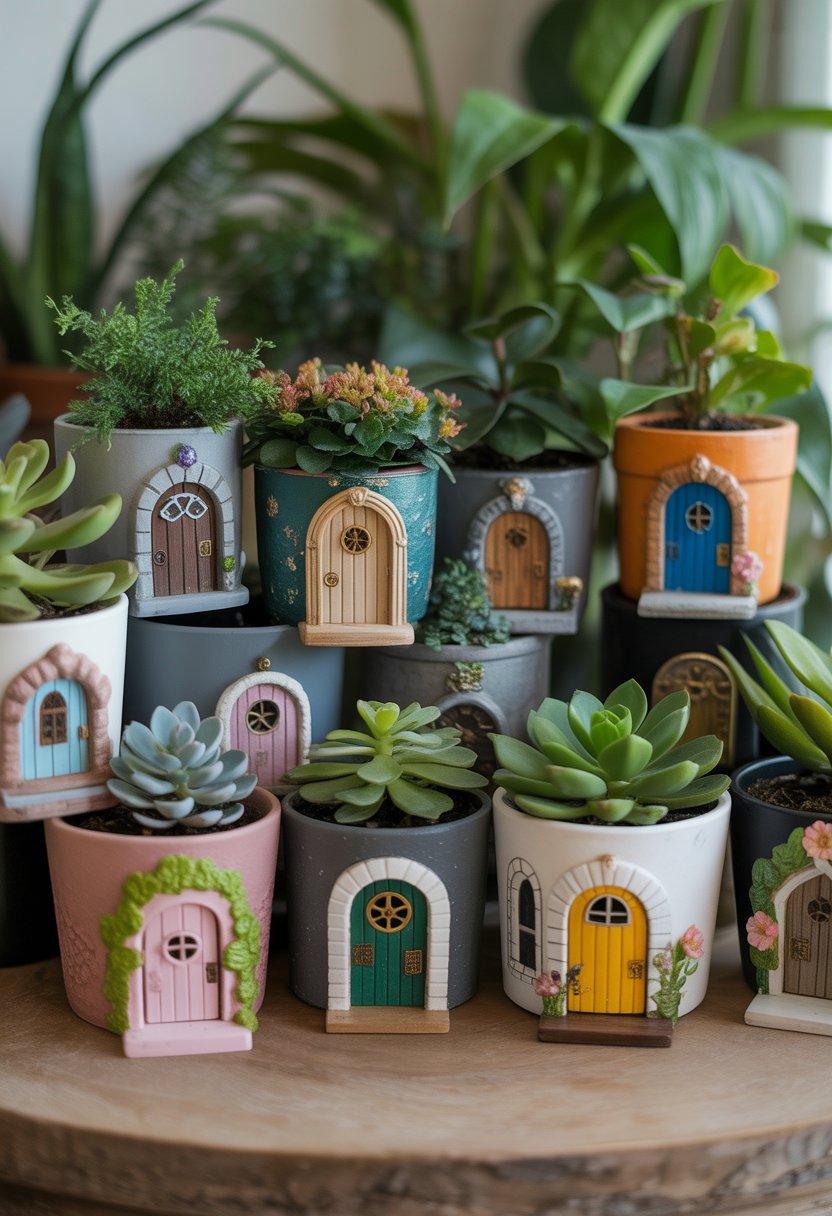
I attach small fairy doors directly to my plant pots using hot glue. This creates magical entrances at the base of indoor plants.
I place doors against the pot’s rim or side. The plants become fairy homes with tiny doorways.
13. Build miniature fences from twigs or wire
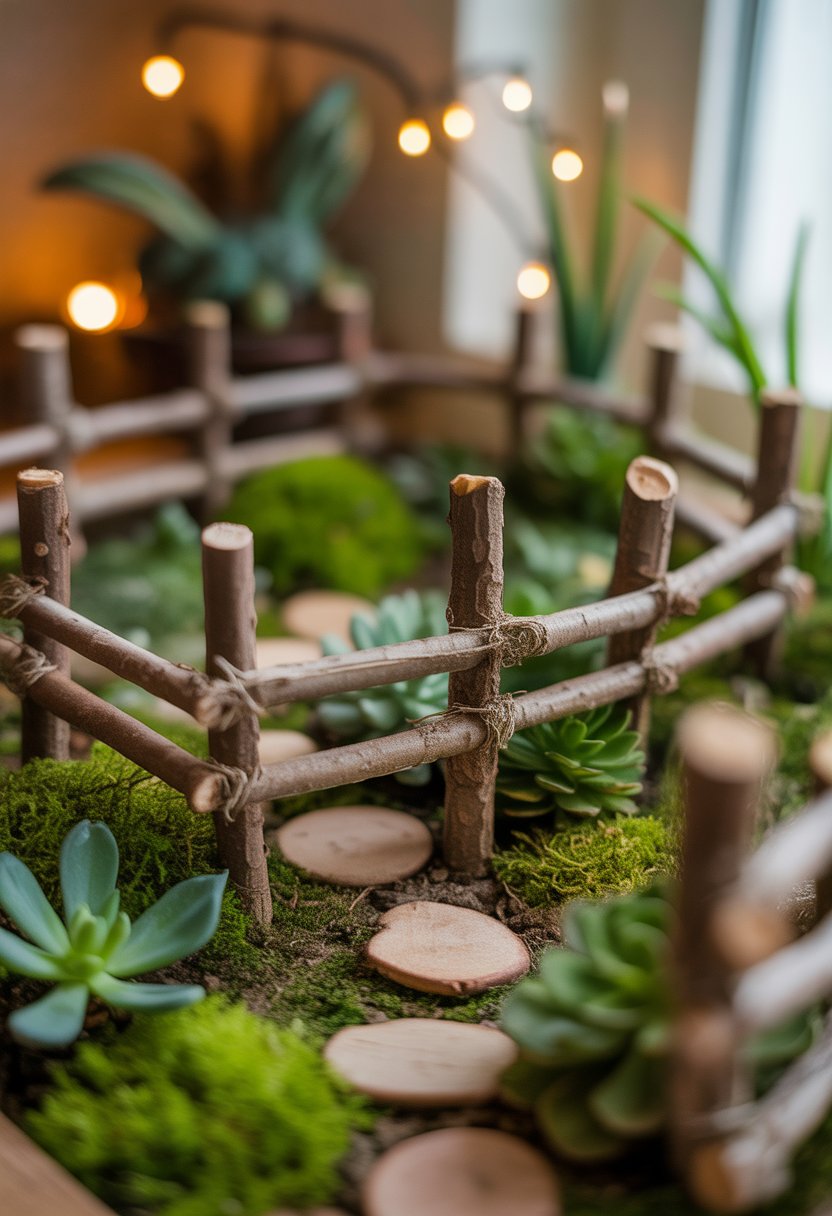
I make tiny fences using thin wire or small twigs from my yard. Wire bends easily around garden features and stays in place well.
Twigs create a natural rustic look. I wire them together at the top and bottom for stability.
14. Integrate delicate fairy figurines made of resin
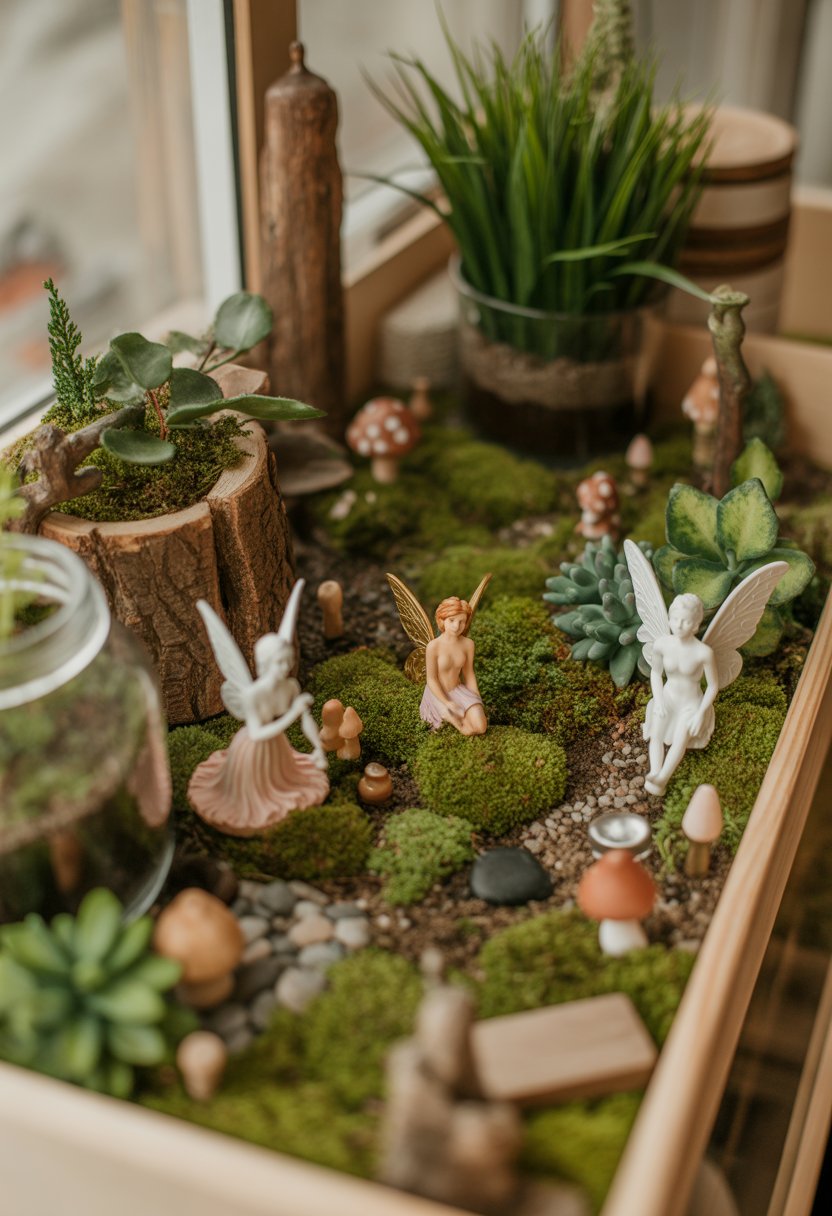
I choose resin fairy figurines for my indoor gardens because they’re durable and detailed. These figurines come with protective coatings that resist fading.
Resin material creates realistic textures and colors. I find hand-painted options add authentic charm to miniature scenes.
15. Place tiny bird nests or nests made from natural fibers

I love adding miniature bird nests to my fairy gardens. They create magical focal points.
I use small twigs and moss to craft realistic nests. Natural fibers work perfectly too.