




In This Article Show
Growing herbs at home brings fresh flavors to your cooking while saving money on store-bought options. Many people think herb gardens require large spaces or special skills, but this simply isn’t true.

With just a few basic supplies and some creativity, you can create a thriving herb garden in any living space, whether you have a full backyard or just a small apartment.
I’ll show you how to transform everyday items like mason jars, wooden pallets, and tin cans into functional herb planters that fit your space and budget.
1. Start with a sunny windowsill planter
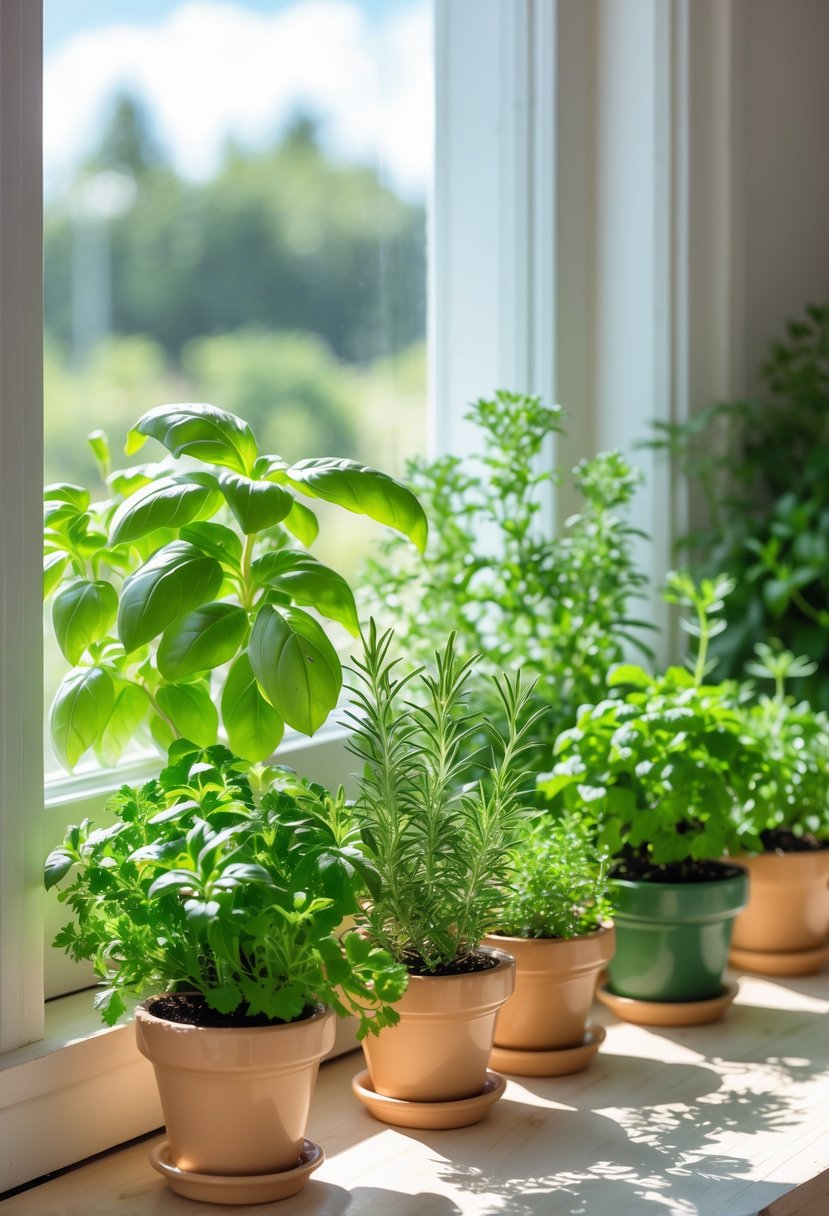
I recommend choosing a windowsill that gets at least six hours of sunlight daily. This gives your herbs the light they need to grow well.
Pick a planter that’s 6-8 inches deep. Most herbs have shallow roots, so they don’t need very deep containers.
2. Use tiered wooden shelves for vertical planting
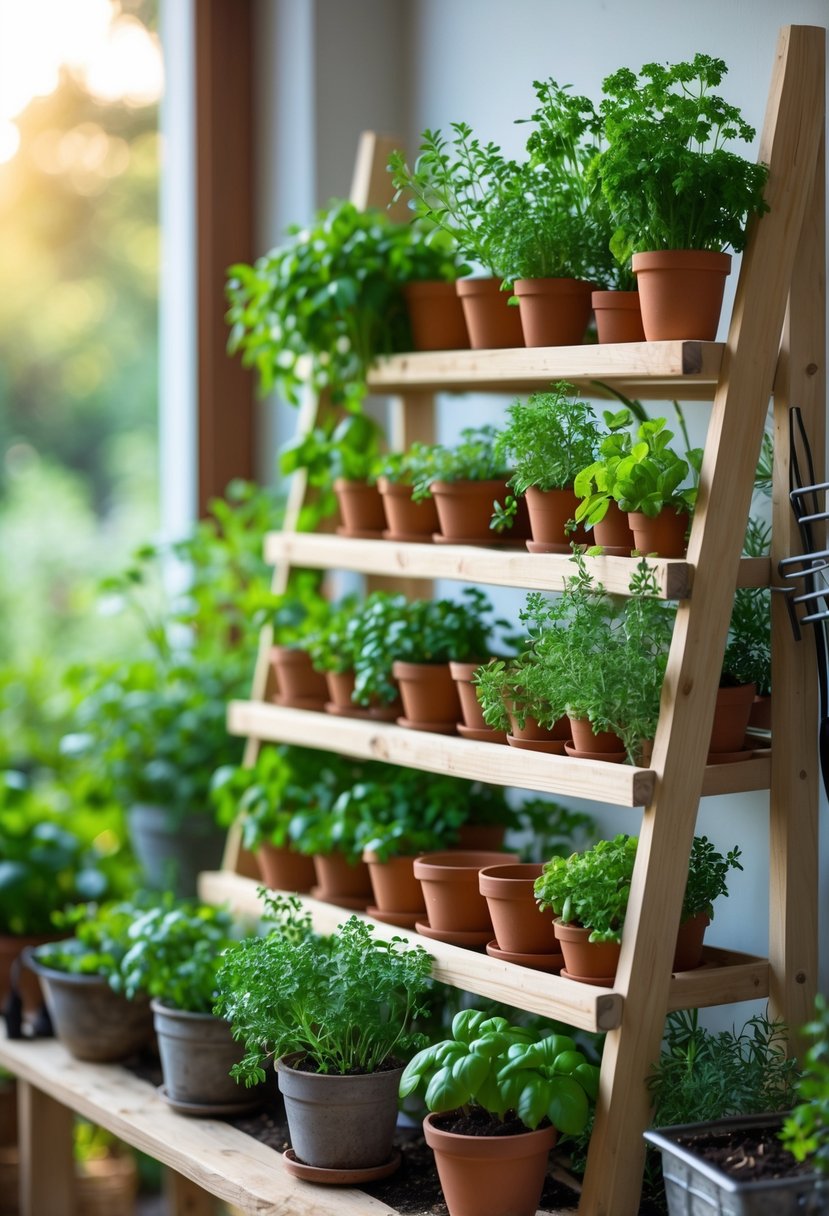
I find tiered wooden shelves perfect for growing herbs in small spaces. They maximize vertical space while keeping plants organized.
I can build simple three-tier shelves using basic wood planks and rope.
3. Repurpose old ladders into herb racks
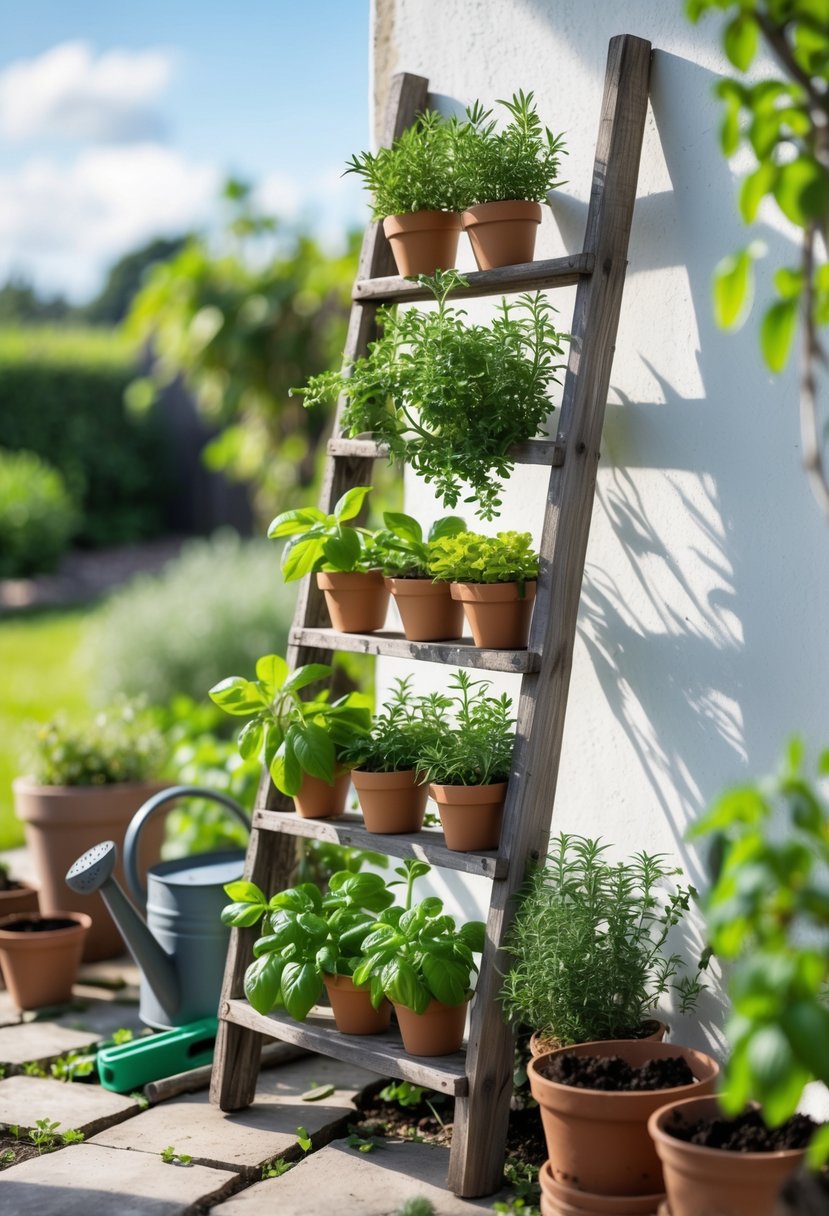
I love turning old ladders into vertical herb gardens. This project saves space and adds rustic charm to any outdoor area.
You can lay the ladder flat and place pots between the rungs. This creates even sections for different herbs.
4. Build a raised garden bed for outdoor herbs
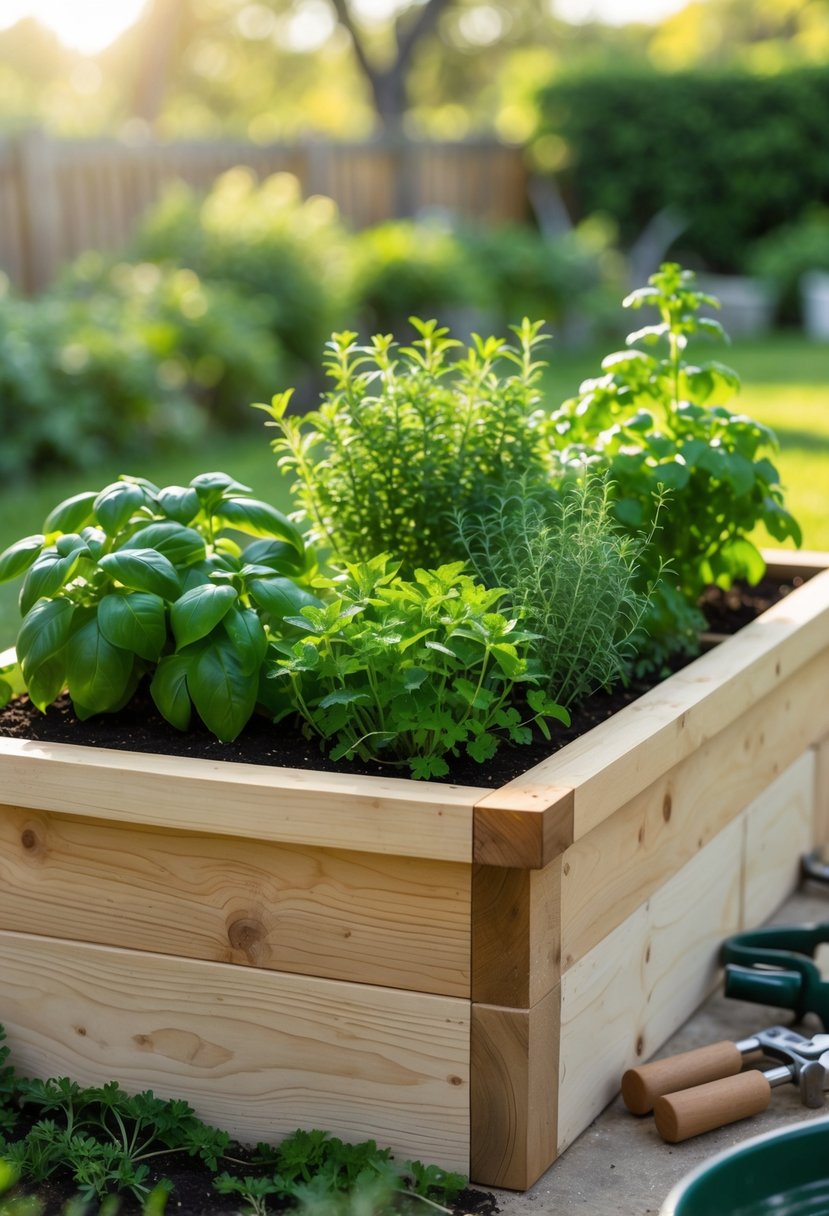
I recommend building a raised bed because it gives you better drainage and soil control. You can make one using basic materials like wood boards or concrete blocks.
The elevated design means less bending when you garden.
5. Create a wall-mounted vertical herb garden
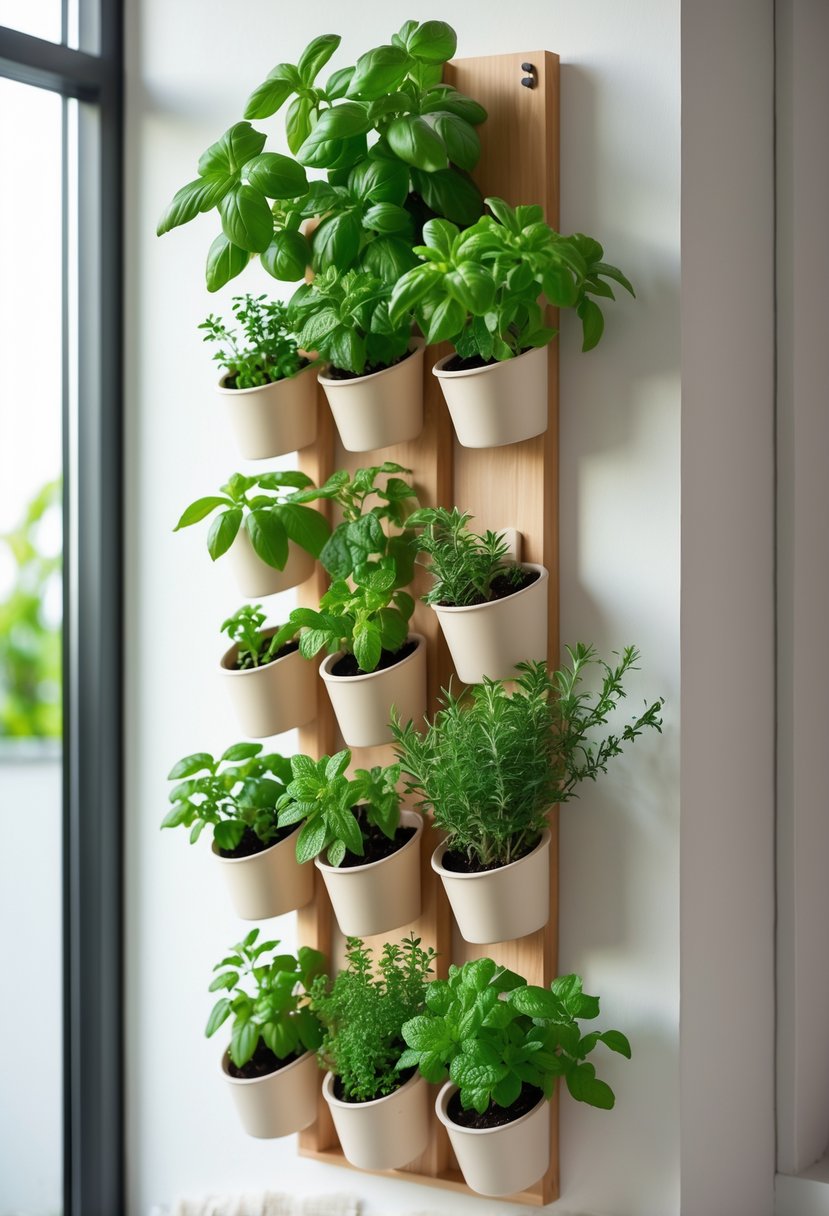
I love wall-mounted herb gardens because they save floor space. You can use wooden pallets, hanging planters, or repurposed gutters.
Mount your system on any wall that gets good sunlight. This works great in kitchens or patios.
6. Use recycled tin cans as planters
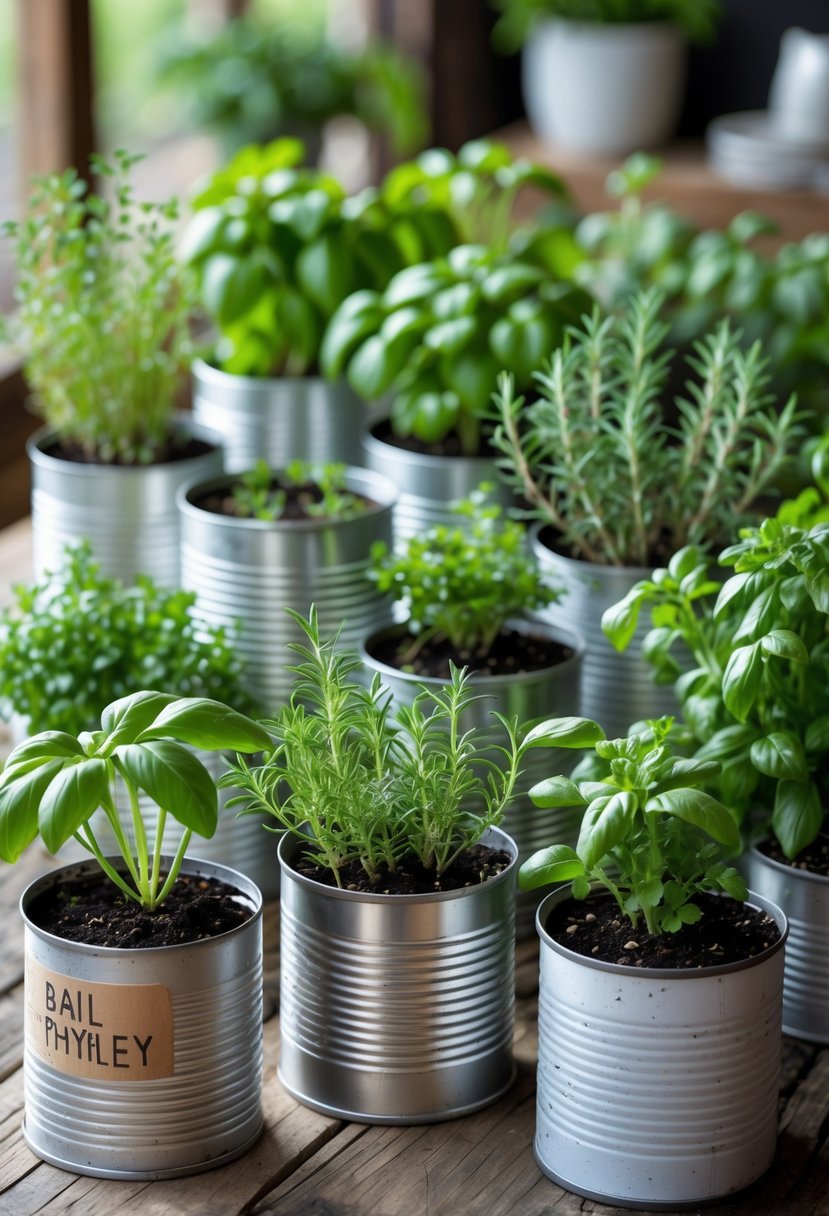
I transform empty tin cans into herb planters easily. This saves money and helps the environment.
I clean the cans first. Then I punch drainage holes in the bottom.
I paint or wrap them with fabric for decoration. Small herbs like basil and parsley grow well in cans.
7. Make a hanging herb garden with macrame holders
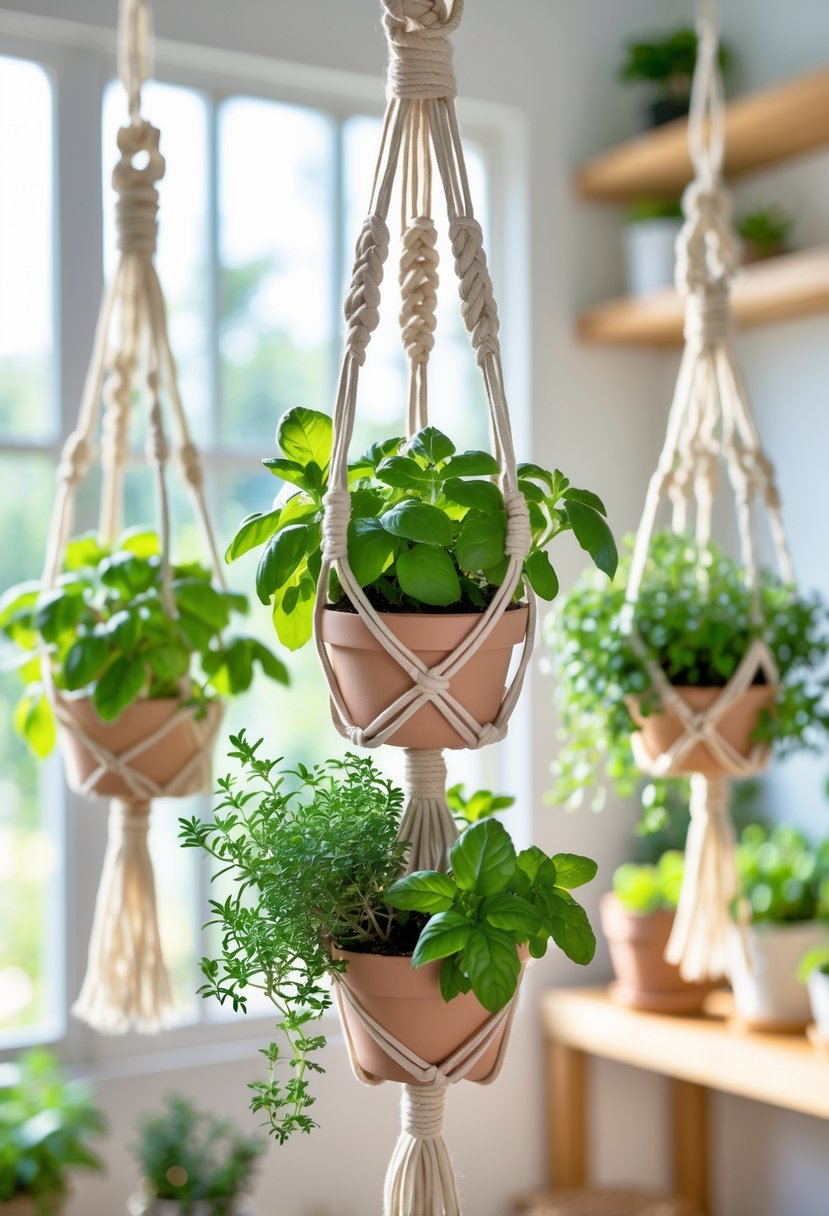
I love making macrame plant hangers for my herbs. They’re easy projects perfect for beginners.
I use simple rope to create basic knot patterns. This holds small herb pots securely.
I choose lightweight plastic pots over heavy ceramic ones. They hang straighter and look better.
8. Grow herbs in mason jars with drainage holes
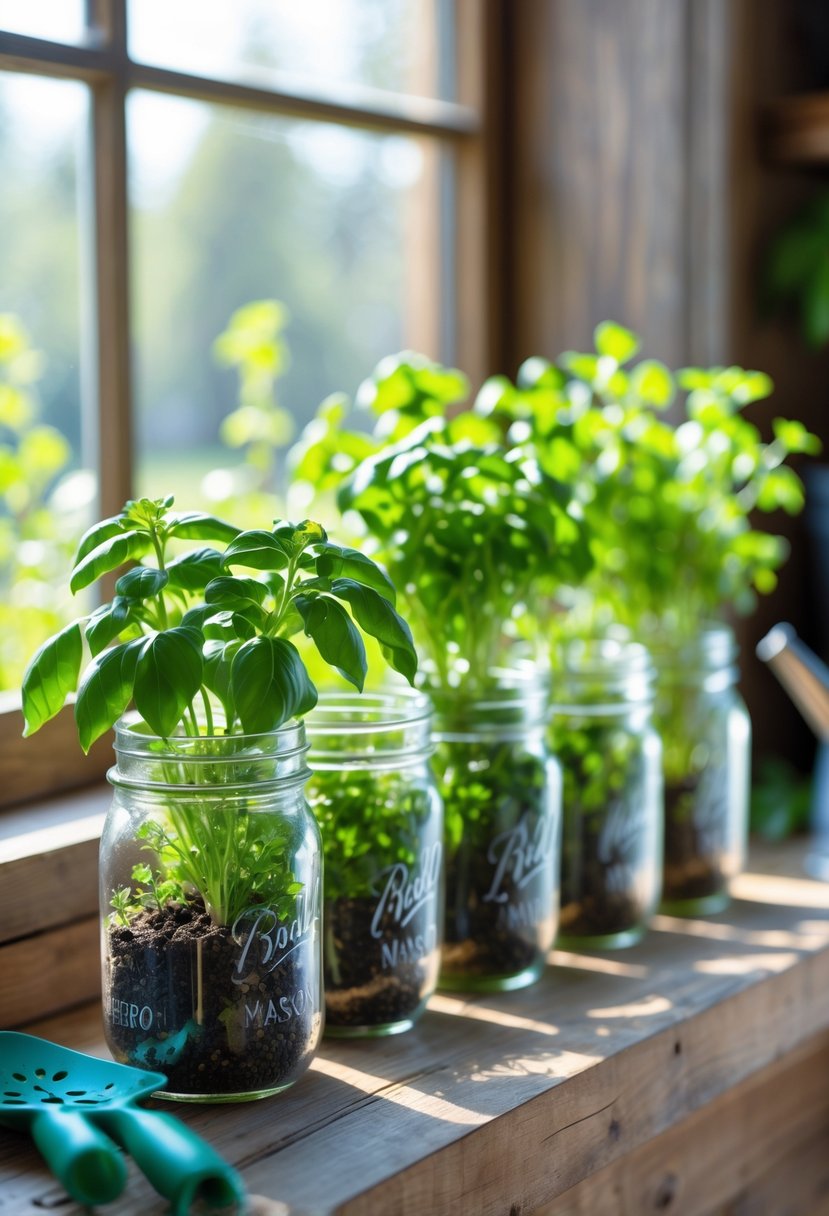
I drill small holes in the bottom of mason jars to create proper drainage. This prevents water from pooling and causing root rot.
I use a drill bit to make three holes in each jar bottom.
9. Install a kitchen counter herb box
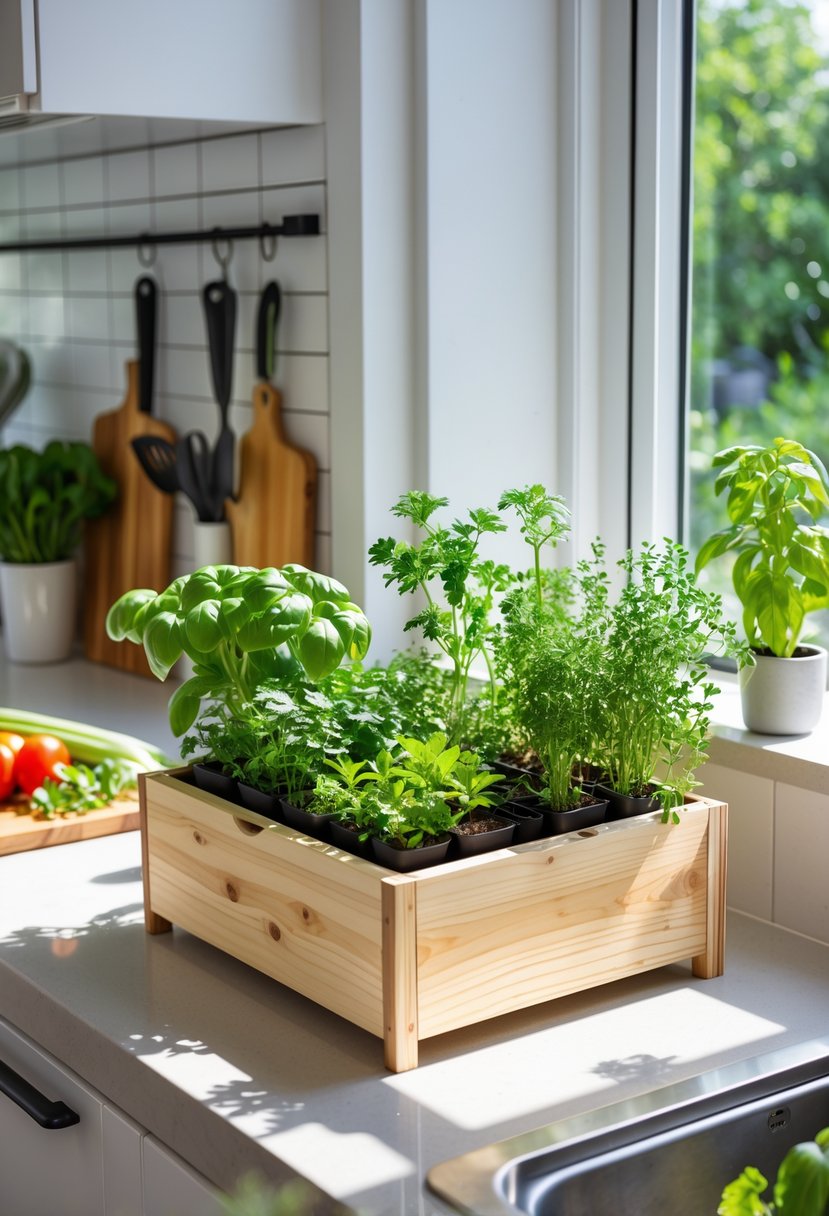
I recommend building a simple wooden herb box for your kitchen counter. Use cedar boards to create a rectangular planter that fits your available space.
Choose containers with drainage holes. Position the box near a sunny window for best herb growth.
10. Plant herbs in a shoe organizer hung on a wall
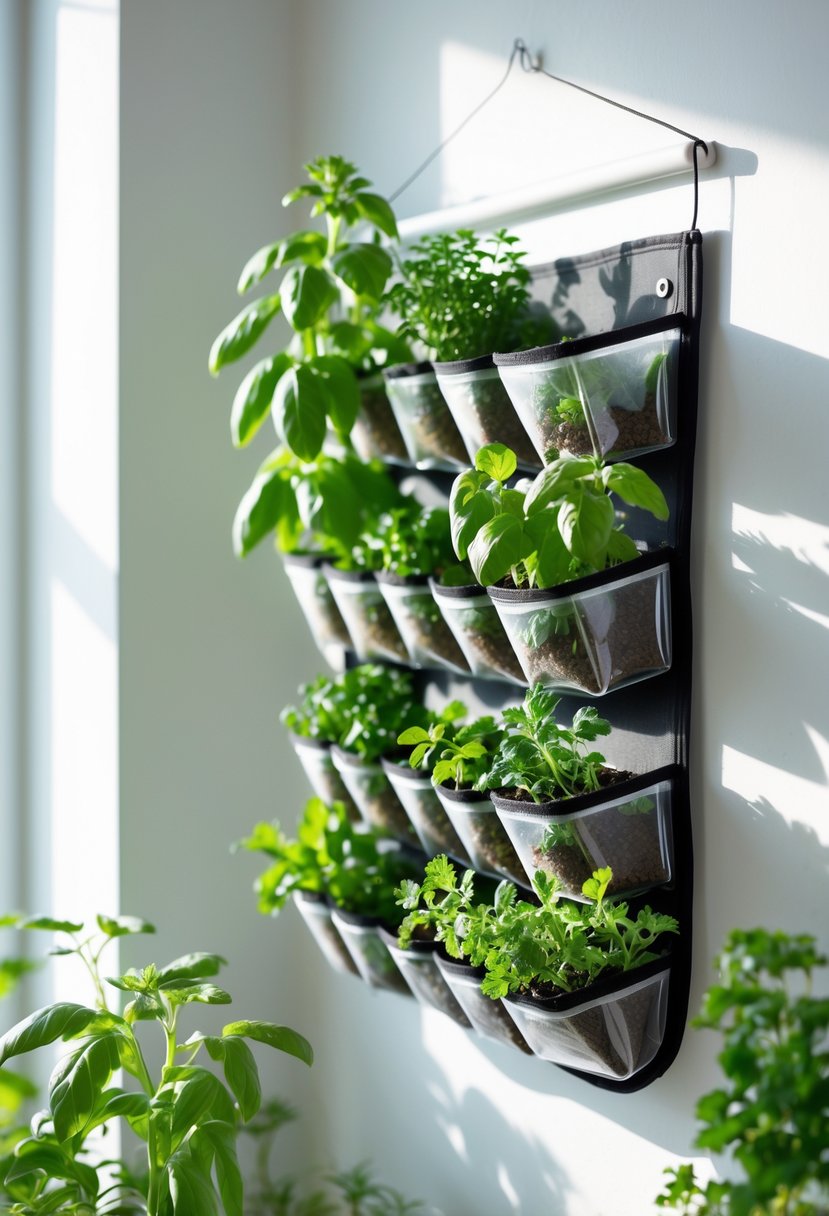
I love using cloth shoe organizers for herbs. They save space and work well in small homes.
I fill each pocket with potting soil. Then I plant different herbs in separate compartments.
I hang the organizer on hooks or nails. This keeps herbs off the ground away from pets.
11. Use lattice panels for climbing herb support
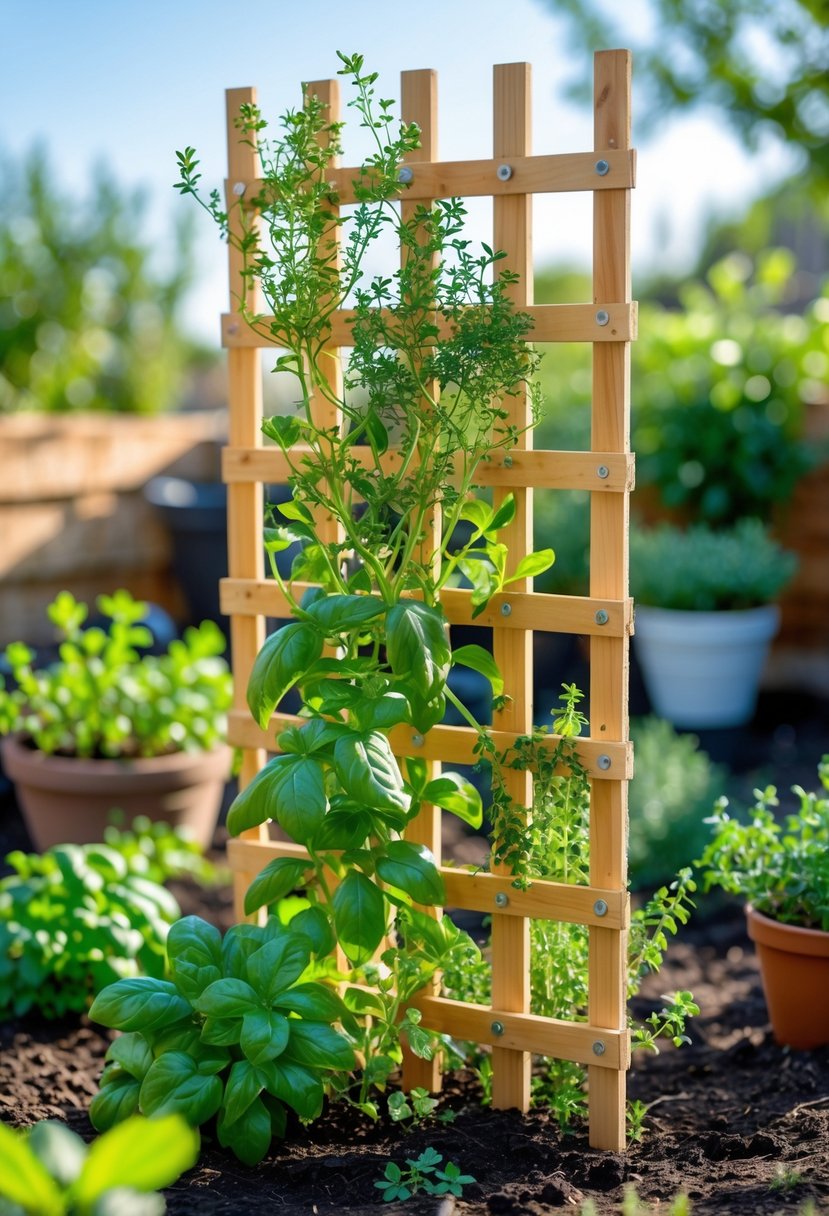
I use lattice panels to support climbing herbs in my garden. They work well for herbs that grow tall or vine.
I attach panels to walls or fences. This creates support for herbs to climb up.
12. Build a DIY pallet herb garden
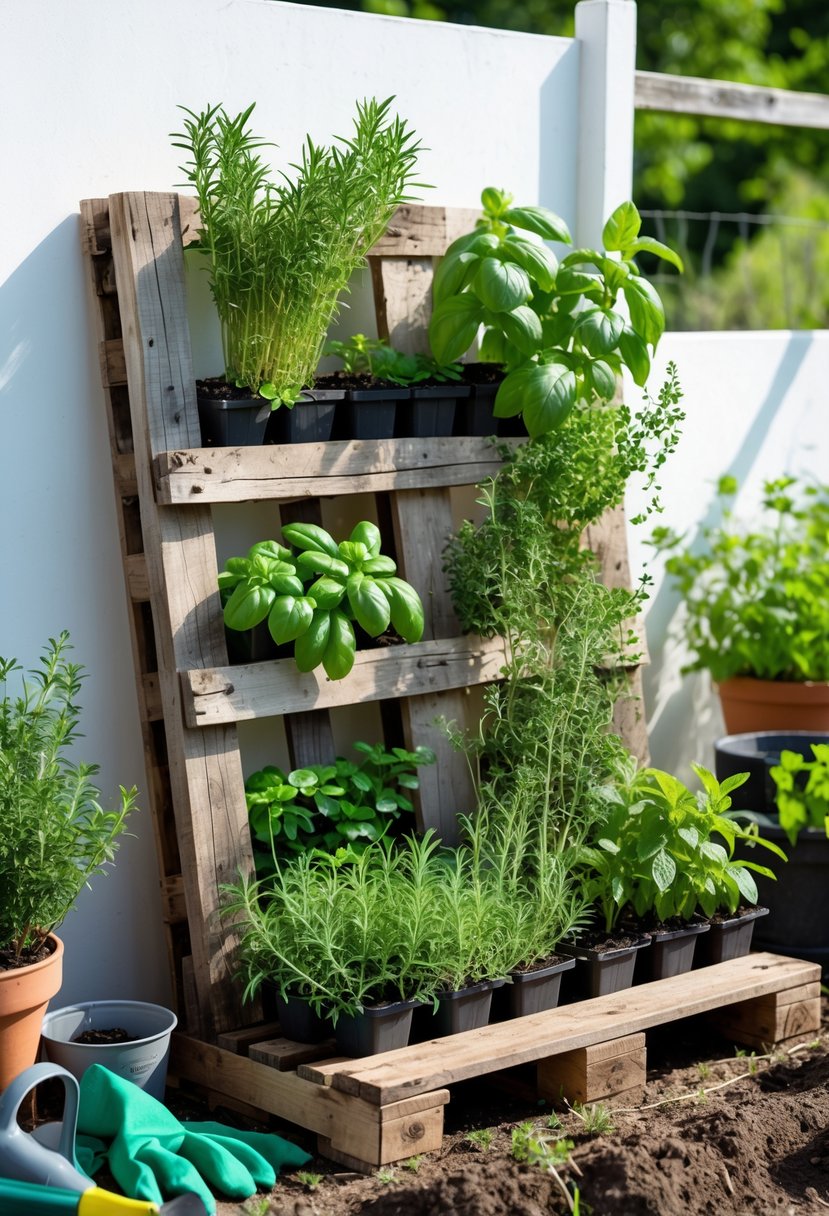
I love using old shipping pallets for vertical herb gardens. They save space and cost almost nothing.
I dismantle the pallet and rebuild it into a box shape. This creates perfect pockets for planting herbs.
13. Incorporate a tiered metal planter stand
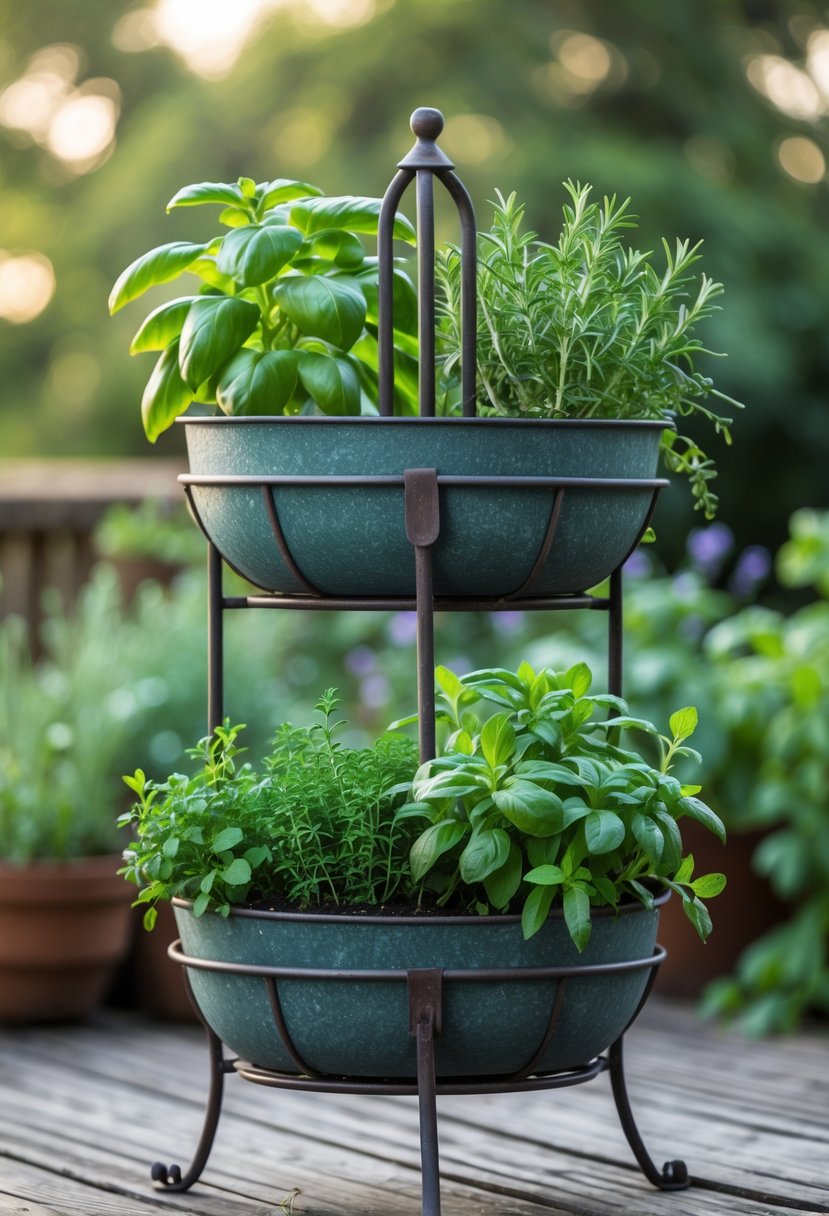
Metal tiered stands offer a sturdy solution for herb gardens. I find aluminum stands work well because they resist rust and last longer outdoors.
You can build one using metal tubing and brazing techniques. This creates multiple planting levels in a compact footprint.
14. Use teak wood boxes for a rustic look
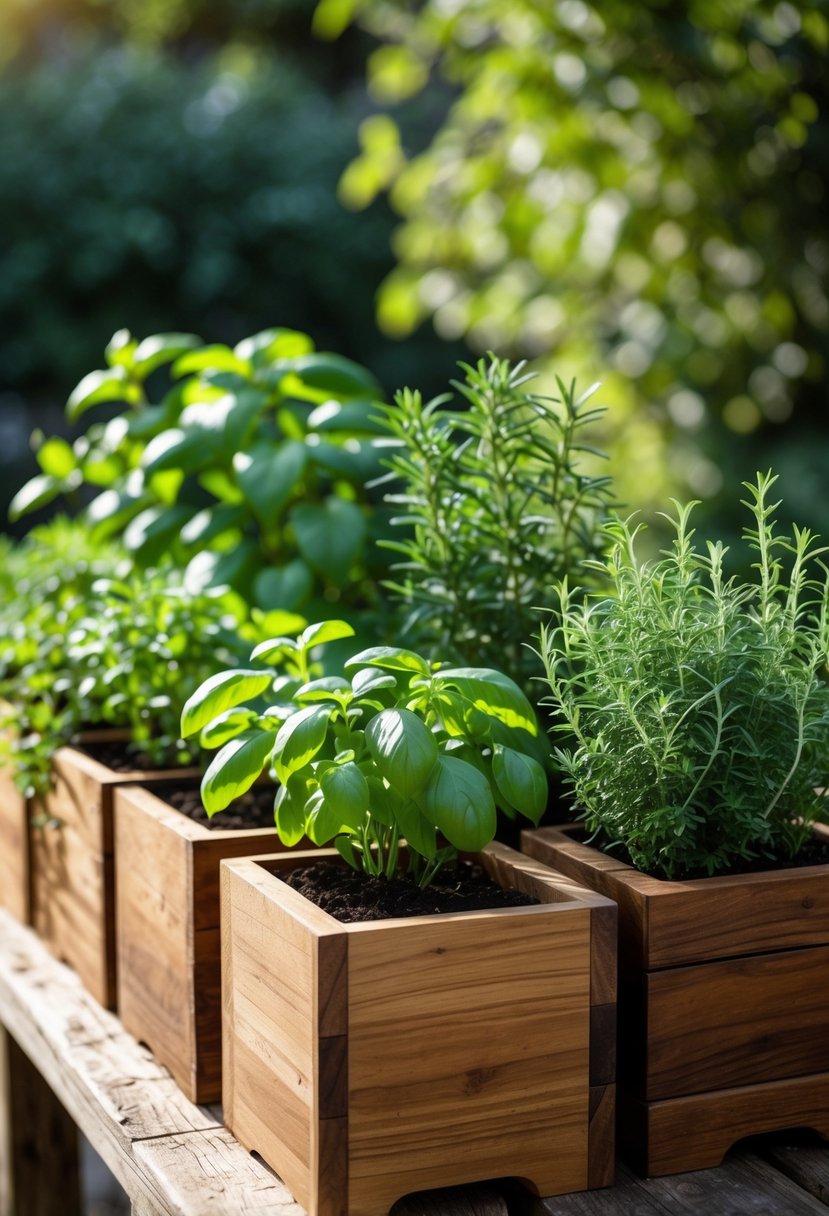
I love using teak wood for herb garden boxes because it gives a natural, rustic appearance. The wood ages beautifully outdoors and develops a weathered look over time.
Teak is naturally water-resistant, making it perfect for herb planters.
15. Grow herbs in recycled wine cork planters
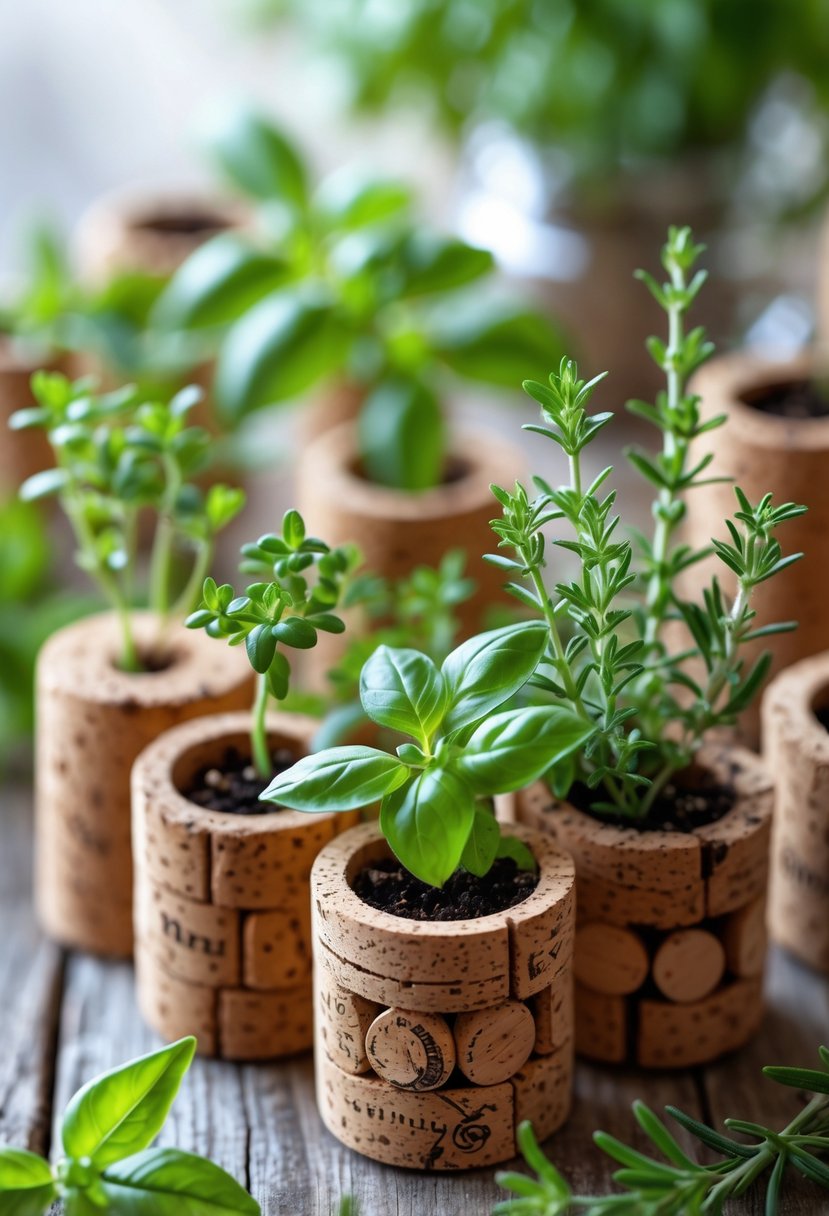
Wine corks make tiny planters for herb seeds and seedlings. I drill small holes in natural corks to create drainage.
These work best for starting seeds like basil or thyme. The corks hold enough soil for early growth stages.